
TL;DR
A Tesla battery after an accident can appear perfectly normal — and still turn a minor crash into a financial total loss. Even a 3–5 mm dent in the enclosure may justifyfull pack replacement costing $12,000–$25,0000.Structural 4680 packss increase repair exposure. Always demand an HV isolation report and underbody inspection before repair or purchase.
Introduction
The conversation around a Tesla battery after an accident has changed dramatically in 2026.
Fivebattery damage was rareage was rare and usually catastrophic. Today, the issue is more subtle — and more expensive. Modern Teslas integrate the battery into the chassis. That improves rigidity, crash performance, and manufacturing efficiency. But it also shifts post-accident economics in ways many buyers and even insurers underestimate.
In internal combustion cars, a damaged engine is a replaceable module. In a Tesla, the battery is:
- The largest single cost component (25–40% of vehicle value)
- Part of the structural floor
- A high-voltage safety system
- A thermal management network
- The foundation of resale value
This guide combines engineering thresholds, insurance math, real-world scenarios, and ownership risk modeling.
SECTION 1 — What a Tesla Battery Actually Is
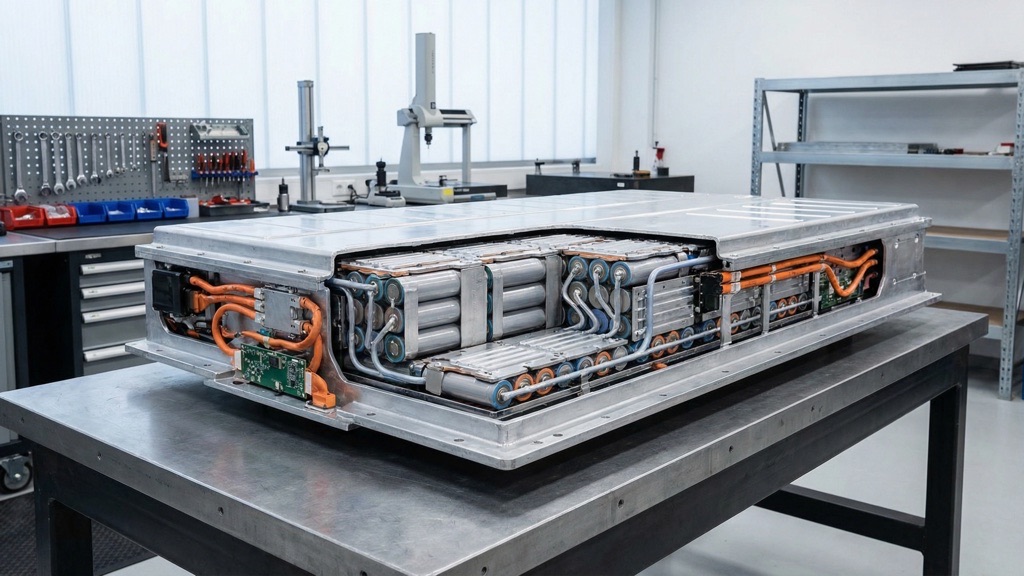
Tesla battery packs vary by model:
- Tesla Model 3
- Tesla Model Y
- Tesla Model S
- Tesla Model X
But all share a core architecture:
| Parameter | Typical Range |
|---|---|
| Nominal Voltage | 350–400V |
| Capacity | 60–100 kWh |
| Pack Weight | 450–600 kg |
| Cooling System | Liquid glycol |
| Continuous Isolation Monitoring | Yes |
In structural versions (Model Y 4680), the pack replaces traditional floor cross-members.
That means:
Battery enclosure damage = structural damage.
SECTION 2 — Battery Chemistry Matters After a Crash
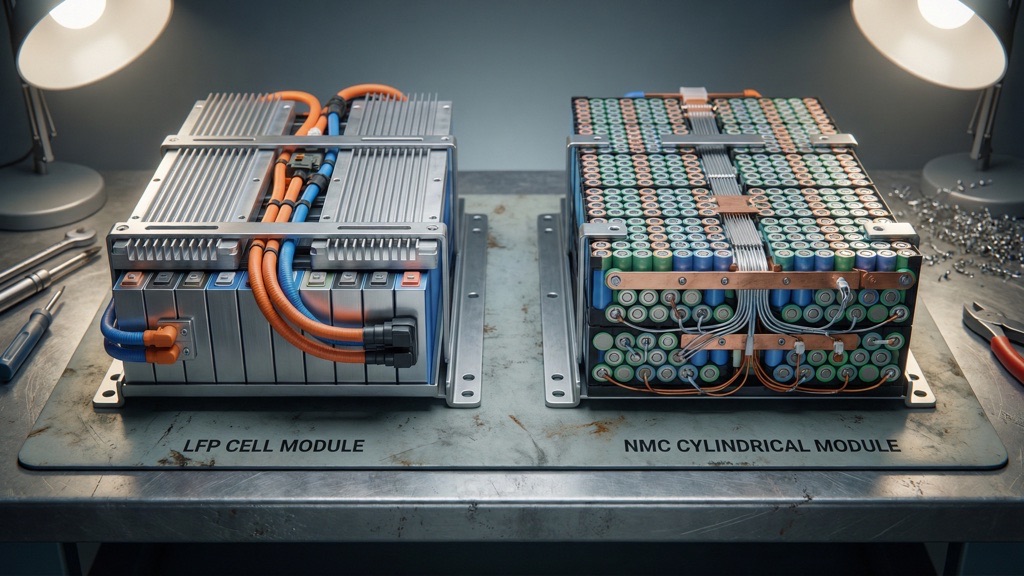
LFP vs NMC After Impact
| Characteristic | LFP (Model 3 RWD) | NMC (LR / Performance) |
|---|---|---|
| Thermal Stability | Higher | Lower |
| Energy Density | Lower | Higher |
| Fire Propensity | Lower | Moderate |
| Structural Sensitivity | Moderate | Higher |
| Replacement Cost | Lower | Higher |
LFP cells tolerate heat and minor deformation better.
NMC cells store more energy per kg — but are more sensitive to internal damage.
In real-world crash evaluations, NMC packs face stricter scrutiny.
SECTION 3 — The $18,700 Dent (Real-World Narrative)
A 2021 Model 3 owner hits road debris at 45 km/h.
No warning lights.
Car drives normally.
Supercharging works.
Two weeks later — insurance inspection:
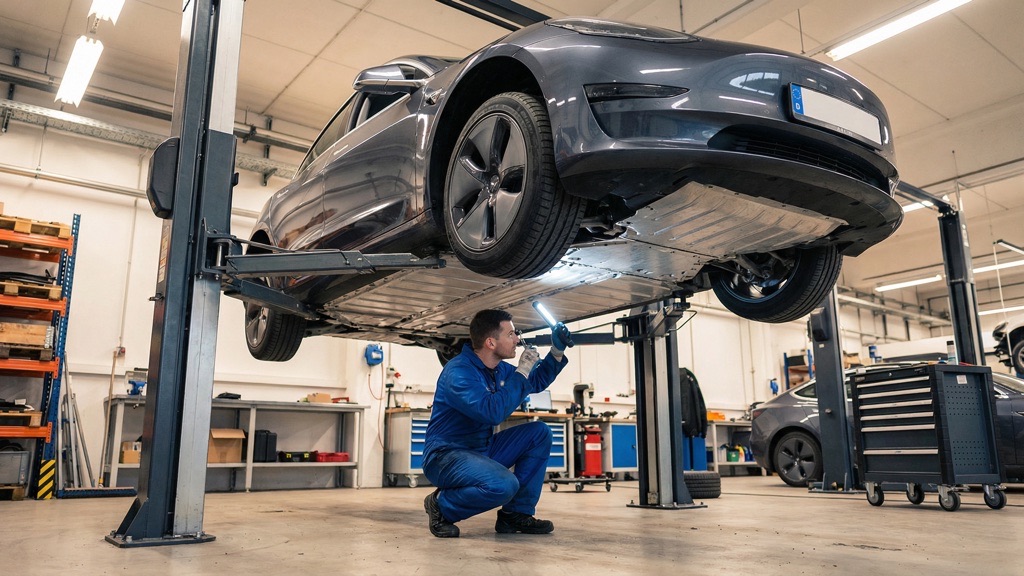
- 4 mm deformation in the aluminum pack enclosure
- No coolant leak
- No HV fault
Tesla quote:
- Battery pack replacement: $16,900
- Labor & calibration: $1,800
- Total: $18,700
Vehicle market value: $23,500
Repair-to-value ratio: 79%
 Cars
Cars
XPeng Next P7 Review (2026): Real Range, Charging & Final Verdict
TL;DR ✅ Buy XPeng Next P7 if you want: One of the most technologically advanced electric sedans of 2026 Strong real-world...
 Reviews
Tesla Model 3 Review 2026: Real-World Range, Charging & Verdict
This review covers the Tesla Model 3 Model Year 2025 (Highland refresh), evaluated as a new car on sale and...
 Reviews
BYD Seal vs Hyundai Ioniq 6 (2026): Which One Is the Better Buy?
INTRODUCTION — The Decision That Actually Matters If both cars cost the same, the answer would be simple. But they...
Insurance decision: Total loss.
This is the modern EV repair paradox.
SECTION 4 — Engineering Thresholds That Trigger Total Loss
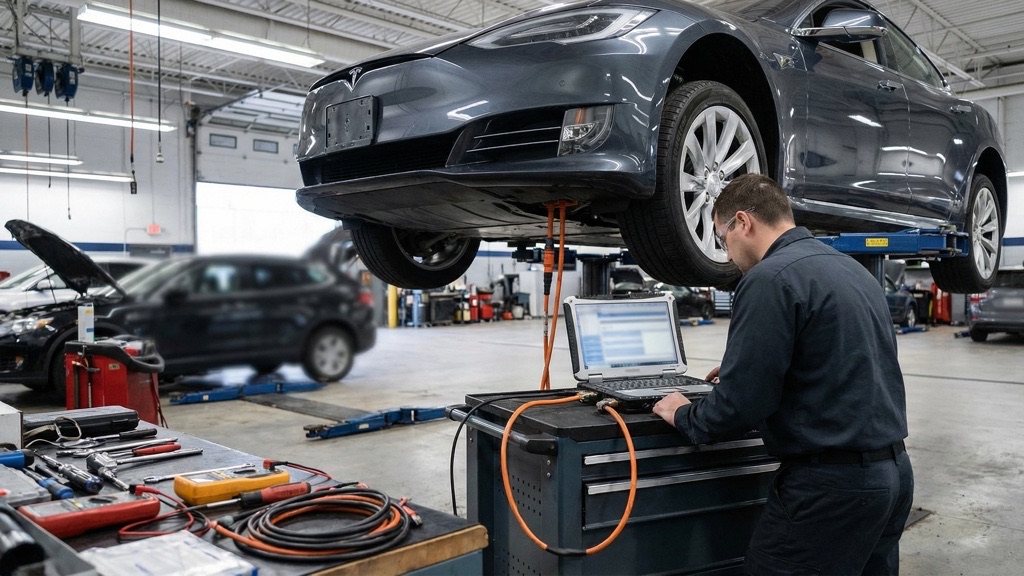
Tesla’s BMS continuously monitors:
| Parameter | Typical Safe Threshold |
|---|---|
| Isolation Resistance | >100 kΩ |
| Pack Coolant Pressure | Stable, no drop |
| Cell Voltage Variance | <20 mV deviation |
| Temperature Delta Across Modules | <5°C |
If isolation resistance drops below the threshold, even intermittently, the vehicle may:
- Disable DC fast charging
- Limit power output
- Trigger HV shutdown
Insurance companies rarely gamble on borderline readings.
SECTION 5 — Replacement Costs by Model (2026 Data)
| Model | Battery Type | Capacity | Replacement Cost | Structural |
|---|---|---|---|---|
| Model 3 RWD | LFP | 60 kWh | $12k–$15k | No |
| Model 3 LR | 2170 NMC | 75–82 kWh | $15k–$18k | No |
| Model Y (2170) | 75 kWh | $16k–$19k | No | |
| Model Y (4680) | 68–72 kWh | $18k–$22k | Yes | |
| Model S | 100 kWh | $18k–$22k | No | |
| Model X | 100 kWh | $20k–$25k | No |
Note:
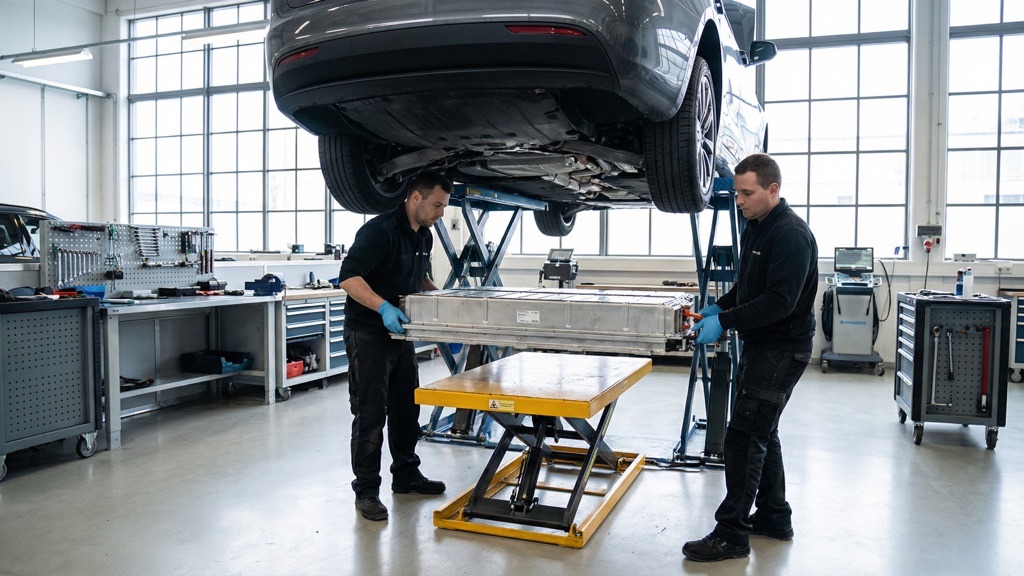
4680 packs cost more to replace despite a smaller nominal capacity due to structural integration and limited module-level serviceability.
SECTION 6 — Tesla 4680 Structural Battery After an Accident
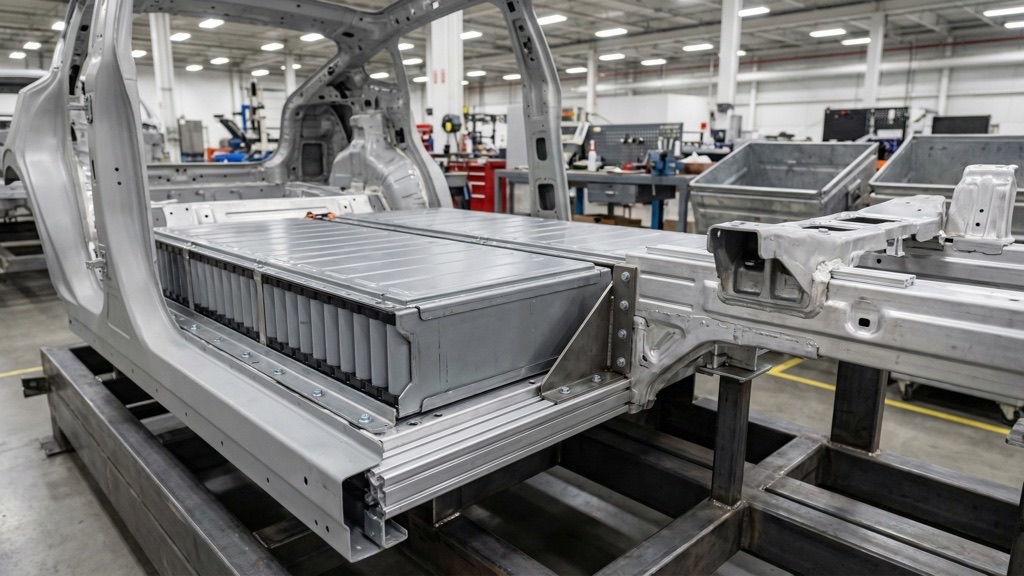
The 4680 structural pack changes repair economics.
Key differences:
- Battery bonded to the upper body structure
- Integrated shear plate design
- Reduced removable cross-members
- Greater torsional rigidity (+10%)
After side or underbody impact:
- Separation is more complex
- Structural certification required
- Labor time increases 20–40%
Result:
Even moderate structural deformation increases total-loss probability.
SECTION 7 — Insurance Economics: EV vs ICE
| Scenario | ICE Sedan | Tesla Model 3 |
|---|---|---|
| Engine Replacement | $4k–$8k | N/A |
| Battery Replacement | N/A | $15k–$18k |
| Structural Floor Damage | Repairable | Often total loss |
| 60% Value Threshold | Rarely exceeded | Frequently exceeded |
EVs cross total-loss thresholds faster because battery cost dominates claim value.
SECTION 8 — Hidden Long-Term Risks After Repair
A repaired Tesla may pass all diagnostics — and still develop:
- Reduced Supercharging peak (250 kW → 140 kW)
- Uneven degradation across modules
- Intermittent isolation warnings
- Thermal imbalance during winter
Why?
Deformed cooling plates can:
- Alter heat dissipation patterns
- Increase localized resistance
- Accelerate cell aging
This is not an immediate failure.
It is an accelerated aging risk.
SECTION 9 — Battery Damage Severity Matrix
| Damage Type | Fire Risk | Long-Term Reliability Risk | Insurance Risk |
|---|---|---|---|
| Cosmetic | Very Low | None | Low |
| Enclosure Dent <3mm | Low | Moderate | Medium |
| Enclosure Dent >5mm | Low–Medium | High | High |
| Cooling Breach | Medium | High | Very High |
| Flood Exposure | High | Extreme | Certain Total Loss |
Important:
Fire risk is often lower than financial risk.
The real danger is economic.
SECTION 10 — Salvage and Import Market Reality
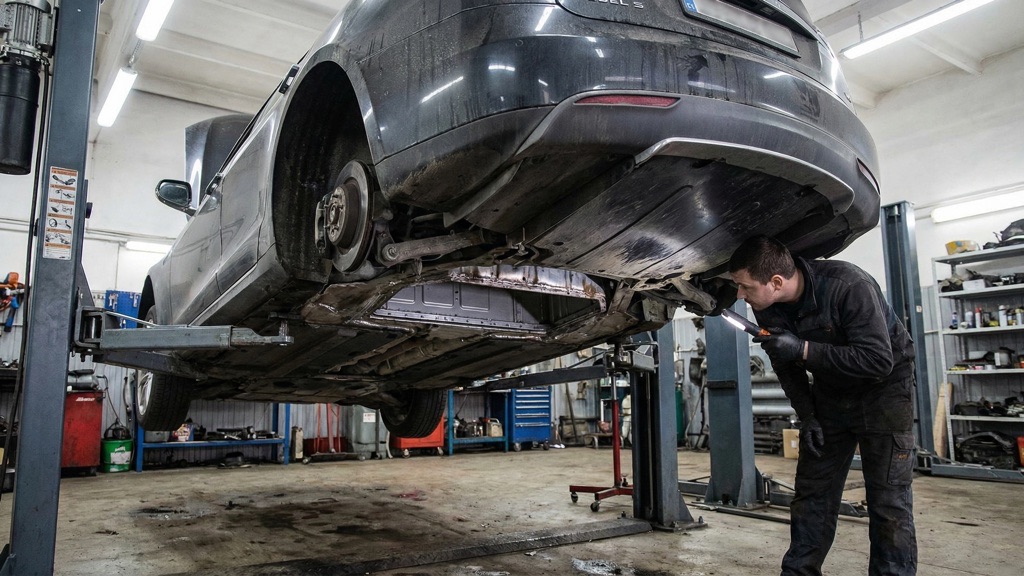
Many damaged Teslas enter export markets.
Common issues in imported salvage vehicles:
- Undisclosed enclosure deformation
- Repaired pack shielding
- Missing insulation test documentation
- Repaired coolant loops without pressure certification
Red flag checklist:
- No HV isolation report
- Underbody repainting
- Non-OEM battery bolts
- Aftermarket sealing compounds
SECTION 11 — Expert Insight
From an engineering standpoint, Tesla optimized its architecture for crash safety and production efficiency — not modular post-crash repair.
The structural battery strategy improves:
- Rigidity
- Manufacturing cost
- Weight distribution
But shifts financial risk to post-accident scenarios.
The key diagnostic question is not:
“Does the car drive?”
It is:
“Is the battery enclosure geometrically intact and electrically isolated within specification?”
That distinction determines whether you own a discounted EV or a deferred liability.
Final Verdict: Is a Tesla Battery After an Accident a Dealbreaker in 2026?
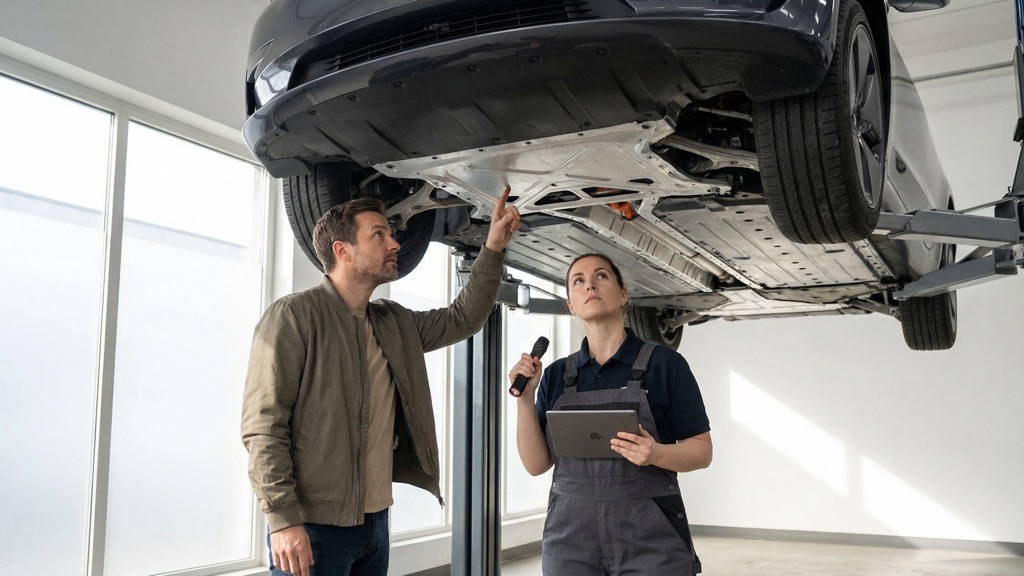
A Tesla battery after an accident is not automatically a dealbreaker — but it is the most financially decisive variable in any damaged EV.
Cosmetic damage: manageable.
Minor underbody scrape: inspect carefully.
Structural deformation: high risk.
Flood exposure: walk away.
In 2026, the battery is not just a component.
It is the vehicle’s structural backbone, energy source, and resale foundation.
Treat it accordingly.
FAQ
Is a Tesla battery after an accident safe?
If insulation resistance and structural integrity meet the specification, yes. If enclosure deformation exists, risk increases.
How much does a Tesla battery cost after a crash?
Between $12,000 and $25,000, depending on model and pack type.
Is the 4680 structural battery more expensive to repair?
Yes. Structural integration increases labor complexity and total-loss probability.
Can Tesla repair modules instead of replacing the entire pack?
Rarely. Most accident-related damage results in full pack replacement.
Should I buy a Tesla with an accident history?
Only with documented HV inspection and a significant price reduction.