
TL;DR (For Busy Riders)
- Electric wins for daily commuting, low running costs,smooth city ridingiding.
- Gas wins for long-distance freedom, instant refueling, and mechanical engagement.
- If 80% of your rides are under you can charge at homergelectric makes more financial sensencial sense in 2026.
- If you tour often or don’t have reliable charging, gas is still the safer bet.
Introduction
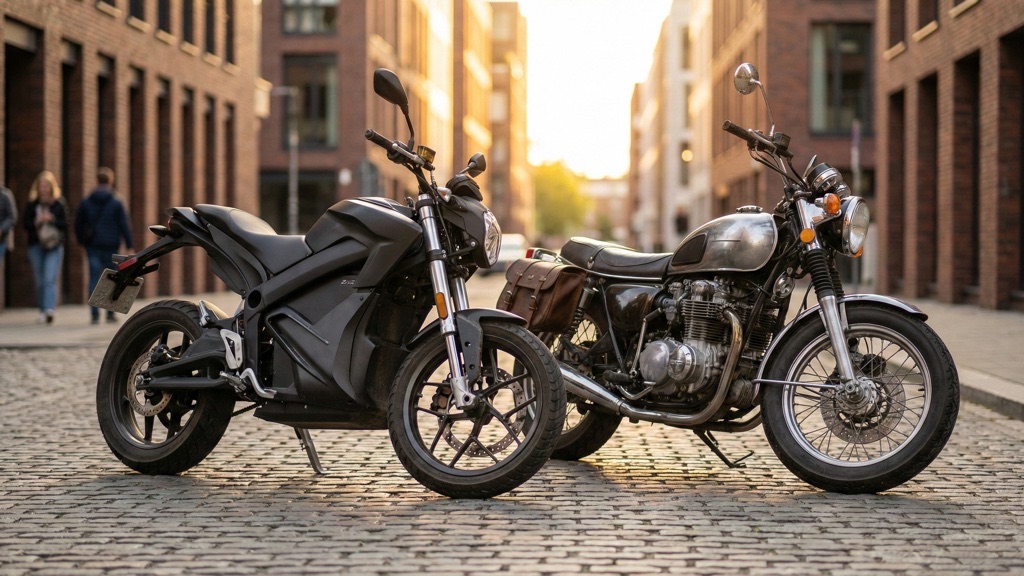
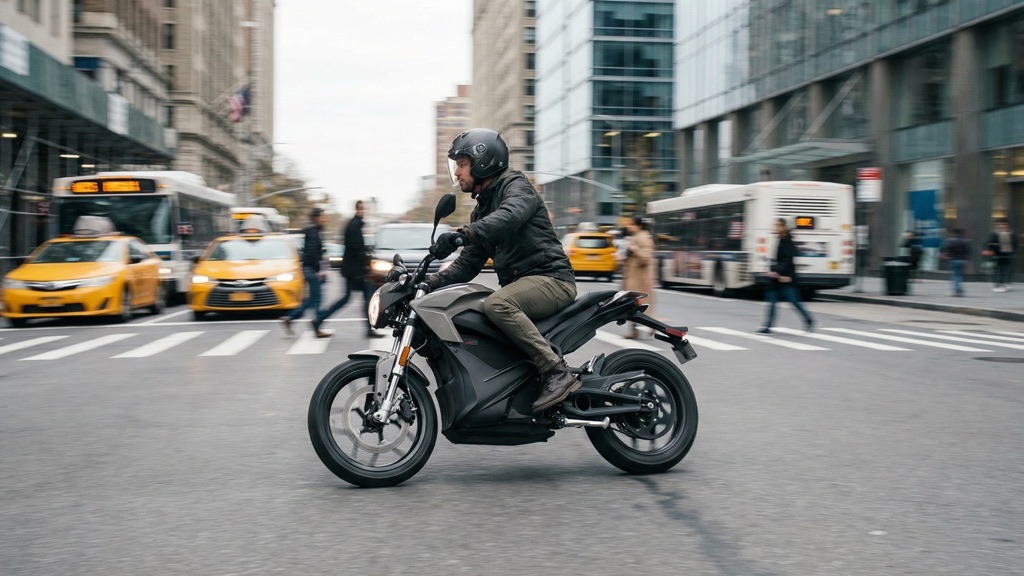
If you’re seriously comparing an electric vs gas motorcycle, you’re not choosing a trend.
You’re choosing:
- Your dailymaintenance scheduleess level
- Your maintenance schedule
- Your riding experience for the next 5+ years
This isn’t a spec-sheet comparison. This is about ownership reality.
⚡ Quick Ownership Snapshot
| Category | Electric Motorcycle | Gas Motorcycle |
|---|---|---|
| Power delivery | Instant torque, no gears | Builds with RPM, gear shifts |
| Noise | Near silent | Engine sound + vibration |
| Maintenance | Very low | Ongoing service |
| Refueling time | 1–8 hrs | 2–5 minutes |
| Running cost per km | $0.02–0.04 | $0.12–0.18 |
| Long-distance touring | Limited | Excellent |
| Urban commuting | Excellent | Good |
🏍 Riding Experience: What It Actually Feels Like
Electric Motorcycle Feel
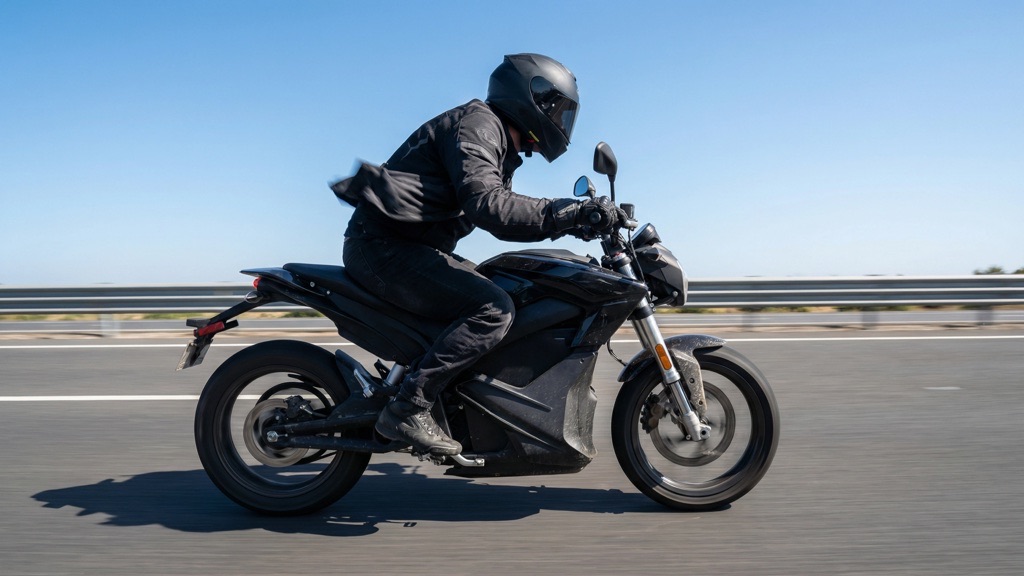
Twist the throttle.
You get full torque immediately.
No clutch.
No shifting.
No vibration.
No engine heat.
In traffic, electric feels almost unfair. You glide through gaps effortlessly. Low-speed control is smooth. Throttle response is razor sharp.
On the highway?
Sustained 120 km/h drains battery quickly. Wind noise replaces engine character. Some riders miss the drama.
Electric feels:
- Clean
- Controlled
- Technological
Gas Motorcycle Feel
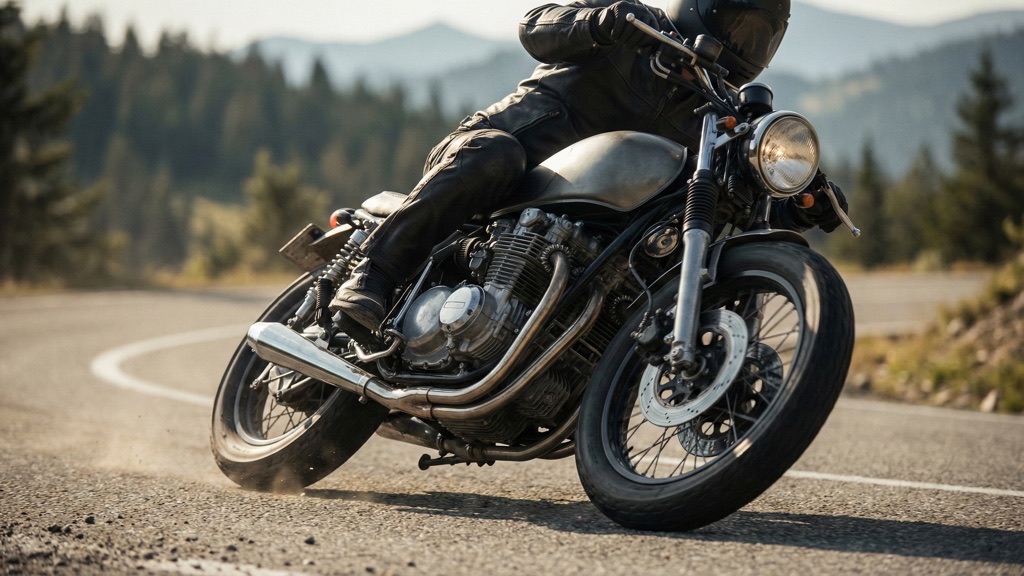
Gas bikes talk to you.
You feel:
 Reviews
Tesla Cybertruck Review 2026: Real-World Range, Charging & Verdict
TL;DR ✅ Buy Tesla Cybertruck if you want: Supercar-level acceleration in a full-size electric pickup Stable, predictable, fast-charging via the...
 Reviews
Maeving RM1 Review (2024): The Calm Urban Upgrade — Smart Switch or Stylish Mistake?
The Maeving RM1 is not built to impress your riding buddies. It’s built to quietly replace your 125cc commuter —...
 Reviews
Electric Motorcycle Buying Guide 2026: Real-World Range, Charging & Rider Verdict
Switching to electric in 2026 is no longer experimental. But it’s still not for everyone. I’ve ridden multiple electric models...
- Engine pulses
- RPM building
- Gear engagement
- Engine braking
On twisty roads, a middleweight like the Yamaha MT-07 feels alive. Every shift is part of the rhythm.
It’s mechanical.
It’s engaging.
It demands more from you — but gives more back emotionally.
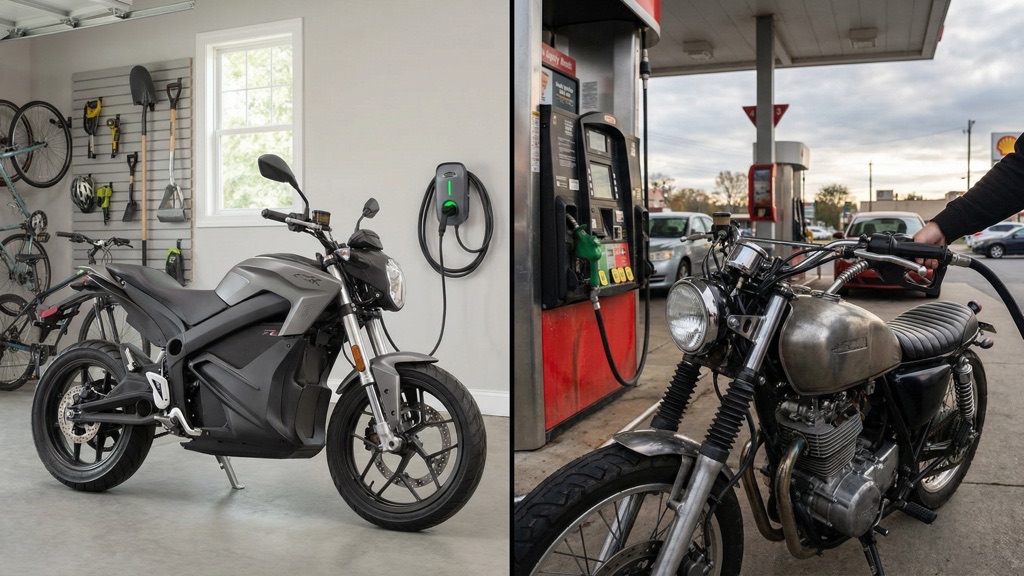
💰 5-Year Ownership Cost (10,000 km/year)
Let’s calculate realistically.
Assumptions:
- Gas price: $1.50/L
- Average fuel consumption: 5L/100km
- Electricity: $0.15/kWh
- Electric efficiency: ~6 kWh/100km
Cost Per Kilometer
| Type | Cost per 100 km | Cost per 1 km |
|---|---|---|
| Electric | ~$0.90 | $0.009 |
| Gas | ~$7.50 | $0.075 |
Electric is roughly 8x cheaper per km in energy cost.
5-Year Running Cost (50,000 km total)
| Cost Category | Electric | Gas |
|---|---|---|
| Energy | ~$450 | ~$3,750 |
| Oil & filters | $0 | ~$1,000 |
| Valve service | $0 | ~$1,200 |
| Chain/sprockets | ~$500 | ~$700 |
| Misc. service | ~$300 | ~$1,000 |
| Total | ~$1,250–1,800 | ~$7,000–8,000 |
Electric wins hard financially — if you ride regularly.
🔋 Range & Charging Reality
| Scenario | Electric | Gas |
|---|---|---|
| City riding | 120–200 km | 250–350 km |
| Aggressive riding | 70–120 km | 200–300 km |
| Cold weather impact | -15% to -30% | Minor |
| Refill time | Hours | Minutes |
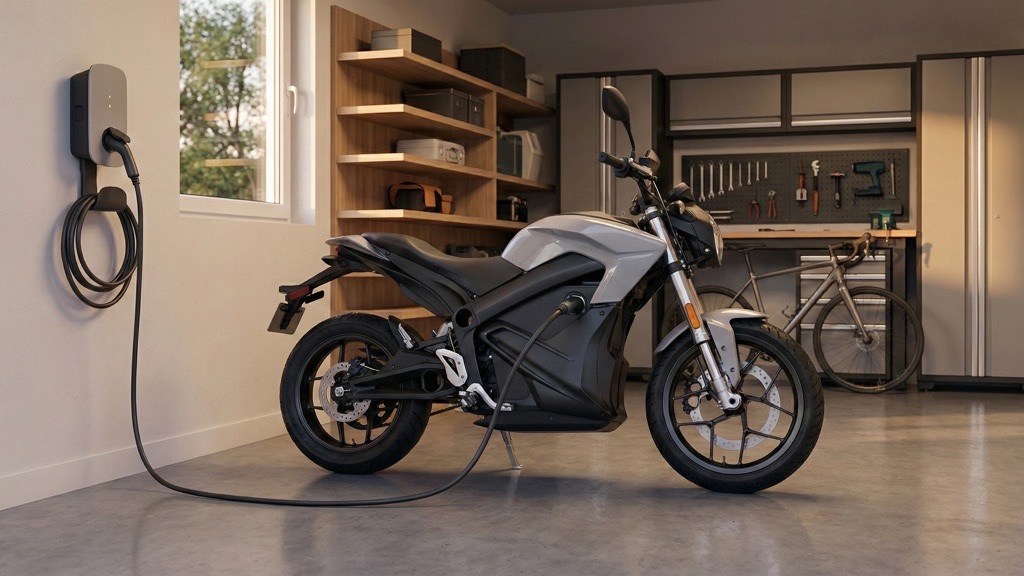
Charging Reality
Home charging = easy ownership.
Apartment without an outlet = complicated life.
Public chargers work — but planning is required.
Gas still dominates spontaneity.
🧠 Ownership Stress Level
| Factor | Electric | Gas |
|---|---|---|
| Maintenance stress | Very low | Ongoing |
| Trip planning stress | Moderate | Very low |
| Daily convenience | High | Medium |
| Unexpected issues | Software/battery | Mechanical wear |
After 2 years:
Electric owners usually say:
“I just ride. I don’t think about it.”
Gas owners often say:
“I love it… but service never ends.”
👍 Electric Pros & 👎 Cons
👍
- Extremely low operating cost
- Instant acceleration
- Minimal maintenance
- Quiet urban commuting
- No heat in traffic
👎
- Charging time
- Range anxiety on long trips
- Cold weather range drop
- Higher upfront price
👍 Gas Pros & 👎 Cons
👍
- Fast refueling
- Long touring range
- Emotional engine character
- Lower entry price
👎
- Fuel cost volatility
- Regular service expenses
- Engine heat in traffic
- More mechanical wear
⚔ Real Model Comparison Example
| Model | Power | Range | Weight | Price | Best For |
|---|---|---|---|---|---|
| Zero SR/F | 82 kW | ~160 km real | 223 kg | ~$20,000 | Urban + weekend |
| Yamaha MT-07 | 55 kW | 300+ km | 184 kg | ~$8,000 | All-round |
| Kawasaki Versys 650 | 49 kW | 350 km | 219 kg | ~$9,000 | Touring |
🔹 SHORT VERDICT
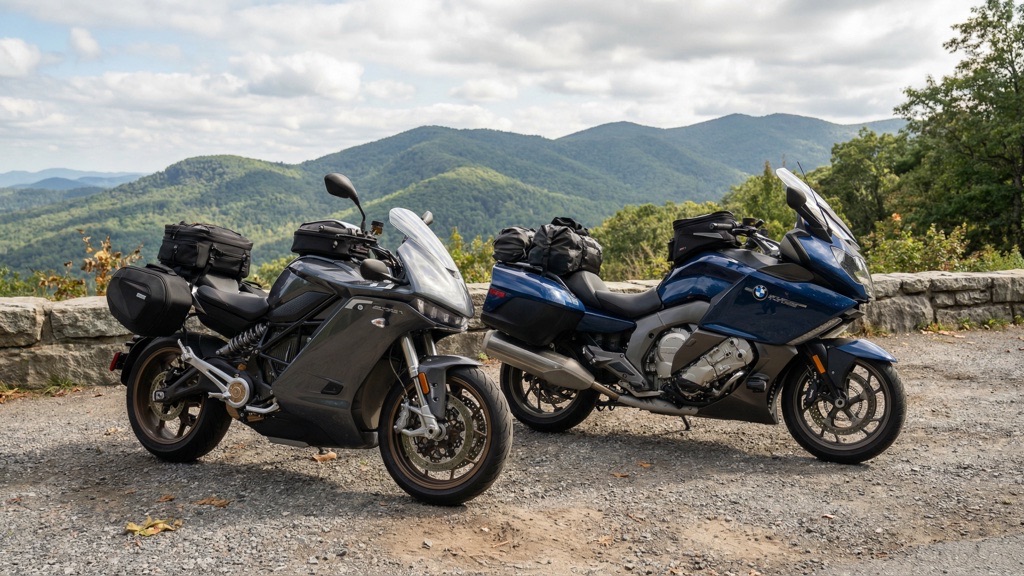
For daily riders with home charging, electric motorcycles make more financial and practical sense in 2026.
For touring riders or apartment dwellers without charging access, gas remains the safer choice.
🔹 DETAILED RIDER VERDICT
Electric ownership feels modern, simple, and financially smart.
Gas ownership feels emotional, mechanical, and unrestricted.
If your riding is:
- 80% city
- Under 150 km per day
- Routine commuting
Electric will likely make you happier long-term.
If your riding is:
- 300 km weekend tours
- Spontaneous road trips
- Emotion-driven
Gas still delivers more freedom.
The real answer isn’t which is better.
It’s what fits your actual riding life.
❓ FAQ (Schema-Ready)
Is an electric motorcycle cheaper than a gas motorcycle long term?
Yes, significantly cheaper in energy and maintenance over 5 years.
How long do electric motorcycle batteries last?
Typically 8–10 years before major degradation.
Can you tour on an electric motorcycle?
Yes, but charging planning is required, and the range is limited compared to gas.
What happens if an electric motorcycle runs out of charge?
You’ll need roadside assistance or a tow to a charging point.