China’s electric vehicle market continues to evolve at an extraordinary pace, and new models from Zeekr and NIO clearly show how intense competition has become in the premium EV segment.
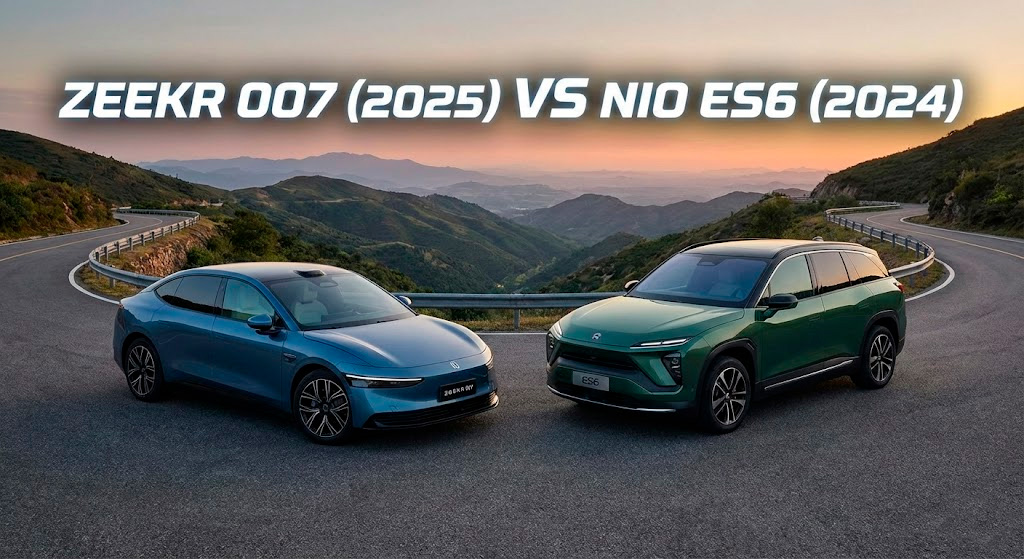
In 2025, Zeekr introduced the Zeekr 007, while a year earlier, Nio launched the refreshed Nio ES6. Although both target demanding buyers, they take very different approaches to performance, comfort, and everyday usability.
Design Philosophy and Interior Experience
The Zeekr 007 adopts a sleek, aerodynamic design with strong emphasis on minimalism and efficiency. Its coupe-like silhouette and clean surfaces highlight its technology-first positioning.
Inside, the Zeekr 007 features a large panoramic display that integrates infotainment, vehicle settings, and driver assistance controls into a single digital interface. The cabin focuses on simplicity and high-tech ambiance.
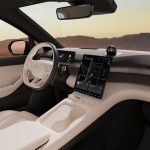
The Nio ES6, by contrast, remains a classic mid-size SUV, prioritizing space and comfort. Its interior is designed for family use, offering generous rear-seat room and a more traditional layout. A standout feature is a dedicated passenger display and Nio’s signature NOMI voice assistant, which adds a personalized and interactive element to the daily driving experience.
Battery Options and Driving Range
Range is one of the key differentiators between the two models.
-
Zeekr 007 (2025):
-
Battery capacity up to 100 kWh
 Reviews
Best Long-Range EVs Under $40k (2026): Real-World Highway Range, Charging Math & 5-Year Cost Verdict
The sub-$40,000 EV segment is no longer about compromise. In 2026, you can realistically expect 260–300 miles of real highway...
 Reviews
EV Ownership Costs Explained (2026): Real Total Cost vs Gas — With Actual 5-Year Math
Most buyers still ask the wrong question: “How much does it cost to charge an EV?” The real question is:...
 Reviews
Volvo EX90 Review (2025): Real-World Range, Charging Limits & 5-Year Ownership Analysis
The EX90 is Volvo’s technological reset — a new EV-only platform, centralized Nvidia-based computing, Google-native infotainment, and LiDAR integrated into...
-
Driving range of over 800 km (CLTC cycle)
-
Focus on long-distance capability and efficiency
-


-
Nio ES6 (2024):
-
Battery options from 75 kWh to 100 kWh
-
Range between 500 and 700 km, depending on configuration
-

The ES6’s defining advantage is Nio’s battery swap technology, which allows drivers to replace a depleted battery with a fully charged one in just a few minutes at dedicated swap stations — a unique solution that eliminates traditional charging wait times.
Performance and Driving Dynamics
Performance further highlights the philosophical divide between the two vehicles.
-
Zeekr 007 accelerates from 0–100 km/h in under 4 seconds, thanks to its powerful electric drivetrain. This positions it closer to performance-oriented EVs.
-
The Nio ES6 takes a more balanced approach, reaching 100 km/h in around 5 seconds, which is still quick enough for both urban and highway driving, but is clearly tuned for comfort rather than outright speed.
Technology and Driver Assistance
Both vehicles are well-equipped for modern city environments:
-
Over-the-air (OTA) software updates
-
Advanced driver assistance systems
-
Smart connectivity features
Zeekr places a strong emphasis on autonomous driving development, using a combination of LiDAR sensors and cameras for enhanced perception and future-ready automation.
Nio focuses more on the ownership experience, combining driver assistance with its ecosystem of charging and battery swap infrastructure.
Two Different Visions of the Future
Ultimately, the Zeekr 007 and Nio ES6 represent two distinct strategies in next-generation electric crossovers:
-
Zeekr 007: prioritizes cutting-edge technology, long driving range, and high performance
-
Nio ES6: emphasizes practicality, comfort, and service-based solutions that simplify daily ownership
Both approaches appeal to different types of premium EV buyers, highlighting the diversity and maturity of China’s rapidly advancing electric vehicle market.