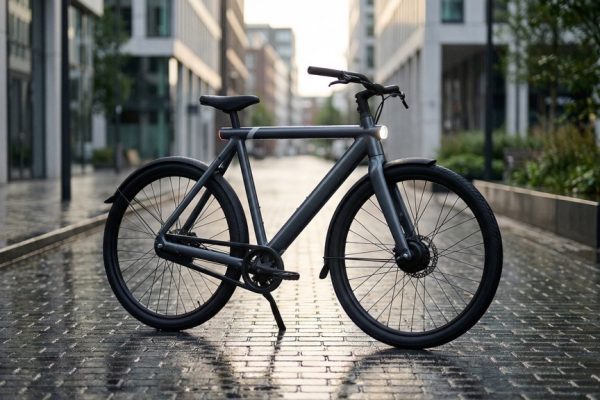

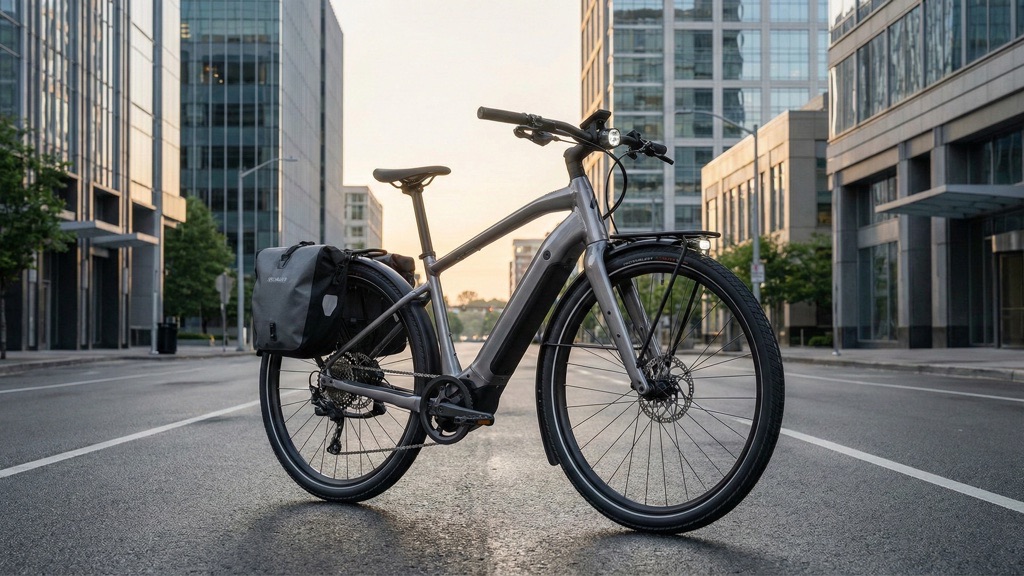
Buying a premium commuter e-bike in 2026 is confusing.
Spec sheets look nearly identical. Motors claim similar wattage. Battery sizes overlap. Prices range from $2,000 to over $5,000 — often without a clear explanation why.
The difference only becomes obvious when you ride 20 miles in traffic, climb a long hill at 25 mph, and repeat that four days a week.
This is a real-world, ownership-focused review of the Specialized Turbo Vado, built by Specialized Bicycle Components. No hype. Just what matters if you’re considering spending serious money on daily transportation.
TL;DR
Best for: 10–30 mile daily commuters replacing car trips
Motor: Custom-tuned Brose mid-drive (up to 90 Nm)
Battery options: 530Wh / 710Wh
Realistic range: 35–75 miles, depending on assist
Buy if: You want refined, natural power and long-term reliability
Avoid if: Budget under $2,500 or you need true cargo-bike capacity
Table of Contents
- What the Turbo Vado Is (And Isn’t)
- Specialized Turbo Vado 2026 Review: Key Specs
- Real-World Ride Test
- Motor Tuning & Why It Feels Different
- Battery & Honest Range Data
- Turbo Vado vs Trek Allant+ (Direct Comparison)
- What Most Reviews Get Wrong
- Long-Term Ownership & Costs
- Is the Turbo Vado Overpriced?
- Pros & Cons
- Who Should / Shouldn’t Buy It
- FAQ
- Final Expert Verdict
What the Turbo Vado Is

The Turbo Vado is a premium commuter platform.
It’s built for:
-
Daily commuting
-
Urban speed (Class 3 in the US)
-
Fitness-focused riding
-
Replacing short car trips
It is not:
-
A mountain eMTB
-
A heavy cargo hauler
-
A budget direct-to-consumer bike
It sits in the same premium category as Trek Allant+ and Gazelle Ultimate
Specialized Turbo Vado 2026 Review: Key Specs
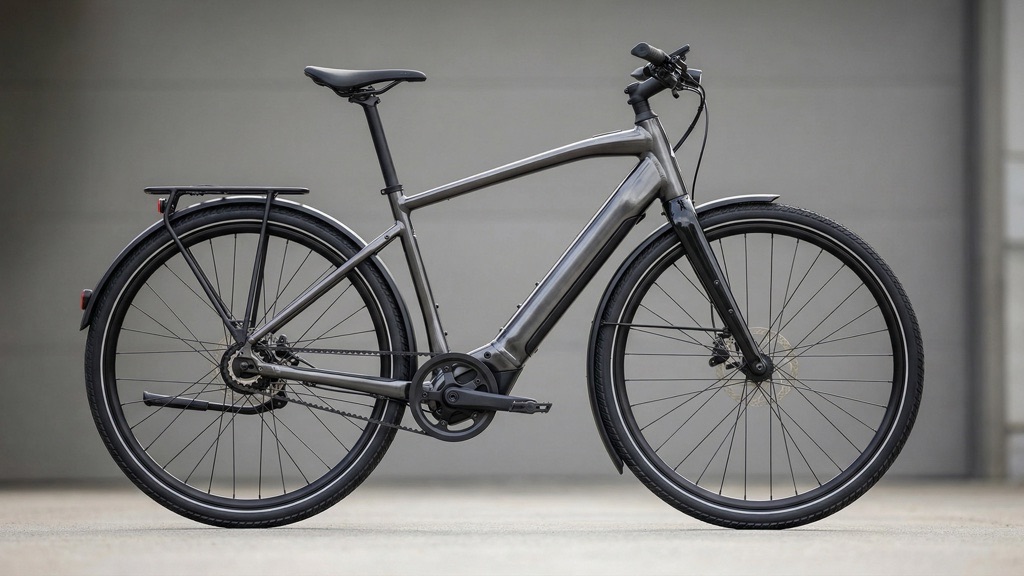
| Feature | Vado 3.0 | Vado 4.0 | Vado 5.0 |
|---|---|---|---|
| Battery | 530Wh | 710Wh | 710Wh |
| Torque | ~70 Nm | ~80 Nm | 90 Nm |
| Class | 3 (US) | 3 (US) | 3 (US) |
| Weight | ~50–55 lbs | ~52 lbs | ~53 lbs |
| Price (MSRP) | ~$3,250 | ~$4,000 | ~$5,000+ |
The 4.0 model is the market sweet spot for most riders.
Real-World Ride Test
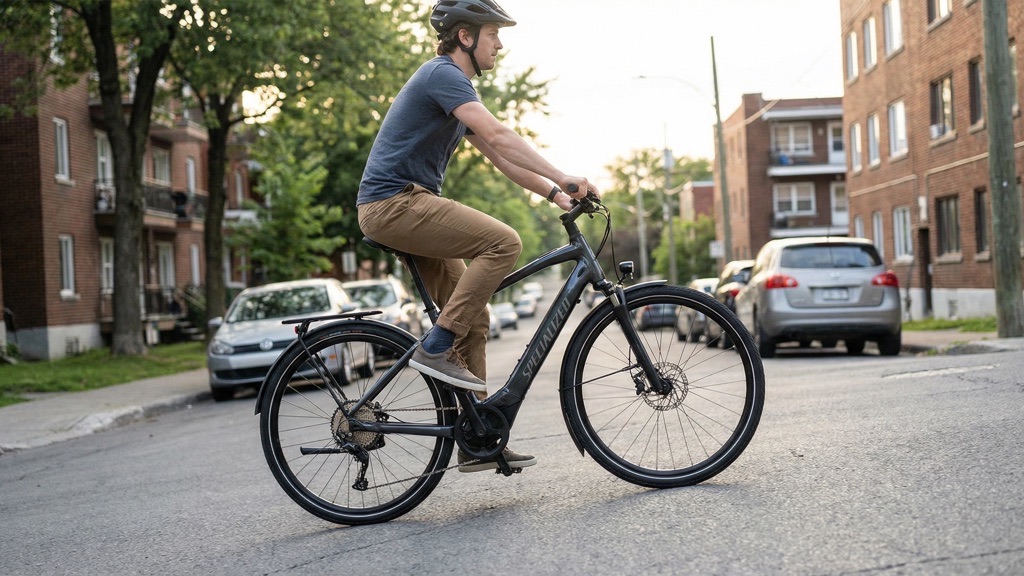
Turbo Vado Hill Climb Performance
Let’s move beyond specs.
Scenario: 22-Mile Mixed Commute
- 40% Sport mode
- 60% Eco mode
- Moderate hills (6–8%)
- 180 lb rider
- Stop-and-go traffic
Result: 48% battery remaining on 710Wh model.
 Aircraft
Rictor X4 Review (2026): Real Flying Motorcycle or Futuristic Toy?
TL;DR ✅ Buy Rictor X4 if you want: real flying tech, maximum wow-factor, early access to personal air mobility ❌...
 Reviews
Best Electric Cars to Buy in 2026: Top 10 EVs Ranked by Range, Price & Charging
TL;DR — Best Electric Cars to Buy in 2026 🥇 Best overall EV of 2026: BYD Seal — unbeatable value,...
 Reviews
Tesla Model S vs Porsche Taycan: Ultimate 2026 Comparison
TL;DR The Tesla Model S vs Porsche Taycan comparison in 2026 is about ownership philosophy, not just speed. Choose Tesla...
That translates to roughly 40–45 miles in similar conditions.
Stoplight Acceleration
No jerk. No surge.
The torque sensor scales naturally with pedal pressure.
It feels like your legs are stronger — not like a scooter kicked in.
8–10% Climb
In Sport mode:
- Cadence stays comfortable
- Motor does not feel strained
- No overheating behavior
28 mph Stability
This matters.
At Class 3 speeds, geometry determines confidence.
The Vado feels planted and predictable — not twitchy.
Motor Tuning & Why It Feels Different
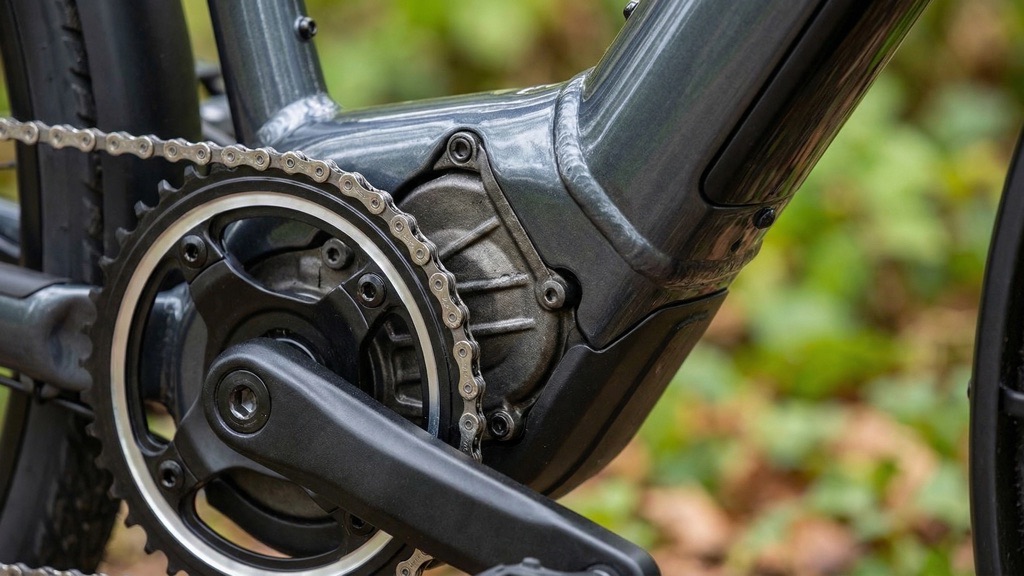
Turbo Vado Mid-Drive Motor Detail
Many commuters use hub motors.
The Turbo Vado uses a mid-drive system custom-tuned by Specialized.
Mid-Drive vs Hub (Simple Reality)
| Feature | Turbo Vado (Mid) | Typical Hub |
|---|---|---|
| Uses gears | Yes | No |
| Hill efficiency | High | Moderate |
| Weight balance | Centered | Rear-heavy |
| Ride feel | Natural | Motorized |
Expert Insight
Watts don’t define performance.
Torque sensor calibration does.
The Vado’s assist ramps proportionally to effort.
There is no cadence-based “on/off” surge common in cheaper systems.
That refinement is why it costs more.
Battery & Honest Range Data
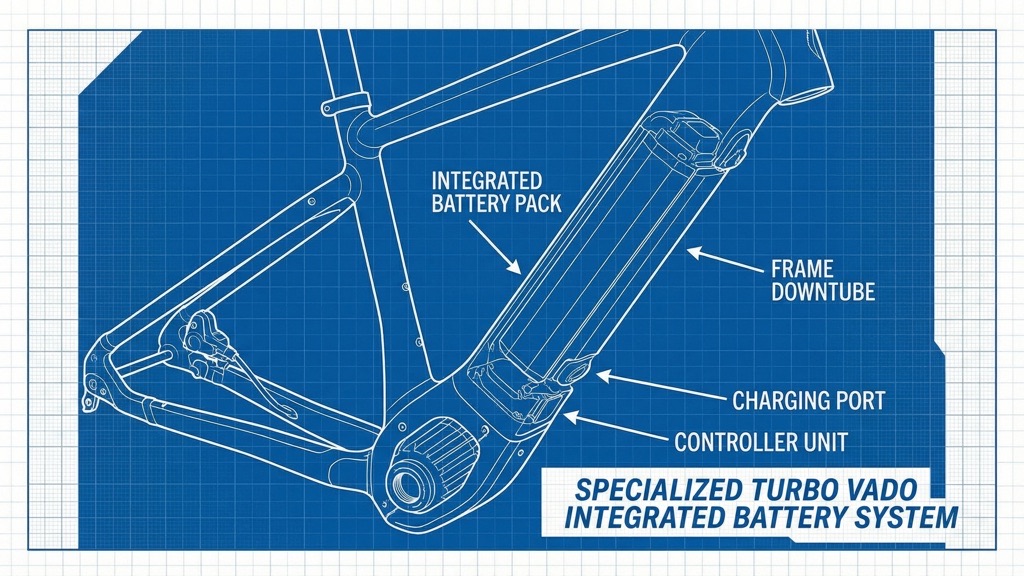
Turbo Vado Integrated Battery SystemBattery options:
- 530Wh
- 710Wh
Realistic Urban Range
| Battery | Eco | Mixed | Sport |
|---|---|---|---|
| 530Wh | 50–70 mi | 35–50 mi | 25–35 mi |
| 710Wh | 65–95 mi | 45–70 mi | 30–45 mi |
These assume:
- 170–190 lb rider
- Urban traffic
- Moderate wind
- Normal tire pressure
Marketing maximum range numbers are rarely real-world numbers.
Turbo Vado vs Trek Allant+
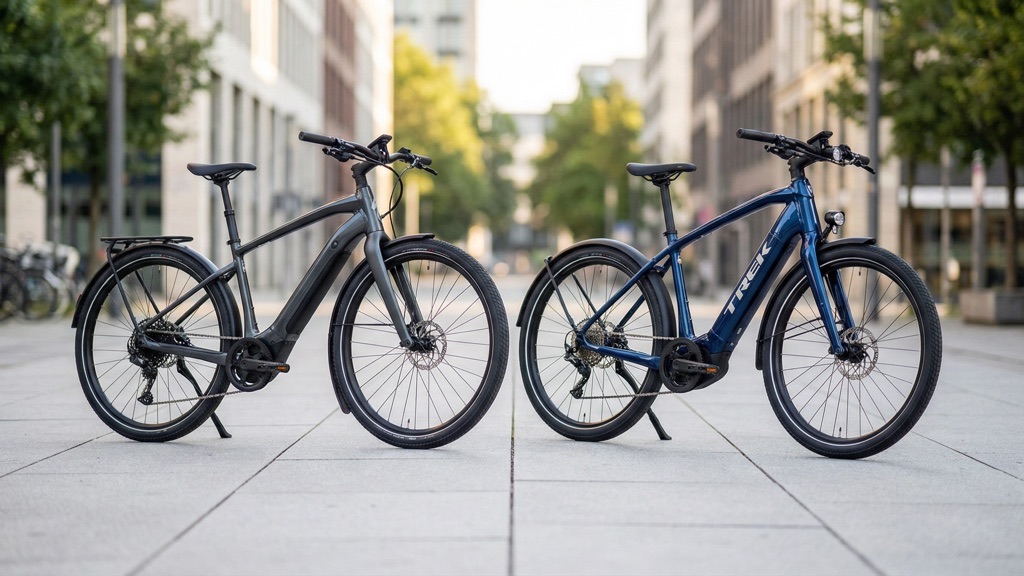
Turbo Vado vs Trek Allant+ Comparison
The most direct competitor is Trek Bicycle Corporation’s Trek Allant+.
Side-by-Side Overview
| Category | Turbo Vado | Trek Allant+ |
|---|---|---|
| Motor Feel | Extremely smooth | Slightly punchier |
| Battery | 530–710Wh | 500–750Wh |
| Ride Stability | Very planted | Slightly sportier |
| Weight | ~52 lbs | Similar |
| Price | $3.2–5k | $3.5–5k |
Practical Difference
-
- Vado feels more refined and subtle.
-
- Allant+ feels slightly more aggressive in assist response.
Neither is objectively better. It depends on rider preference.
What Most Reviews Get Wrong
1. They Focus on Watts
250W vs 500W is meaningless without torque and tuning context.
2. They Ignore Braking at 28 mph
At Class 3 speeds, braking consistency matters more than top speed.
Hydraulic discs here feel predictable and progressive.
3. They Ignore Chain Wear
Mid-drives stress chains more than hub systems.
Expect faster drivetrain wear.
Long-Term Ownership & Costs
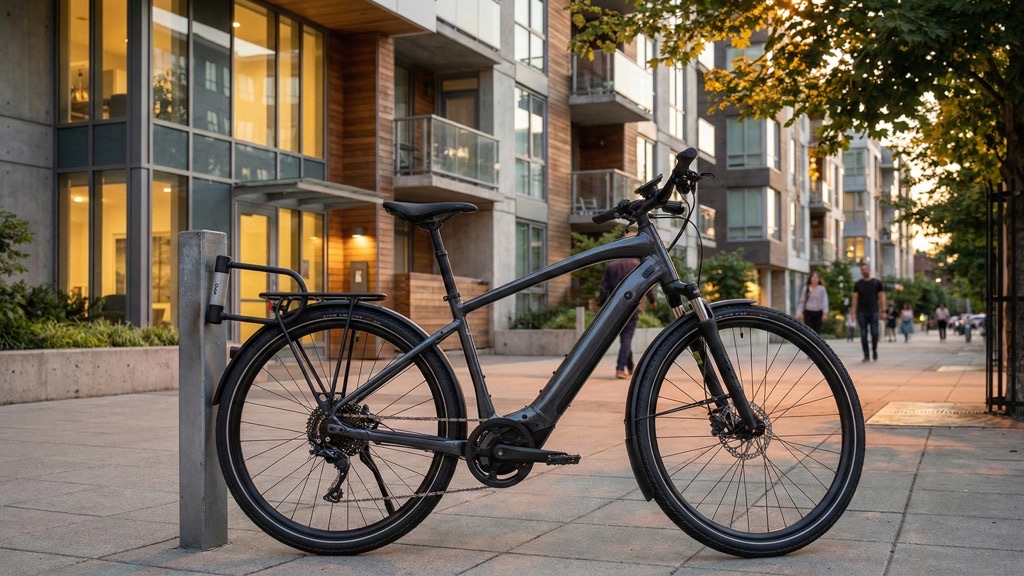
Turbo Vado Daily Ownership Scenario
Battery Lifespan
-
- 600–1,000 cycles typical
-
- 3–5 years before noticeable degradation
Replacement cost: significant (premium integrated system).
Maintenance Reality
-
- Chain and cassette wear faster than hub bikes
-
- Dealer diagnostics recommended
-
- Firmware updates may require a service visit
Resale Value
Premium commuter bikes from established brands retain value better than most direct-to-consumer options.
Is the Turbo Vado Overpriced?
This is the right question.
At ~$4,000, you’re paying for:
-
- Motor tuning refinement
-
- Frame integration
-
- Stability at 28 mph
-
- Dealer support network
-
- Long-term parts availability
A $2,000 commuter can move you.
But it will not feel the same after 20 miles in traffic, five days a week.
For occasional riders, yes — it’s overpriced.
For daily commuters replacing car trips, the cost often makes sense.
Pros & Cons
Pros
-
- Extremely smooth assist calibration
-
- Strong hill climbing
-
- Stable at high speed
-
- Integrated commuter setup
-
- High build quality
Cons
-
- Premium price
-
- Heavy for apartment carry
-
- Faster drivetrain wear than hub bikes
-
- Battery replacement expensive
Who Should Buy It?
Buy if:
-
- You commute 4–6 days per week
-
- Your route includes hills
-
- You value ride feel over raw specs
-
- You want long-term brand support
Avoid if:
-
- You ride once per week
-
- Budget is tight
-
- You need heavy cargo hauling
-
- You want ultra-lightweight
Final Expert Verdict

Turbo Vado High-Speed Stability
The Specialized Turbo Vado is not the cheapest commuter.
It’s one of the most refined.
After extended real-world use, what stands out isn’t power — it’s smoothness. Stability. Predictability.
If you want a commuter that feels like a high-quality bicycle — just stronger — this remains one of the best choices in 2026.
If you’re price-sensitive or ride casually, there are cheaper options.
If you ride daily and care about how the bike feels after mile 15, the Turbo Vado justifies its position.
FAQ
Is the Specialized Turbo Vado good for long commutes?
Yes. With the 710Wh battery, 45–70 miles in mixed riding is realistic.
Is it better than a hub-motor commuter?
For a natural ride feel and hill efficiency, yes.
How long does the battery last?
Typically 3–5 years, depending on usage and charging habits.
Can you ride it without assist?
Yes, but at 50+ lb,s it’s optimized for assisted riding.