

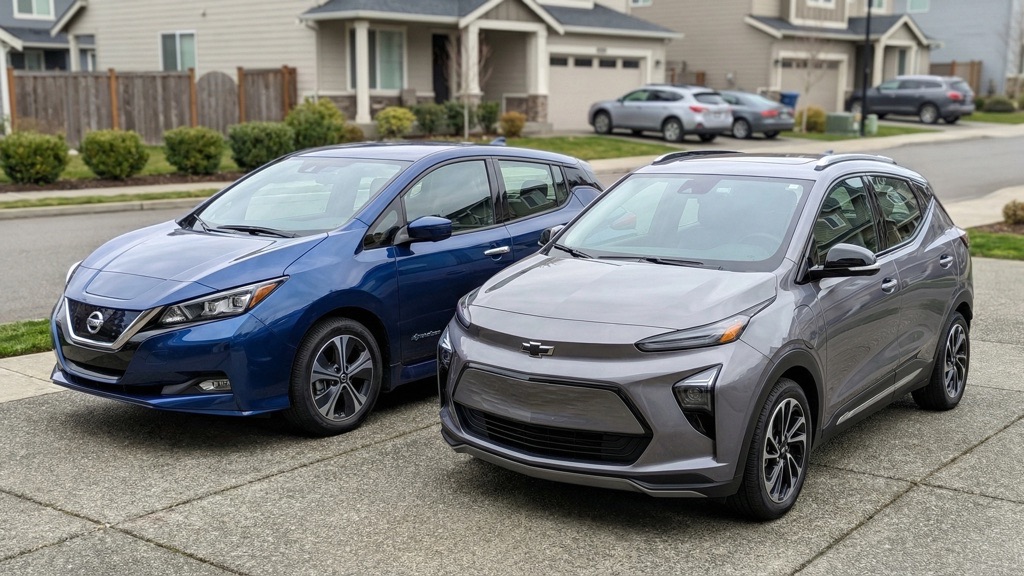
If you’re comparing the Nissan Leaf and the Chevrolet Bolt EUV, you’re not shopping emotionally.
You’re doing matBoth can be found for under $16,000 in 2026n 2026. Both promise 200+ miles of range. Both look like incredible EV bargains.
But here’s the hard truth:
One of these cars is aging out of the charging ecosystem.
The other survived a recall — and ironically became the smarter used buy because of it.
If they cost the same, there is only one rational choice.
Let’s break it down properly — including a real 500-mile road-trip simulation.
⚡ QUICK VERDICT
Best for:
Home-charging commuters who want the lowest total ownership cost
Not recommended for:
Drivers relying heavily on public DC fast charging
Real-world range (expert estimate):
- Leaf SV Plus: 210–230 miles
- Bolt EUV: 230–250 miles
Biggest advantage:
Bolt: Liquid cooling + CCS future-proofing
Leaf: Ride comfort & cabin quietness
Main drawback:
Leaf: CHAdeMO charging is disappearing
Bolt: Slow charging curve vs modern EVs
Overall rating:
- Leaf: 7.6 / 10
- Bolt: 8.8 / 10
📊 Key Specifications
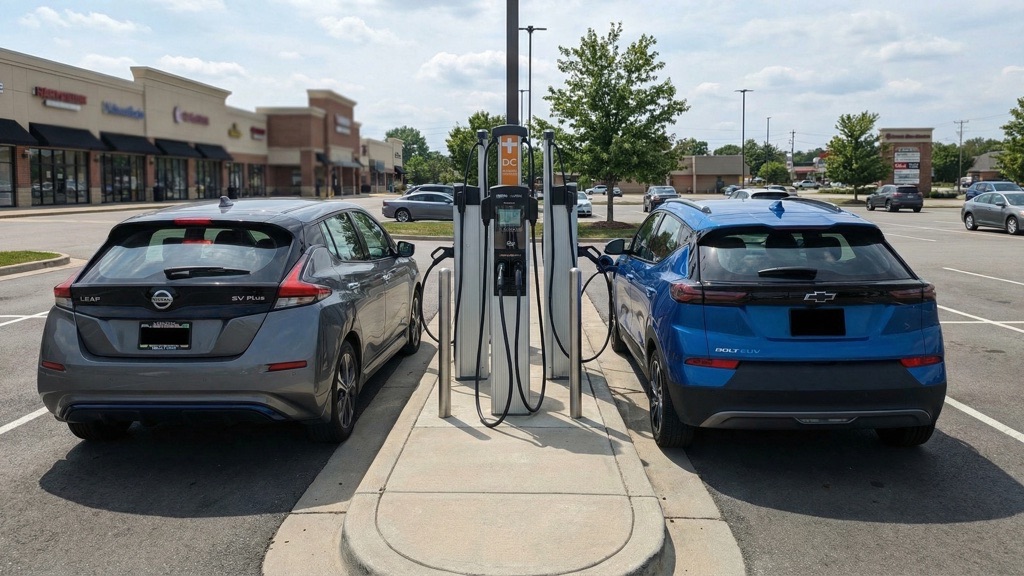
| Specification | Nissan Leaf SV Plus | Chevrolet Bolt EUV |
|---|---|---|
| Battery capacity | 60 kWh | 65 kWh |
| Real-world range | 210–230 mi | 230–250 mi |
| EPA range | 212 mi | 247 mi |
| DC fast charging | ~50 kW (CHAdeMO) | ~55 kW (CCS) |
| 10–80% DC time | 45–60 min* | 45–50 min |
| Drivetrain | FWD | FWD |
| Used price (2026) | $13–15k | $14–16k |
*Leaf may throttle heavily in hot climates after repeated fast charges.
On paper? Similar.
In real-world usability? Increasingly different.
🚗 Real-World Driving: City vs Highway
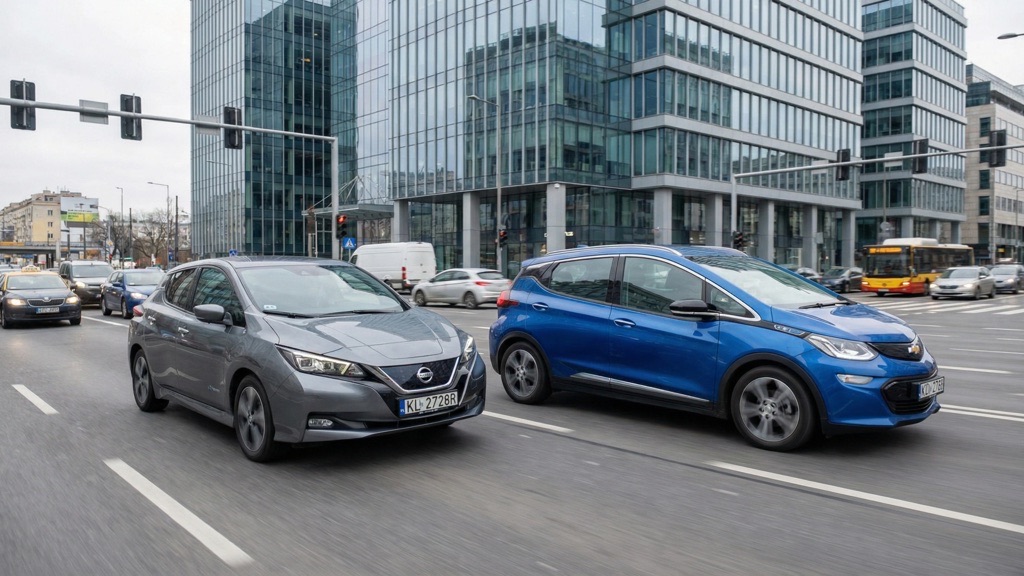
City Driving
Both are excellent:
- Instant torque
- Strong regen braking
- Easy maneuverability
- Low operating cost
The Bolt feels quicker and more alert.
The Leaf feels smoother and more comfortable.
If 95% of your driving is under 40 miles per day, both are satisfying.
Highway Reality
This is where ownership diverges.
Nissan Leaf
- Air-cooled battery
- Can heat soak after 1–2 fast charges
- Efficiency drops faster at 70–75 mph
Chevrolet Bolt EUV
- Liquid-cooled battery
- Holds charging speed more consistently
- Better sustained highway efficiency
In hot climates (ArizoNissan Leaf — Charging Infrastructure Risktheoretical. It affects road-trip stress.
🔌 Charging: The Deciding Factor
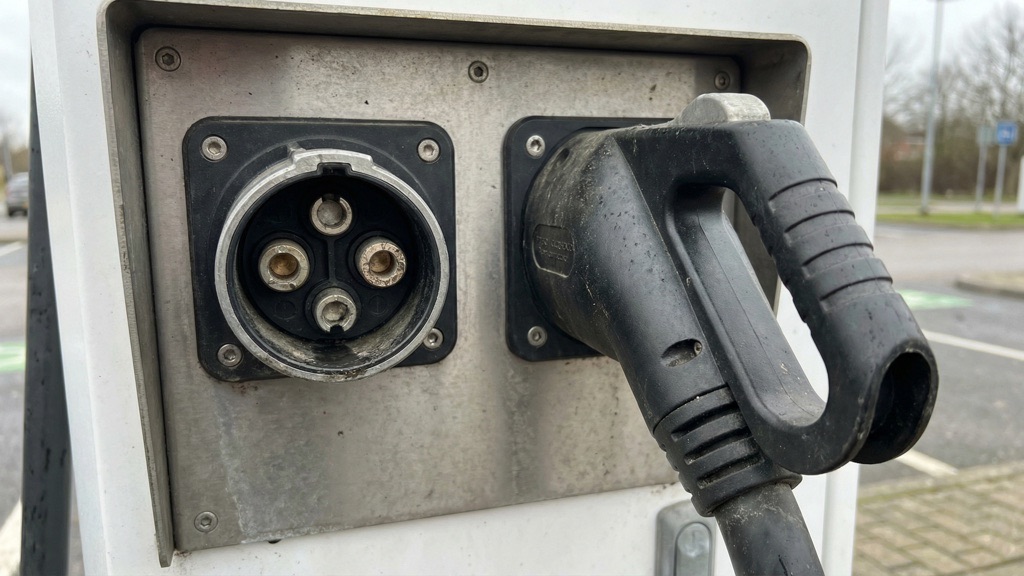
Nissan Leaf — Charging Infrastructure Risk
- Uses CHAdeMO
- Limited new station growth in the US
- Some European networks are deprioritizing it
- Adapter ecosystem shrinking
Buying a Leaf in 2026 means accepting that its charging standard is slowly fading.
If you charge at home 95% of the time — manageable.
If not — risky.
Chevrolet Bolt EUV — CCS Advantage
- Uses CCS
- Widely supported across the US & the EU
- Compatible with expanding infrastructure
It’s not fast by 2026 standards — but it’s usable.
📊 Charging Curve Comparison
| Metric | Leaf SV Plus | Bolt EUV |
|---|---|---|
| Peak kW | ~50 | ~55 |
| Sustained kW | 35–40 | 40–50 |
| Heat throttling risk | High (hot climate) | Low |
| Road-trip practicality | Limited | Acceptable |
Now let’s simulate reality.
🛣️ 500-Mile Road Trip Simulation
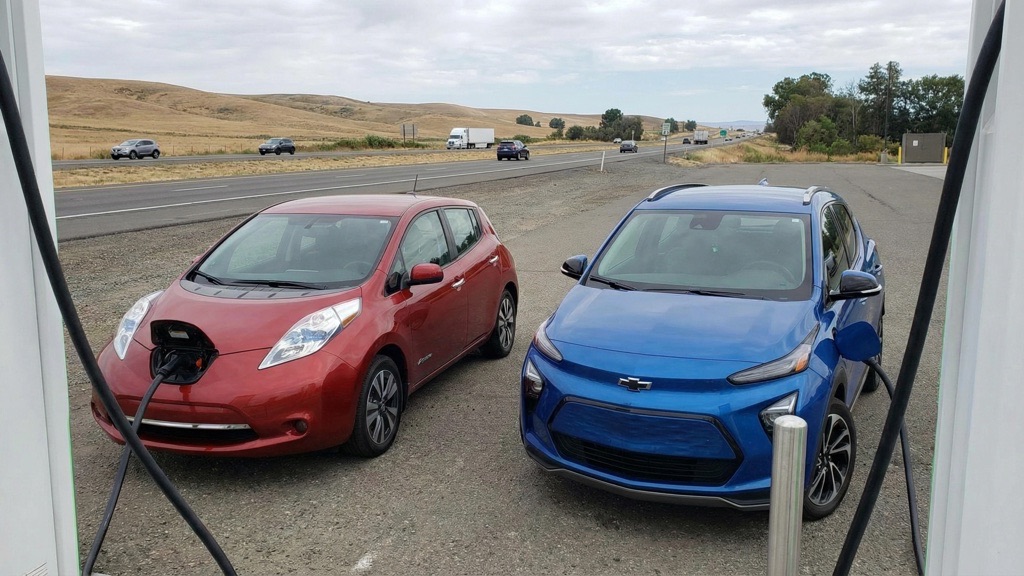
Assumptions:
- Start at 100%
- Drive at an average of 70 mph
- Charge between 10–80%
- Mild weather (not extreme heat)
| Metric | Nissan Leaf | Chevrolet Bolt EUV |
|---|---|---|
| Real usable range per leg | ~170 mi | ~190 mi |
| Charging stops required | 3–4 | 3 |
| Avg charging time per stop | 50–60 min | 45–50 min |
| Total charging time | ~3–3.5 hrs | ~2.3–2.5 hrs |
| Risk of charge slowdown | High | Low |
Now imagine doing this in 95°F heat.
The Leaf may add another 30–60 minutes due to thermal throttling.
This is where regret starts.
❗ When You’ll Regret Buying Each
You’ll Regret the Leaf If:
- You rely on DC fast charging weekly
- You live in a hot climate
- You expect strong resale in 5 years
- Both cars cost the same
You’ll Regret the Bolt If:
- You expect fast modern charging speeds
- Ride comfort is your top priority
- You dislike firm suspension
- You want a premium interior feel
This section matters more than spec sheets.
👍 Pros & 👎 Cons
Nissan Leaf
👍 Pros
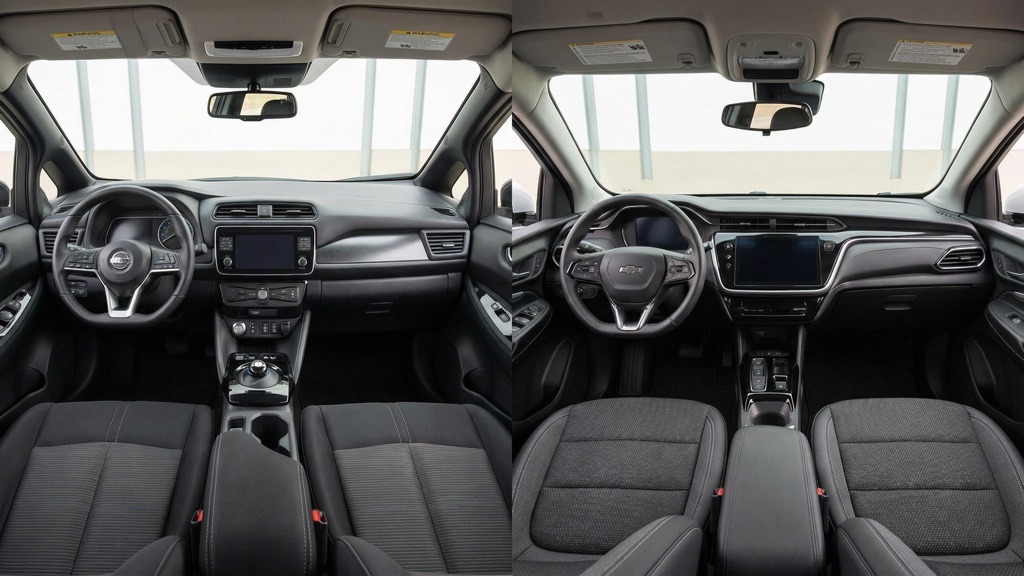
- Extremely comfortable ride
- Quiet highway cruising
- Often, the cheapest entry price
- Proven mechanical simplicity
👎 Cons
- Aging CHAdeMO ecosystem
- Air-cooled battery limitations
- Lower resale stability
- Interior feels dated
Chevrolet Bolt EUV
👍 Pros
- Liquid-cooled battery durability
- CCS charging compatibility
- Better highway efficiency
- Excellent value under $16k
👎 Cons
- Slow charging vs modern EVs
- Firm ride quality
- Budget interior plastics
- Discontinued production perception
🌍 Climate Suitability
| Climate | Leaf | Bolt |
|---|---|---|
| Hot (AZ, Spain) | Risky long-term | Strong choice |
| Cold (Nordics) | Acceptable | More consistent |
| Mild (UK, CA) | Fine | Fine |
If you live in a hot region and plan to keep the car 5+ years, I would personally avoid the Leaf unless heavily discounted.
💰 5-Year Ownership Cost (12k miles/year)
| Category | Leaf | Bolt |
|---|---|---|
| Electricity | ~$3,600 | ~$3,800 |
| Maintenance | ~$1,500 | ~$1,400 |
| Tires | ~$2,000 | ~$2,000 |
| Depreciation | ~$5,000 | ~$4,000 |
| Total 5-Year Cost | ~$12,100 | ~$11,200 |
Bolt wins on resale stability and long-term predictability.
🧠 Final Expert Verdict
🔹 SHORT VERDICT
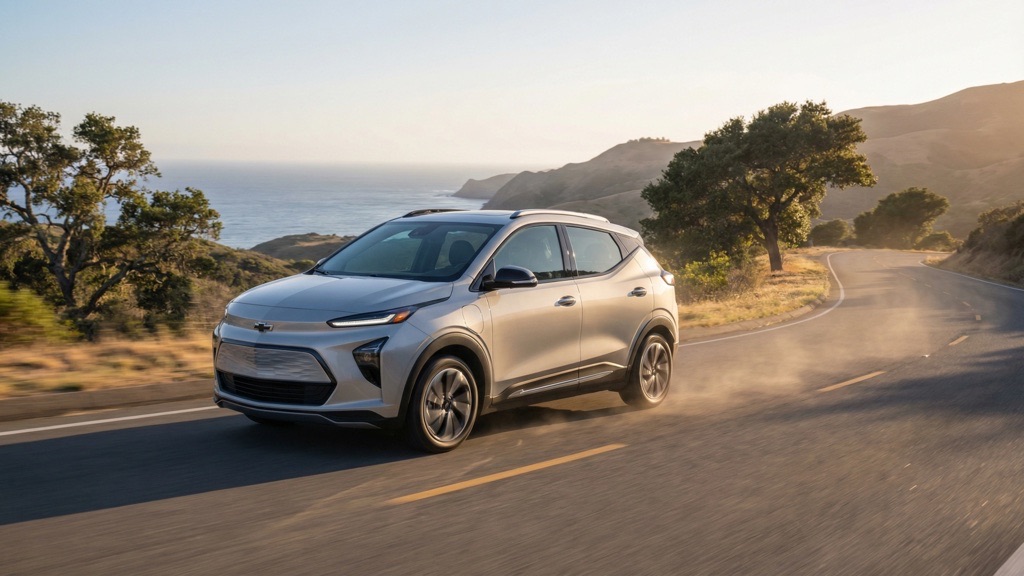
If both cars cost the same, buy the Bolt.
Choose the Leaf only if:
- It’s significantly cheaper
- You charge at home almost exclusively
- You live in a mild climate
🔹 DETAILED VERDICT
The Leaf is comfortable and honest.
But it belongs to a previous EV era.
The Bolt, despite its rocky history, feels more future-proof in 2026 because:
- CCS compatibility
- Better thermal management
- Stronger resale confidence
Ideal Leaf Buyer
Low-mile commuter. Mild climate. Price-driven decision.
Ideal Bolt Buyer
Budget-conscious but long-term thinker. May road-trip occasionally. Wants less infrastructure anxiety.
Long-Term Value
Under $15k, the Bolt EUV is one of the smartest used EV buys in North America today.
The Leaf only makes sense when priced meaningfully lower.
TL;DR
- Both are great city EVs.
- Bolt is more future-proof.
- Leaf is comfortable but aging.
- If prices are equal, choose the Bolt.
FAQ
Is the Nissan Leaf still worth buying in 2026?
Yes — but only if you mostly charge at home and get a strong price.
Is the Chevy Bolt reliable after the recall?
Most units received new battery packs, improving the long-term outlook.
Which is better for resale?
Bolt currently holds value slightly better.
Which one should I actually buy?
If prices are similar: Bolt.
If Leaf is much cheaper and you rarely fast charge, it can make sense.