TL;DR
Tesla’s carbon footprint is higher at production due to battery manufacturing, but over a realistic 8–10 year ownership cycle, most Tesla vehicles emit 45–70% less CO₂ than comparable gasoline cars. Break-even typically occurs between 20,000 and 50,000 km, depending on electricity carbon intensity and battery size. The biggest variable is not the battery — it’s the grid. As power systems decarbonize, Tesla’s lifecycle emissions automatically decline.
Introduction: Why Tesla’s Carbon Footprint Is Now a Policy-Level Issue
In 2026, Tesla’s carbon footprint is not just a consumer question — it’s a regulatory metric, an ESG benchmark, and a tax exposure variable.
As Tesla, Inc. scales global production across the US, Europe, and China, lifecycle CO₂ determines:
- EU fleet compliance exposure
- US Inflation Reduction Act eligibility
- Corporate Scope 3 reporting
- Carbon border adjustment risk
- Residual value modeling
Buyers, fleet operators, and policymakers are increasingly focused on lifecycle emissions — not tailpipe zero.
This institutional-grade analysis models:
- Scope 1, 2, 3 emissions
- Battery carbon intensity (kg CO₂/kWh)
- Grid sensitivity (100–800 g CO₂/kWh)
- 3-, 5-, and 10-year ownership
- Hybrid and diesel comparison
- Battery size sensitivity
- Secondary market amortization
- Policy implications
Methodology and Assumptions

To ensure transparency, the following assumptions were used:
Distance modeled:
- 150,000 km (10-year average global ownership)
- 75,000 km (5-year scenario)
- 45,000 km (3-year scenario)
Grid carbon intensity:
- EU average: ~300 g CO₂/kWh
- US average: ~400 g CO₂/kWh
- Coal-heavy: 600–700 g CO₂/kWh
- Renewable-heavy: <100 g CO₂/kWh
Fuel emissions factors:
- Gasoline: 2.3 kg CO₂/L
- Diesel: 2.6 kg CO₂/L
Battery production intensity (2026 LCA ranges):
- LFP: 60–80 kg CO₂/kWh
- NCA/NCM: 80–120 kg CO₂/kWh
Data ranges reflect aggregated findings from Tesla sustainability disclosures and international energy lifecycle databases.
Scope 1, 2, and 3 Breakdown

Tesla’s carbon footprint is dominated by upstream processes.
| Scope | Description | Estimated Share |
|---|---|---|
| Scope 1 | Direct factory emissions | 5–10% |
| Scope 2 | Purchased electricity | 20–30% |
| Scope 3 | Supply chain & materials | 60–70% |
Key Insight: Raw material extraction and battery manufacturing dominate lifecycle impact — not vehicle assembly.
 Aircraft
Rictor X4 Review (2026): Real Flying Motorcycle or Futuristic Toy?
TL;DR ✅ Buy Rictor X4 if you want: real flying tech, maximum wow-factor, early access to personal air mobility ❌...
 Cars
Cars
Tesla Model Y vs Kia EV6 (2026): Range, Charging, Price & Verdict
TL;DR Choose the Kia EV6 if you want superior charging speed, better real-world range efficiency, and a lower starting price....
 Reviews
Zeekr 007 (2025) vs Nio ES6 (2024): What China’s New-Generation Electric Crossovers Can Do
China’s electric vehicle market continues to evolve at an extraordinary pace, and new models from Zeekr and NIO clearly show...
Manufacturing Emissions by Model
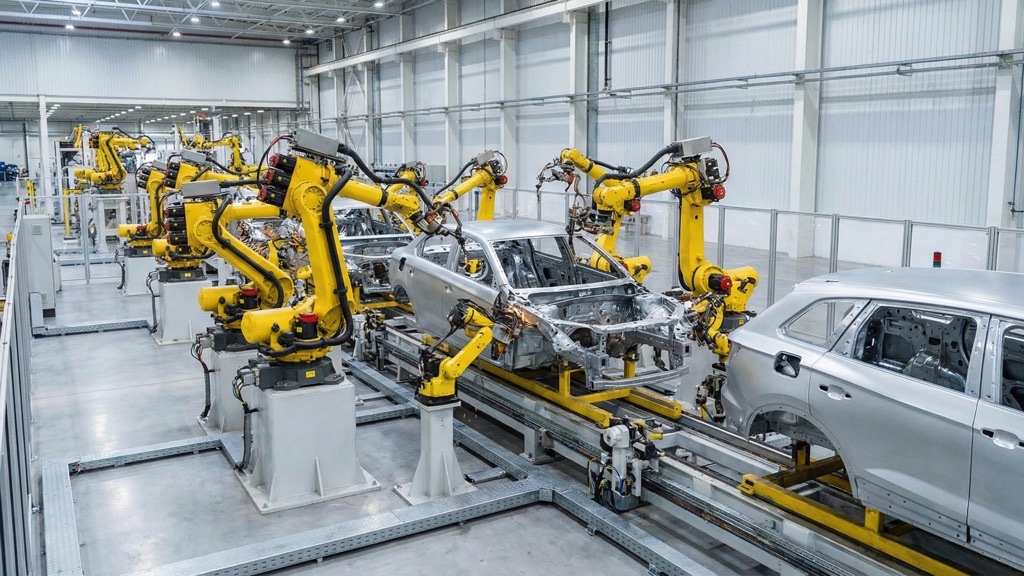
| Vehicle | Battery | Production CO₂ |
|---|---|---|
| Gasoline Sedan | — | 6–8 t |
| Hybrid Sedan | ~1.5 kWh | 7–9 t |
| Tesla Model 3 (57 kWh LFP) | 57 kWh | 8–10 t |
| Tesla Model Y (82 kWh NCA) | 82 kWh | 11–14 t |
Battery pack accounts for roughly 35–50% of total EV production emissions.
Battery Size Sensitivity Analysis

Battery size is one of the strongest carbon variables.
| Battery Size | Battery CO₂ | EU Break-even |
|---|---|---|
| 57 kWh | ~3.5–4.5 t | 20,000–25,000 km |
| 75 kWh | ~5–6 t | 28,000–35,000 km |
| 100 kWh | ~7–9 t | 40,000–50,000 km |
Conclusion: Smaller battery variants have significantly faster carbon amortization.
Operational Emissions Modeling
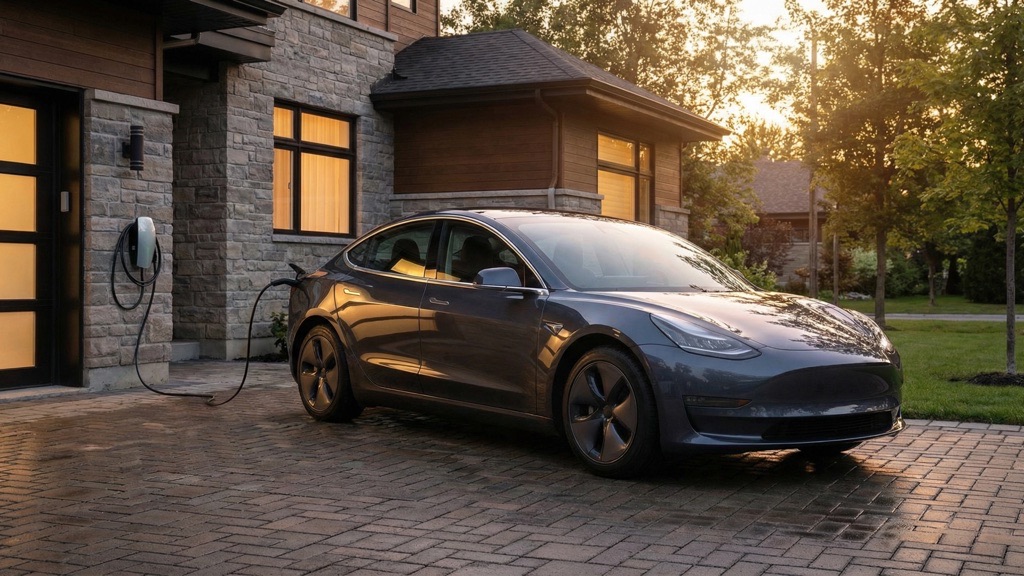
Assumptions:
- Model 3 efficiency: 15 kWh/100 km
- Model Y efficiency: 17 kWh/100 km
- Gasoline sedan: 7 L/100 km
- Diesel sedan: 5.5 L/100 km
- Hybrid: 4.5 L/100 km
Per 100 km CO₂ Emissions
| Vehicle | CO₂ per 100 km |
|---|---|
| Gasoline | ~16 kg |
| Diesel | ~14 kg |
| Hybrid | ~10 kg |
| Tesla @ 700 g/kWh | ~10.5–12 kg |
| Tesla @ 400 g/kWh | ~6–7 kg |
| Tesla @ 200 g/kWh | ~3–4 kg |
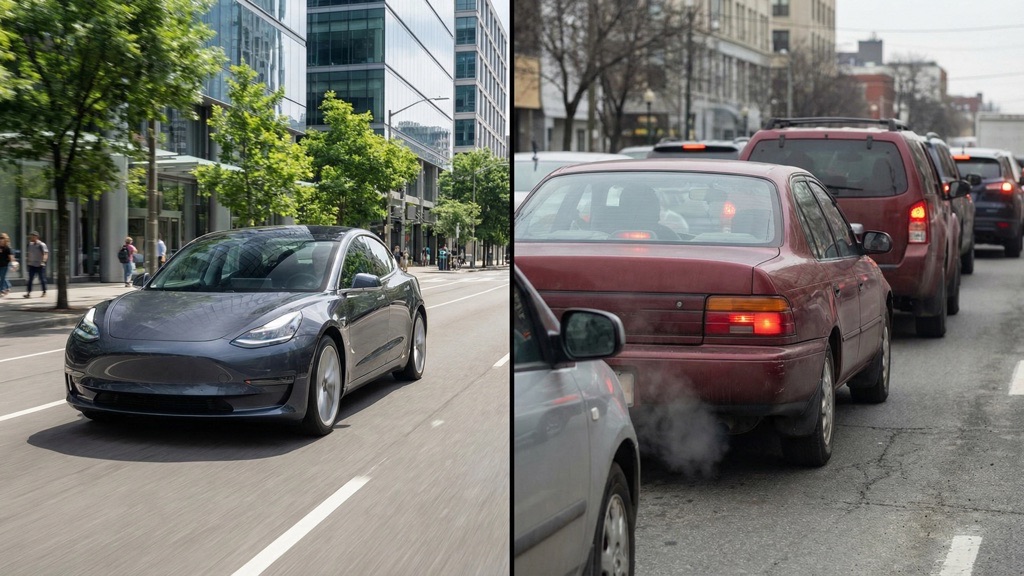
Even in coal-heavy grids, Tesla approaches hybrid-level emissions.
Ownership Duration Sensitivity
3-Year Scenario (45,000 km)
| Grid | Reduction vs Gasoline |
|---|---|
| EU | 25–35% |
| Coal-heavy | 10–20% |
| Renewable | ~50% |
Short ownership reduces the advantage due to front-loaded emissions.
5-Year Scenario (75,000 km)
Reduction improves:
- EU: 40–50%
- Coal-heavy: 25–35%
10-Year Scenario (150,000 km)
| Region | Tesla CO₂ | Gasoline CO₂ | Reduction |
|---|---|---|---|
| Germany | ~14 t | ~27 t | ~48% |
| Poland | ~19 t | ~27 t | ~30% |
| Norway | ~9 t | ~27 t | ~67% |
Long-term ownership strongly favors EV platforms.
How Tesla’s Carbon Footprint Compares to Gasoline and Hybrid Vehicles
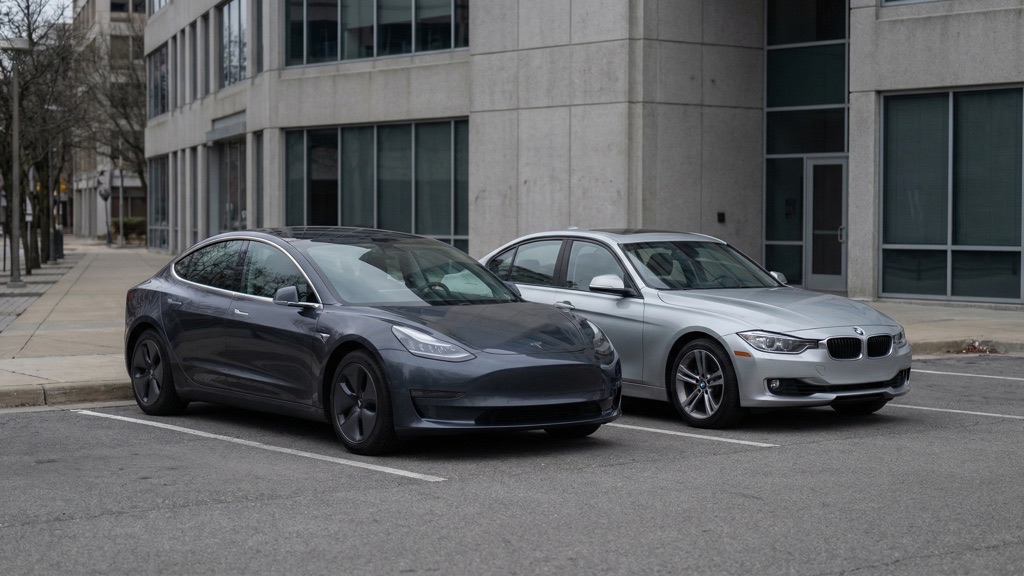
Over 150,000 km:
- Gasoline sedan: ~30–35 t CO₂
- Diesel sedan: ~25–30 t CO₂
- Hybrid sedan: ~18–22 t CO₂
- Model 3 (EU grid): ~13–15 t CO₂
Tesla surpasses hybrid advantage once ownership exceeds ~5 years in moderate grids.
Gigafactory Influence
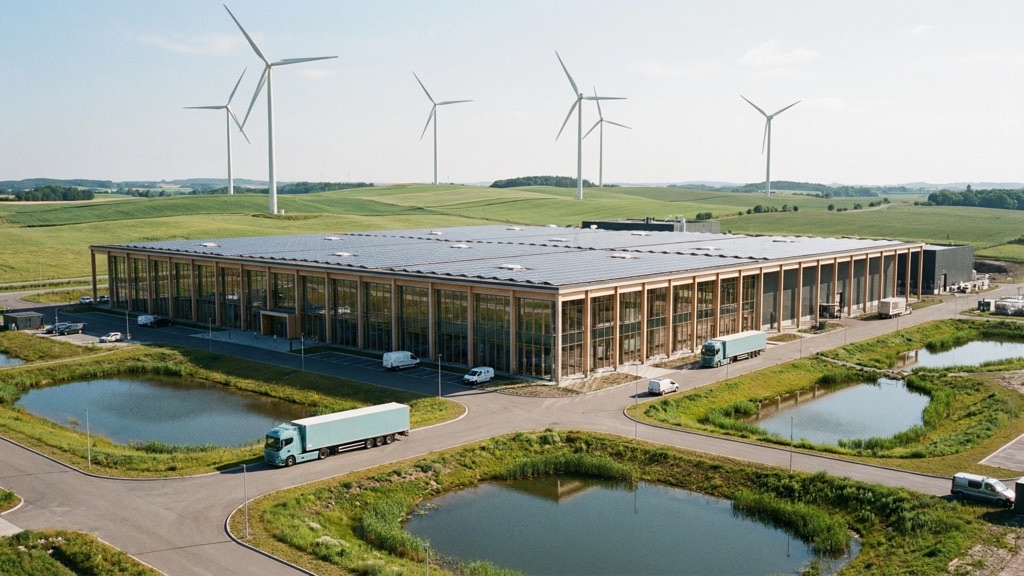
Gigafactory Berlin-Brandenburg
Localized production reduces logistics emissions and integrates renewable sourcing.
Gigafactory Shanghai
High-volume LFP deployment reduces cobalt intensity and mining footprint.
Secondary Market and Extended Lifespan Effect
A Tesla operating beyond 200,000 km further reduces per-km lifecycle emissions.
Because manufacturing emissions are fixed, extended lifespan lowers carbon intensity per kilometer — a structural advantage over combustion vehicles.
Battery Degradation and Replacement Risk

Modern Tesla packs retain approximately 80–90% capacity beyond 200,000 km.
Lifecycle modeling shows:
- Degradation has minimal carbon impact unless full pack replacement occurs.
- Full replacement within 200,000 km remains statistically uncommon.
Therefore, degradation does not materially alter lifecycle advantage in most ownership cases.
Policy and Regulatory Impact
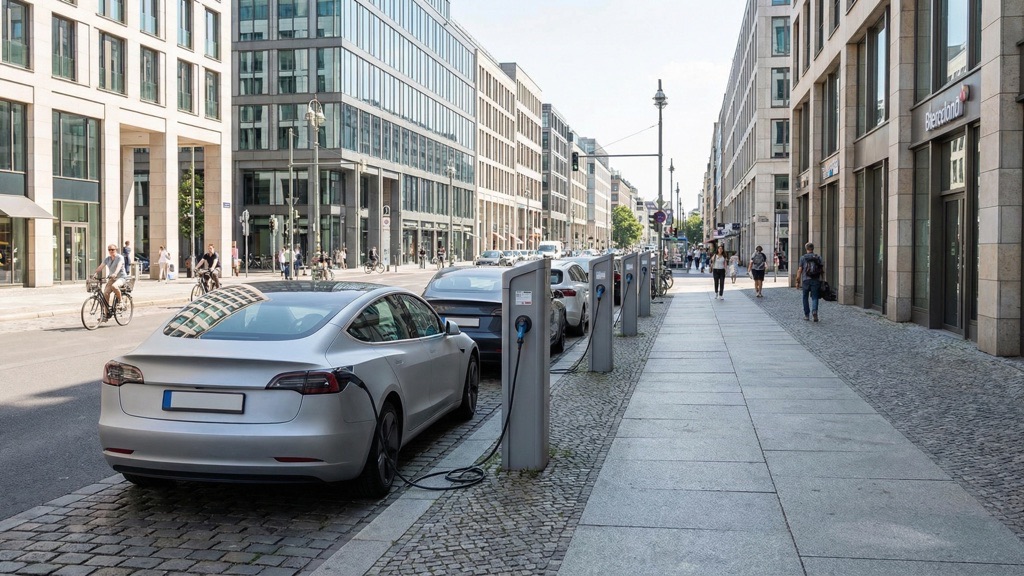
Tesla’s lifecycle emissions affect:
- EU fleet CO₂ compliance targets
- Corporate Scope 3 disclosures
- Carbon border taxes
- National decarbonization pathways
As grids decarbonize annually, Tesla vehicles become cleaner over time — without hardware modification.
Combustion vehicles cannot benefit from grid decarbonization.
Who Maximizes Tesla’s Carbon Advantage
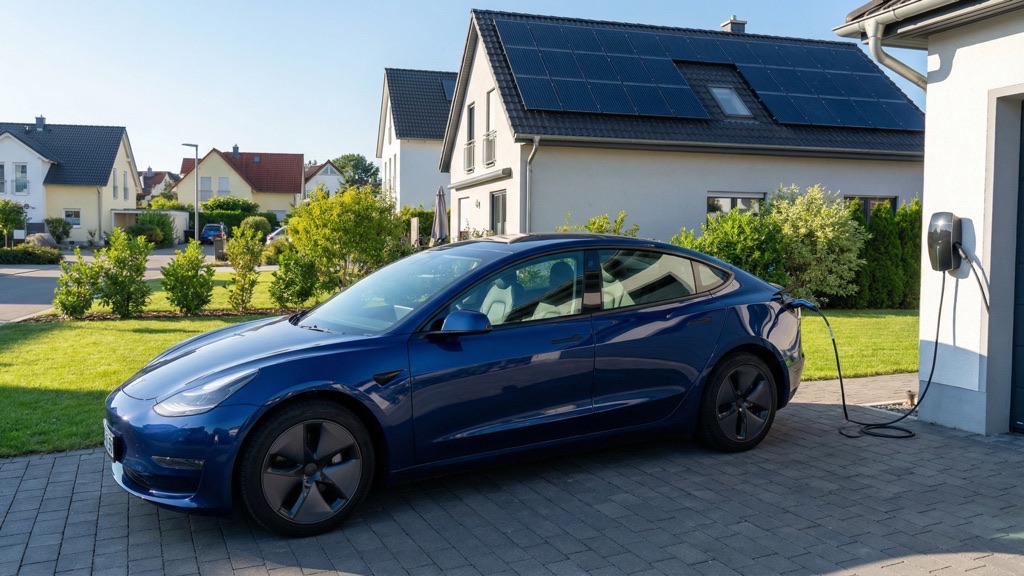
Ideal
- 15,000+ km/year
- Ownership > 5 years
- Standard Range battery
- EU / US / Nordic grid
- Solar home charging
Less Ideal
- <5,000 km/year
- 2–3 year lease
- High-coal regions with slow decarbonization
Final Verdict: Tesla’s Carbon Footprint in 2026
Tesla’s carbon footprint is front-loaded but structurally advantaged over time.
Over:
- 3 years: Moderate reduction
- 5 years: Strong reduction
- 10 years: 50–70% lower lifecycle CO₂
The most climate-efficient Tesla configuration is:
- Smaller battery
- Long-term ownership
- Clean electricity
In 2026, under realistic global conditions, Tesla remains one of the lowest lifecycle carbon options in the mass-market automotive sector — provided electricity systems continue decarbonizing.
FAQ — Tesla’s Carbon Footprint
Is Tesla’s carbon footprint lower than that of gasoline cars?
Yes. Over 150,000 km, most Tesla models emit 45–70% less CO₂ depending on grid mix and battery size.
How long does it take for Tesla to offset battery production emissions?
Typically 20,000–50,000 km.
Is Tesla cleaner than a hybrid?
Over ownership longer than 5 years in moderate grids, yes.
Does battery size affect Tesla’s carbon footprint?
Yes. Larger batteries increase manufacturing emissions and extend break-even distance.
Does electricity decarbonization reduce Tesla emissions?
Yes. As grids improve, operational emissions decline automatically.