
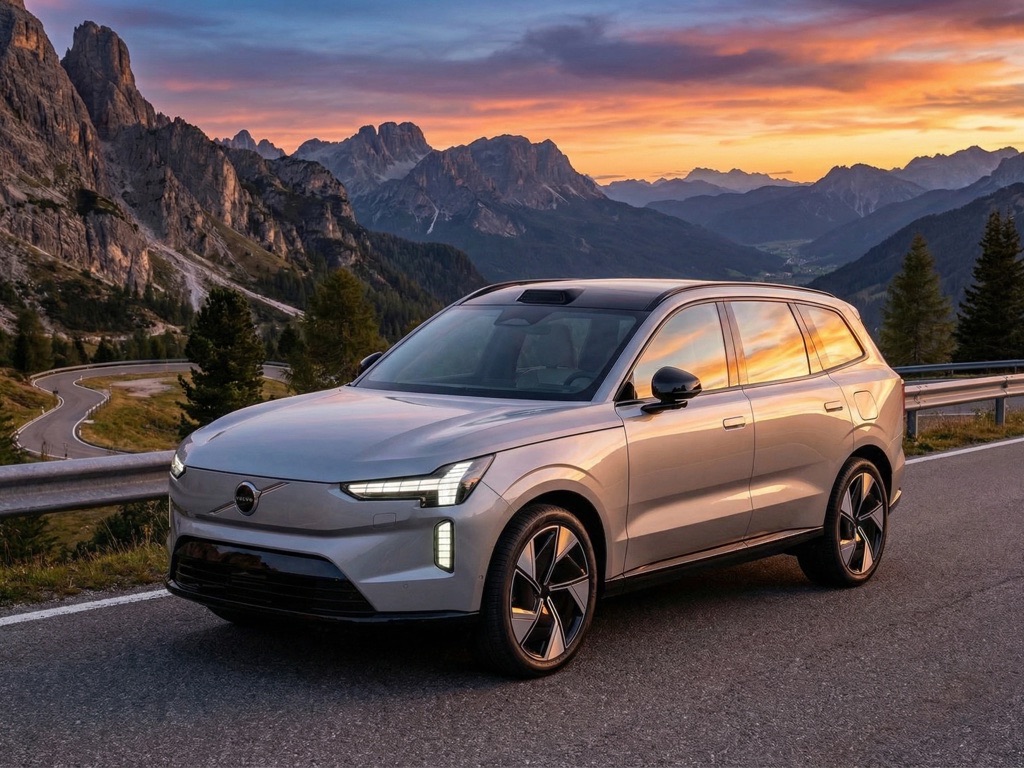
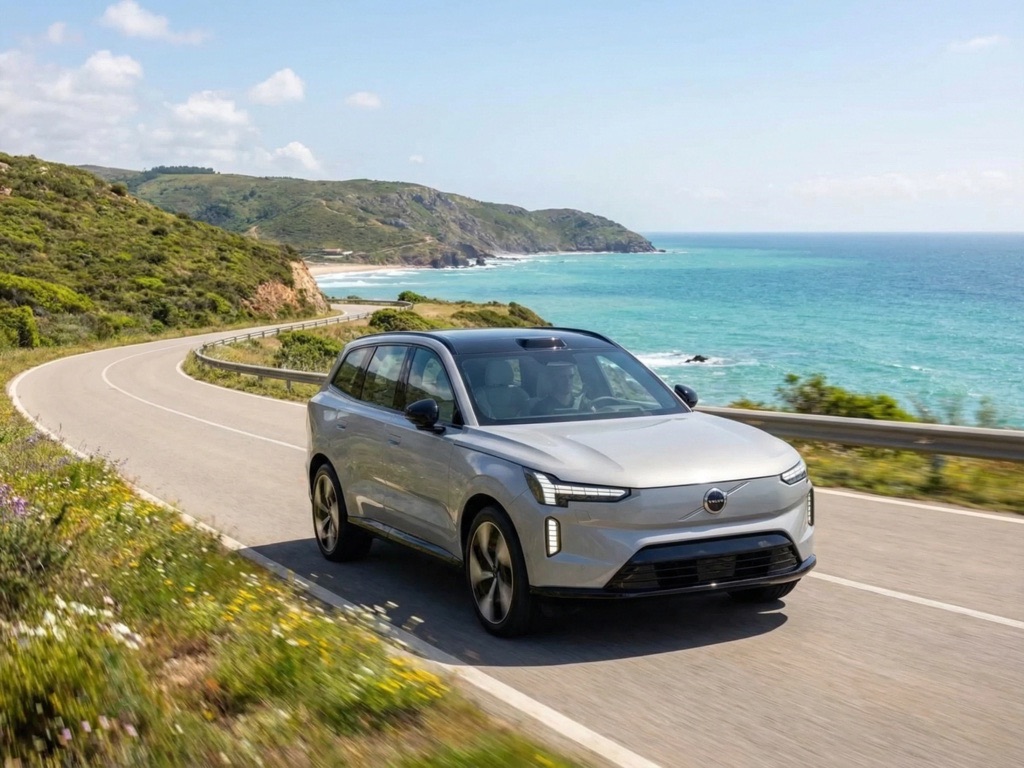
The EX90 is Volvo’s technological reset — a new EV-only platform, centralized Nvidia-based computing, Google-native infotainment, and LiDAR integrated into its safety stack.
This is not a performance SUV.
It’s not a tech experiment.
It’s a premium, safety-led, comfort-first three-row electric family vehicle.
If your priority is long-distance charging speed or maximum efficiency per dollar, this isn’t the segment leader. But if you value refinement, composure, and safety architecture, the EX90 deserves serious consideration.
In 2025, large electric SUVs will finally be competitive. The real question is: Does the EX90 justify its premium positioning?
⚡ QUICK VERDICT
Best for: Families prioritizing safety, comfort, and a traditional premium feel
Not recommended for: High-mileage road trippers chasing fastest charging curves
Real-world range (expert estimate): 270–305 miles
Biggest advantage: Ride refinement + cabin isolation
Main drawback: 400V architecture in an increasingly 800V segment
Overall rating: 9.4 / 10
📊 Key Specifications
| Specification | Value |
|---|---|
| Battery capacity | 111 kWh (107 kWh usable) |
| EPA range | Up to 310 miles |
| Real-world range | 270–305 miles |
| DC fast charging | Up to 250 kW |
| 10–80% time | ~32–35 minutes |
| Platform voltage | 400V |
| 0–60 mph | 4.7 sec (Performance) |
| Drivetrain | Dual-motor AWD |
| Curb weight | ~6,000+ lbs |
| Starting price (US) | ~$76,000 |
🚗 Real-World Driving Experience

Ride & Comfort
This is currently one of the quietest electric SUVs in the segment. Road noise suppression is exceptional. With air suspension, it isolates poor pavement better than most competitors.
Compared to the Tesla Model X, the Volvo feels calmer and less reactive. Compared to the Rivian R1S, it feels more refined and less rugged.
This is deliberate engineering.
Efficiency Reality
Large battery ≠ efficiency leader.
Highway consumption at 75 mph:
- ~2.2–2.4 mi/kWh
- Real highway range: 275–285 miles
Winter highway:
- ~1.9–2.1 mi/kWh
- 230–250 miles realistic
It’s solid — but not class-leading.
 Reviews
Best Long-Range EVs Under $40k (2026): Real-World Highway Range, Charging Math & 5-Year Cost Verdict
The sub-$40,000 EV segment is no longer about compromise. In 2026, you can realistically expect 260–300 miles of real highway...
 Reviews
Tesla Model 3 vs Xiaomi SU7 (2025): Real-World Range, Charging & Expert Verdict
The electric sedan market in 2025 isn’t just evolving — it’s fragmenting. On one side stands the updated Tesla Model...
 Reviews
How to Choose an Electric Motorcycle as a Beginner: Full 2025 Guide
Electric motorcycles are becoming one of the fastest-growing segments in modern mobility. They are clean, affordable to run, easy to...
📈 Efficiency & Charging Comparison
| Model | Voltage | Highway Efficiency | 10–80% Time | Real Hwy Range |
|---|---|---|---|---|
| Volvo EX90 | 400V | 2.2–2.4 mi/kWh | 32–35 min | 275–285 mi |
| Tesla Model X | 400V | ~2.6 mi/kWh | ~30 min | 300+ mi |
| Kia EV9 | 800V | 2.3–2.5 mi/kWh | ~24–28 min | 270–290 mi |
| Rivian R1S | 400V | ~2.1 mi/kWh | ~30–35 min | 260–280 mi |
Expert takeaway:
The EX90 is competitive — but not dominant — in charging or efficiency.
🔬 Engineering Perspective
Let’s be honest.
1️⃣ 400V Architecture
In 2025, 800V systems will become common in premium EVs.
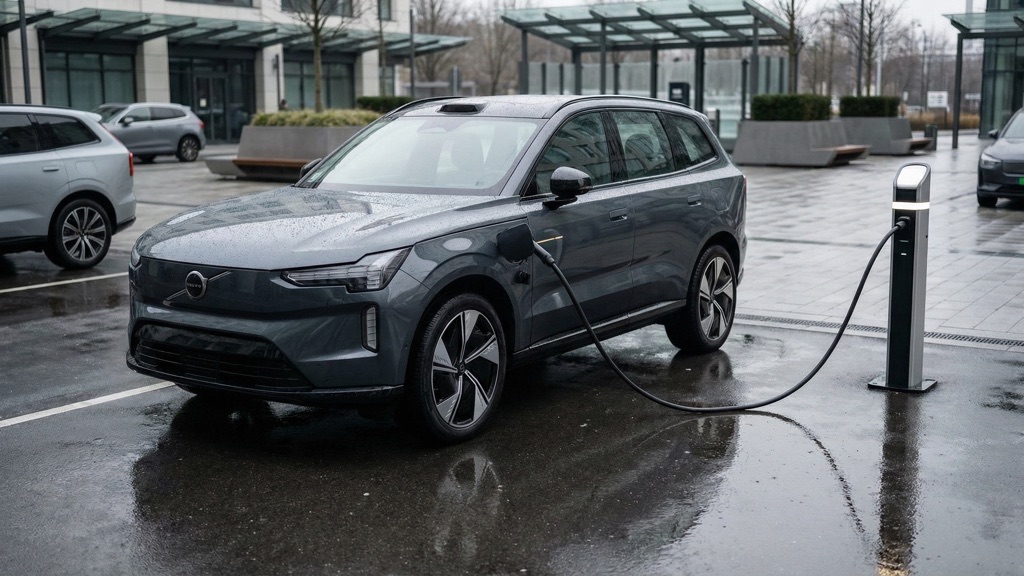
The EX90’s 400V system is reliable — but limits sustained charging speeds.
For a $75k+ SUV, this feels slightly behind the curve.
2️⃣ Weight
Over 6,000 lbs.
That affects:
- Tire wear
- Efficiency
- Handling agility
Volvo chose comfort and safety over lightweight efficiency.
3️⃣ Centralized Computing
The Nvidia-based architecture is forward-thinking.
But early production software maturity is still evolving.
Long-term OTA support will determine resale strength.
4️⃣ LiDAR Reality
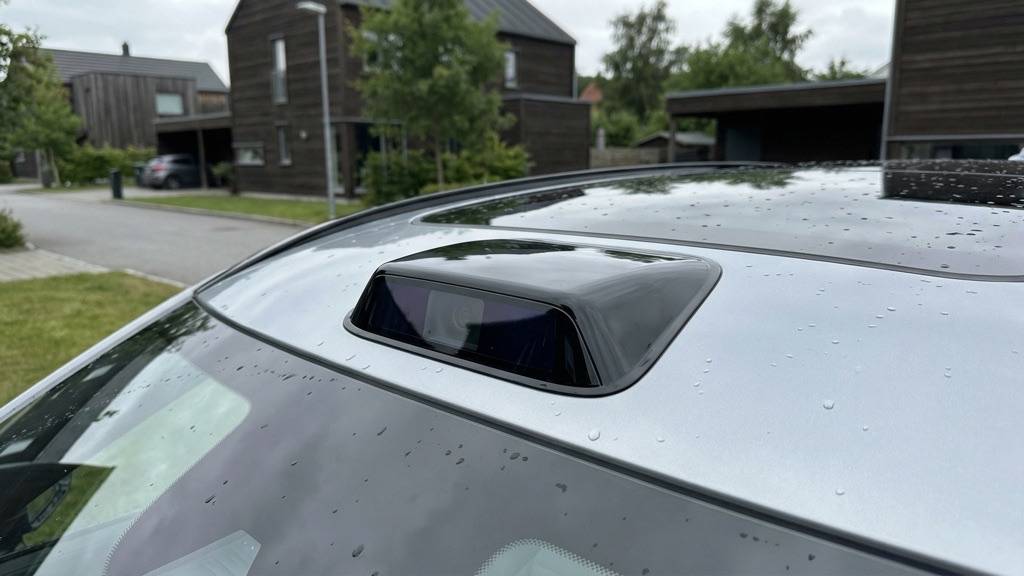
The roof-mounted LiDAR is impressive — but today, its practical daily benefit is limited. It’s more about future capability than current advantage.
That’s important context buyers rarely hear.
👍 Pros & 👎 Cons
👍 Pros
- Class-leading ride comfort
- Extremely quiet cabin at highway speeds
- Strong real-world range for size
- Thoughtful Scandinavian interior design
- High safety integration architecture
👎 Cons
- The charging curve tapers aggressively after 50%
- Not the most efficient in its segment
- Expensive when optioned
- Depreciation risk is higher than Tesla’s historically
- The software ecosystem is still maturing
💰 5-Year Ownership & Depreciation Comparison
Assuming 12,000 miles/year (US average).
| Model | Est. 5-Year Depreciation | Est. 5-Year Total Cost |
|---|---|---|
| Volvo EX90 | 45–50% | ~$55k–60k |
| Tesla Model X | 35–40% | ~$50k–55k |
| Kia EV9 | 45% | ~$45k–50k |
| Rivian R1S | 45–55% | ~$58k–65k |
Expert opinion:
Tesla likely retains its value better.
Volvo will sit in the middle of the premium pack.
Rivian carries the highest volatility risk.
Depreciation is your largest cost — not electricity.
🧠 Who Should Absolutely Skip This Car
Skip the EX90 if:
- You road trip weekly across long distances
- You prioritize the fastest DC charging available
- You want sport-SUV driving dynamics
- You care deeply about resale optimization
Buy it if:
- You value quietness over acceleration drama
- You want a premium family SUV with strong real range
- You prefer traditional luxury over minimalistic tech
🧠 Final Expert Verdict
🔹 SHORT VERDICT
Buy it if refinement, safety, and comfort matter more than charging speed supremacy.
Consider Tesla or EV9 if efficiency per dollar or faster charging matters most.
🔹 DETAILED VERDICT
The Volvo EX90 is arguably the most composed and comfort-focused three-row electric SUV available in 2025.
It is not the efficiency champion.
It is not the fastest charger.
It is not the most exciting.
But it may be the most reassuring.
Long-term ownership outlook is solid, assuming Volvo continues to refine its software ecosystem. The battery chemistry and thermal management are conventional but stable — expect 10–15% degradation over 8–10 years.
For families transitioning from premium ICE SUVs, this is one of the smoothest EV upgrades available today.
Final Score: 9.4 / 10
TL;DR
Volvo EX90 delivers strong real-world range, exceptional ride comfort, and premium cabin refinement. Charging is goo,d but not leading edge. Expensive, but composed and family-focused.
FAQ
Is the EX90 better than the Tesla Model X?
More refined and traditional. Tesla wins in efficiency and software.
Does 400V matter?
Yes — it limits sustained ultra-fast charging compared to 800V rivals.
How much range in winter?
Expect 230–250 highway miles in cold conditions.
Is depreciation a concern?
Moderate. Tesla likely retains its value better.