
Switching to electric isn’t about horsepower.
It’s about how charging fits into your real life.
If charging matches your rouelectric motorcycles feel effortlessrtless.
If it doesn’t, they feel like a compromise.
This is the ultimate, rider-first breakdown with:
- Real charging times
- Real electricity cost per 100 km
- Home vs public comparison
- Apartment ownership reality
- Battery degradation truth
- Touring scenarios
- ICE comparison
- And who should NOT switch
⚡ QUICK RIDER VERDICT
- Best setup: Home Level 2 charging
- Real-world usable battery window: 80% → 20%
- Cost per 100 km (home): ~$1
- Cost per 100 km (public fast): ~$3.5
- Best rider type: Daily commuter with garage
- Overall ownership satisfaction (with home charging): 9/10
No home charging? Ownership drops to 6/10.
🔧 Real Charging Example (14 kWh Battery)
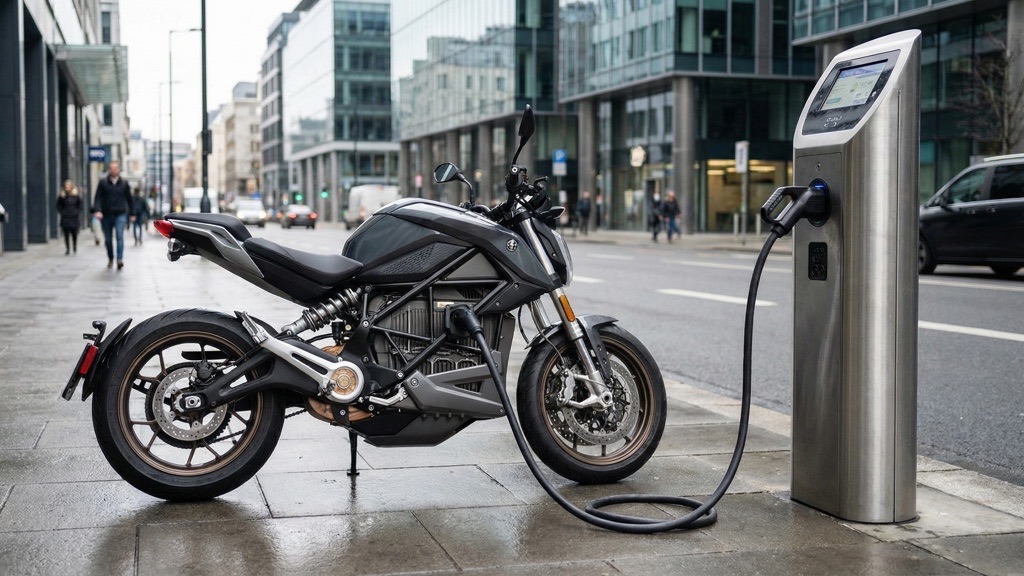
Typical mid-size electric motorcycle (like models from Zero Motorcycles or LiveWire).
Charging Time Comparison
| Charger Type | Power Output | 0–100% | 20–80% | Real-World Use |
|---|---|---|---|---|
| Level 1 (wall outlet) | 1.3–2 kW | 8–12 hrs | 4–6 hrs | Overnight only |
| Level 2 Home | 6–7 kW | 2–3 hrs | 1–1.5 hrs | Ideal daily |
| Public Level 2 | 6–11 kW | 2–4 hrs | 1–2 hrs | Backup |
| DC Fast (CCS) | 20–25 kW | ~60 min | 30–40 min | Touring |
Important:
You rarely use 0–100%. Most riders operate in the 20–80% range.
That’s your real charging life.
💰 How Much Does It Cost to Charge an Electric Motorcycle?
Let’s calculate.
Assumptions:
- Battery: 14 kWh
- Efficiency: 7 kWh / 100 km
- Home electricity: $0.15/kWh
- Public Level 2: $0.35/kWh
- DC Fast: $0.50/kWh
Cost Per 100 km
| Charging Type | Cost per kWh | Cost per 100 km |
|---|---|---|
| Home | $0.15 | $1.05 |
| Public Level Charging at Home (The Ideal Scenario) | $3.50 |
Now compare to a 5L/100km gas motorcycle at $1.50/L:
5 × 1.50 = $7.50 per 100 km
Even public fast charging is still cheaper than fuel.
Home charging is dramatically cheaper.
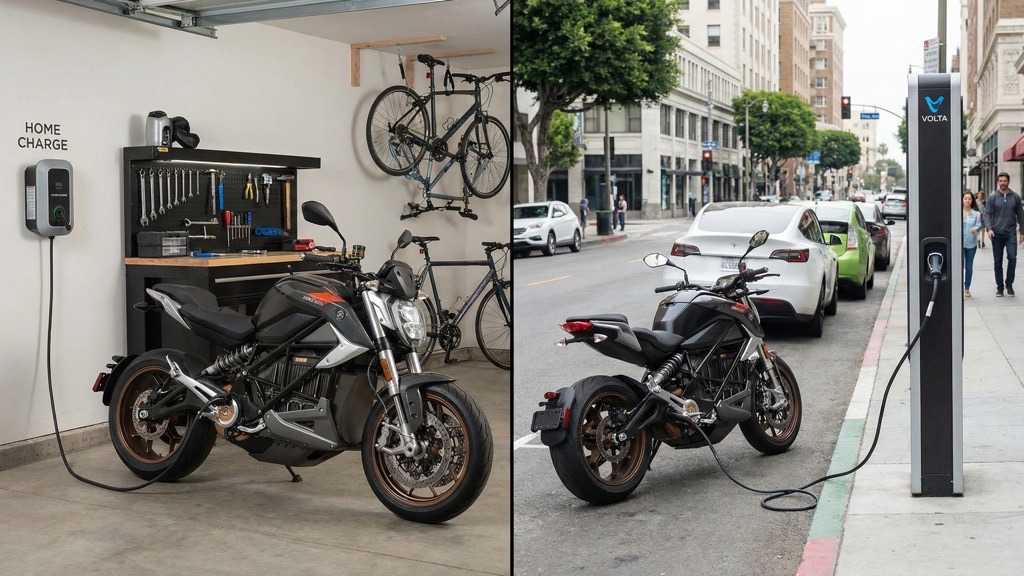
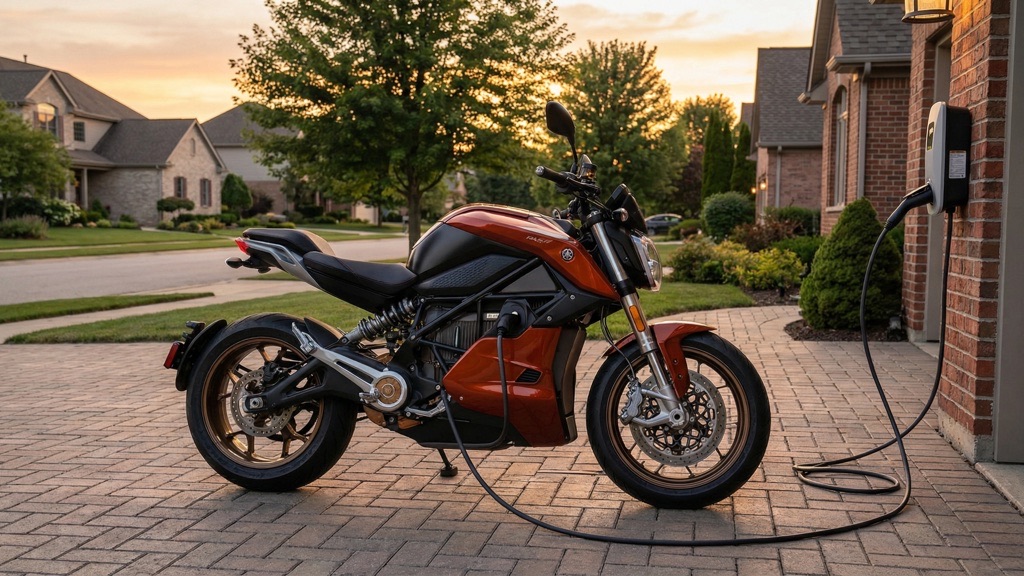
🏠 Charging at Home (The Ideal Scenario)
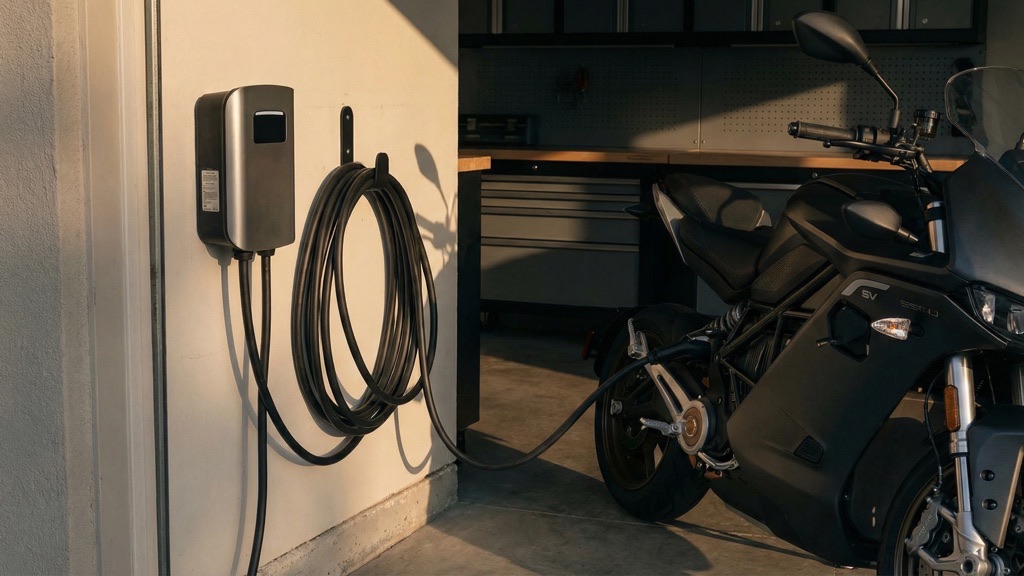
This is where electric makes total sense.
Ride.
Plug in.
Sleep.
Wake up at 100%.
No detours.
No apps.
No waiting.
Why Home Charging Changes Everything
- Lowest cost per km
- No schedule disruption
- Gentle charging = better battery longevity
- Maximum convenience
Electric doesn’t save you time.
 Reviews
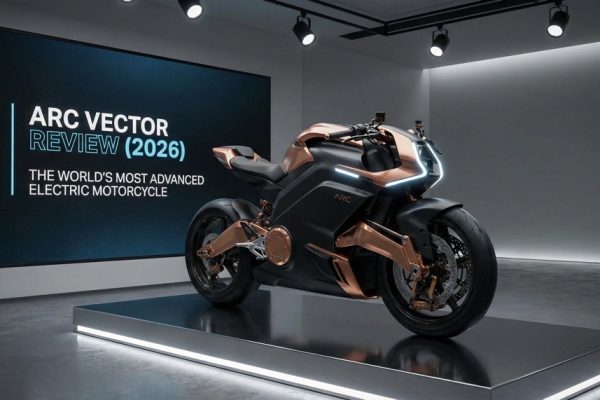
Arc Vector Review (2026): The World’s Most Advanced Electric Motorcycle
Electric motorcycles in 2026 have finally matured into a real alternative to gasoline bikes. Most brands now focus on affordability,...
 Reviews
Tromox M05 “Electric Latte” Review — The Stylish Urban EV That Looks Like a Motorcycle but Rides Like an E-Moto
Electric two-wheelers are evolving fast, but few new models spark as much curiosity as the Tromox M05, better known by...
 Reviews
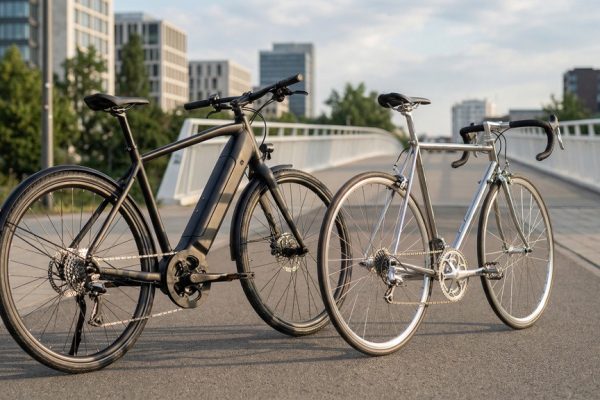
E-Bike vs Regular Bike: Is It Worth It in 2026?
Choosing between an electric bike and a regular bicycle sounds simple — until you actually try to decide. In 2026,...
It moves charging into your sleep hours.
🌍 Public Charging Reality
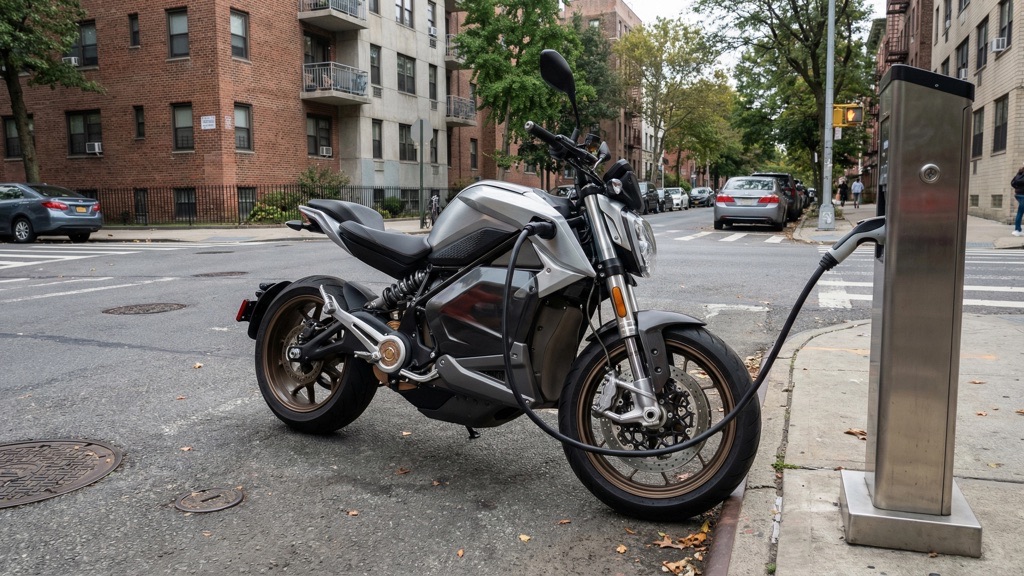
Public charging works — but it changes ownership psychology.
You start:
- Planning stops
- Watching battery percentage
- Checking charger availability
- Paying higher electricity rates
It’s fine for touring.
It’s annoying for daily dependency.
🏍 250 km Ride Scenario (Real Touring Example)
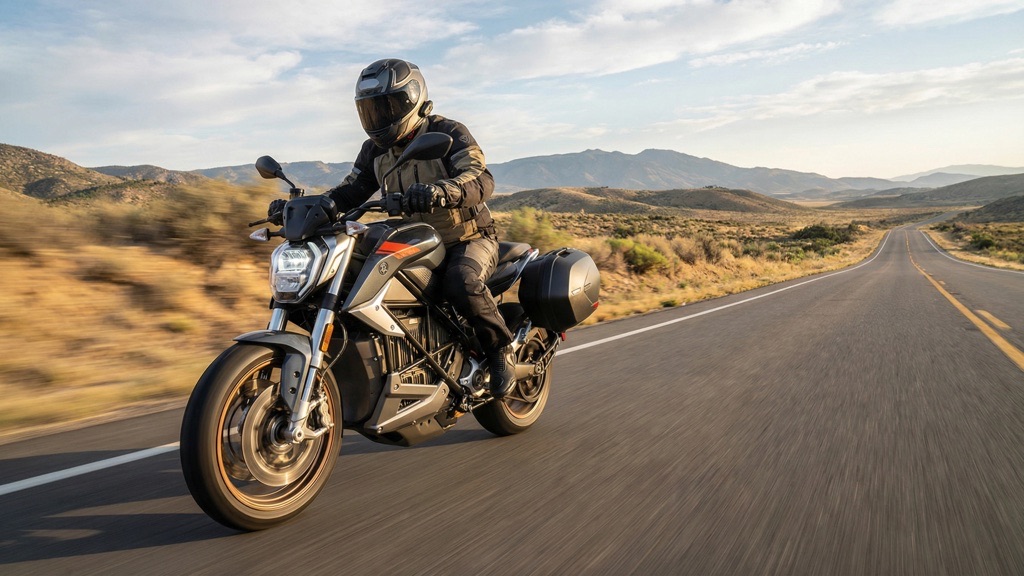
Realistic mixed range: 150 km
Usable battery window: 80% → 20%
Ride Plan
- Start at 100%
- Ride 140 km
- Stop and DC fast charge
- 35–45 minutes to reach 80%
- Ride another 100–110 km
Total added time: ~45 minutes.
Electric touring works.
But it’s slower.
If you value spontaneous 400 km days — ICE still wins.
🏢 Can You Charge an Electric Motorcycle in an Apartment?
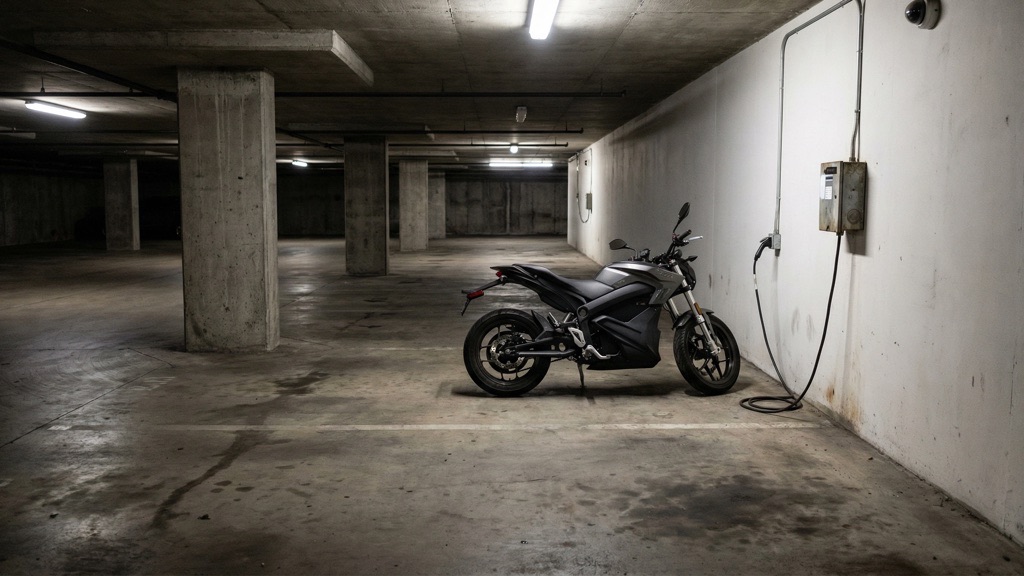
This is the biggest friction point.
Common issues:
- No outlet in the parking garage
- HOA restrictions
- Shared underground parking
- Extension cords are not allowed
- Charging cable security concerns
- Winter cable stiffness
If you rely only on public charging, ownership becomes logistics-heavy.
Possible? Yes.
Effortless? No.
🔋 Is DC Fast Charging Bad for the Battery?
Short answer:
Occasional use — fine.
Daily reliance — not ideal.
Fast charging generates more heat.
Heat accelerates battery aging.
Home Level 2 charging is gentler and better for long-term battery health.
If you plan to keep the bike 5–8 years, prioritize home charging.
⚔️ EV vs Gas Motorcycle Comparison
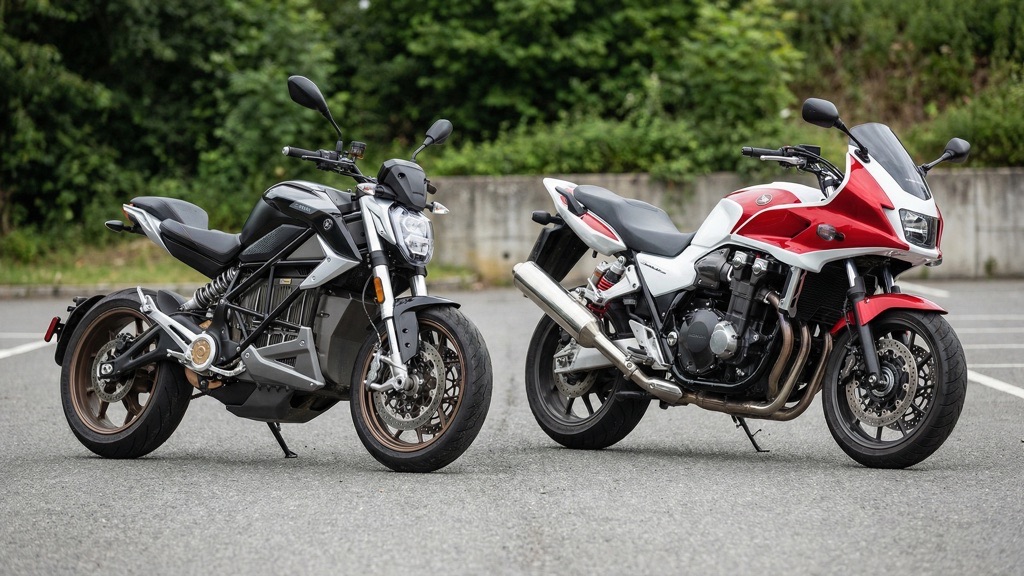
| Factor | Electric (Home Charging) | Electric (Public Only) | Gas Motorcycle |
|---|---|---|---|
| Cost per 100 km | ~$1 | ~$3.5 | ~$7.5 |
| Refuel/Charge Time | Overnight | 30–60 min | 3–5 min |
| Daily Convenience | Excellent | Moderate | Good |
| Touring Flexibility | Moderate | Moderate | Excellent |
| Maintenance | Low | Low | Higher |
Electric wins daily commuting.
Gas wins long-distance spontaneity.
🧠 The 3 Types of Electric Motorcycle Owners
1️⃣ The Garage Commuter
Charges overnight.
Never visits public chargers.
Loves electric.
Ownership satisfaction: 9/10.
2️⃣ The Apartment Planner
Relies on public charging.
Plans rides carefully.
Mixed feelings.
Ownership satisfaction: 6–7/10.
3️⃣ The Tourer
Rides 300+ km days often.
Uses DC fast frequently.
May miss gas convenience.
Ownership satisfaction: lifestyle-dependent.
Know which one you are.
❌ When Electric Charging Is a Bad Idea
Reconsider switching if:
- You cannot charge at home
- Public charging is unreliable locally
- You ride 300+ km frequently
- You hate waiting
- You expect gas-bike flexibility
Electric motorcycles reward routine.
They punish unpredictability.
🧠 FINAL RIDER VERDICT
🔹 SHORT VERDICT:
Home charging makes electric ownership fantastic.
Public-only charging makes it situational.
🔹 DETAILED VERDICT:
Is it worth it?
If you have reliable home charging and ride under 150 km daily — absolutely.
Your running costs drop massively.
Your bike is always ready.
Ownership feels modern and simple.
If you depend on public charging, think hard.
It can work.
But it requires patience, infrastructure, and a different mindset.
Electric motorcycles are not about peak performance.
They’re about lifestyle alignment.
If charging fits your routine, you’ll love it.
If it fights your routine, you won’t.
TL;DR — Electric Motorcycle Charging (Home vs Public)
- Home charging = electric makes total sense.
Plug in overnight, wake up full. ~$1 per 100 km. 9/10 ownership experience. - Public-only charging = situational.
Works, but costs more (~$3–4 per 100 km) and requires planning. 6/10 experience. - DC fast charging is great for trips, but daily use isn’t ideal for long-term battery health.
- Touring 300+ km often?
Electric adds 30–60 minutes per charging stop. - Apartment without outlet access?
Think carefully before switching.
❓ FAQ (Schema-Ready)
How long does it take to charge an electric motorcycle at home?
On a standard outlet (Level 1), 8–12 hours for a 14 kWh battery.
With a Level 2 home charger, typically 2–3 hours.
How much does it cost to charge an electric motorcycle?
At $0.15/kWh, roughly $1 per 100 km.
Public fast charging can cost around $3–4 per 100 km.
Can you use DC fast charging regularly?
You can, but frequent use may accelerate battery degradation compared to slower home charging.
Do electric motorcycles use CCS charging?
Many modern models support CCS DC fast charging, but some only support Level 2 AC charging. Always check the manufacturer’s specifications.
Is electric motorcycle charging cheaper than gas?
Yes. Even public charging is usually cheaper per kilometer than gasoline.