
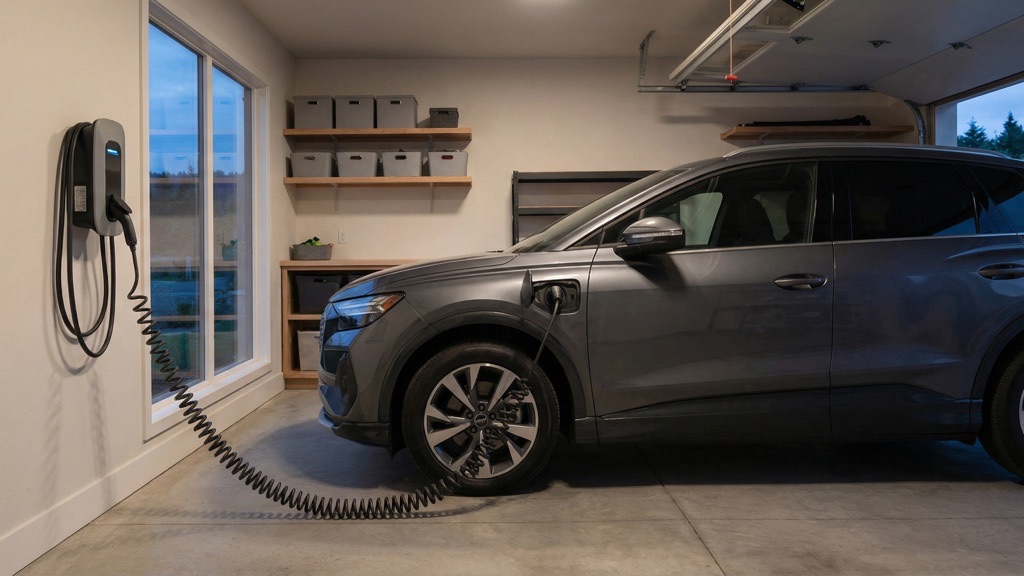
Home charging is either the smartest decision you make as an EV owner — or the biggest oversight.
In 2026, public fast charging across the US and Europe is no longer “cheap backup.” In many regions, it’s approaching gasoline-equivalent cost per mile. Meanwhile, electricity at home — especially off-peak — remains dramatically cheaper and far more predictable.
But here’s the uncomfortable truth:
- Many buyers overspend on hardware they don’t need.
- Others underestimate installation combuy an EV without solving home charginging home charging first — and regret it.
This is the definitive, no-marketing, expert guide to getting home charging right.
⚡ QUICK VERDICT
Best for:
Homeowners with a driveway or garage driving 30–100 miles (50–160 km) daily
Not recommended for:
Apartment residents without guaranteed charging access
Real-world Level 2 charging speed:
25–45 miles (40–70 km) of range per hour
Typical installation cost:
$1,000–$3,500 (US) / €1,200–€3,700 (EU)
Typical ROI:
1–2 years (12,000 miles/year driver)
Biggest advantage:
Total control over charging cost and convenience
Main drawback:
Upfront electrical work and possible panel upgrade
Overall rating:
9.8/10 (with private parking)
4/10 (without it)
📊 HOME CHARGING LEVELS – WHAT ACTUALLY MATTERS
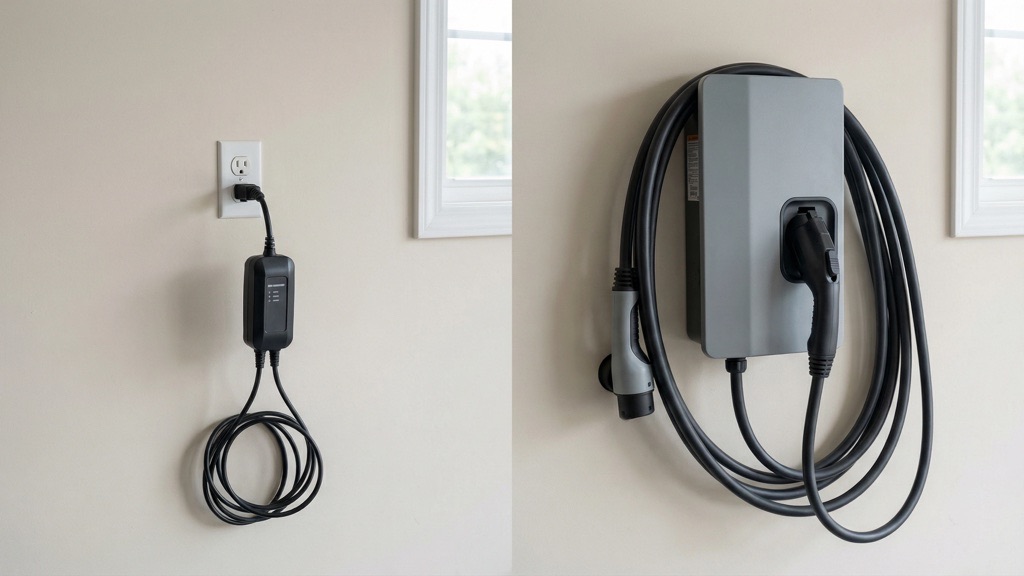
| Specification | Level 1 (Standard Outlet) | Level 2 (Dedicated Circuit) |
|---|---|---|
| Voltage | 120V (US) / 230V (EU) | 240V split-phase (US) / 400V 3-phase (EU) |
| Power Output | 1–2 kW | 7–22 kW |
| Range Added | 3–5 mi/hr (5–8 km/hr) | 25–45 mi/hr (40–70 km/hr) |
| Full Charge (75 kWh battery) | 35–50 hours | 5–8 hours |
| Installation Required | No | Yes |
| Realistic Use Case | PHEV / emergency | Daily EV ownership |
Expert position:
Level 1 is not a long-term solution for full EV drivers.
Level 2 is not an upgrade — it’s the baseline.
🔌 32A vs 40A vs 48A (US) | 7 kW vs 11 kW (EU)
Most buyers overspec.
| Power Level | Who Actually Needs It | Reality |
|---|---|---|
| 7 kW / 32A | 80–90% of drivers | More than enough |
| 9.6 kW / 40A | Heavy commuters | Good margin |
| 11 kW (EU 3-phase) | 70–120 mi daily drivers | Ideal balance |
| 48A+ / 22 kW | High-demand households | Often unnecessary |
If you drive 40 miles per day, a 7 kW charger replenishes that in ~1.5 hours.
Bigger numbers look impressive. They rarely change real life.
 Reviews
Why electric motorcycles are beneficial?
Electric Motorcycles: The Fastest Two-Wheelers Electric motorcycles have emerged as the frontrunners in the realm of two-wheeled electric transportation, boasting...
 Reviews
How to Choose an Electric Motorcycle as a Beginner: Full 2025 Guide
Electric motorcycles are becoming one of the fastest-growing segments in modern mobility. They are clean, affordable to run, easy to...
 Reviews
E-Bike Laws & Regulations (US + EU) — 2026 Authority Guide
Buying an e-bike is easy. Buying a legal e-bike in 2026 is not. A throttle that’s fine in one US...
Reliable home units from companies like Wallbox, ChargePoint, and Tesla differ more in ecosystem and software than in core charging capability.
Amperage and installation quality matter more than branding.
🚗 REAL-WORLD SCENARIOS (WHAT OWNERS EXPERIENCE)
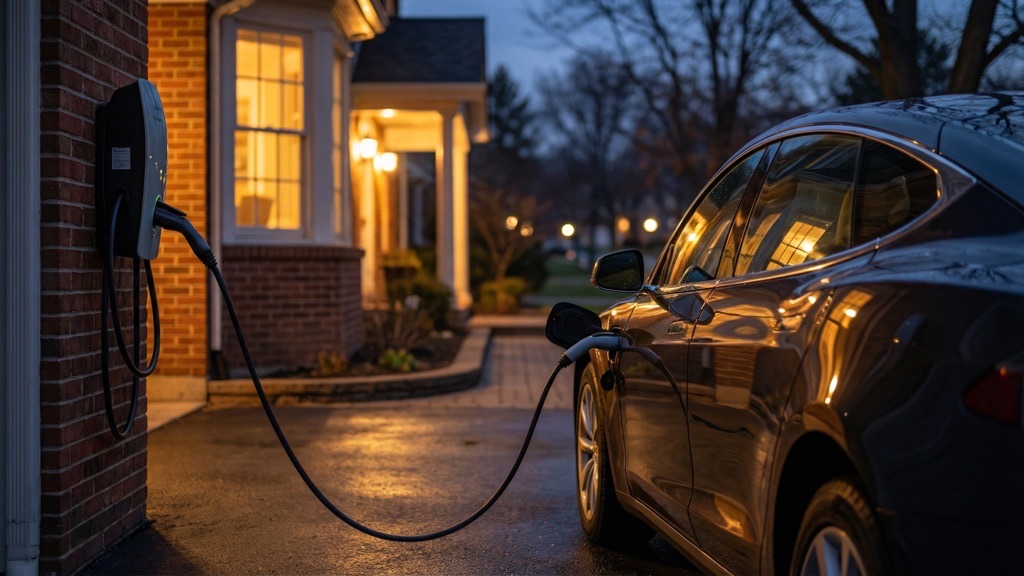
Weekday Commuter (45 miles/day)
- Battery drops from 80% → 55%.
- Plug in at 10 PM.
- Off-peak rate kicks in automatically.
- Back to 80% by midnight.
Charging disappears from your mental load.
Heavy Day (Unexpected 150 miles)
You return home at 25%.
With 7–11 kW Level 2:
- Back to 80% by early morning.
- No public stop required.
Without Level 2:
- You’re planning your next day around charging.
Winter Reality
Cold weather cuts efficiency by 10–25%.
With home charging:
- Charging simply runs longer overnight.
- You can precondition from the grid.
- Battery stress is minimized.
Public fast charging in winter? Slower and more expensive.
Power Outage Scenario
Short outage? No impact.
Long outage?
- Your EV still holds stored energy.
- Some bidirectional-capable setups can even power parts of a home (vehicle-dependent).
Home charging increases resilience — not just convenience.
💰 INSTALLATION COSTS – FULL BREAKDOWN
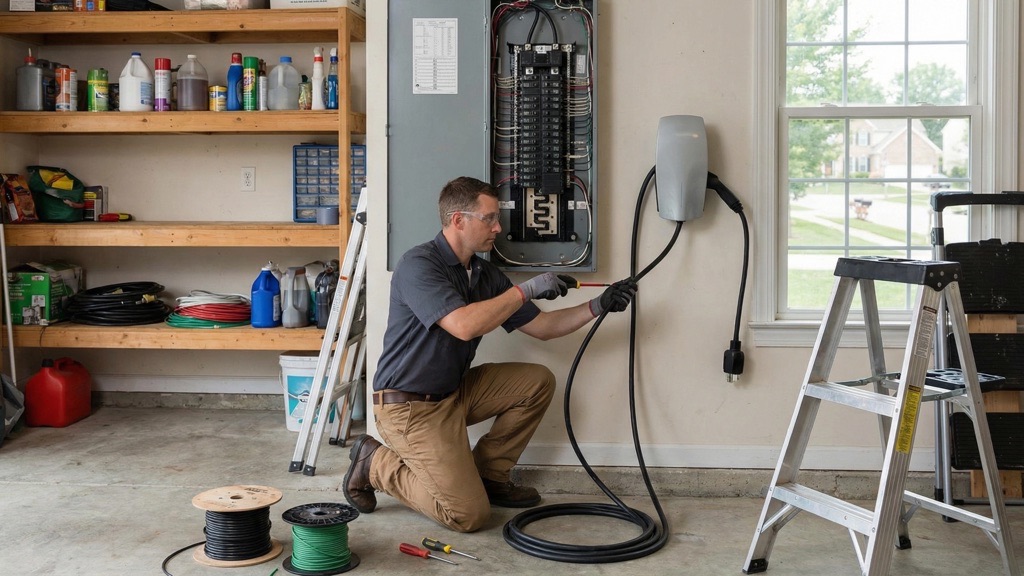
| Region | Charger Hardware | Installation | Panel Upgrade (if needed) | Realistic Total |
|---|---|---|---|---|
| US | $400–$900 | $600–$1,500 | $1,000–$3,000 | $1,000–$3,500 |
| Europe | €500–€1,200 | €700–€2,000 | €800–€2,500 | €1,200–€3,700 |
What Actually Drives Cost:
- Distance to electrical panel
- Available amperage
- 3-phase availability (EU)
- Trenching for detached garages
- Local permits & inspection
- HOA restrictions (US)
Biggest mistake:
Buying the charger before checking the panel capacity.
⚡ ELECTRICITY COST VS GAS – REAL NUMBERS
Assume 30 kWh / 100 miles efficiency.
| Region | Avg kWh Price | Cost per 100 Miles |
|---|---|---|
| US ($0.15/kWh) | $0.15 | ~$4.50 |
| US Off-Peak ($0.12) | $0.12 | ~$3.60 |
| Europe (€0.25) | €0.25 | ~€7.50 |
| Europe Dynamic (€0.20) | €0.20 | ~€6.00 |
Gas equivalent:
$12–$20 per 100 miles.
Public DC fast charging in many regions now approaches $0.40–$0.60/kWh — often eliminating EV savings.
Home charging protects your economics.
📊 ROI – WHEN DOES IT PAY BACK?
Assume:
- 12,000 miles/year
- $0.15/kWh electricity
- $3.50/gallon gas equivalent
- $2,000 installation
| Annual Miles | Annual Savings | Break-Even Time |
|---|---|---|
| 8,000 | ~$760 | ~2.6 years |
| 12,000 | ~$1,140 | ~1.8 years |
| 18,000 | ~$1,710 | ~1.2 years |
The more you drive, the faster it pays back.
🧠 DECISION MATRIX – SHOULD YOU INSTALL LEVEL 2?
| Daily Driving | Private Parking | Expert Recommendation |
|---|---|---|
| <30 miles | Yes | 7 kW sufficient |
| 30–80 miles | Yes | Install Level 2 |
| 80–120 miles | Yes | 11 kW ideal |
| Any distance | No | Reconsider full EV or ensure reliable public access |
If you’re unsure, you probably need Level 2.
Skipping home charging means choosing a harder version of EV ownership.
❌ 6 MISTAKES BUYERS MAKE
- Overspecifying amperage
- Ignoring panel capacity
- Installing the charger in the wrong location
- Not using off-peak tariffs
- Overpaying for unused “smart” features
- Ignoring local incentives or rebates
Planning beats hardware.
👍 PROS & 👎 CONS
👍 Pros
- Lowest long-term fueling cost
- Maximum daily convenience
- Gentle on battery health
- Solar-ready integration
- Predictable budgeting
👎 Cons
- High upfront installation cost
- Not viable for many renters
- Possible panel upgrade expense
- Permit delays in some regions
- HOA restrictions (US neighborhoods)
⚖️ HOME VS PUBLIC VS FAST CHARGING
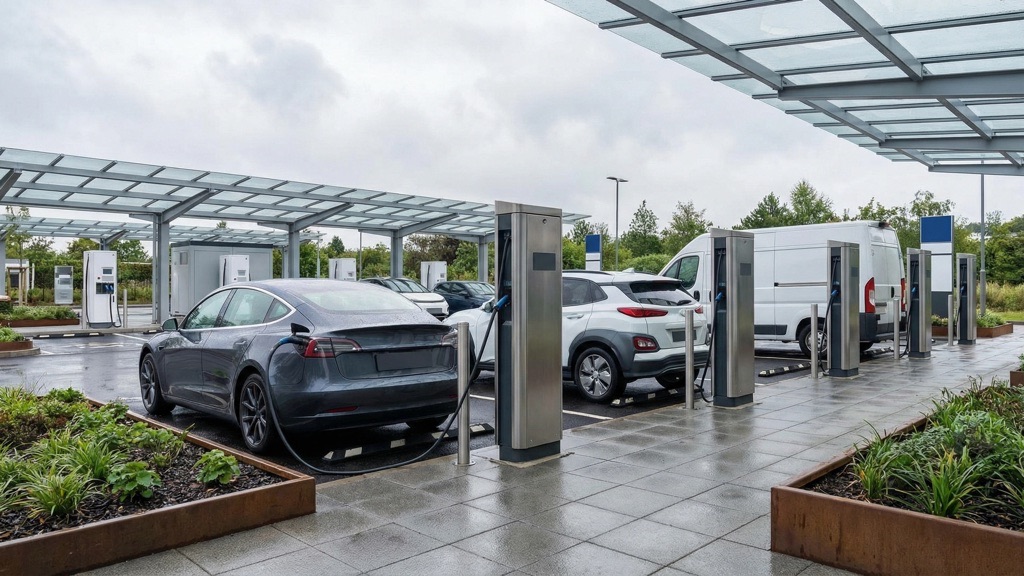
| Charging Type | Cost | Speed | Daily Practicality | Stress Level |
|---|---|---|---|---|
| Home AC | Low | Moderate | Excellent | Very Low |
| Public AC | Medium | Moderate | Acceptable | Medium |
| DC Fast | High | Very High | Poor for routine use | High |
Expert stance:
Home charging should cover 80–90% of your needs.
Fast charging is for distance — not daily life.
🔋 BATTERY HEALTH – LONG TERM
Home AC charging:
- Generates less heat
- Slower charge curves
- Lower stress than repeated DC fast sessions
Typical modern EV degradation:
5–10% over 5–8 years (real-world averages).
Home charging supports longevity.
🧠 FINAL EXPERT VERDICT
🔹 SHORT VERDICT
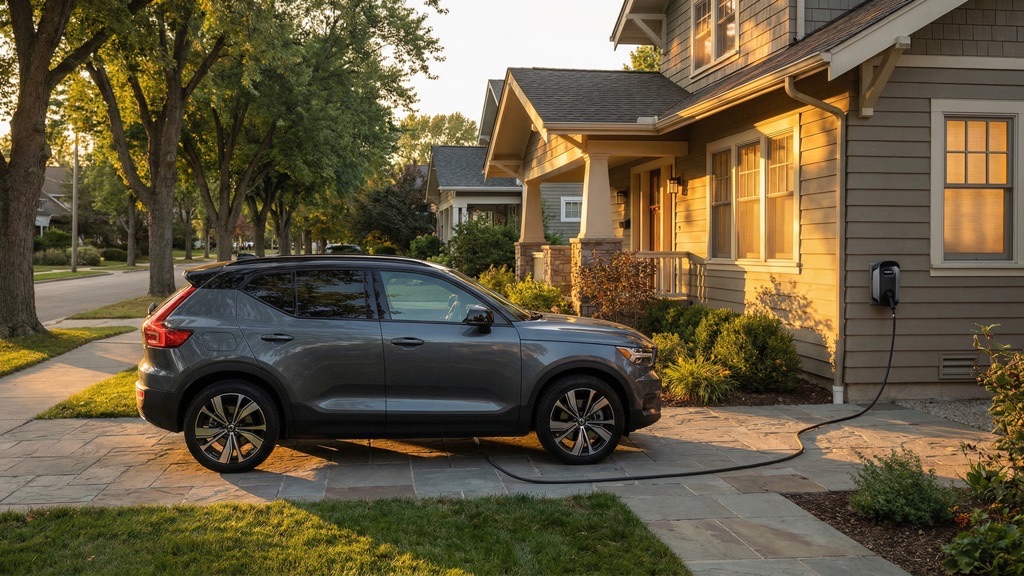
If you own a home with parking — install Level 2.
It transforms EV ownership from manageable to effortless.
If you cannot charge at home, you must be comfortable relying on public infrastructure — and paying more for it.
🔹 DETAILED VERDICT
Ideal Buyer Profile
- Drives 30–100 miles daily
- Plans to keep EV 5+ years
- Wants predictable ownership costs
- Values convenience over optimization stress
Long-Term Outlook
Electricity prices will fluctuate.
Public fast charging will remain premium-priced.
Home charging locks in control.
Value for Money
High upfront cost.
Strong financial return.
Major lifestyle upgrade.
In professional terms:
Home charging isn’t optional for serious EV ownership.
It’s foundational.
TL;DR
- Level 2 is essential for most EV owners
- Installation costs $1,000–$3,500
- Saves $800–$1,700 per year vs gas
- Pays back in 1–2 years
- Reduces charging stress dramatically
FAQ
Can I rely only on public fast charging?
Technically yes. Financially and practically, it’s rarely optimal.
Do I need 22 kW at home?
Rarely.
Is the installation complicated?
Usually straightforward — unless panel capacity is limited.
Is home charging always cheaper?
Almost always — especially with off-peak or dynamic tariffs.