
TL;DR — Quick Answer
Towing with an electric car typically reduces real-world rangee by 30–55%, primarily due to aerodynamic drag and sustained load. Modern EVs have more than enough torque — but heat management and charging strategy determine success.
If you remember one thing:
Towing isn’t the problem. Planning for range loss is.
💡 Quick Tip: Dropping speed from 110 km/h to 95 km/h can improve towing efficiency by 10–15%.
Why Trust This Guide
This guide combines real-world EV towing data, engineering principles, and manufacturer specifications from Tesla, Ford Motor Company, and Hyundai Motor Company, plus battery chemistry best practices used in modern NMC and LFP systems.
Introduction
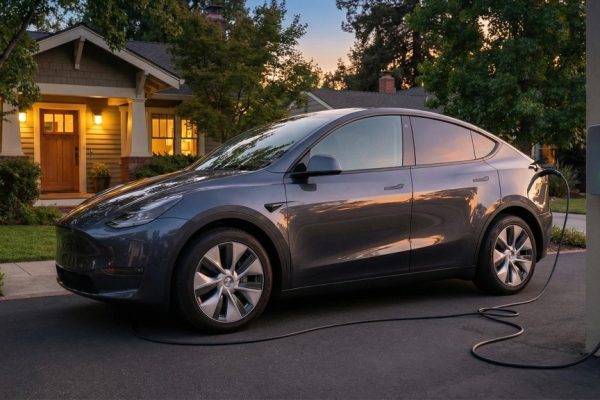
Electric vehicles are no longer limited to commutTesla Model Yike the Tesla Model Y, Ford Hyundai Ioniq 5, and Hyundai Ioniq 5 are fully rated for towing.
But towing dramatically changes energy consumption.
If you’re planning to pull:
- A camper
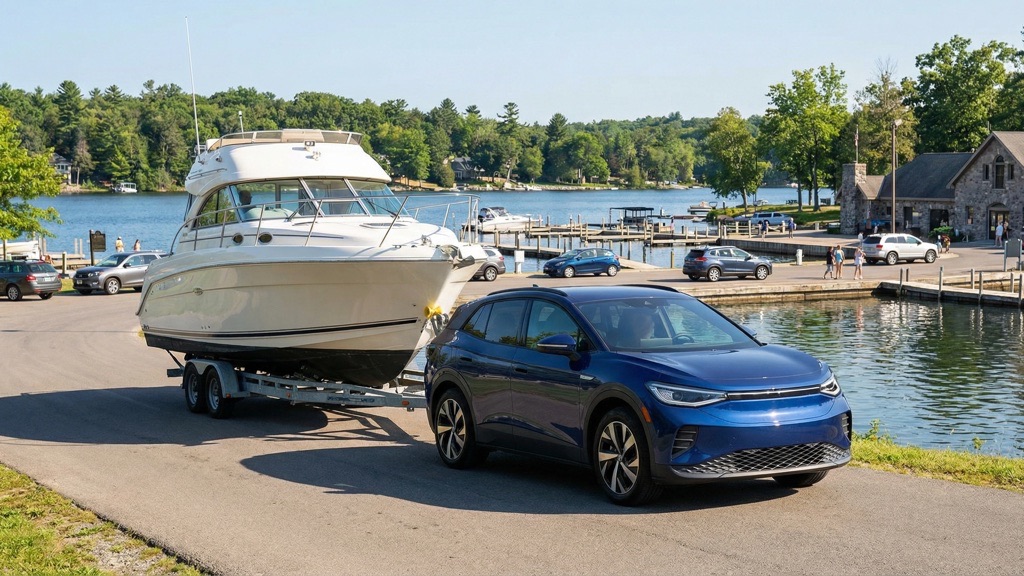
- A boat
- A cargo trailer
- Construction equipment
You need to understand how drag, battery chemistry, heat, and charging curves affect range.
This is the ultimate 2026 deep-dive.
Key Facts at a Glance
- Typical range loss: 30–55%
- Worst-case scenario: Up to 65%
- Main efficiency killer: Aerodynamic drag
- Battery impact over 5 years: Minor if occasional
- Cost per 1,000 km (EV vs diesel): Often 40–60% cheaper
Maximum Tow Ratings (Reality Check)
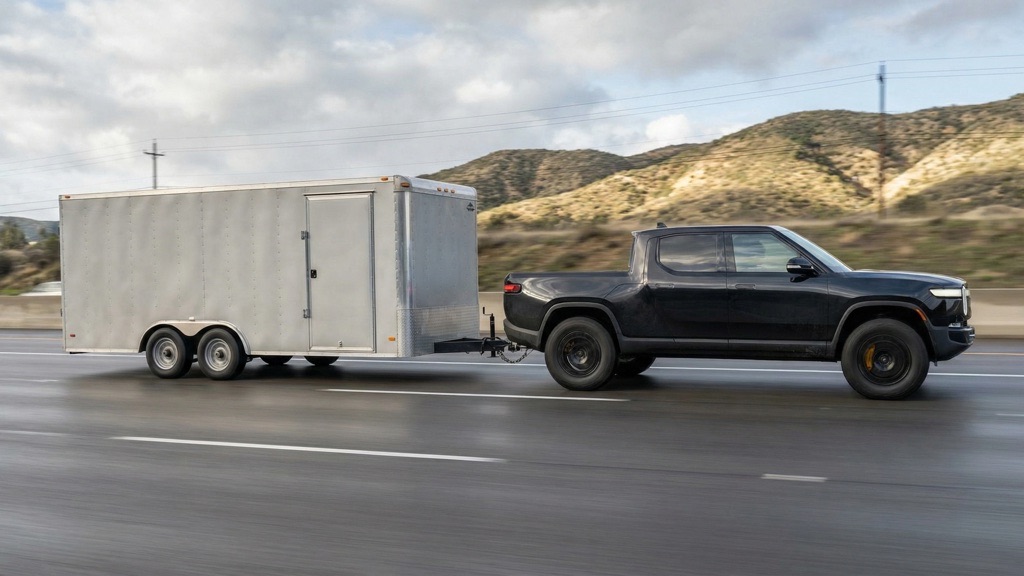
Power is rarely the limitation.
Range and charging logistics are.
How Electric Car Towing Range Works
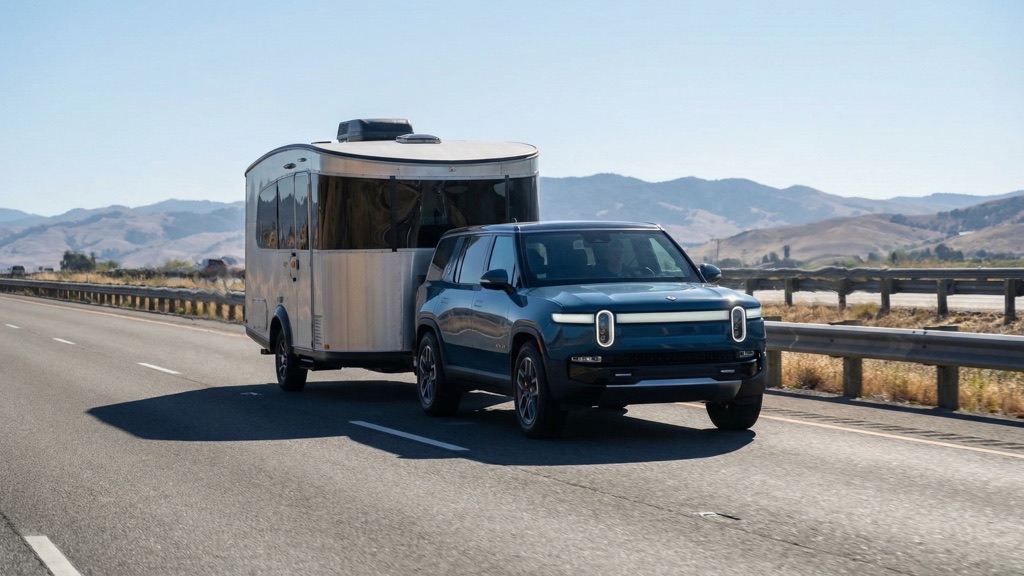
Electric motors provide instant torque from 0 RPM.
However, towing increases:
- Mass → more rolling resistance
- Frontal area → more drag
- Sustained load → more heat
At highway speeds, drag becomes dominant.
Doubling aerodynamic drag can nearly double energy consumption.
Real Energy Consumption Examples
Example: Tesla Model Y (75 kWh)
| Condition | Consumption | Range |
|---|---|---|
| Solo driving | 17 kWh/100 km | ~500 km |
| Small trailer | 25 kWh/100 km | ~330 km |
| Camper trailer | 30–32 kWh/100 km | ~240–260 km |
Example: Ford F-150 Lightning (131 kWh)
| Condition | Consumption | Range |
|---|---|---|
| Normal | 24 kWh/100 km | ~500 km |
| Heavy enclosed trailer | 40–45 kWh/100 km | ~290–320 km |
Bigger batteries reduce stress — but percentage losses remain similar.
Worst-Case Scenario (Extreme Conditions)
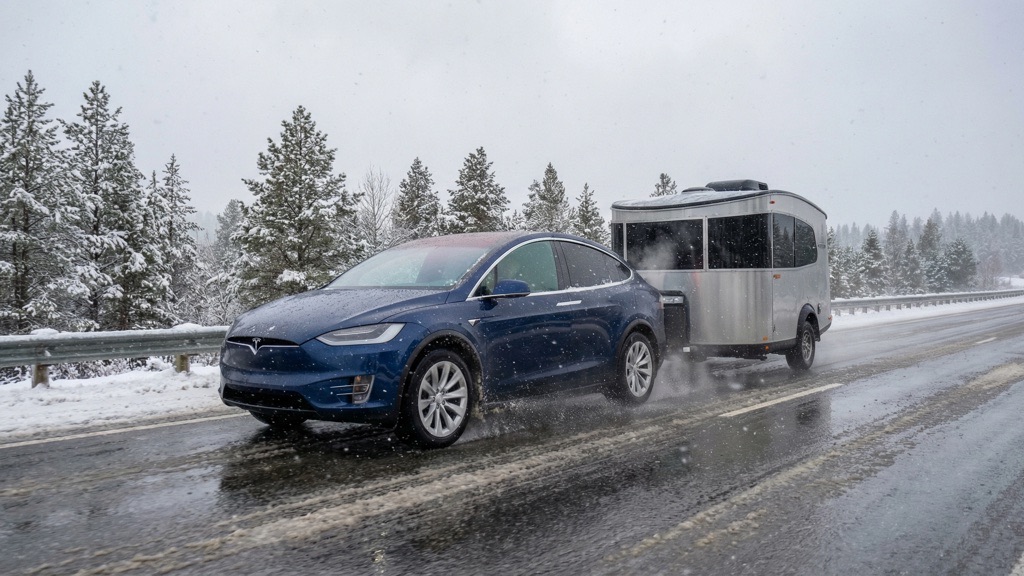
Winter (0°C) +
Large camper +
120 km/h highway speed =
👉 Up to 60–65% real-world range reduction
Cold batteries + cabin heating + drag = compounding losses.
This is where planning becomes essential.
Why Speed Is the Biggest Variable
Drag increases exponentially with speed.
| Speed | Energy Impact |
|---|---|
| 90 km/h | Moderate |
| 105 km/h | Significant |
| 120 km/h | Severe |
Lowering speed is the single easiest way to regain range.
Battery Chemistry: LFP vs NMC Under Towing Stress
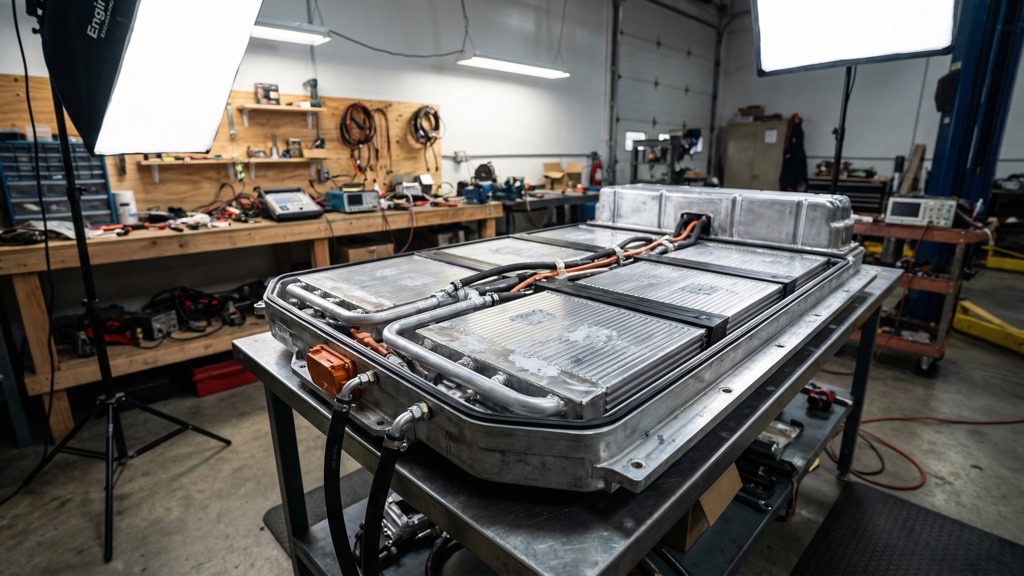
| Feature | NMC | LFP |
|---|---|---|
| Energy density | Higher | Lower |
| Heat tolerance | Good | Excellent |
| Cycle durability | Moderate | High |
| Better for frequent towing? | Good | Better |
LFP batteries tolerate repeated heat cycles better, making them slightly more resilient for heavy, frequent towing.
Thermal Management & Charging Speed Impact
Sustained towing increases battery temperature.
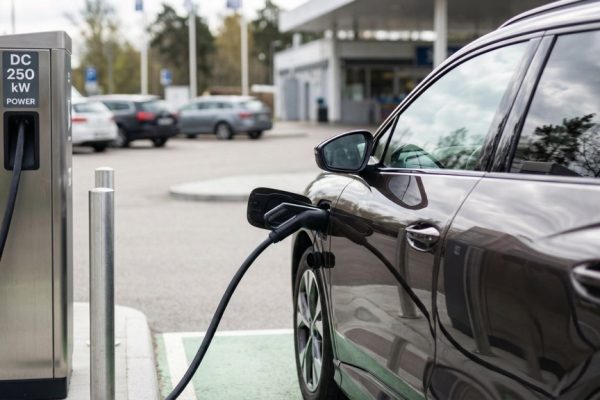
If the battery arrives hot at a fast charger:
- Charging speeds may reduce
- Peak charging (e.g., 250 kW) may not be sustained
- Cooling systems may prioritize temperature control over charge rate
Well-engineered systems (notably from Tesla) actively precondition batteries to optimize charge speed.
5-Year Battery Degradation Impact
| Usage Type | Extra Degradation (5 Years) |
|---|---|
| Rare towing (5–10 trips/year) | +1–2% |
| Moderate towing | +2–3% |
| Heavy frequent towing | +4–5% |
Assuming:
- Proper load limits respected
- Battery cooling functional
- Mostly 10–80% charging window
For most private owners, resale impact is minimal.
EV vs Diesel Towing Cost (Per 1,000 km)
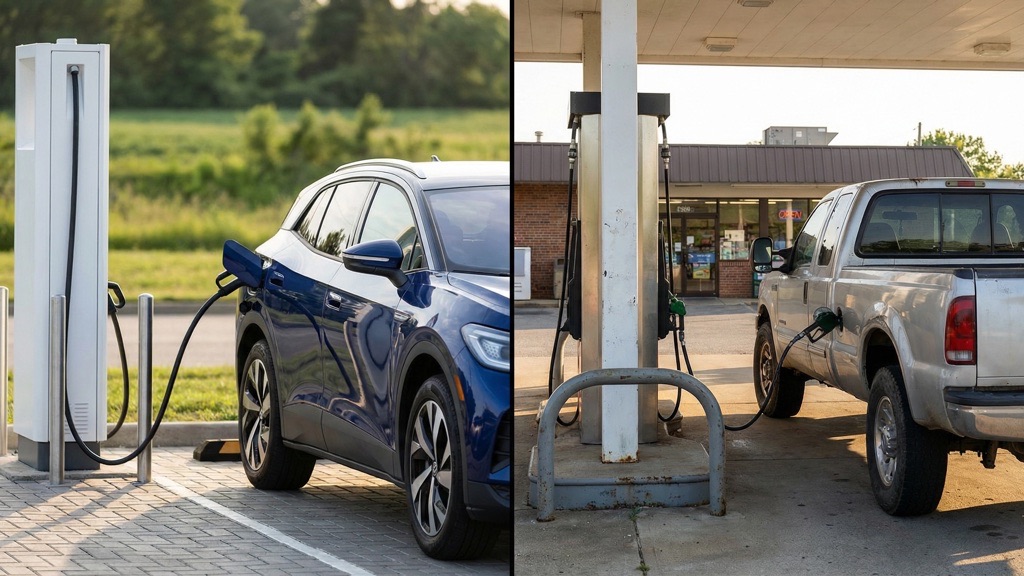
Electric
30 kWh/100 km × $0.20/kWh
= $6 per 100 km
= $60 per 1,000 km
Diesel
10 L/100 km × $1.50/L
= $15 per 100 km
= $150 per 1,000 km
Even with high consumption, EV towing often remains significantly cheaper per km.
Charging Strategy When Towing
- Charge between 10–80% for optimal speed
- Avoid repeated 90–100% fast charges
- Use trailer-aware route planning
- Choose pull-through chargers
- Precondition the battery before arrival
EV vs Gasoline Towing Comparison
| Feature | Electric | Diesel/Gas |
|---|---|---|
| Torque | Instant | Builds with RPM |
| Noise | Quiet | Loud under load |
| Cost per km | Lower | Higher |
| Refueling time | Longer | Shorter |
| Maintenance | Lower | Higher |
Real-World Scenarios
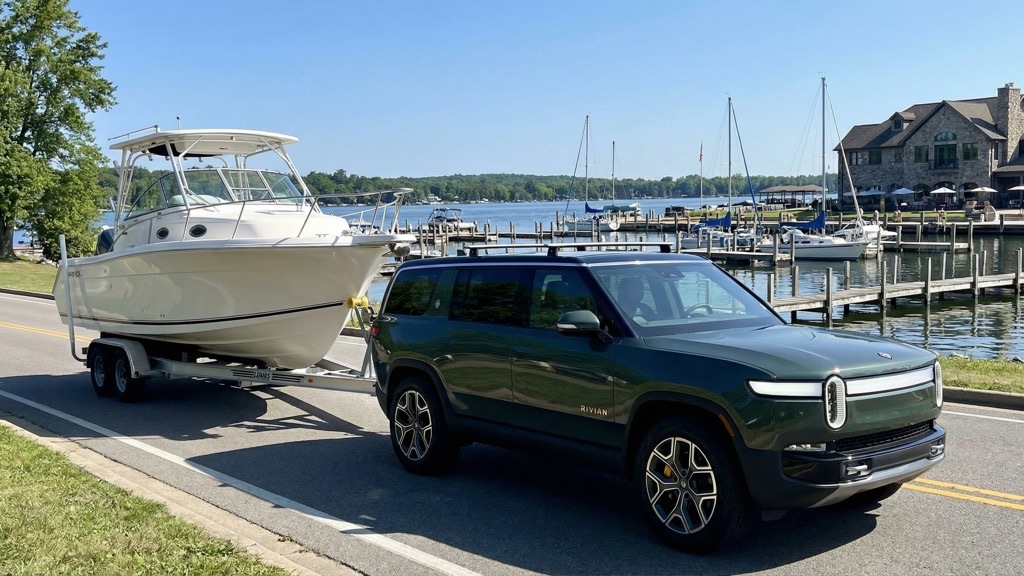
Weekend Camper (200–300 km trips)
Ideal EV use case.
Boat Owner Near Lake
Perfect scenario — short, predictable routes.
Cross-Country RV Travel
Possible, but requires patience and strategic charging.
Who Should Choose an EV for Towing?
✔ Recreational users
✔ Regional contractors
✔ Occasional trailer owners
❌ Long-haul heavy commercial towing
❌ Remote regions with sparse fast charging
Future of Electric Towing (2026+)
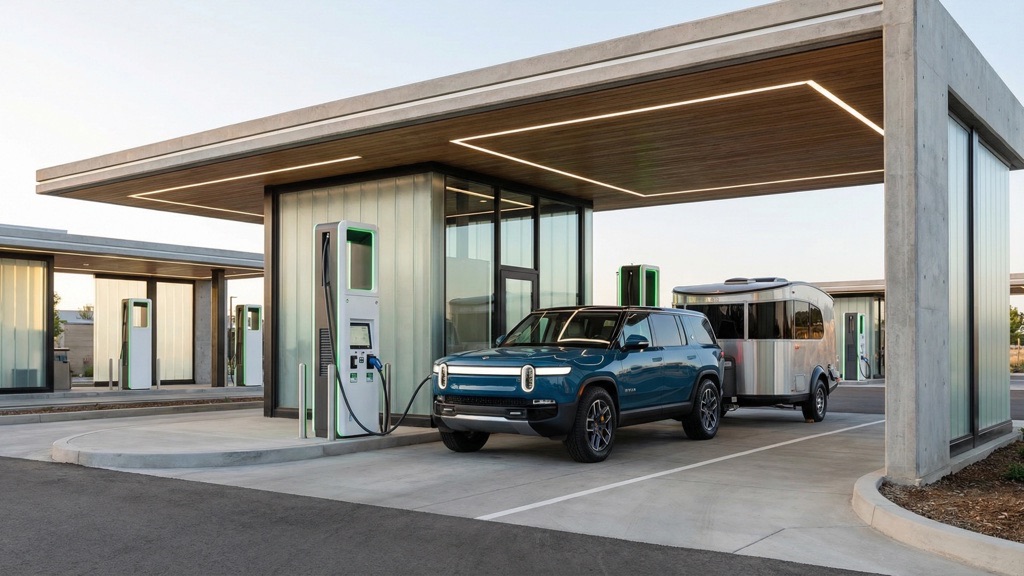
- 150–200 kWh battery packs
- 800V charging systems
- Trailer-integrated navigation
- More pull-through fast chargers
Towing capability will continue improving rapidly.
Final Verdict: Is Electric Car Towing Practical?
Yes — with planning.
Modern EVs deliver excellent towing performance.
Range management — not power — is the limiting factor.
For most recreational users, electric towing is entirely practical.
Summary
- Average range loss: 30–55%
- Extreme loss: Up to 65% (winter + high speed + camper)
- 5-year battery impact: Minor for occasional users
- Cost advantage: Often 40–60% cheaper than diesel
- Biggest mistake: Driving too fast while towing
- Expert takeaway: Slow down, manage heat, charge strategically
FAQ
How much range do you lose towing with an electric car?
Typically 30–55%, depending on trailer size, speed, and temperature.
What is the worst-case EV towing range loss?
Up to 60–65% in cold weather at high speeds with a large camper.
Is towing harmful to EV batteries long-term?
Occasional towing adds only 1–2% extra degradation over 5 years.
Does speed matter when towing an EV?
Yes. Higher speed dramatically increases aerodynamic drag and consumption.
Are electric trucks better for towing?
Generally, yes, due to larger battery packs and higher tow ratings.
Is EV towing still cheaper than diesel?
In most electricity markets, yes — often 40–60% cheaper per km.