
INTRO
Choosing between a mid-drive and a hub motor e-bike in 2026 is harder than it should be.
Power numbers overlap. Torque claims look impressive. Marketing makes both systems sound identical.
But in real-world riding — hills, cargo, daily commuting, long-term ownership — the differences are clear.
This guide is based on multi-year real-world use of both systems across urban, hilly, and mixed terrain environments. No hype. No brand bias. Just practical buying logic that helps you choose correctly.
TL;DR
Best for hills: Mid-drive
Best for flat commuting: Hub motor
Most natural ride feel: Mid-drive
Lowest upfront cost: Hub motor
Most maintenance-friendly: Hub motor
Most efficient under load: Mid-drive
Typical torque (hub): 35–80 Nm
Typical torque (mid-drive): 50–90 Nm
Buy a mid-drive if: You live in a hilly area, carry cargo, or ride long distances.
Buy a hub motor if: Your terrain is flat, and budget matters more than refinement.
Table of Contents
- What Is a Hub Motor?
- What Is a Mid-Drive Motor?
- Torque vs Watts: What Actually Matters
- Hill Performance Explained
- Battery Efficiency & Range
- Speed Classes (US & EU)
- Ride Feel: Cadence vs Torque Sensors
- Maintenance & Hidden Costs
- Common Buying Mistakes
- Real-Life Rider Scenarios
- Price Guide (2026 Reality)
- Who Should Buy Each Type
- FAQ
- Final Expert Verdict
What Is a Hub Motor?
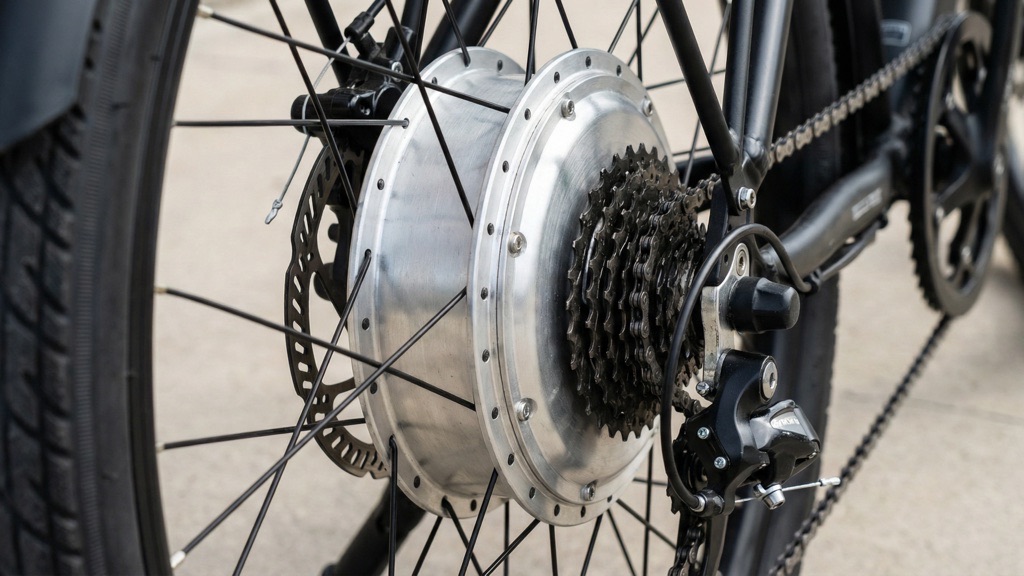
A hub motor is built into the front or rear wheel and drives the wheel directly.
It does not use the bike’s gears.
Two Main Designs
- Geared hub motor – lighter, higher torque, soft mechanical sound
- Direct-drive hub motor – heavier, nearly silent, smoother delivery
Typical 2026 Specs
- 250W (EU legal standard)
- 500–750W (common in the US market)
- 35–80 Nm torque
Hub motors dominate entry-level and mid-range commuter bikes.
What Is a Mid-Drive Motor?
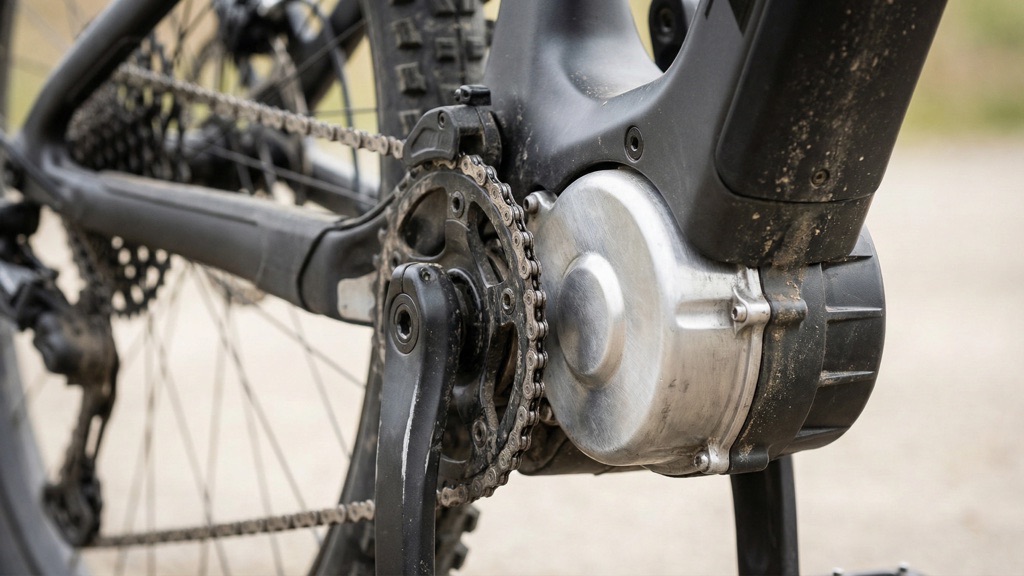
A mid-drive motor sits at the crank and powers the chain.
Established systems from:
- Bosch
- Shimano
- Yamaha
have used this architecture for years.
Typical 2026 Specs
- 250W nominal (EU compliant)
- 50–90 Nm torque
- Almost always paired with torque sensors
Mid-drives dominate premium commuter, cargo, and electric mountain bike segments.
Torque vs Watts: Why Power Numbers Mislead
Watts measure electrical input power.
Torque (Nm) measures rotational force.
Torque determines:
- Hill climbing ability
- Acceleration feel
- Cargo capability
But here is the key difference:
A mid-drive uses the bike’s gears.
That means torque is multiplied mechanically.
 Reviews
Volvo EX90 Review (2025): Real-World Range, Charging Limits & 5-Year Ownership Analysis
The EX90 is Volvo’s technological reset — a new EV-only platform, centralized Nvidia-based computing, Google-native infotainment, and LiDAR integrated into...
 Reviews
RadRover vs Aventon Aventure (2026): Which Fat Tire E-Bike Should You Buy?
Two of the most searched fat-tire e-bikes in North America are the RadRover from Rad Power Bikes and the Aventure...
 Reviews
Is Buying a Used Electric Car Worth It in Europe?
From 2023 to 2025, Europe experienced the sharpest correction in EV prices in modern automotive history. Lease returns peaked in...
This is why:
A 250W mid-drive can climb more efficiently than a 750W hub motor.
The hub motor cannot shift gears. When RPM drops on steep hills, efficiency drops too.
Hill Performance: Real-World Mechanics
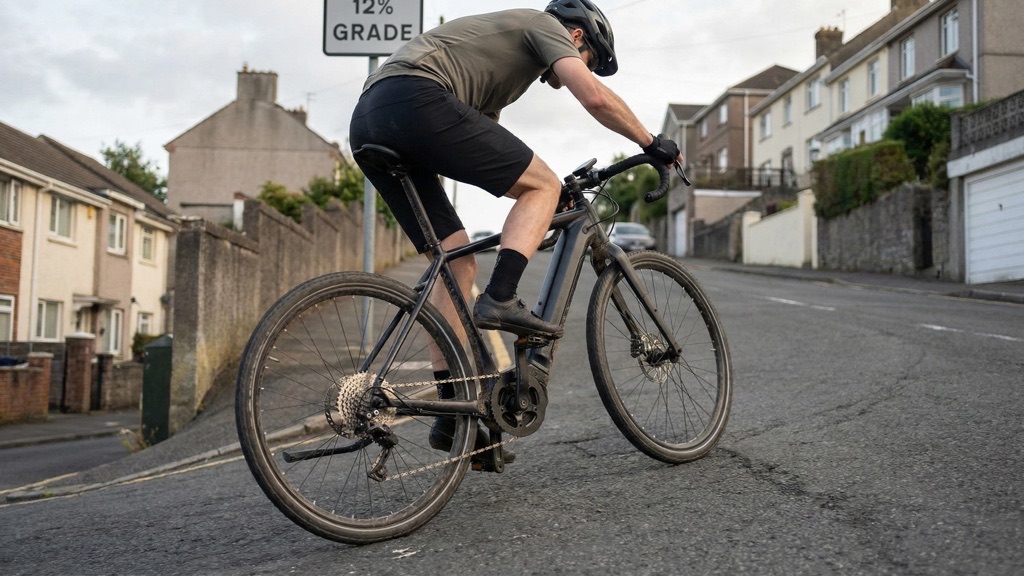
On a 10–12% incline:
Hub Motor
- Motor RPM decreases
- Efficiency drops
- Heat increases
- The battery drains faster
Mid-Drive
- Rider shifts to a lower gear
- Motor stays in optimal RPM range
- Torque multiplies
- Efficiency remains stable
Practical Result
On rolling terrain, mid-drives are typically 10–20% more efficient.
On steep climbs, the difference becomes very noticeable.
Battery Efficiency & Real-World Range
Battery capacity is measured in watt-hours (Wh).
Example:
- 500 Wh battery = 500 watts for 1 hour (theoretical)
Real-World Mixed Riding (500–625 Wh)
| Terrain | Hub Motor | Mid-Drive |
|---|---|---|
| Flat city | 50–80 km | 55–85 km |
| Rolling hills | 40–65 km | 50–75 km |
| Steep terrain | 30–50 km | 45–70 km |
Manufacturer range claims are often tested in ideal conditions. Real riding includes wind, weight, and elevation.
Speed Classes (US & EU)
Motor type often affects compliance.
European Union
- 250W nominal
- 25 km/h assistance limit
- No throttle
Both hub and mid-drive can comply equally.
United States
| Class | Speed | Throttle | Common Motor Type |
|---|---|---|---|
| Class 1 | 20 mph | No | Mid-drive & hub |
| Class 2 | 20 mph | Yes | Mostly hub |
| Class 3 | 28 mph | No throttle | Often mid-drive |
Most mid-drives are Class 1 or 3.
Throttle-equipped bikes are typically hub motor systems.
Always check local regulations. Laws change and vary by state/country.
Ride Feel: Cadence vs Torque Sensors
Many hub bikes use cadence sensors.
That means:
- The motor activates when the pedals rotate
- Assistance may feel delayed
Most mid-drives use torque sensors.
That means:
- Assistance responds to how hard you push
- Feels smooth and proportional
However, some modern hub motor bikes now use torque sensors, narrowing the difference.
Sensor type influences ride feel more than motor location.
Maintenance & Hidden Costs
Hub Motor
Pros:
- Lower drivetrain wear
- Fewer shifting-related issues
Cons:
- Rear wheel removal more complex
- Motor failure requires wheel replacement
Mid-Drive
Pros:
- Efficient under load
- Better long-term climbing performance
Cons:
- Chain life: 1,500–3,000 km
- Cassette replacement is more frequent
High-mileage riders should factor drivetrain cost into ownership.
Common Buying Mistakes
- Choosing based on watts alone
- Ignoring terrain
- Underestimating drivetrain wear on mid-drives
- Overpaying for torque not needed in flat cities
- Assuming all hub motors feel the same
Motor type should match the terrain first.
Real-Life Rider Scenarios
Scenario 1: Flat City Commuter
20 km daily, minimal hills.
Hub motor offers lower cost and sufficient performance.
Scenario 2: Suburban Rider With Steep Hills
10–15% inclines daily.
Mid-drive provides better efficiency and climbing control.
Scenario 3: Cargo Parent
Child seat or cargo rack, added weight.
Mid-drive handles load more efficiently.
Expert Insight (Based on Multi-Year Use)
After multiple seasons of riding both systems across city commuting and steep hill routes, the most consistent difference appears under sustained load.
Mid-drive motors maintain optimal RPM when paired with correct gearing. Hub motors lose efficiency when forced to climb slowly at low rotational speeds.
In flat urban environments, this difference becomes minor.
On hills, it becomes decisive.
Terrain determines the correct motor — not advertised wattage.
Price Guide (2026 Market Reality)
$800–$1,200
- Basic hub motor
- Cadence sensor
- Mechanical brakes
$1,200–$1,800
- Improved hub motor
- Better battery (500–625 Wh)
- Hydraulic brakes
$2,000–$2,800
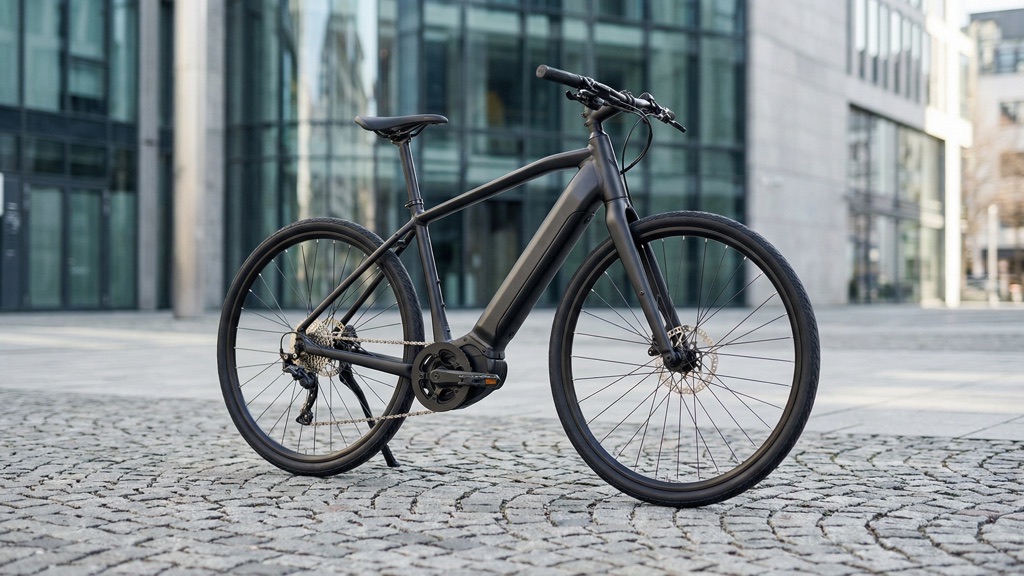
- Entry mid-drive
- Torque sensor
- Higher quality drivetrain
$3,000–$5,000+
- Premium mid-drive
- Refined integration
- Advanced displays & tuning
The practical sweet spot for daily riders is typically $2,500–$3,500.
Who Should Buy a Hub Motor?
- Flat terrain
- Budget-conscious
- Short to mid-distance commuting
- Prefer throttle capability
- Lower maintenance expectations
Who Should Buy a Mid-Drive?
- Hilly terrain
- Cargo hauling
- Long-distance commuting
- Performance-focused riders
- Riders prioritizing efficiency
Final Expert Verdict
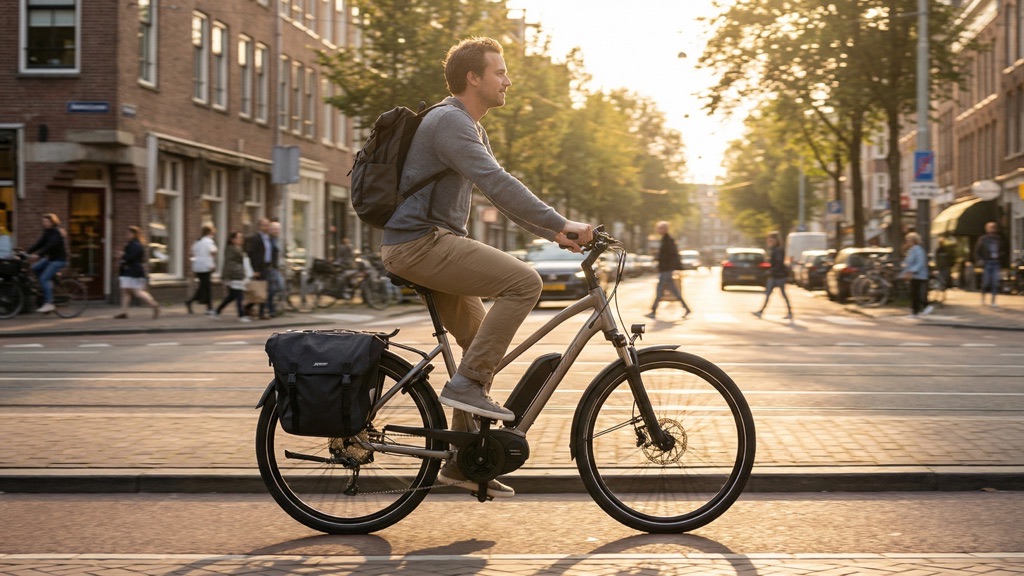
Both systems are mature and reliable in 2026.
Hub motors are practical, affordable, and sufficient for flat-city riding.
Mid-drives are more efficient under load, climb better, and feel more refined.
The right choice depends on terrain and riding style.
Choose based on how and where you ride — not on watt numbers alone.
FAQ
Is mid-drive always better?
No. It’s better for hills and load efficiency. Hub motors are excellent for flat urban riding.
Do mid-drives wear chains faster?
Yes. Because power goes through the drivetrain, wear increases compared to hub systems.
Are hub motors unreliable?
No. They are mechanically simple and generally reliable.
Is torque more important than watts?
Yes. Torque determines hill strength and acceleration feel.
Which motor is quieter?
Direct-drive hub motors are typically the quietest.