
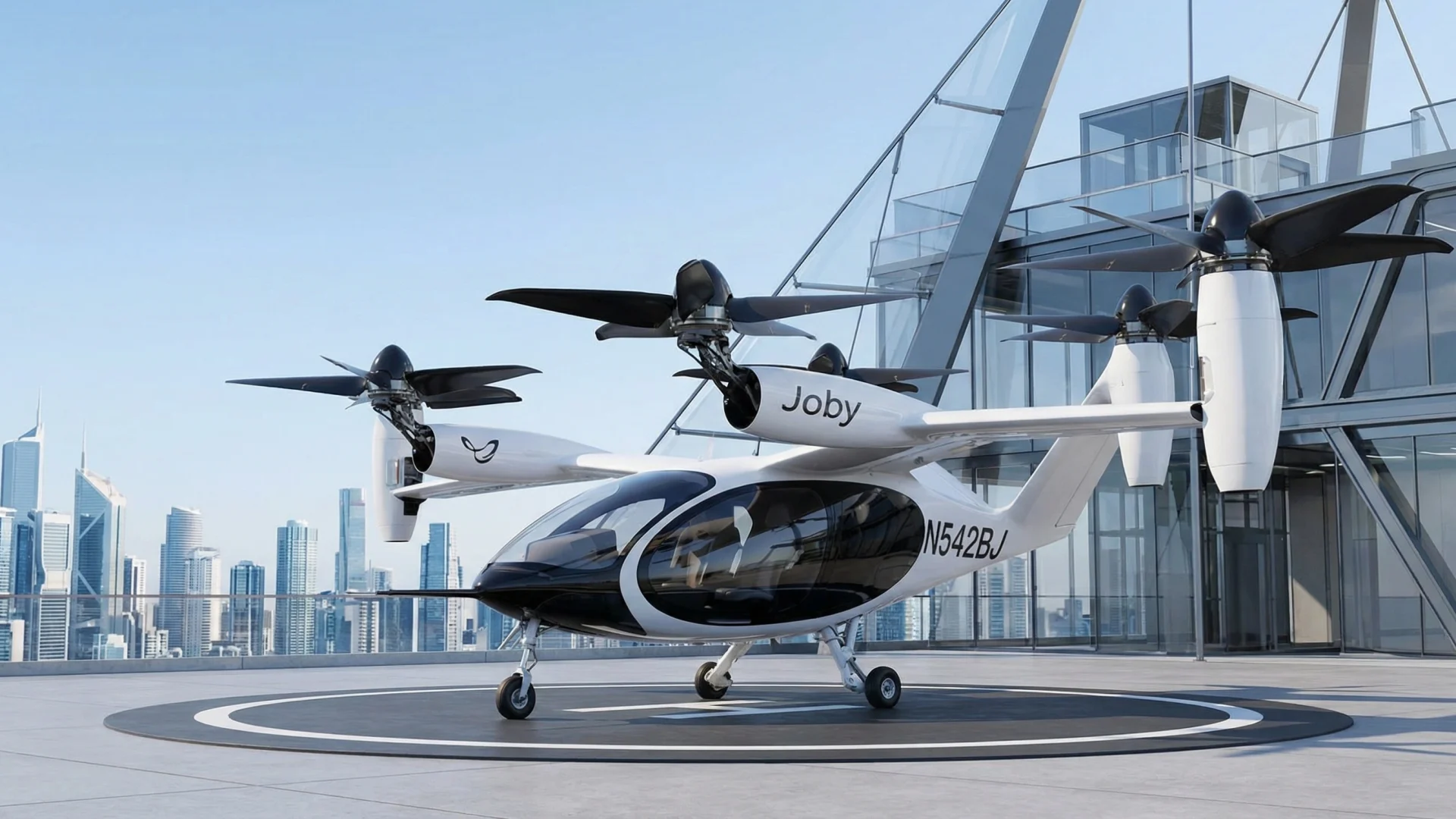
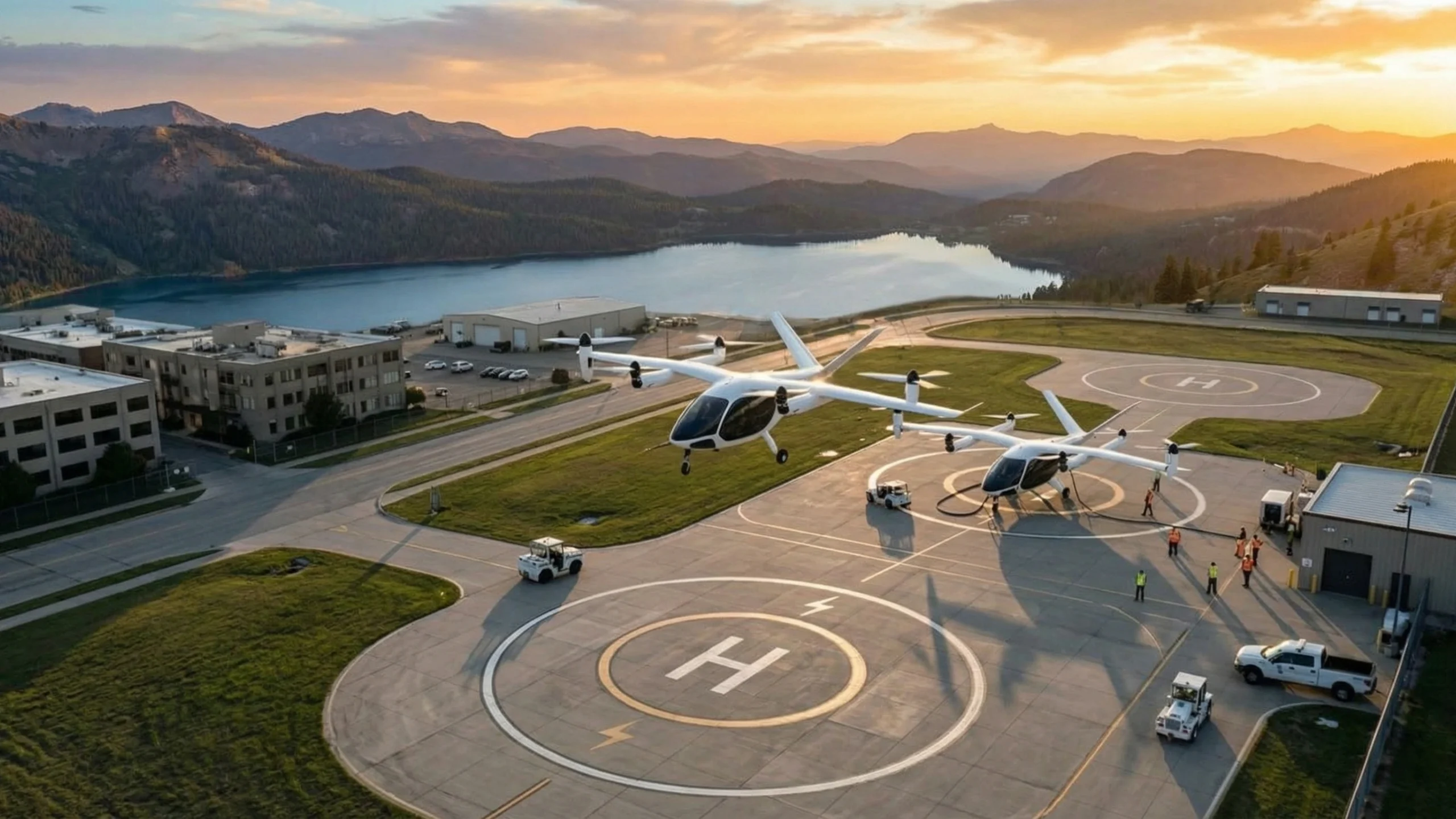
The Federal Aviation Administration has officially greenlit commercial air taxi operations across the United States, with eight pilot programs launching this summer across 26 states. The Advanced Air Mobility and eVTOL Integration Pilot Program (eIPP) represents the most significant regulatory milestone for electric vertical takeoff and landing aircraft, moving the industry from certification testing into real-world passenger and cargo operations.
Transportation Secretary Sean Duffy unveiled the initiative, which will test operational concepts including urban air taxi services, regional passenger transportation, cargo delivery, emergency medical response, and autonomous flight technologies. The program marks a dramatic acceleration from years of regulatory delays, finally allowing companies like Joby Aviation, Archer Aviation, BETA Technologies, and Wisk to transition from prototype testing to revenue-generating flights.

Program Scope and Geographic Distribution
The eIPP encompasses eight distinct projects spanning 26 states, each with specific operational focuses. Texas will support regional flights connecting Dallas, Austin, San Antonio, and eventually Houston through partnerships with the Texas Department of Transportation. The Port Authority of New York and New Jersey will oversee four industry partners testing 12 operational concepts across New England.
Additional testing locations include Utah (coordinating Pacific Northwest, Rocky Mountain, and Plains operations), Florida (focusing on cargo, passenger transport, and medical response), Louisiana (testing cargo and personnel transportation for offshore and energy sector operations), North Carolina, Pennsylvania, and the City of Albuquerque. This geographic diversity ensures the program tests eVTOLs across varied terrain, weather conditions, and operational environments.
Key Specifications and Technical Requirements
| Specification | Details |
|---|---|
| Aircraft Type | Electric or hybrid vertical takeoff and landing aircraft |
| Takeoff/Landing Space | Relatively confined spaces (rooftops, vertiports) |
| Typical Cruise Speed | ~200 mph |
| Safety Standard | Less than one in a billion flight hour failure rate |
| Power Systems | Multiple redundant electric motors with battery arrays |
| Operational Concepts | Passenger transport, cargo delivery, emergency medical, and autonomous operations |
The FAA’s safety requirements demand a failure rate of less than one in a billion flight hours—approximately 1,500 times safer per mile than average teenage drivers. This stringent standard has driven years of development, but the eIPP now permits manufacturers to demonstrate compliance through actual operations rather than extended laboratory testing.

Industry Leaders and Current Status
Four primary manufacturers are positioned to lead initial operations: Joby Aviation, Archer Aviation, BETA Technologies, and Wisk Aero. Joby has completed thousands of test flights with its S4 aircraft and has been awaiting final FAA approval for its G-2 issue paper, which describes compliance with certification standards. Archer has signed a memorandum of agreement with San Francisco to explore vertiport development at the Kilroy Oyster Point facility, with plans to offer flights between San Francisco and Bay Area cities including Oakland, San Jose, Livermore, and Napa—replacing 60- to 90-minute car commutes with 10- to 20-minute flights.
 Cars
Cars
Nio’s Affordable Family-Friendly Onvo L60 EV: A Real Tesla Model Y Rival
Nio is shaking up the electric vehicle market again with its new “family-focused” Onvo brand and its first offering, the...
 News
News
ENGWE M20 3.0 Hits 40 MPH Top Speed with 3300W Motor for Under $1700
The ENGWE M20 3.0 electric bike achieves a 40 mph top speed in off-road mode, powered by a 3300W peak...
 Cars
Cars
BMW i4 Gets A New Face And Laser Tail Lights
BMW’s all-electric i4 four-door liftback receives a subtle refresh for 2025, featuring a redesigned face with full LED headlights, laser-accented...
BETA received FAA approval for its certification basis and opted to wait for July 2024’s advisory circular containing eVTOL guidance. Wisk accepted its G-1 Stage 2 issue paper in late 2024. Additional participants include Electra, Ampaire, Elroy Air, and Reliable Robotics.
Regulatory Acceleration and Congressional Support
The eIPP was created under President Trump’s “Unleashing Drone Dominance” executive order. Congressional support has intensified through the bipartisan Aviation Innovation and Global Competitiveness Act, which directs the FAA to streamline eVTOL certification by using industry-developed consensus standards to the “maximum extent possible” and to provide manufacturers with 270-day response timelines for issue papers.
The FAA’s 2024 special federal aviation regulation on pilot training and initial operations already alludes to using industry consensus standards for compliance, but the new legislation significantly expands this approach. This represents a fundamental shift from traditional certification processes, allowing manufacturers greater input into safety standards while maintaining FAA oversight.
Autonomous Operations and Future Implications
Several pilot programs, including those in North Carolina and Albuquerque, are specifically evaluating autonomous flight capabilities. Joby’s “Superpilot” system is designed to eventually eliminate the need for human pilots, suggesting that crewed operations may represent only an initial phase of eVTOL deployment. This trajectory raises questions about pilot certification timelines and long-term employment in the sector.
Competitive Context and Global Positioning
The eIPP represents a strategic response to international competition, particularly from China. Chinese companies like eHang have already deployed autonomous aerial vehicle taxi services, while American manufacturers have faced extended regulatory delays. The program positions the United States to establish operational standards and market leadership before international competitors dominate the emerging sector.
Comparison with Competing Technologies
| Technology | Takeoff Method | Operational Status | Primary Use Case |
|---|---|---|---|
| eVTOL Air Taxis (US) | Vertical | Pilot programs launching summer 2026 | Urban/regional passenger transport |
| Autonomous Aerial Vehicles (China) | Vertical | Commercial operations active | Passenger transport, cargo |
| Traditional Helicopters | Vertical | Established | Emergency, executive transport |
| Regional Aircraft | Conventional runway | Established | Regional passenger transport |
eVTOLs offer advantages over helicopters through quieter, cleaner electric operation and lower operating costs comparable to rideshare services. Unlike traditional aircraft, they require no runway infrastructure. However, Chinese autonomous systems already operate commercially, while US eVTOLs remain in pilot phases.
Unanswered Questions and Implementation Challenges
Several critical details remain unconfirmed: specific pricing for passenger flights, exact launch dates for each pilot program location, and timeline for transitioning from pilot operations to commercial service. The FAA’s ability to coordinate across 26 states while maintaining safety standards presents operational complexity. Additionally, the integration of autonomous systems into national airspace while maintaining public safety and regulatory oversight requires unprecedented coordination between federal aviation authorities and state transportation departments.
Verdict: The eIPP represents a watershed moment for American aviation innovation, finally translating a decade of technological development into operational reality. This summer’s launches will determine whether eVTOLs can deliver on promises of faster, cleaner urban mobility or whether regulatory and operational challenges prove insurmountable. The program is designed for manufacturers seeking to prove commercial viability, infrastructure developers planning vertiport investments, and transportation agencies exploring last-mile connectivity solutions. Success here will reshape regional transportation; failure could delay the sector by years. Watch Texas, Florida, and New York operations most closely—these regions will provide the clearest indicators of whether air taxis become mainstream transportation or remain a niche technology.