
TL;DR (Quick Answer)
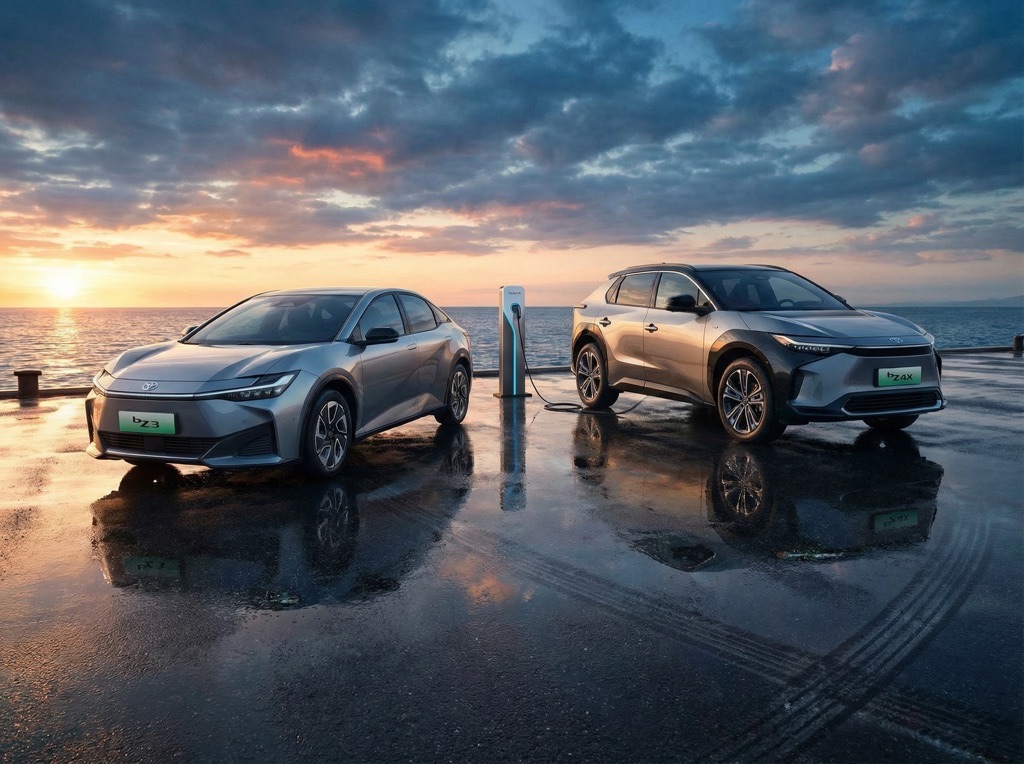
Toyota will introduce six new battery-electric vehicles (BEVs) in Europe by 2026, focusing primarily on compact, mid-size, and large SUVs. The strategy marks a decisive shift from Toyota’s hybrid-first approach toward full electrification, aiming to rapidly scale EV sales while leveraging shared platforms, competitive pricing, and strong brand trust.
Toyota is executing an aggressive battery-electric vehicle expansion across Europe, delivering on its commitment to introduce six new BEV models by the end of 2026. The Japanese automaker is targeting Europe’s most lucrative market segments—B, C, and D-segment SUVs—with a lineup designed to compete directly against established EV players while maintaining Toyota’s reputation for practicality and reliability.
This expansion represents a critical inflection point for Toyota’s European strategy. By 2026, the company aims to have 15 zero-emission models across the Toyota and Lexus brands, with battery-electric vehicles accounting for over 20% of sales and reaching 250,000 units annually. The initiative signals Toyota’s commitment to its multi-pathway approach to carbon neutrality in Europe by 2035, balancing battery-electric, plug-in hybrid, hybrid, and hydrogen fuel cell technologies.
Background: Toyota’s European Electrification Journey
Toyota has already sold six million electrified vehicles in Europe since 1995, establishing itself as a leader in emissions reduction across the continent. The company’s electrified vehicle share in Europe currently stands at 71%, with expectations to reach 75% by 2024. However, battery-electric vehicles have historically represented a smaller portion of this mix, with hybrids dominating Toyota’s European lineup.
The shift toward dedicated BEV models reflects changing market dynamics and regulatory pressures. European emissions standards are tightening, and consumer demand for pure-electric vehicles continues to accelerate. Toyota’s previous BEV offering—the bZ4X, launched in 2022—demonstrated the company’s capability in the segment but also revealed the need for a broader portfolio to capture market share across multiple customer preferences and price points.
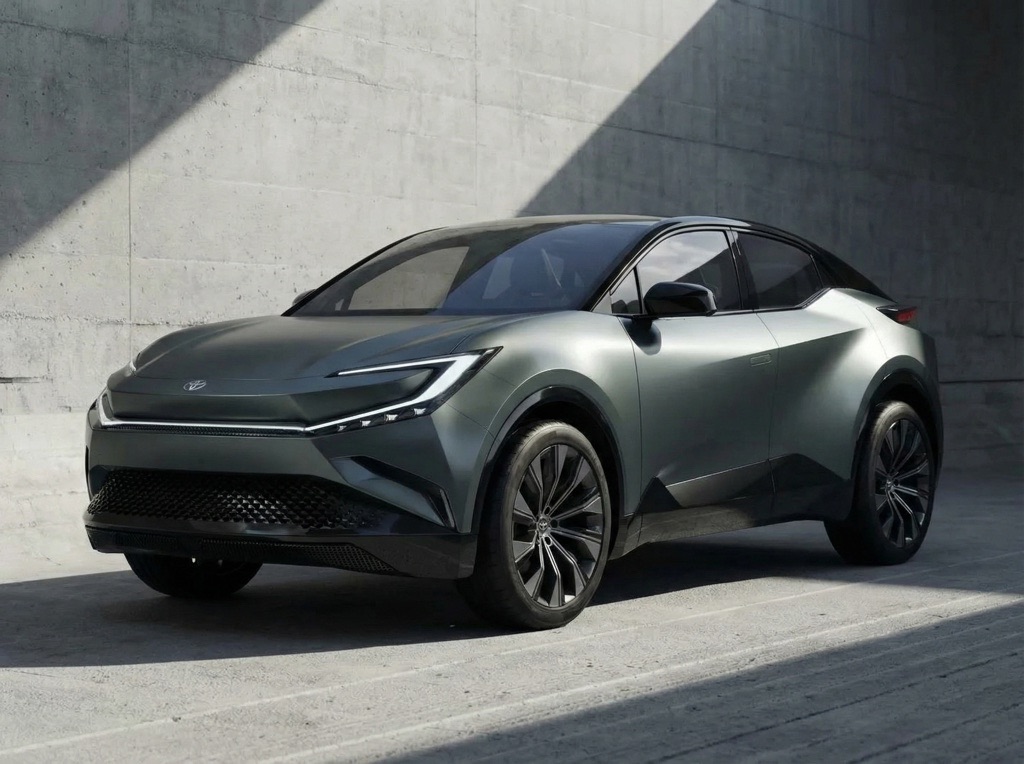
Key Specifications: The New BEV Lineup
| Model | Segment | Battery Options | Power Output | Launch Timeline |
|---|---|---|---|---|
| bZ4X (Updated) | D-Segment SUV | 57.7 kWh / 73.1 kWh | Up to 343 DIN hp (252 kW) | 2025 |
| Urban Cruiser | B-Segment SUV | Details not yet confirmed | Details not yet confirmed | 2025 |
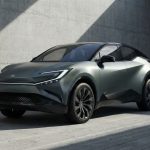
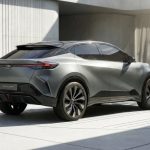
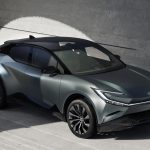
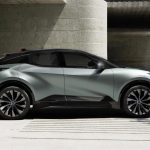
| C-HR+ | C-Segment SUV | 57.7 kWh / 77 kWh | 167–343 DIN hp | 2025 |
| Four Additional Models | Various Segments | Details not yet confirmed | Details not yet confirmed | 2026 |
Technical Innovation: Next-Generation Battery Architecture
Toyota’s BEV expansion is underpinned by a modular design architecture featuring a Gigacast chassis, minimized component count, and a new operating system dedicated to electric vehicles. This eTNGA (electric Toyota New Global Architecture) platform enables efficient production across multiple segments while maintaining authentic SUV character and practicality.
The new bZ4X exemplifies this approach, offering customers two lithium-ion battery pack options (57.7 and 73.1 kWh gross capacity) with enhanced electric motors delivering up to 343 DIN hp. The vehicle includes a new optional 22 kW onboard charger, battery pre-conditioning for faster charging, and intelligent BEV-focused route planning software. All-wheel drive capability is available across the lineup, addressing a key differentiator for Toyota in the competitive European SUV market.
Beyond current offerings, Toyota is preparing a revolutionary battery roadmap. The company plans to introduce three new battery technologies: a high-performance lithium-ion variant offering twice the range and 20% cost reduction compared to the current bZ4X; a low-cost LFP battery with 20% greater range and 40% cost reduction; and a high-performance bipolar battery with even lower costs and extended range. Most significantly, Toyota targets commercialization of solid-state batteries in 2027-2028, with production capacity for several tens of thousands of vehicles.
 Cars
Cars
Denza Z9: The Chinese Luxury Sedan Challenging European Premium EVs
Move over, German luxury cars – there’s a new challenger in town. The Denza Z9, BYD’s latest luxury offering, brings...
 Cars
Cars
China Bans Yoke Steering Wheels Starting January 2027: Safety Standards Eliminate Tesla Design
China’s Ministry of Industry and Information Technology has effectively banned yoke-style steering wheels through new mandatory safety regulations taking effect...
 Cars
Cars
BYD Seal 08 Flagship Sedan Enters Winter Testing – Ocean Series’ 2026 Q1 Launch Nears
BYD has released winter testing images of the Seal 08 flagship sedan, confirming active development ahead of its Q1 2026...
Market Positioning: Targeting Europe’s Core SUV Segments
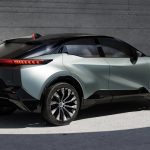
Toyota’s strategy focuses on the B, C, and D-segment SUV categories, which represent the principal segments of the European automotive market. This segmentation allows the company to address diverse customer needs: the Urban Cruiser targets budget-conscious buyers seeking compact electric SUVs; the C-HR+ appeals to mainstream customers wanting contemporary design with practical performance; and the updated bZ4X maintains Toyota’s presence in the premium D-segment where authentic SUV capability commands premium pricing.
The naming strategy represents a deliberate choice to leverage brand recognition. Rather than adopting abstract designations like “bZ,” Toyota is using familiar model names—C-HR+, Urban Cruiser—to strengthen customer recognition and reduce purchase hesitation among traditional Toyota buyers. This approach contrasts with competitors like Volkswagen (ID. series) and BMW (i series), which use distinct EV-only naming conventions.
Toyota’s commitment to all-wheel drive across the lineup addresses a critical European market preference. Many competitors offer AWD only on higher-trim variants or specific models; Toyota’s emphasis on making genuine all-wheel drive available across configurations positions the brand as offering authentic SUV performance rather than compromised city cars with electric powertrains.
Competitive Context: Where Toyota Stands
Toyota’s six-model BEV expansion by 2026 places it in direct competition with established EV manufacturers. Volkswagen’s ID. The family already spans multiple segments with the ID.3, ID.4, and ID.5 established in European markets. BMW’s i4 and iX compete in premium segments, while Hyundai and Kia have aggressively expanded their EV portfolios with the Ioniq 5, Ioniq 6, and EV6.
However, Toyota’s differentiation lies in its multi-pathway strategy and proven reliability heritage. While competitors have committed almost exclusively to battery-electric vehicles, Toyota maintains investments in hydrogen fuel cells (Mirai, Crown) and continues hybrid development. This approach hedges against regulatory uncertainty and appeals to customers skeptical about pure-electric adoption. Additionally, Toyota’s reputation for durability and after-sales service provides psychological reassurance in a market where EV reliability concerns persist.
The updated bZ4X with up to 343 DIN hp directly competes with the Volkswagen ID.5 (up to 295 hp) and BMW iX xDrive50 (up to 516 hp), positioning Toyota in the performance-oriented segment while maintaining efficiency credentials.
Unanswered Questions and Market Challenges
Despite Toyota’s ambitious timeline, several critical details remain unconfirmed. The four additional BEV models planned for 2026 have not been formally announced, leaving uncertainty about market coverage and pricing strategy. Specific range figures for the new models are not yet published, making direct efficiency comparisons with competitors impossible. Pricing for the updated bZ4X and new C-HR+ has not been disclosed, raising questions about competitiveness against established EV offerings.
Additionally, Toyota’s solid-state battery timeline—2027-2028 commercialization—places it behind competitors like Samsung and QuantumScape, which have announced earlier production targets. The production capacity of “several tens of thousands of vehicles” suggests limited initial availability, potentially constraining market impact in the critical 2027-2029 period.
European charging infrastructure remains a variable outside Toyota’s control. While the company emphasizes battery preconditioning and intelligent route planning, widespread adoption depends on continued investment in public charging networks across the continent.
Verdict: A Credible but Cautious Expansion
Toyota’s commitment to six new BEV models by 2026 represents a genuine strategic pivot, not merely incremental product development. The focus on core SUV segments, familiar naming conventions, and authentic all-wheel drive capability demonstrates an understanding of European customer preferences. The modular eTNGA platform and advanced battery roadmap indicate sa erious long-term commitment to electrification.
However, execution risk remains. Toyota’s historical strength in hybrids has sometimes translated to conservative EV development; the company must prove it can match the performance, charging speed, and software sophistication that customers now expect from dedicated EV competitors. The four unannounced 2026 models will determine whether this expansion truly addresses market gaps or represents incremental portfolio filling.
This strategy is designed for Toyota loyalists seeking to transition to electric vehicles without abandoning brand familiarity, and for European customers prioritizing practicality and reliability over cutting-edge technology. It is not positioned for early adopters seeking the latest EV innovation—that market remains dominated by Tesla, Volkswagen, and Hyundai-Kia. Success will ultimately depend on whether Toyota can deliver these vehicles on schedule, at competitive pricing, with the reliability customers expect from the brand.