

For years, choosing a compact electric Kia meant accepting one thing: calm competence. The EV3, EV4, and EV5 were designed to be quiet, comfortable, and efficient—excellent daily drivers, but hardly the sort of cars that made your pulse rise on a twisty road. That changes in 2026.
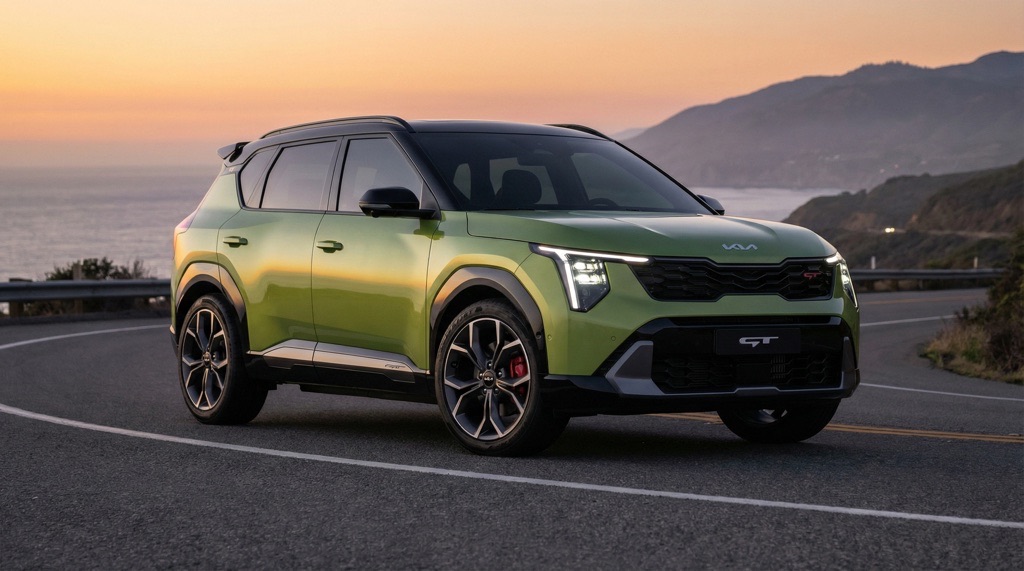
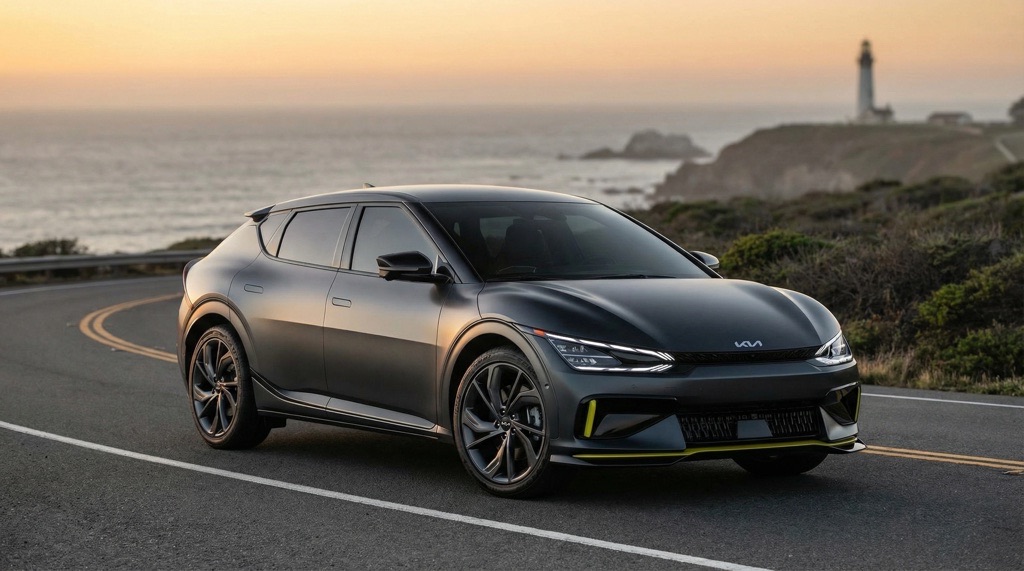
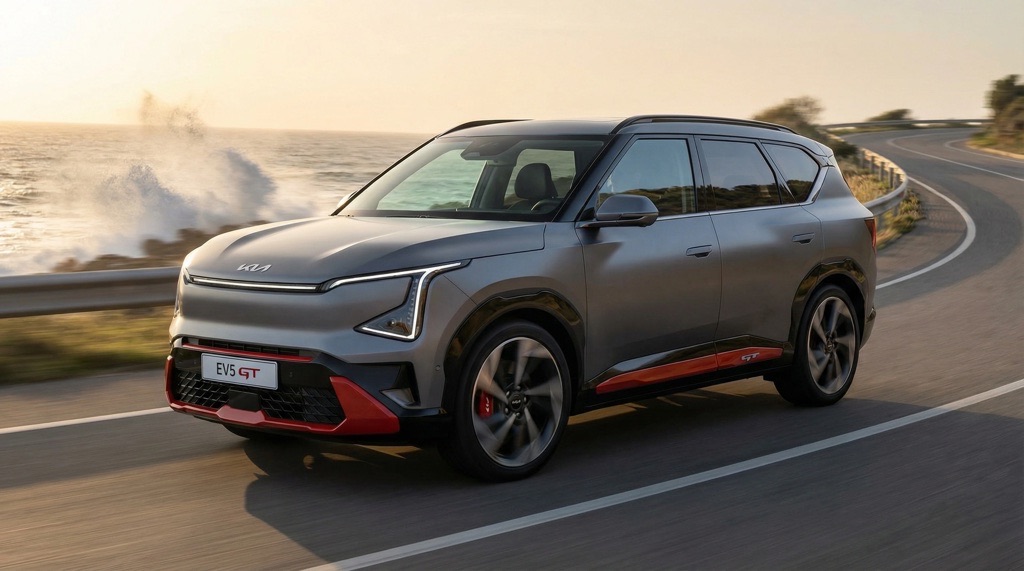
Kia has officially introduced GT versions of the EV3, EV4, and EV5, adding more power, all-wheel drive, sportier chassis tuning, and even artificial engine sound. These models won’t replace the wild EV6 GT, but they finally inject real excitement into Kia’s smaller EV lineup.
What Makes Kia’s New GT Models Different?
The core upgrade is simple but effective: a second electric motor on the rear axle.
This turns all three cars into dual-motor AWD EVs, improving traction, acceleration, and cornering balance. Kia has also reworked suspension, steering feel, and driver-focused software to make these cars feel more alive.
Powertrain Breakdown: EV3 GT, EV4 GT, EV5 GT
EV3 GT & EV4 GT
Both models share the same drivetrain:
-
Front motor: 194 hp
-
Rear motor: 94 hp
-
Total output: 282 hp
-
All-wheel drive
This setup strikes a balance between performance and efficiency, keeping these cars quick without pushing them into excessive power territory.
EV5 GT
The larger and heavier EV5 GT gets extra muscle:
-
Front motor: 208 hp
-
Rear motor: 94 hp
-
Total output: 302 hp
 Cars
Cars
Chery Exeed Liefeng: 1500 km Range on Solid-State Battery at -30°C in 2026
Chery’s Exeed Liefeng shooting brake will launch in 2026 with a Rhino S solid-state battery delivering 1,500 km range even...
 Cars
Cars
Tesla Model Y Loses Power at 72 km Range on Chinese Highway, Sparking EV Safety Buffer Debate
A Tesla Model Y abruptly lost power on a Chinese highway despite displaying 72 km of remaining range, slowing to...
 Cars
Cars
China’s BYD Yangwang U9 Xtreme Breaks World Speed Record, Surpassing Bugatti
BYD Shakes Up the Hypercar World For decades, the title of world’s fastest car has been a private competition between...
-
All-wheel drive
Earlier speculation suggested outputs closer to 400 hp, but Kia clearly chose drivability and range over headline-grabbing numbers.
Acceleration: A Big Step Up
| Model | 0–100 km/h |
|---|---|
| EV4 GT | 5.6 seconds |
| EV3 GT | 5.7 seconds |
| EV5 GT | 6.2 seconds |
These figures represent a dramatic improvement over the single-motor versions and place the GT models firmly in the “quick hot EV” category.
Chassis, Suspension & Driving Tech
Kia didn’t stop at adding power.
Key GT Upgrades
-
Adaptive electronic suspension with firmer tuning
-
Dedicated GT drive mode
-
Sharper steering calibration
-
Reduced body roll in corners
The goal isn’t track domination—it’s confidence and fun on real roads.
Fake Gears, Real Fun? Kia Thinks So
Borrowing a trick from the Hyundai Ioniq 5 N, Kia equips the GT models with:
-
Virtual Gear Shift (VGS)
-
Synthetic engine sound
There’s no actual gearbox, of course. Instead, software briefly interrupts power delivery to simulate upshifts and downshifts. It’s artificial—but for drivers who miss the drama of combustion engines, it adds personality.
Interior & Exterior GT Touches
Inside
-
Sportier bucket-style seats with stronger side bolstering
-
Three-spoke GT steering wheel
-
Performance-focused digital displays
Outside
-
Subtle GT badging
-
Sporty trim accents
-
Unique wheel designs
Kia has avoided overly aggressive styling—these GTs still look clean and mature.
Battery, Range & The Trade-Off
All three GT models retain the 81.4 kWh battery used in standard versions:
| Model (Standard) | WLTP Range |
|---|---|
| EV3 | up to 605 km |
| EV4 | up to 633 km |
| EV5 | up to 555 km |
Adding AWD and more power will reduce real-world range, though Kia hasn’t published official GT figures yet. Expect a noticeable—but reasonable—drop.
Production Timeline
-
Production start: Q2 2026
-
Deliveries: Late 2026
Kia has not confirmed whether the upcoming EV2 will receive a GT variant.
Why These GT Models Matter
These cars signal a shift in Kia’s EV strategy. Performance is no longer reserved for halo models like the EV6 GT. Instead, Kia is bringing accessible fun to its mainstream electric lineup—without sacrificing practicality or efficiency.
They may not be electric supercars, but for drivers who want:
-
All-wheel drive
-
Sub-6-second acceleration
-
Sporty handling
-
Everyday usability
…these new GT models hit a sweet spot.
Kia expands its electric lineup with GT versions of the EV3, EV4, and EV5, adding dual-motor all-wheel drive, quicker acceleration, adaptive suspension, and simulated gear shifts—bringing real driving excitement to Kia’s compact EVs in 2026.