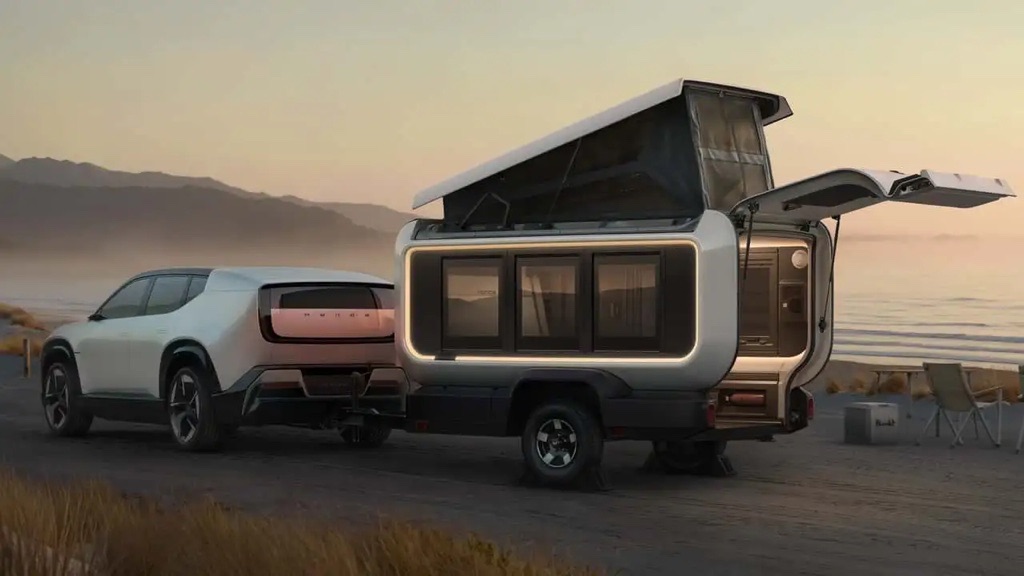
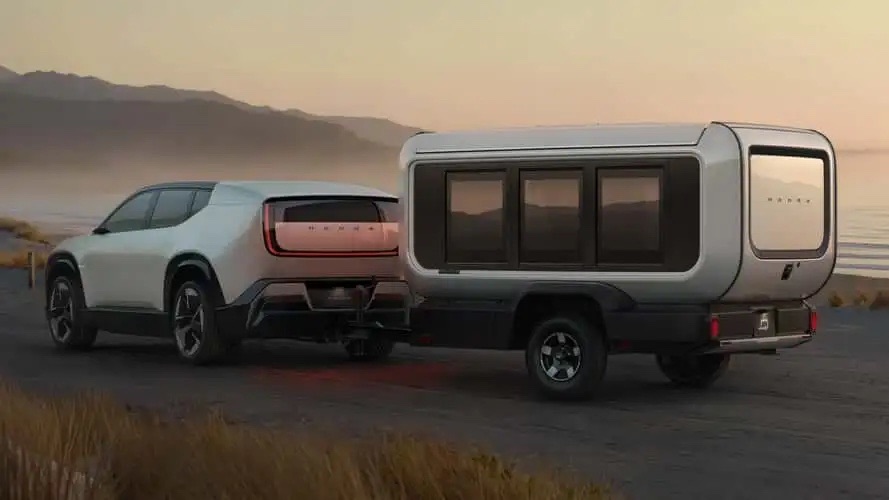
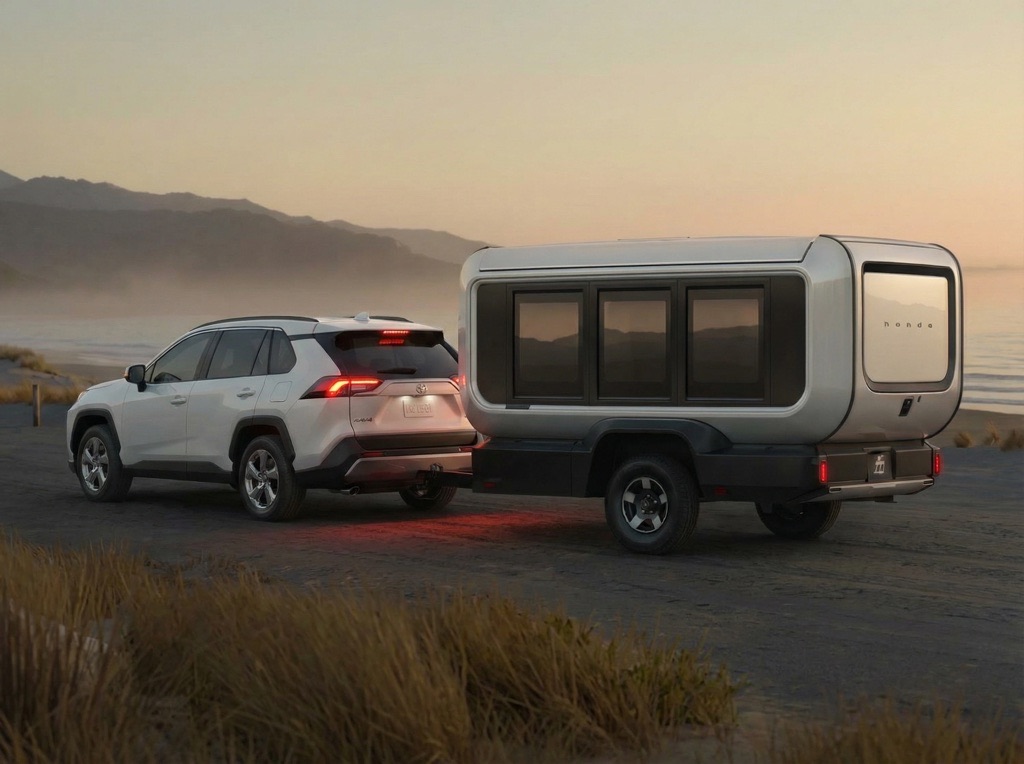
Honda has unveiled the Base Station Prototype, a lightweight camper trailer weighing under 1,500 pounds that can be towed by compact SUVs like the CR-V or RAV4, as well as electric vehicles such as the Prologue.
This garage-sized trailer sleeps four, features modular accessories, solar power, and a pop-up roof that provides 7 feet of standing height, aiming to make camping accessible without requiring a large truck. For EV owners and families seeking affordable outdoor adventures, it challenges traditional RV norms by prioritizing modularity and lightness.
Background: Honda’s Push into Adventure Gear
Honda’s U.S. R&D teams in California and Ohio developed the Base Station Prototype, applying the same innovative approach behind the Motocompacto e-scooter. It follows Honda’s ‘Man Maximum/Machine Minimum’ design philosophy, which maximizes interior space while minimizing mechanical footprint – a principle seen in their award-winning cars and trucks.
The prototype builds on Honda’s 50-year U.S. R&D legacy in adventure products like rugged trucks, SUVs, ATVs, side-by-sides, motorcycles, and generators. Honda positions it as a way to ‘democratize outdoor adventures,’ targeting popular tow vehicles including the CR-V (America’s best-selling SUV for 25 years), Toyota RAV4, Honda Prologue EV, and upcoming 0 Series SUV. American Honda VP Lance Woelfer highlighted its modular construction for customization, with more details on production plans coming in months.
While only prototypes exist now, Honda describes it as competitively priced in the lightweight travel trailer segment, potentially between $20,000-$40,000 based on analyst estimates, though official pricing remains unconfirmed.

Key Specifications
| Feature | Details |
|---|---|
| Weight | Under 1500 pounds |
| Towing Capacity | Compatible with compact SUVs (CR-V, RAV4), EVs (Prologue, 0 Series) |
| Sleeping Capacity | 4 people (queen-size futon couch + optional kids bunk bed) |
| Interior Height | 7 feet (2.1m) with pop-up roof |
| Dimensions/Storage | Fits standard garage or parking space |
| Power System | Lithium battery, inverter, integrated solar panels; supports external sources (campsite, Honda generator); app-controlled |
| Modular Windows (5 total) | Removable/replaceable; options: external shower, kitchen (induction cooktop, running water), A/C, future awning/power bank |
| Other Features | Top-hinged tailgate, configurable ambient lighting, and heater standard |
| Status | Prototype; production details pending |
Design and Modularity Analysis
The Base Station’s standout feature is its modularity: five large side windows (three left, two right) can be swapped for accessories like an external shower, kitchen with induction cooktop and running water, or an A/C unit. This allows customization based on needs – add a bunk bed for kids or keep it minimal for couples. The pop-up roof quickly raises for standing room, and the top-hinged tailgate blends indoor-outdoor space.
 Cars
Cars
Chinese-Market Ford Bronco Launches: AWD Electric & Plug-In Hybrid Camper With Premium Tech
Sales have officially begun in China for the Ford Bronco developed by Jiangling Ford, marking the debut of a large,...
 News
News
Chevy Equinox EV Scores 722/1000 in J.D. Power Study—Below Mass-Market Average
Chevy Equinox EV Scores 722/1000 in J.D. Power Study—Below Mass-Market Average The Chevrolet Equinox EV scored 722 out of 1,000...
 Cars
Cars
CATL’s Sodium-Ion Batteries Now in Mass Production: 175 Wh/kg Energy Density Matches LFP
CATL’s Sodium-Ion Batteries Now Entering Passenger Vehicles CATL has officially begun deploying its third-generation sodium-ion batteries in passenger vehicles, marking...
Power is zero-emission focused with solar panels, a lithium battery under the futon, and an inverter, managed via a Base Station app or onboard display. It connects easily to campsite power or Honda generators for longer stays. Ambient lighting around windows is programmable for color and brightness, aiding nighttime setup.
Resembling a scaled-down Lightship trailer, its minimalist aesthetic prioritizes function: a futon folds into a queen bed, providing airy space for four. Honda emphasizes it’s not for extreme off-roading but practical adventures with family cars.
Power and Sustainability for the EV Era
Designed with EVs in mind, the trailer’s lightweight build suits compact crossovers and electrics, reducing range strain. Solar integration and battery system enable off-grid use, aligning with Honda’s electrification push via Prologue and 0 Series. External power compatibility ensures versatility.
Accessories like the induction cooktop and running water make it campsite-ready without heavy plumbing. However, full specs like exact battery capacity or solar output are not yet released, leaving questions on real-world endurance.
Practicality and Accessibility
At under 1500 pounds, it tows with vehicles needing no heavy-duty setup, fitting in garages to avoid storage hassles. This lowers barriers for first-time campers, potentially shifting hotel stays to road trips. Honda’s auto manufacturing expertise could enable efficient production via metal-stamping, unlike fiberglass rivals.
Comparison with Competitors
| Model | Weight | Price (Starting) | Key Features | Tow Vehicle Fit |
|---|---|---|---|---|
| Honda Base Station (Prototype) | <1500 lbs | Competitive (~$20k-$40k est.) | Modular windows, solar, EV-friendly, garage-fit | CR-V, RAV4, EVs |
| Happy Camper HC1 | ~1200 lbs | $30,000+ | Teardrop style, basic interior | Compact cars/SUVs |
| nuCamp TAB 320 | ~2000 lbs | $28,000+ | Fixed kitchen, wet bath | Mid-size SUVs |
| Lightship (similar aesthetic) | ~3500 lbs | $100,000+ | Luxury, aluminum, off-grid | Trucks/SUVs |
Honda’s entry appears leaner and more customizable than Happy Camper or nuCamp, with EV focus distinguishing it. Production efficiency could undercut prices.
Verdict
The Honda Base Station Prototype excels in making camping practical for compact vehicle owners, especially EV drivers, with smart modularity and solar power – ideal for families or couples wanting hassle-free adventures without big rigs. It’s a bold step for Honda into accessories, but production confirmation, exact pricing, battery specs, and module expansion remain unanswered. If realized competitively, it could redefine lightweight trailers for the EV age; sign up on Honda’s site for updates.