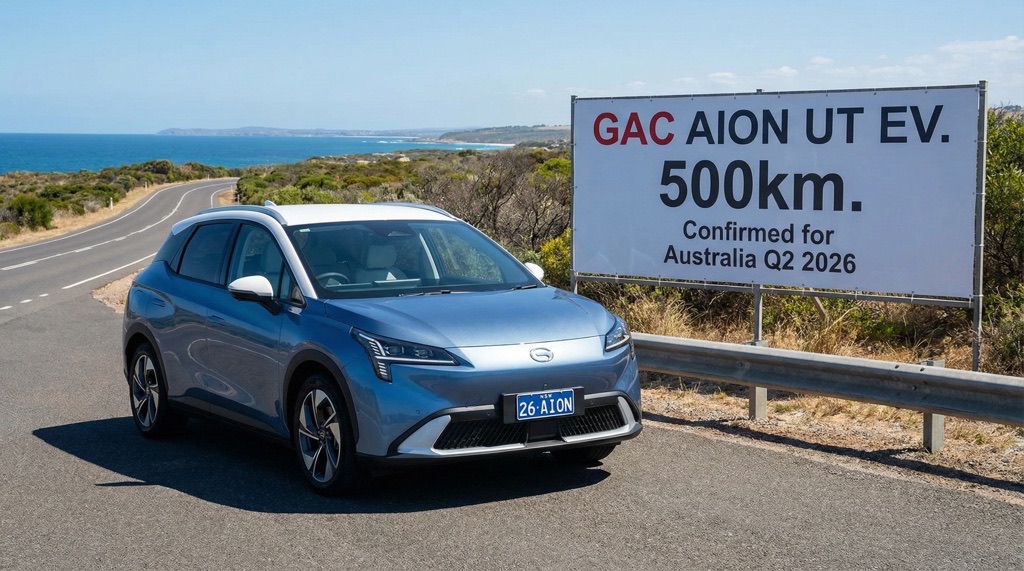
GAC’s Fourth Australian Model Brings Affordable Electric Hatchback to Market
GAC has confirmed the AION UT compact electric hatchback will launch in Australia during Q2 2026, marking the Chinese brand’s fourth model for the local market. The all-electric city car measures 4,270mm long on a 2,750mm wheelbase—roughly the size of a Toyota Corolla hatch—and will compete directly with the BYD Dolphin, MG4, and GWM Ora in the affordable EV segment.
While Australian specifications remain unconfirmed, overseas models deliver up to 500km of NEDC range (approximately 400km WLTP), powered by front-mounted electric motors ranging from 100kW to 150kW paired with lithium iron phosphate (LFP) battery packs. GAC has not yet released local pricing, but the UT is positioned as a potentially cheaper alternative to rivals, with the BYD Dolphin currently starting at $29,990 plus on-road costs.
Design and Interior Features
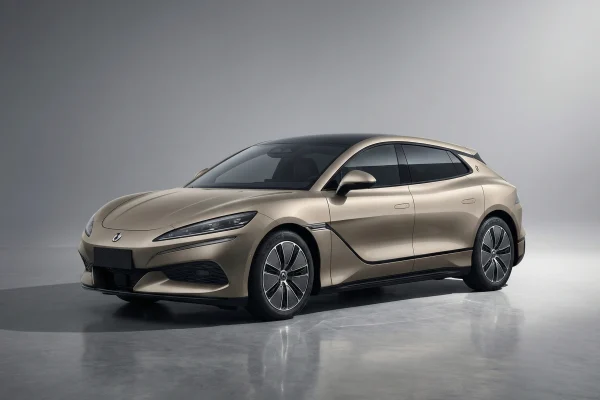
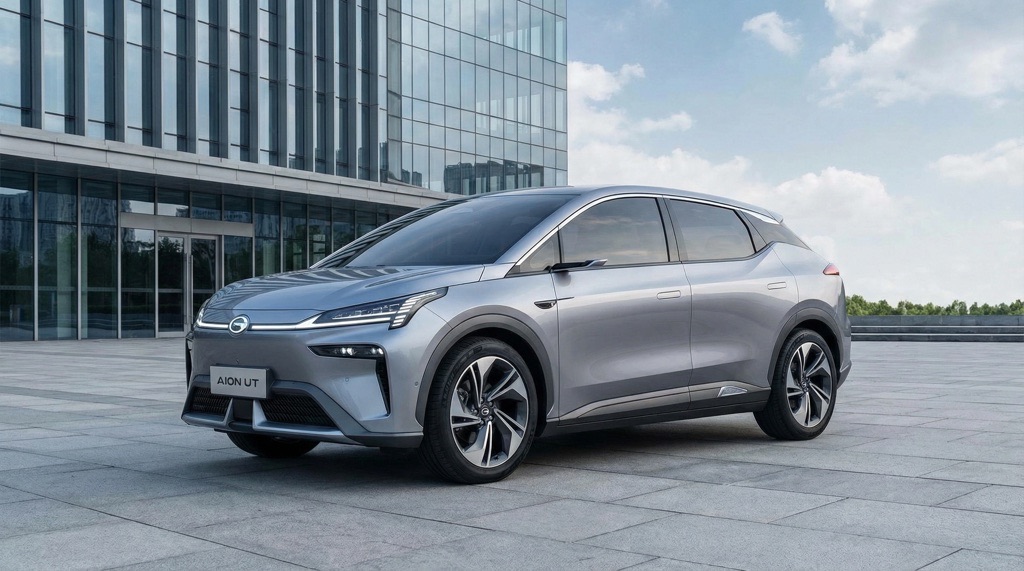
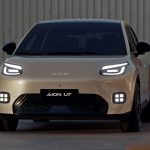
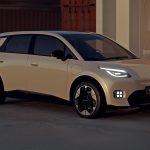
The AION UT features a Milan-inspired design created at GAC’s Milan Design Centre, characterized by a sloping front end, curved rear hatch, and distinctive two-tone floating roof. The vehicle claims the world’s first ‘eyebrow-style’ headlamp design, complemented by pixel-element tail lights and front fog lights.
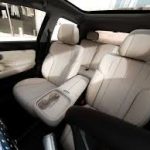
Inside, the cabin prioritizes minimalist design with dual displays: a 14.6-inch central touchscreen and an 8.8-inch digital instrument cluster powered by GAC’s Huawei Cloud system, supporting HiCar and Apple CarPlay connectivity. The front seats can fully recline to form a 1.8-meter double bed, while rear passengers enjoy 905mm of legroom—accommodating occupants up to 1.8 meters tall. Boot space reaches 440 liters, with 16-inch wheels and LED headlights standard on overseas models.
Powertrain and Performance Specifications
| Specification | Standard Edition | Premium Edition |
|---|---|---|
| Motor Power | 100kW (136 hp) | 150kW (204 hp) |
| Peak Torque | 145 Nm | 210 Nm |
| Battery Capacity | 50.3 kWh LFP | 60 kWh LFP |
| NEDC Range | 420 km | 500 km |
| Estimated WLTP Range | ~350 km | ~400-410 km |
| Max Speed | 150 km/h | Details not yet confirmed |
| Energy Consumption | 12.2 kWh/100km | Details not yet confirmed |
| Curb Weight | 1,600 kg | Details not yet confirmed |
The AION UT employs a front-mounted single motor with front-wheel drive, delivering smooth power delivery across both variants. The standard edition produces 100kW and 145 Nm, while the premium variant steps up to 150kW and 210 Nm—a difference that translates to noticeably different acceleration characteristics. Both versions utilize CATL LFP ‘Chocolate’ batteries, which support 99-second battery swapping capability in markets where this infrastructure exists.
 Cars
Cars
Polestar Secures $600 Million Loan From Geely to Stabilize Finances
The Swedish-Chinese electric car maker Polestar has secured a loan facility of up to $600 million from its majority owner,...
 Cars
Cars
Volkswagen ID Code Electric Car Concept: A Futuristic Marvel with Impressive Specs
Volkswagen has taken a leap into the realm of science fiction with its latest concept, the ID. Code. Boasting talking...
 Cars
Cars
Hyundai Kona Electric Gains UK Government £1,500 EV Grant – First Hyundai Model to Qualify, Starting at £33,500
The Hyundai Kona Electric has become the first Hyundai model eligible for the UK Government’s Electric Car Grant, offering buyers...
Chassis and Handling
The suspension setup combines front MacPherson independent suspension with a rear torsion beam non-independent suspension, tuned for stability and comfort. GAC claims the chassis absorbs speed bumps cleanly while maintaining excellent composure during high-speed lane changes, though the torsion beam rear limits handling dynamics compared to independent rear suspensions found on premium competitors.
Market Position and Competition
The AION UT slots beneath GAC’s existing AION V mid-size SUV in the local lineup and shares the same platform—a significant advantage given the AION V’s Toyota pedigree as the bZ3X, jointly developed by GAC and Toyota in China. This engineering heritage provides confidence in structural integrity and reliability standards.
As a compact hatchback, the UT competes directly with established affordable EVs. The BYD Dolphin starts at $29,990, the MG4 offers competitive pricing in the same segment, and the GWM Ora provides a similar size and range. However, the UT is unlikely to challenge the BYD Atto 1’s title as Australia’s cheapest EV at $23,990, given its larger footprint and longer range.



What Remains Unknown
Critical details for Australian buyers remain unconfirmed. GAC has not locked in local pricing, final specifications, or which battery configurations will be offered locally. While overseas models include 34.8kWh, 44kWh, 50kWh, and 60kWh options, Australian models will likely receive only the larger 50kWh and 60kWh units. Motor power output for the local market—whether both 100kW and 150kW variants will be available—also remains unclear.
Over-the-air (OTA) update capability and the full suite of safety and driver-assist features promised overseas have not been confirmed for Australia. Additionally, no official 0-100 km/h acceleration times have been released, making direct performance comparisons difficult.
Verdict
The AION UT represents GAC’s strategic push into the affordable compact EV segment, arriving at a critical moment when Australian buyers increasingly demand sub-$40,000 electric options. The vehicle’s Milan-designed aesthetics, practical interior space, and proven LFP battery technology position it as a credible alternative to established Chinese competitors. However, until GAC confirms Australian pricing, powertrain specifications, and equipment levels closer to launch, potential buyers cannot assess whether the UT delivers genuine value or merely follows the crowded budget EV playbook. The Q2 2026 timeline gives GAC roughly four months to finalize these details—a narrow window for a market where pricing and specification clarity drive purchasing decisions. This vehicle is for pragmatic city drivers prioritizing range and interior space over performance, provided pricing lands below $35,000 before on-road costs.