
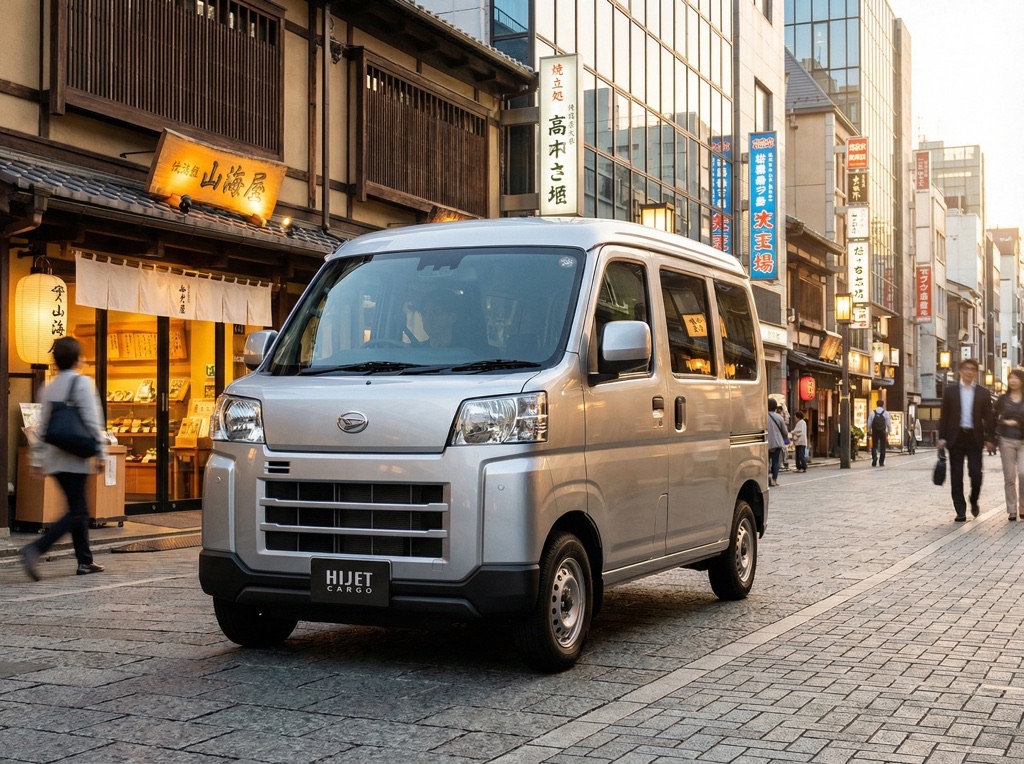
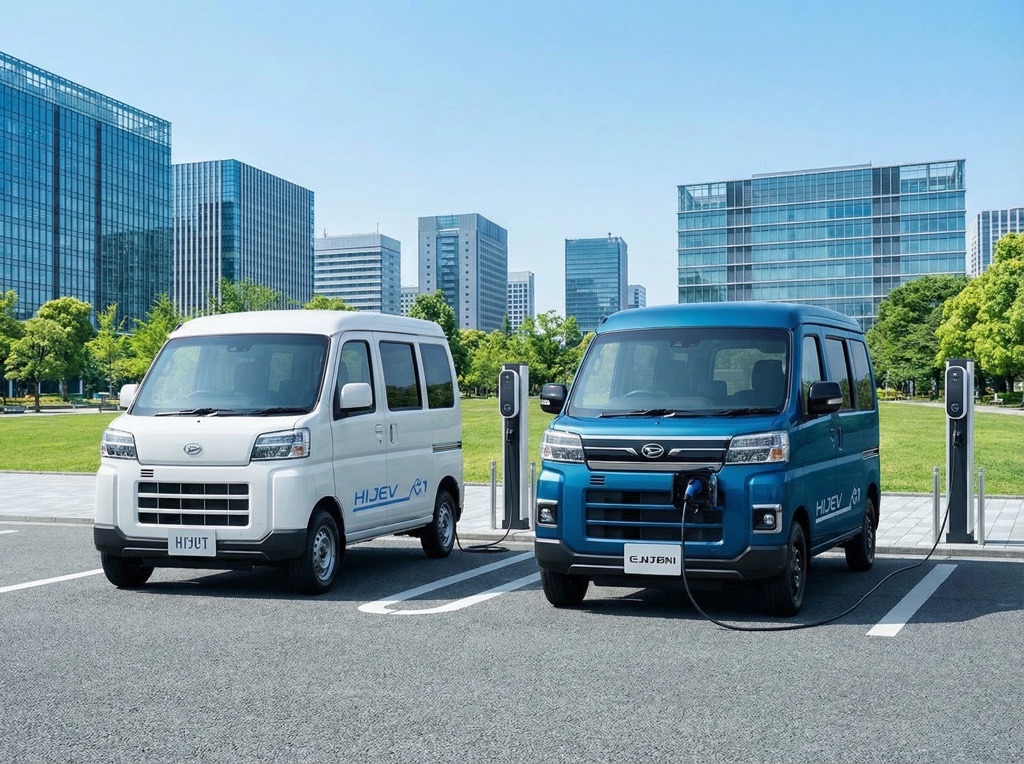
Daihatsu’s e-Hijet Cargo delivers 257 km WLTC range from a 36.6 kWh battery in a compact delivery van measuring just 3.4 meters long. This electric kei van, launched in Japan in 2026, matches its gas predecessor’s 772-pound cargo capacity while adding V2L output and a unique plastic window insert for safe outdoor power use. For urban delivery fleets seeking efficient, low-fatigue EVs, it sets a practical benchmark despite limited production.
Background: Daihatsu’s Kei Van Legacy Meets Electrification
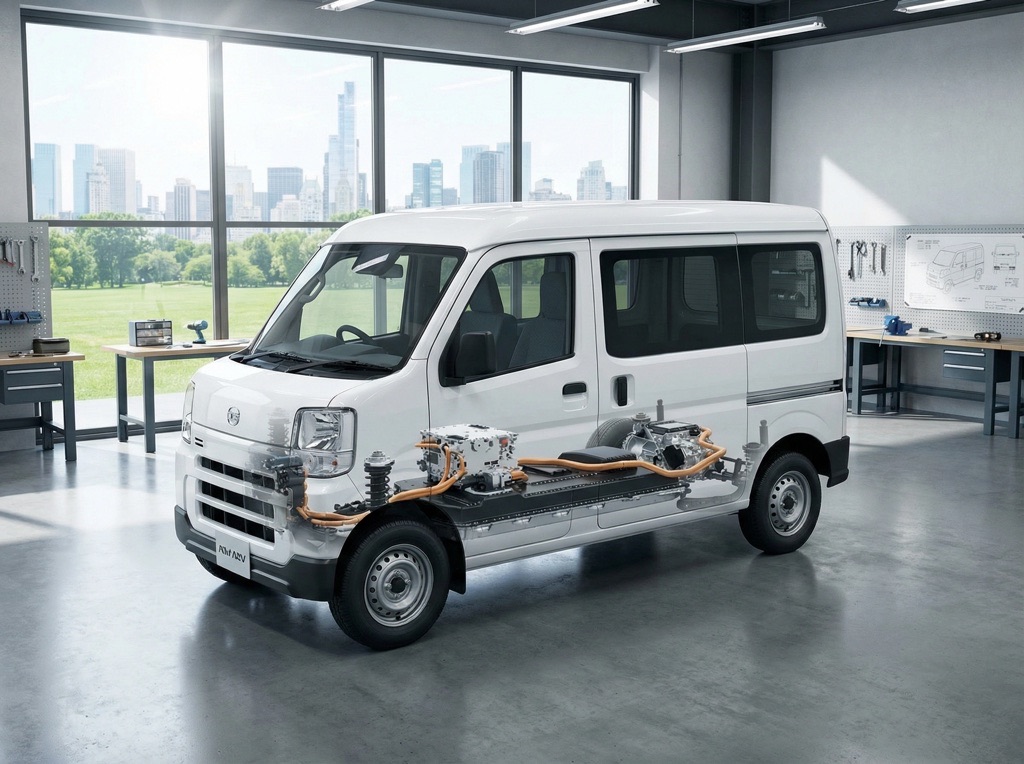
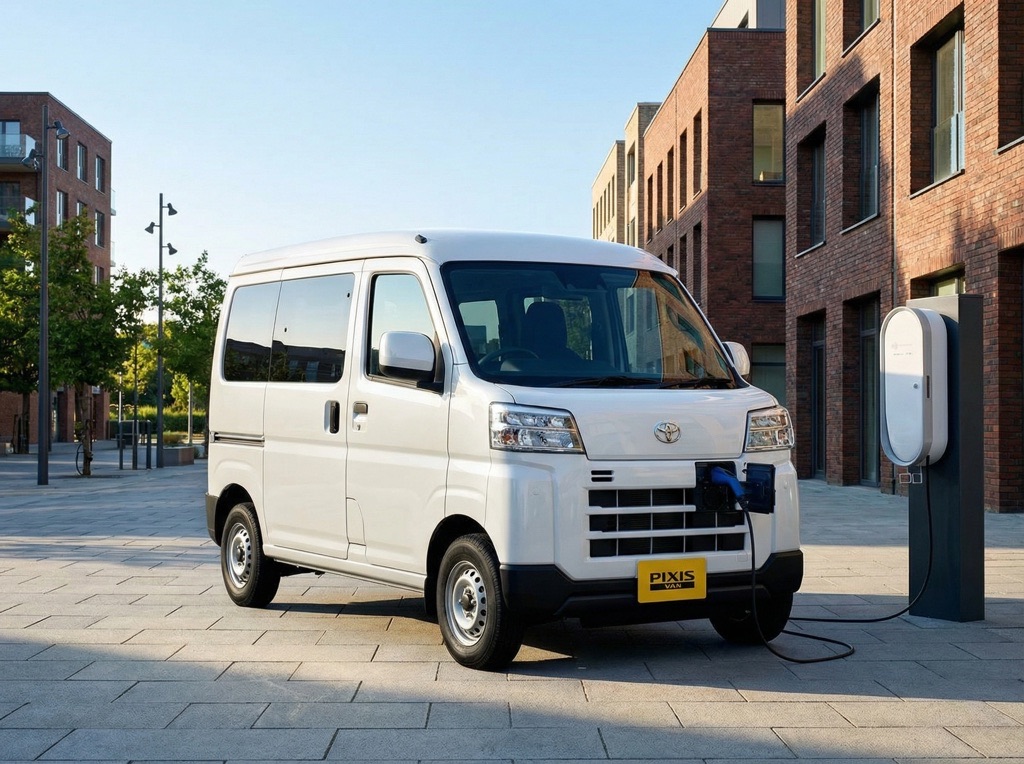
Daihatsu, a subsidiary of Toyota since 2016, has dominated Japan’s kei vehicle market—compact cars and trucks under strict size limits (3.4m length, 1.48m width)—with the Hijet since 1960. The Hijet Cargo, a cab-over van, has sold millions for urban deliveries, maintaining No.1 loading space among mini cab-over vans. The e-Hijet Cargo, its first mass-produced BEV alongside the Toyota Pixis Van BEV, shifts to lithium iron phosphate (LFP) batteries for safety and longevity, targeting commercial users with WLTC range leadership at 257 km. Production ramps to 300 units monthly, prioritizing Japan amid global EV demand.
This model retains Hijet appeal: practicality in Tokyo’s tight streets, where larger trucks falter. Daihatsu’s e-SMART ELECTRIC system enhances quietness, ride comfort, and acceleration, reducing driver fatigue on multi-stop routes. Unlike flashy sedans, it solves real-world logistics without excess size or power.
Key Specifications
| Specification | Details |
|---|---|
| Battery | 36.6 kWh LFP |
| Range (WLTC) | 257 km |
| Motor Power | 63 hp (47 kW) |
| Drive | Rear-wheel drive with rear e-axle |
| Cargo Capacity | 772 lb (350 kg), No.1 in class |
| Dimensions (LxWxH) | 3.395 m x 1.475 m x 1.89 m max |
| V2L Output | 1,500 W AC outlet |
| Price (Japan) | Approx. $21,000 |
| Production | 300 units/month |
Performance and Efficiency Analysis
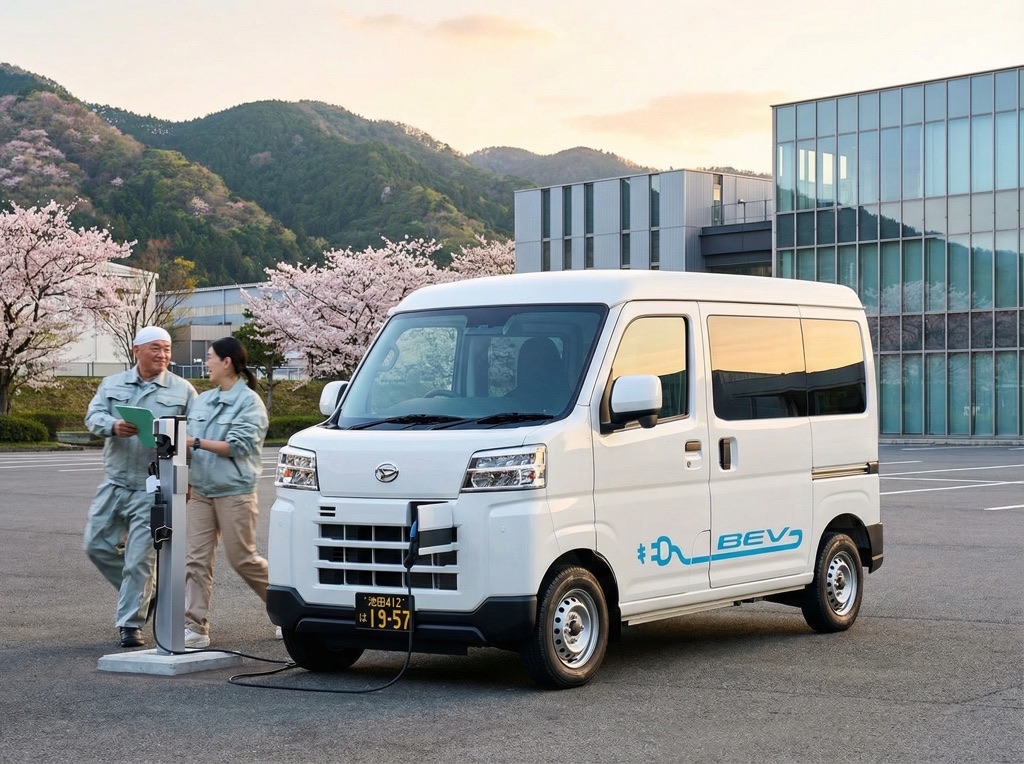
The e-Hijet’s 36.6 kWh floor-mounted battery achieves 257 km WLTC range, topping mini commercial BEVs—about 160 miles real-world per early estimates. Its 63 hp motor, paired with instant EV torque, suits stop-go deliveries better than gas kei vans’ 45-64 hp engines. Rear e-axle enables potential traction advantages, though top speed likely mirrors gas models at 105 km/h.
Quiet cabin and smooth acceleration cut fatigue, vital for drivers logging 200+ km daily. LFP chemistry resists degradation in Japan’s humid climate, unlike NMC packs. Cargo space matches the gas Hijet at 772 lb, with a four-seater option preserving utility. Unanswered: exact charging speed—likely Level 2 AC given kei class limits.
 Cars
Cars
2027 Chevrolet Bolt Production Ends Mid-2027 After 18 Months to Prioritize ICE SUVs
General Motors will cease production of the revived 2027 Chevrolet Bolt EV at its Fairfax Assembly plant in Kansas around...
 News
News
700 Wh/kg Lithium Battery Breakthrough Doubles EV Range Potential Without Solid-State Complexity
Chinese researchers have developed a lithium metal battery achieving 700 Wh/kg energy density at room temperature, retaining nearly 400 Wh/kg...
 Cars
Cars
2025 Citroen Ami: The Quirky Electric Microcar Gets a Playful Update
A Fresh Face for the Urban EV Pioneer Citroen has unveiled the refreshed 2025 Ami at the Paris Motor Show,...
Innovative Features: V2L with Practical Twist
Standard 1,500 W dashboard outlet supports tools or appliances, but Daihatsu’s plastic window insert—a low-cost seal with cable hole—prevents rain ingress during outdoor use. This addresses a gap in pricier EVs, enabling safe worksite power without cabin exposure. Images show a simple plug fitting over glass, embodying kei engineering: functional over flashy.
Other perks include hill-hold and eco modes from the e-SMART system. No advanced driver aids noted, keeping costs low. Critical view: V2L at 1.5 kW trails rivals like Hyundai Ioniq 5 (3.6 kW), but suffices for drills or lights in urban Japan.
Safety and Build Quality
LFP batteries enhance thermal stability, reducing fire risk in dense cities. Cab-over design maximizes space but positions driver over front axle—ride tuned for comfort. Gas Hijet specs suggest 145/80R12 tires, 160 mm clearance, and drum/disc brakes; EV likely upgrades regenerative braking. Details not yet confirmed on crash ratings or IP ratings for V2L.
Comparison with Competitors
| Model | Range (WLTC equiv.) | Power | Cargo Payload | Price | Availability |
|---|---|---|---|---|---|
| Daihatsu e-Hijet Cargo | 257 km | 63 hp | 772 lb | $21,000 | Japan only |
| Toyota Proace City Electric | 330 km | 136 hp | 1,000 lb+ | $40,000+ | Europe |
| Ford E-Transit Connect | 275 km | 161 hp | 1,100 lb | $45,000+ | US/Europe |
| Citroën ë-Berlingo | 280 km | 136 hp | 1,000 lb | $38,000 | Europe |
The e-Hijet undercuts larger vans on price and size, ideal for Tokyo alleys, but lacks their range and power. Proace and E-Transit suit longer EU/US routes; no direct US kei EV competitor exists due to regulations.
Verdict
The Daihatsu e-Hijet Cargo excels as Japan’s urban delivery EV: top range, unmatched cargo in kei class, and clever V2L make it practical for fleets. Buy if you’re a Japanese business needing fatigue-free, compact electrification—$21,000 delivers value gas models can’t match. Globally, it highlights missed opportunities, import barriers, and low production limit access. Watch for exports or US kei rule changes—who wouldn’t want this box in alleyways?