
Swedish Electric Ferry Maker Candela Secures €30 Million in Largest Funding Round
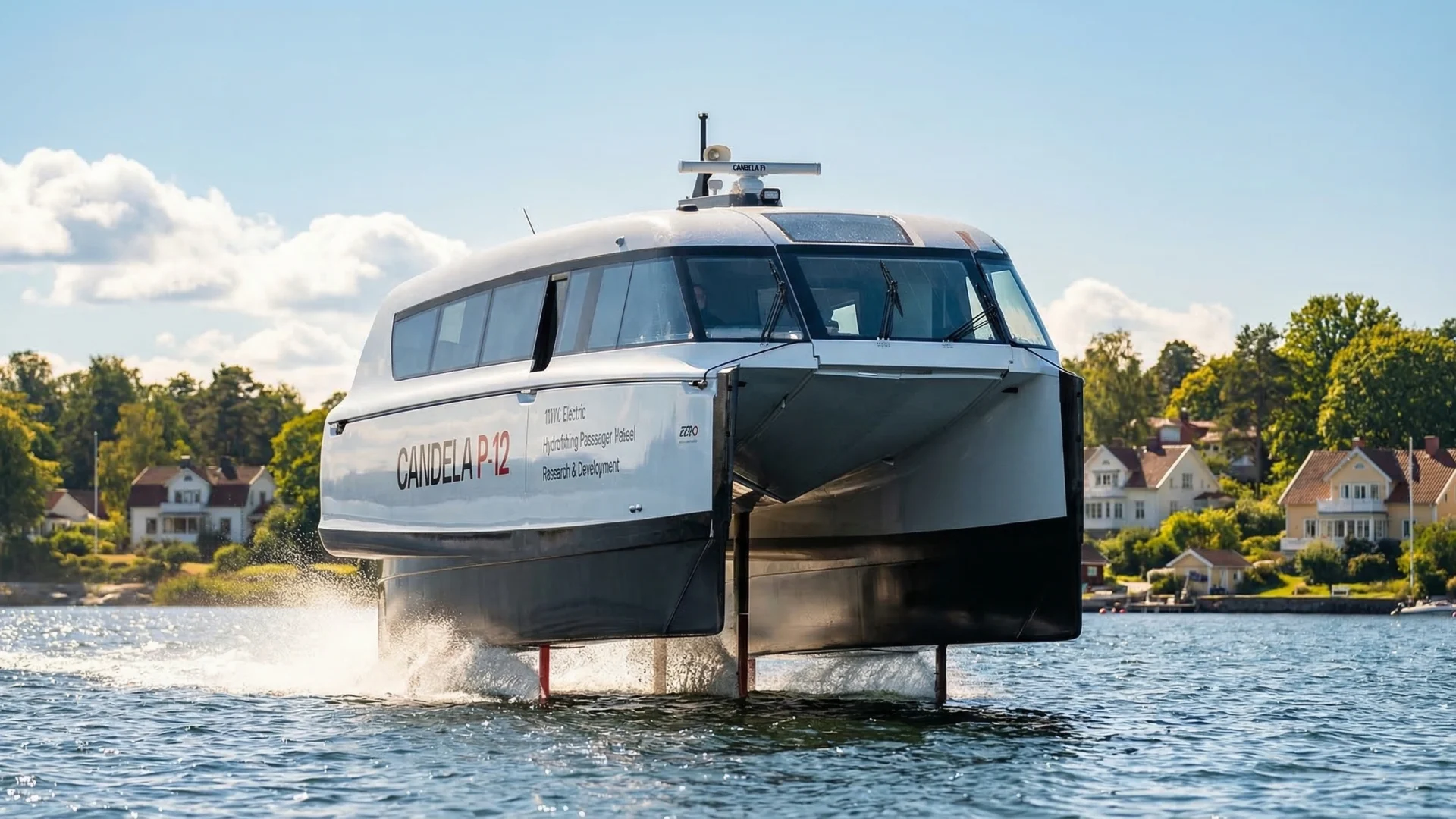
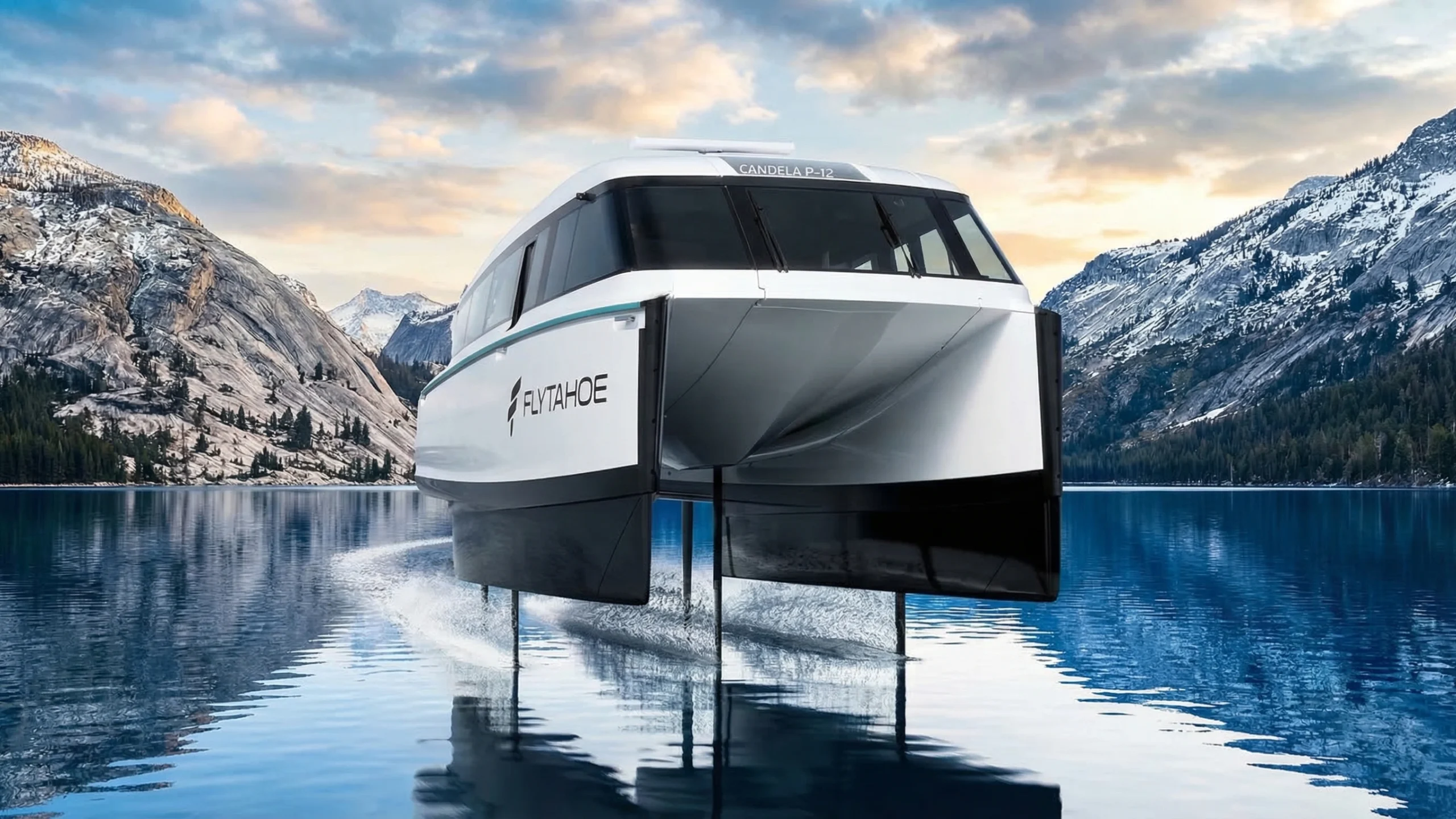
Swedish electric vessel manufacturer Candela has raised €30 million in its largest funding round to date, bringing total capital raised to €129 million and cementing its position as the best-funded electric vessel manufacturer globally. The round marks a significant vote of confidence in the company’s hydrofoiling P-12 ferry technology, with the World Bank’s International Finance Corporation (IFC) contributing €8 million alongside existing investors EQT Ventures, SEB Private Equity, KanDela AB, and Ocean Zero LLC.
The funding defies a broader downturn in climate-tech investment, where funding has declined approximately 50% since 2021. The capital will finance a second manufacturing facility in Poland to scale serial production of the P-12 and meet growing global demand, with more than 65 vessels currently on order.
From Luxury Speedboat to Public Transit Solution
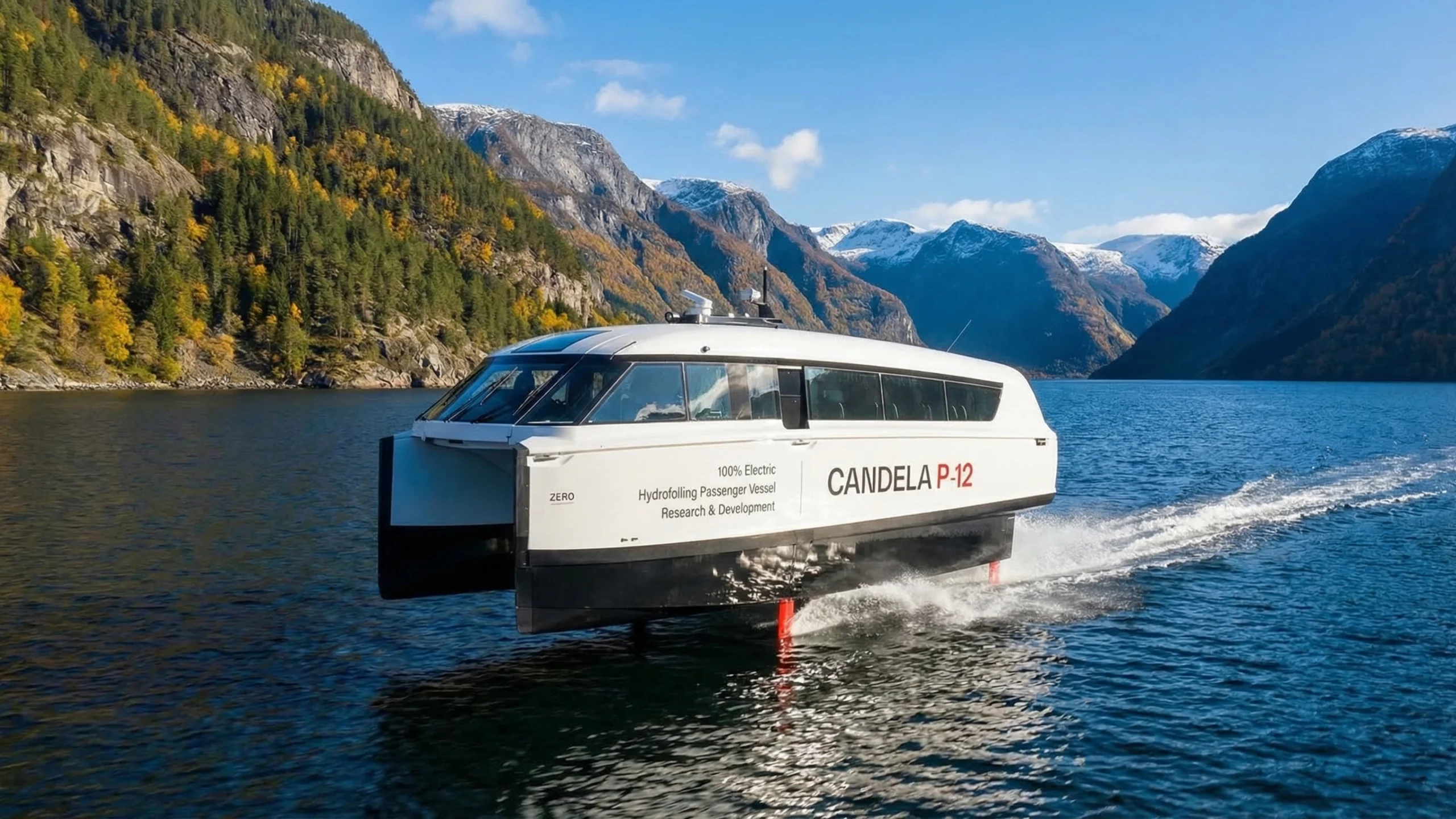
Candela’s pivot from high-end recreational vessels to public transportation ferries represents a strategic shift that has attracted institutional investors. The company, founded in 2014 and based in Stockholm, initially developed hydrofoiling technology for the luxury market before recognizing the broader commercial opportunity in urban water transport.
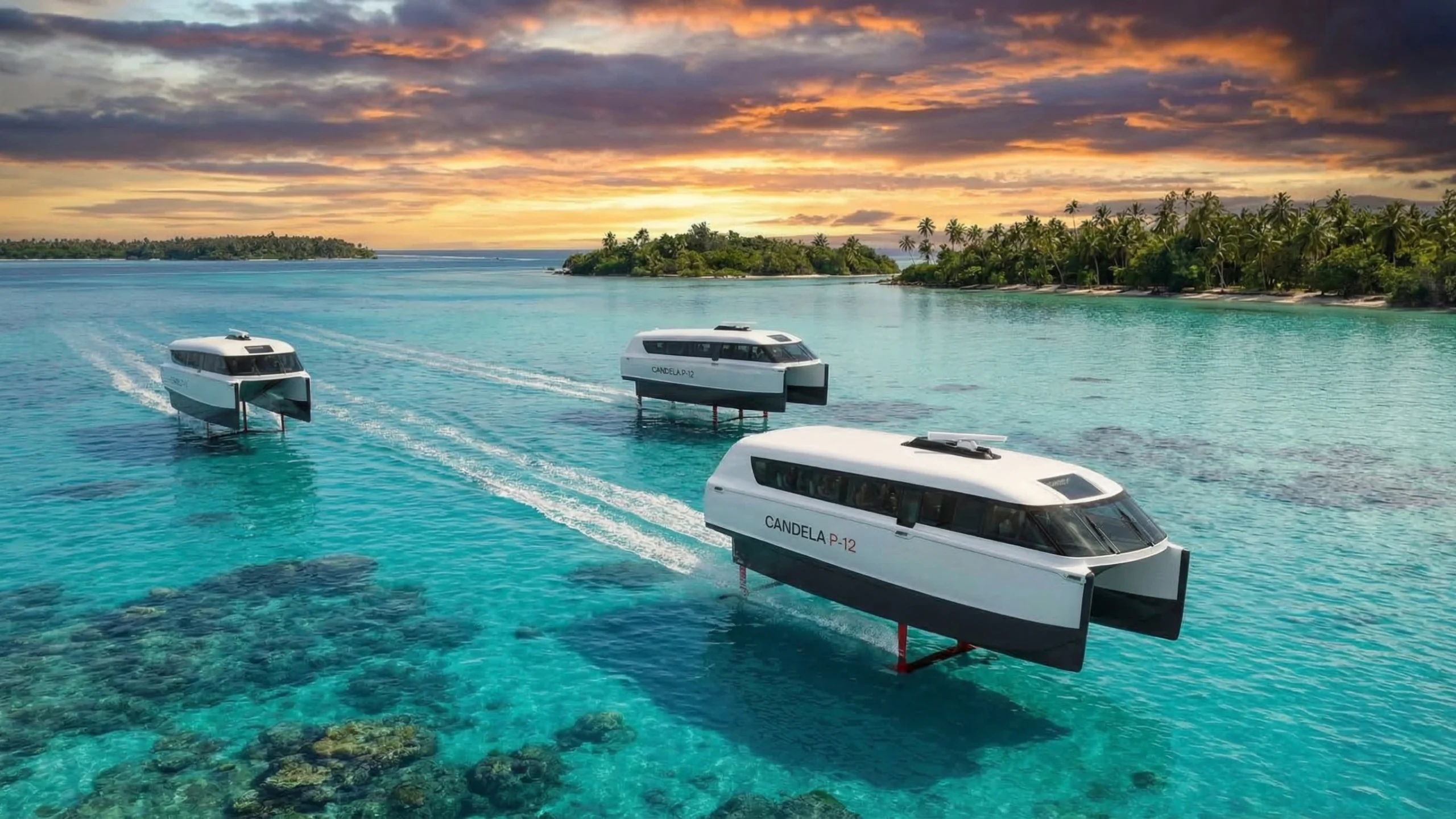
The P-12 ferry has already demonstrated real-world viability in Nordic cities. The vessel is currently operating in Stockholm, Gothenburg, Oslo, and Trondheim, where it has shown strong technical performance, significantly reduced operating costs, and dramatically shorter travel times compared to traditional diesel ferries. In these deployments, the P-12 has proven its commercial case: faster service, lower expenses, and zero emissions.
How Hydrofoil Technology Delivers Superior Performance
| Feature | P-12 Hydrofoil | Traditional Diesel Ferry |
|---|---|---|
| Energy Consumption | 80% less energy than high-speed vessels | Baseline (100%) |
| Operating Costs | Significantly reduced | Higher fuel and maintenance costs |
| Travel Time (Mumbai example) | 35 minutes | ~2 hours |
| Wake Generation | Zero wake | Significant wake impact |
| Emissions | Zero | Diesel emissions |
| Passenger Capacity | 30 passengers | Varies by vessel |
The P-12’s core innovation lies in its computer-controlled hydrofoils—underwater wings that lift the hull above the water surface. By flying above waves rather than pushing through them, the vessel reduces drag by 80%, dramatically lowering energy requirements and enabling faster transit times. This design also eliminates wake, reducing environmental impact on shorelines and aquatic ecosystems.
The technology’s efficiency translates directly to operational economics. Transit operators benefit from lower electricity costs compared to diesel fuel, reduced maintenance requirements, and the ability to offer faster, more frequent service—a combination that makes electric hydrofoiling ferries commercially superior to traditional vessels, according to EQT Ventures Managing Director Marnix van der Ploeg.
Global Expansion Accelerates with Serial Production
Candela is transitioning from prototype and pilot deployments to industrial-scale manufacturing. The company is opening a second factory in Poland to apply “scalable, platform-based serial production,” treating ferry manufacturing similarly to automotive production using carbon fiber and shared platforms to control costs.
 News
News
Toyota plans to introduce an all-electric version of its popular Toyota Hilux Revo BEV pickup truck by the end of 2025
Toyota plans to introduce an all-electric version of its popular Toyota Hilux Revo BEV by the end of 2025. The...
 Aircraft
Soaring into the Future: The Vertical Aerospace VX4 eVTOL Aircraft
Hello, fellow aviation enthusiasts and futurists! Today, we embark on an exhilarating journey to explore the cutting-edge world of electric...
 News
News
The Bristell B23 Energic: Electrifying the Skies with Aviation’s First Electric Trainer
The world of aviation is about to experience a seismic shift with the introduction of the Bristell B23 Energic, a...
Deployment plans extend across multiple continents. By 2026, Candela expects to deploy fleets in:
- Mumbai: A fleet of ten P-12s will reduce travel time from Navi Mumbai Airport to the city center from approximately two hours to 35 minutes
- The Maldives: Planned deployments for island transport
- Saudi Arabia: Integration into the NEOM project
- Thailand: Regional expansion in Southeast Asia
- United States: Lake Tahoe area operations planned
With serial production now underway and first customer deliveries beginning in March 2026, the company has secured 65 vessel orders. This order book demonstrates genuine market demand beyond pilot programs, validating the commercial viability of the technology.
Why Institutional Investors Are Backing Candela
The IFC’s €8 million investment signals confidence in Candela’s technology and market opportunity. According to Farid Fezoua, IFC Director for Equity, Funds and Venture Capital: “This investment reflects IFC’s commitment to advancing innovative transportation solutions in emerging markets. By supporting Candela’s expansion, we aim to accelerate the adoption and early deployment of breakthrough maritime technology in Emerging Markets, mobilize private capital, create high-value jobs, and enable more efficient water-based mobility.”
The World Bank’s involvement is particularly significant. The IFC typically invests in projects with demonstrated social and economic impact, not speculative technologies. Its participation suggests Candela’s ferries address genuine infrastructure challenges in emerging markets—reducing commute times, lowering transportation costs, and providing sustainable alternatives to diesel-powered vessels.
CEO and founder Gustav Hasselskog emphasized the market context: “In a market where climate tech funding is down around 50 percent since 2021, raising our largest round ever sends a clear signal: the transition is moving beyond subsidies and green premiums. Our vessels win on cost and performance, and that’s why investors are backing Candela.”
Competitive Positioning and Market Opportunity
Candela operates in an emerging market for electric ferries and water-based urban transport. While specific competitors are not detailed in available sources, the company’s focus on commercial viability—lower operating costs and faster transit times—differentiates it from early-stage electric vessel manufacturers that rely primarily on environmental credentials.
The global ferry market represents a significant opportunity. Thousands of cities with waterways currently operate diesel ferries, and rising fuel costs are making the economics of electric alternatives increasingly attractive. Candela’s platform-based manufacturing approach enables cost-competitive production at scale, addressing a key barrier to electric ferry adoption.
Unanswered Questions and Considerations
While Candela’s technology and funding trajectory are impressive, several questions remain. Battery replacement costs and lifespan for the P-12 are not detailed in available sources. The company’s timeline for profitability and the specific manufacturing capacity of the new Polish facility are also unclear. Additionally, regulatory approval processes for deploying these vessels in new markets—particularly in emerging economies—may present unforeseen challenges.
The 65-vessel order book is substantial, but details on customer identities, delivery timelines, and contract values would provide clearer insight into revenue visibility and execution risk.
Verdict
Candela represents a rare case of genuinely useful innovation in electric transport: a technology that solves real problems (commute time, operating costs, emissions) rather than creating new ones. The company’s progression from luxury speedboats to public transit ferries, combined with real-world deployments in Nordic cities and a growing order book, demonstrates commercial viability beyond speculation. The World Bank’s investment and the €30 million funding round signal institutional confidence in both the technology and market opportunity. For cities with waterway infrastructure and high diesel ferry operating costs—particularly in emerging markets—Candela’s P-12 offers a compelling alternative. The company’s success will depend on executing serial production in Poland, meeting delivery timelines, and replicating Nordic pilot success in geographically and operationally diverse markets.