
Horizon Aircraft Simplifies Cavorite X7 Design While Maintaining Performance
Horizon Aircraft has announced a significant redesign of its Cavorite X7 hybrid-electric VTOL, reducing the aircraft’s fan count from 14 to 12 while improving manufacturing efficiency, maintenance simplicity, and aerodynamic performance. The Toronto-based company revealed the updates on January 21, 2026, following successful transition flights of its large-scale prototype that validated the fan-in-wing configuration.
The Cavorite X7 represents a pragmatic approach to regional air mobility—acknowledging that current battery technology cannot yet power long-range aircraft alone, the company has chosen a hybrid powertrain that combines electric vertical takeoff with gas-powered cruise capability. This strategy positions Horizon differently from pure-electric competitors struggling with range limitations.
Background: From X5 to Refined X7
Horizon Aircraft first emerged in 2021 with the Cavorite X5, introducing its patented fan-in-wing design to the crowded eVTOL market. The company’s approach combines the vertical agility of helicopters with the speed and efficiency of fixed-wing aircraft—a hybrid concept that has gained traction as the industry recognizes pure-electric limitations for regional transport missions.
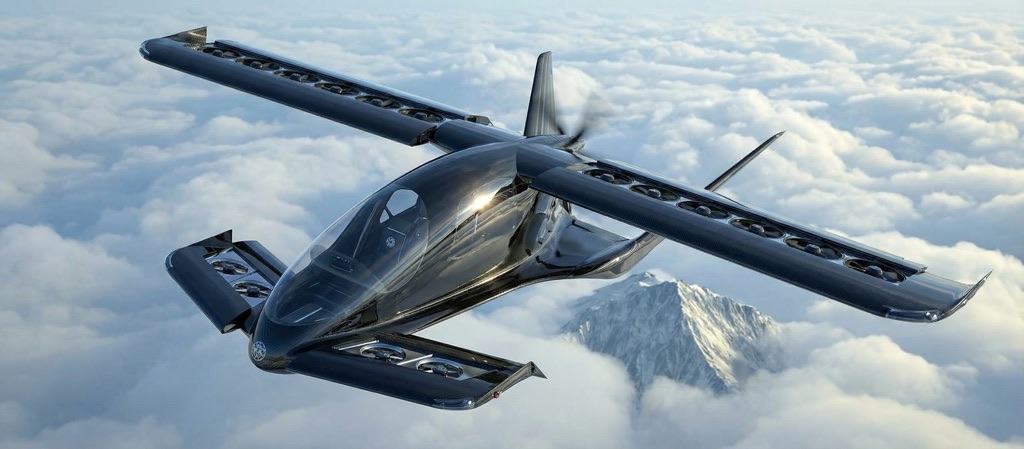
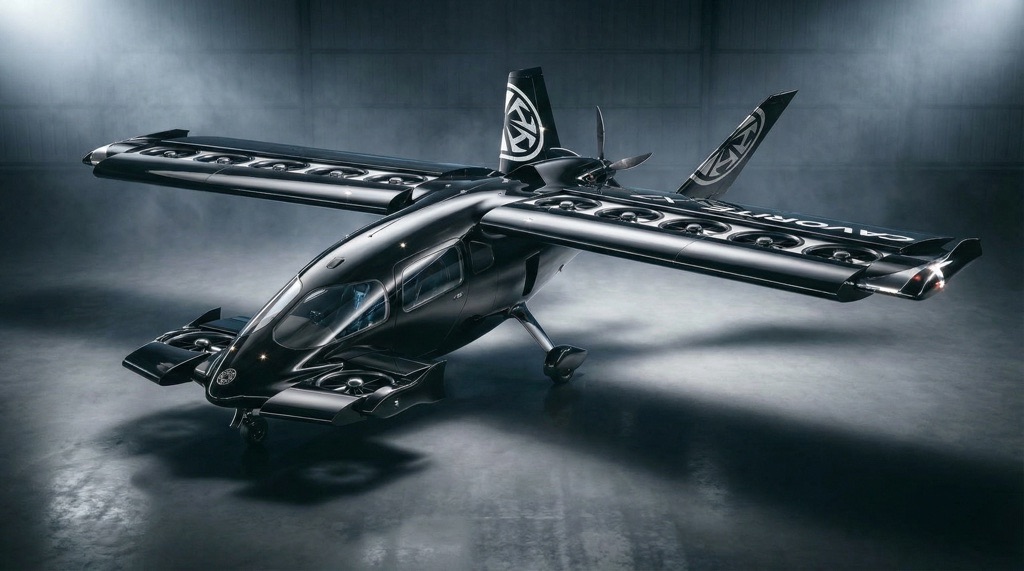
The X7 represented an ambitious scaling of this concept, but the original 14-fan configuration—with 10 fans embedded in the wings and 4 smaller fans in the canards (the small wings near the nose)—proved unnecessarily complex. The new design reflects engineering maturity and a commitment to practical, certifiable aircraft rather than experimental prototypes.
Updated Specifications
| Specification | Details |
|---|---|
| Vertical Lift Fans | 12 total (5 per wing, 1 per canard) |
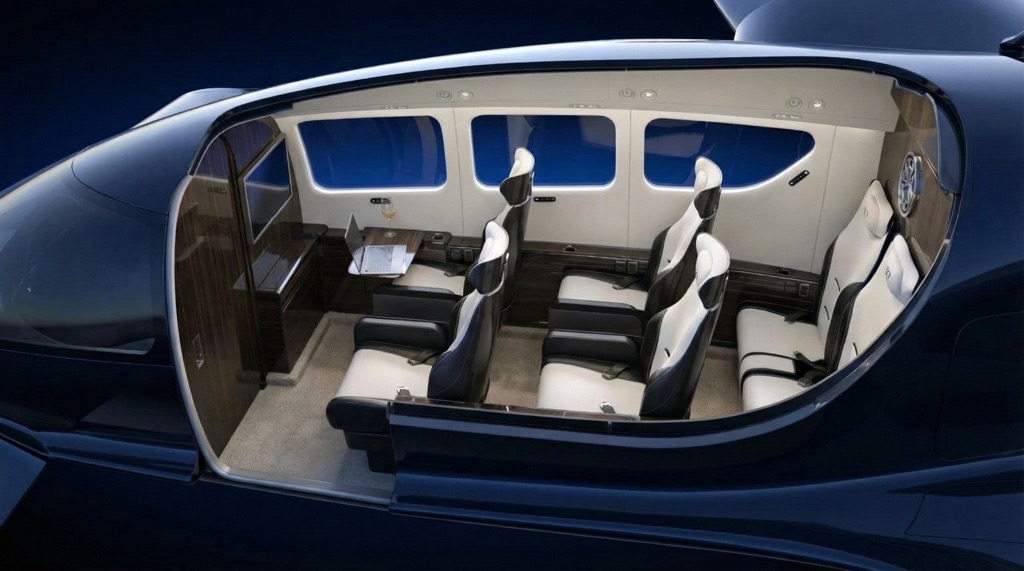
| Passenger Capacity | 6 passengers + 1 pilot |
| Useful Load | 1,500 pounds |
| Cruising Speed | 280 mph (450 km/h) |
| Range (with reserves) | 497 miles (800 km) |
| Takeoff/Landing | Vertical (helipad-sized area) or conventional runway |
| Powertrain | Hybrid (battery + gas-powered pusher propeller) |
| Estimated Price | $5 million |
| Emissions Reduction | Up to 30% lower than conventional aircraft |
Engineering Refinements: Less Complexity, Better Performance
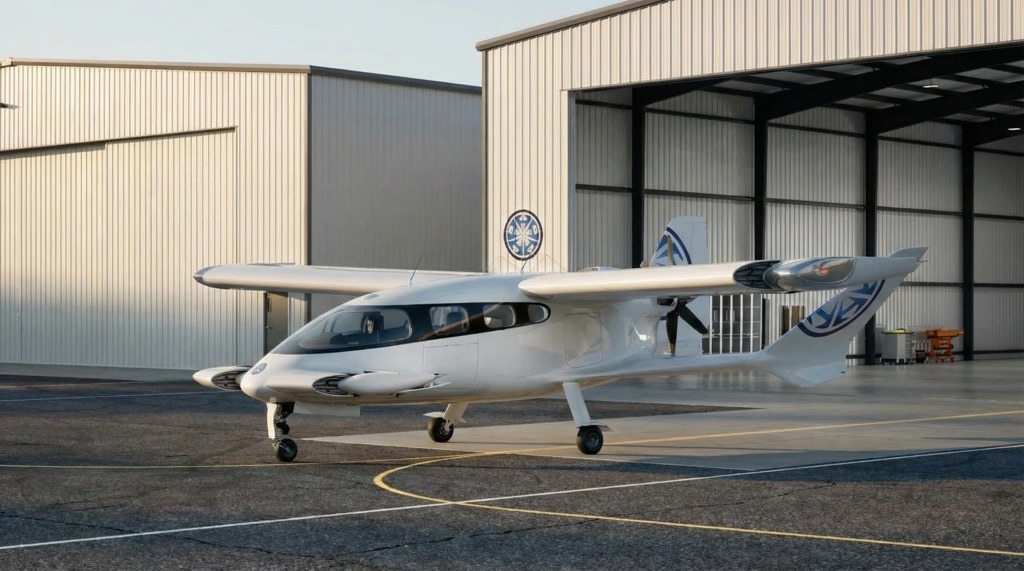
The reduction from 14 to 12 fans represents a deliberate simplification strategy. The four smaller canard-mounted fans have been replaced with two larger units matching the wing fan specifications, standardizing all lift fans across the aircraft. This change delivers multiple benefits: fewer moving parts reduce maintenance burden, dual-motor architecture on each fan maintains redundancy for safety, and manufacturing becomes more straightforward.
Horizon’s prototype has already demonstrated safety margins exceeding certification requirements—the aircraft successfully hovered with 30% of fans disabled, proving the system’s inherent redundancy. The simplified 12-fan configuration maintains this safety philosophy while reducing complexity.
Aerodynamic refinements complement the fan reduction. Reprofiled canards and tail surfaces lower drag, improving cruise efficiency and stability. During forward flight, aerodynamic covers slide over the fans and seal the wing surface, transforming the aircraft from a hovering platform into a sleek fixed-wing plane. The cabin has been slightly extended to increase legroom, and windows have been redesigned to improve external visibility—practical improvements addressing passenger comfort on what could be a $5 million investment.
 Aircraft
My Other Car Is a $280,000 Flying Truck
China’s Aridge Land Aircraft Carrier isn’t a sci-fi fantasy — it’s a six-wheeled, range-extended truck that poops out a flying...
 Aircraft
Sea Cheetah: Revolutionizing Maritime Transportation with Hydrogen-Powered Wing-in-Ground Effect Technology
A New Era of Hybrid Transportation Imagine a vessel that defies traditional transportation categories – part boat, part aircraft, and...
 Aircraft
Honda’s Sky-High Ambitions: The Secret eVTOL Project Unveiled
Breaking into the Future of Urban Mobility Honda, the automotive titan known for reliable cars like the Civic and Accord,...
The Hybrid Advantage: Where the X7 Differentiates
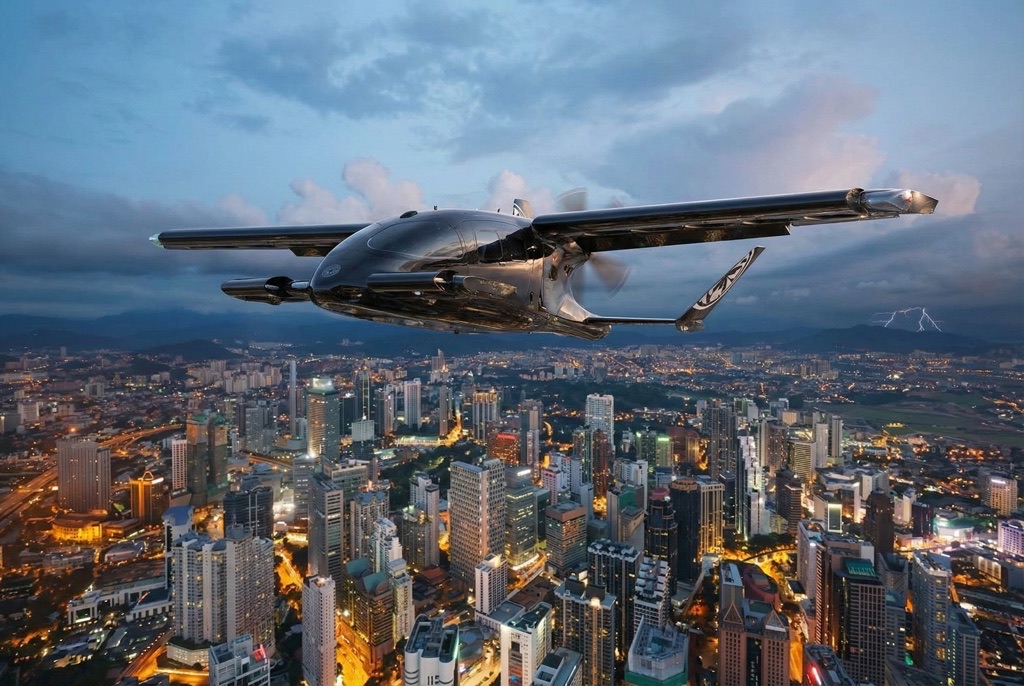
The Cavorite X7’s hybrid powertrain fundamentally changes the competitive calculus in the eVTOL market. While pure-electric air taxis typically achieve 20-minute flight times before requiring 3+ hours of charging, the X7 operates differently: batteries power vertical takeoff and initial climb, then a gas-powered pusher propeller takes over for cruise flight. This architecture enables the aircraft to carry six passengers plusa
pilot at 280 mph for 497 miles with reserves—roughly equivalent to flying from New York to Toronto without refueling.
This range advantage addresses a critical market need for regional transport, medical evacuation, and disaster response missions where pure-electric aircraft fall short. The hybrid approach also acknowledges current battery technology limitations while positioning the aircraft for future electrification as battery energy density improves.
Operating costs are projected at approximately 30% lower than comparable helicopter missions, while delivering nearly twice the speed of traditional helicopters. For applications like medevac operations, this combination of speed, range, and cost efficiency could prove transformative.
Competitive Positioning
The eVTOL market includes several notable competitors, though few match the X7’s range and payload capacity:
| Aircraft | Passenger Capacity | Range | Powertrain | Status |
|---|---|---|---|---|
| Cavorite X7 | 6 + pilot | 497 miles | Hybrid | Prototype phase |
| Joby S4 | 4 + pilot | ~150 miles | Pure electric | Advanced development |
| Archer Midnight | 4 + pilot | ~60 miles | Pure electric | Development |
| EHang 216 | 2 passengers | ~22 miles | Pure electric | Limited operations |
The X7’s hybrid architecture and 497-mile range position it in a different market segment than most competitors—less urban air mobility, more regional transport, and specialized missions. This distinction could prove advantageous as the industry matures and recognizes that pure-electric solutions face fundamental physics constraints for longer-distance operations.
Remaining Questions and Timeline
While the January 2026 redesign demonstrates engineering progress, several questions remain unanswered. Horizon has targeted prototype assembly in 2026, but certification timelines remain unclear. The company has not publicly disclosed detailed noise metrics, though hybrid operation should produce quieter takeoffs than gas-powered helicopters. Specific payload-range tradeoffs and real-world operating costs under various mission profiles have not been independently verified.
The $5 million estimated price point requires validation, as does the claimed 30% emissions reduction compared to conventional aircraft. These figures are based on “conservative simulations” rather than flight test data.
Verdict: Pragmatism Over Hype
The Cavorite X7 represents a refreshingly pragmatic approach to eVTOL development in an industry notorious for vaporware and broken promises. By acknowledging battery technology limitations and choosing a hybrid powertrain, Horizon is building a bridge to the future rather than attempting technological leaps unsupported by current physics. The January 2026 redesign—reducing complexity while maintaining performance—signals engineering maturity and manufacturing readiness. The aircraft is positioned for regional transport, medical evacuation, and disaster response missions where its 497-mile range and 280 mph cruise speed deliver genuine operational advantages over helicopters. This is not a flying taxi for urban commuters; it’s a specialized transport platform for missions where current pure-electric aircraft cannot compete. For operators requiring long-range, high-capacity vertical takeoff capability, the X7 warrants serious consideration—assuming Horizon successfully navigates certification and production challenges that have derailed numerous eVTOL programs.