

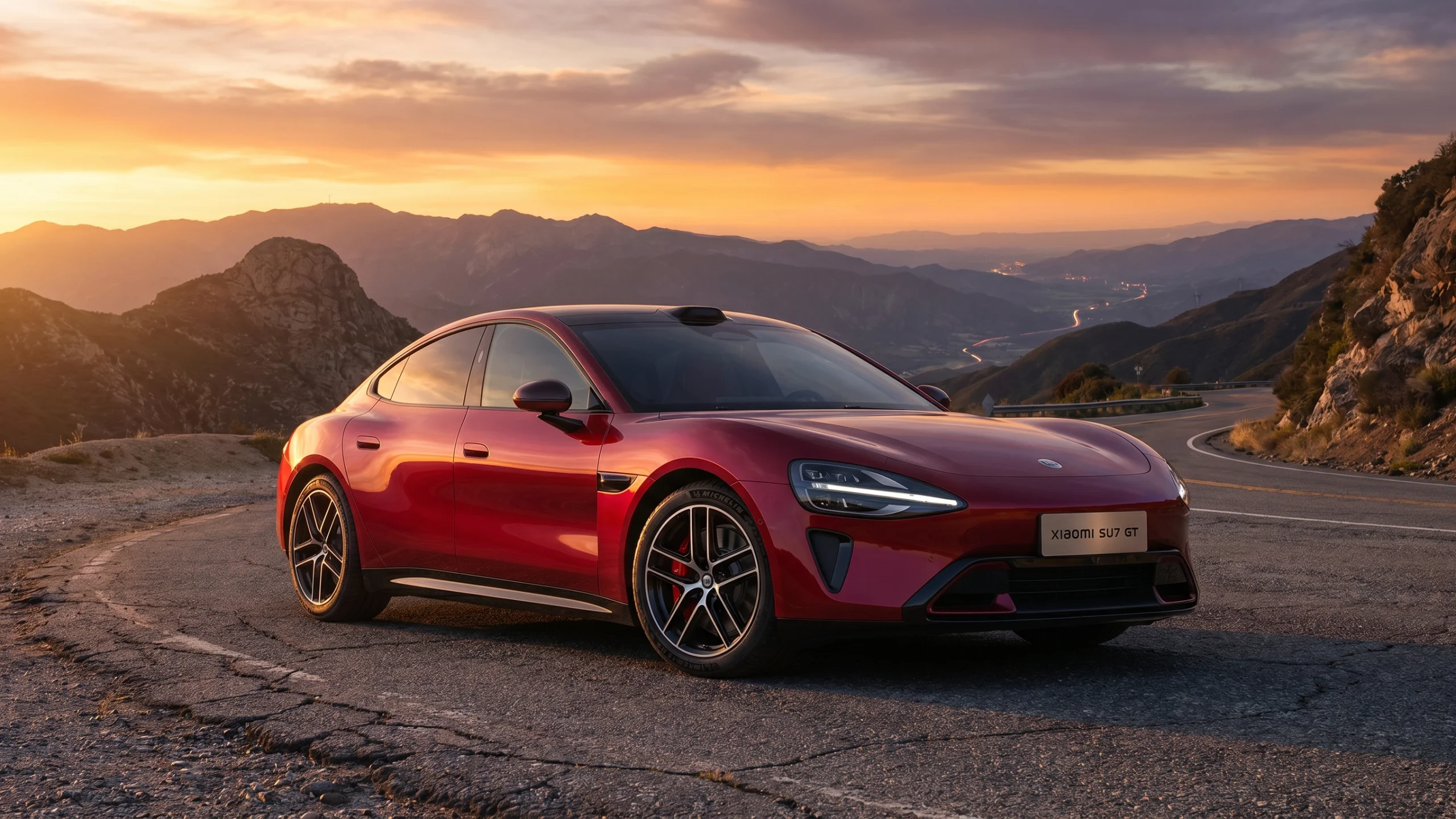
Xiaomi’s highly anticipated YU7 GT is already hitting Chinese streets ahead of its official late-May debut, with the 990-horsepower electric SUV representing the company’s most aggressive push into the premium performance segment. The dual-motor setup and 705 km range position it as a direct competitor to established performance EVs, though questions remain about real-world efficiency and pricing in a crowded market.
Xiaomi’s Automotive Ambitions Take Shape
Xiaomi’s transition from consumer electronics to electric vehicles has accelerated dramatically since the standard YU7 launched in June 2025. That model generated 200,000 orders almost immediately, with December 2025 sales peaking at 39,089 units. However, March 2026 sales dropped to 13,558 units, signaling that initial enthusiasm has cooled. The GT variant’s arrival is clearly designed to reignite buyer interest and establish Xiaomi as a serious contender in premium EV performance.
The company’s strategy mirrors its smartphone playbook: enter with competitive specs, build brand loyalty through software integration, and expand upmarket with performance variants. For Xiaomi, the automotive division represents a critical growth vector as smartphone markets mature. The YU7 GT launch demonstrates confidence that the brand can compete against established automakers in high-performance segments.
Specifications Overview
| Specification | Value |
|---|---|
| Combined Power Output | 738 kW (990 hp) |
| Front Motor | 288 kW (386 hp) – Inovance |
| Rear Motor | 450 kW (604 hp) – Xiaomi-developed |
| Battery Capacity | 101.7 kWh |
| CLTC Range | 705 km (438 miles) |
| Top Speed | 300 km/h (186 mph) |
| Length | 5,015 mm (197.4 inches) |
| Width | 2,007 mm (79 inches) |
| Height | 1,597 mm (62.9 inches) |
| Wheelbase | 3,000 mm (118 inches) |
| Wheel Size | 21-inch |
| Braking System | Multi-piston calipers with carbon-ceramic discs (expected) |
| Suspension | Air suspension with rear axle torque vectoring |

Dual-Motor Architecture and Performance Claims
The YU7 GT’s power delivery relies on an asymmetrical dual-motor setup that reveals Xiaomi’s engineering priorities. The 288 kW front motor from Inovance handles steering-axle duties, while Xiaomi’s proprietary 450 kW rear motor delivers the majority of performance. This 386 hp / 604 hp split is unconventional—most performance EVs distribute power more evenly—but allows Xiaomi to emphasize rear-wheel drive characteristics while maintaining front-motor efficiency benefits.
The 300 km/h top speed claim is theoretically achievable given the power figures, though real-world testing will be essential. More practically, the 705 km CLTC range requires scrutiny. China’s CLTC cycle is notoriously optimistic compared to WLTP or EPA standards—real-world range is likely 20-30% lower, suggesting 490-560 km in typical driving. The 101.7 kWh battery is substantial but not exceptional for an SUV of this size and power output.
Rear axle torque vectoring is a sophisticated addition that distributes power between rear wheels during cornering, theoretically improving handling dynamics. Combined with air suspension, this should provide a more compliant ride than traditional performance SUVs, supporting Xiaomi’s “Grand Tourer” positioning over track-focused aggression.
Design and Customization Strategy
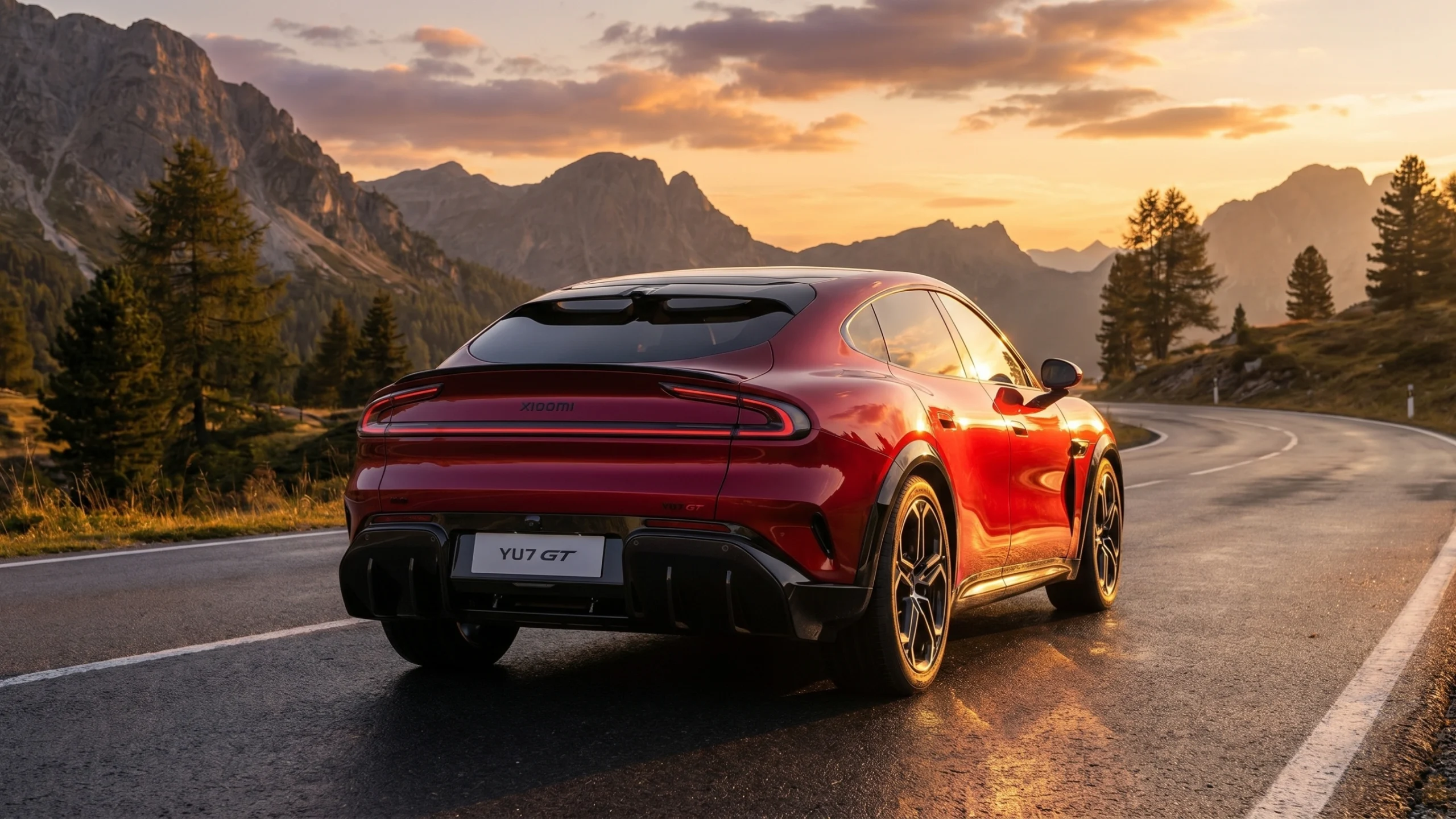
Physically, the YU7 GT is a substantial vehicle measuring 5,015 mm in length with a 3,000 mm wheelbase, placing it firmly in the mid-to-large SUV category. The “Cherry Red” paint option shown in early sightings features aggressive styling: widened front fenders, a prominent front splitter, and ten through-air channels designed for high-speed aerodynamic management. The 21-inch wheels with multi-piston brake calipers complete the performance aesthetic.
 Cars
Cars
Hyundai Inster: The Quirky, Affordable EV for the City
Hyundai is shaking up the electric vehicle market with its latest offering – the Inster, a fun and funky electric...
 News
News
Leapmotor B10 Adds One-Pedal Driving and CarPlay in OTA Update Six Months After Launch
The Leapmotor B10 compact electric SUV receives a major over-the-air (OTA) software update, adding one-pedal driving, Apple CarPlay, and Android...
 Cars
Cars
BMW Unveils the Electric 2002te Restomod: Price, Specs, and EV Conversion Details
A Classic Bavarian Coupé Reborn With Tesla Power Bavarian Econs Tech has officially revealed one of the most striking electric...
Xiaomi’s emphasis on customization—headlight decorations, side mirror designs, rear spoilers, hood ornaments, wheel styles, and caliper colors—reflects the company’s consumer electronics DNA. This personalization approach differentiates the YU7 GT in a market where many EVs appear identical. However, it also raises questions about long-term parts availability and service complexity for independent repair shops.
Market Positioning and Timing
The YU7 GT’s late-May launch arrives at a critical moment for Xiaomi’s automotive division. Standard YU7 sales momentum has clearly declined from December’s 39,089 units to March’s 13,558 units. The performance variant is intended to capture a different buyer segment—those willing to pay premium prices for extreme performance—while also generating media attention that benefits the entire lineup.
Pricing details remain unconfirmed, but the 990 hp output and premium positioning suggest the YU7 GT will command a significant premium over the standard model. In China’s competitive EV market, this positions it against models like the BYD Song Plus DM-i and potentially imported performance EVs, though direct pricing comparisons await official announcements.
Comparison with Competitors
Tesla Model X Plaid: Tesla’s 1,020 hp tri-motor SUV remains the performance benchmark, with superior acceleration (0-60 mph in 2.5 seconds) and established Supercharger infrastructure. However, the Model X Plaid commands significantly higher prices and lacks the YU7 GT’s customization options. Real-world range comparisons favor Tesla due to superior efficiency.
BYD Song Plus DM-i: While technically a plug-in hybrid rather than pure EV, BYD’s offering provides comparable performance with extended range through combustion backup. The Song Plus DM-i appeals to buyers concerned about charging infrastructure, though it lacks the YU7 GT’s pure-electric efficiency and performance ceiling.
Nio ES8: Xiaomi’s fellow Chinese EV manufacturer offers 533 hp and battery-swapping infrastructure, positioning it as a lifestyle choice rather than a pure performance competitor. The ES8 emphasizes comfort and technology over raw power, targeting a different buyer profile than the GT variant.
Unanswered Questions and Concerns
Several critical details remain unconfirmed. Pricing has not been announced, making value assessment impossible. Real-world range testing under various conditions is essential—CLTC figures are historically optimistic. Acceleration figures (0-100 km/h times) would clarify performance positioning. Charging speed specifications and battery degradation warranties are absent. Additionally, details about the carbon-ceramic brake system are described as “expected” rather than confirmed, suggesting final specifications may still be in flux.
The timing of pre-production units reaching showrooms before official launch is unusual and raises questions about whether this represents genuine market readiness or marketing theater to generate buzz ahead of the formal announcement.
Verdict
The Xiaomi YU7 GT represents an aggressive entry into the premium performance EV segment, combining headline-grabbing 990 hp output with practical Grand Tourer positioning. The dual-motor architecture, air suspension, and extensive customization options differentiate it from competitors, though real-world efficiency and pricing remain critical unknowns. This SUV is designed for Chinese buyers seeking performance and personalization without sacrificing practicality—those willing to wait for official pricing and real-world testing before committing. For international markets, availability and pricing will determine whether Xiaomi’s automotive ambitions extend beyond China’s borders.