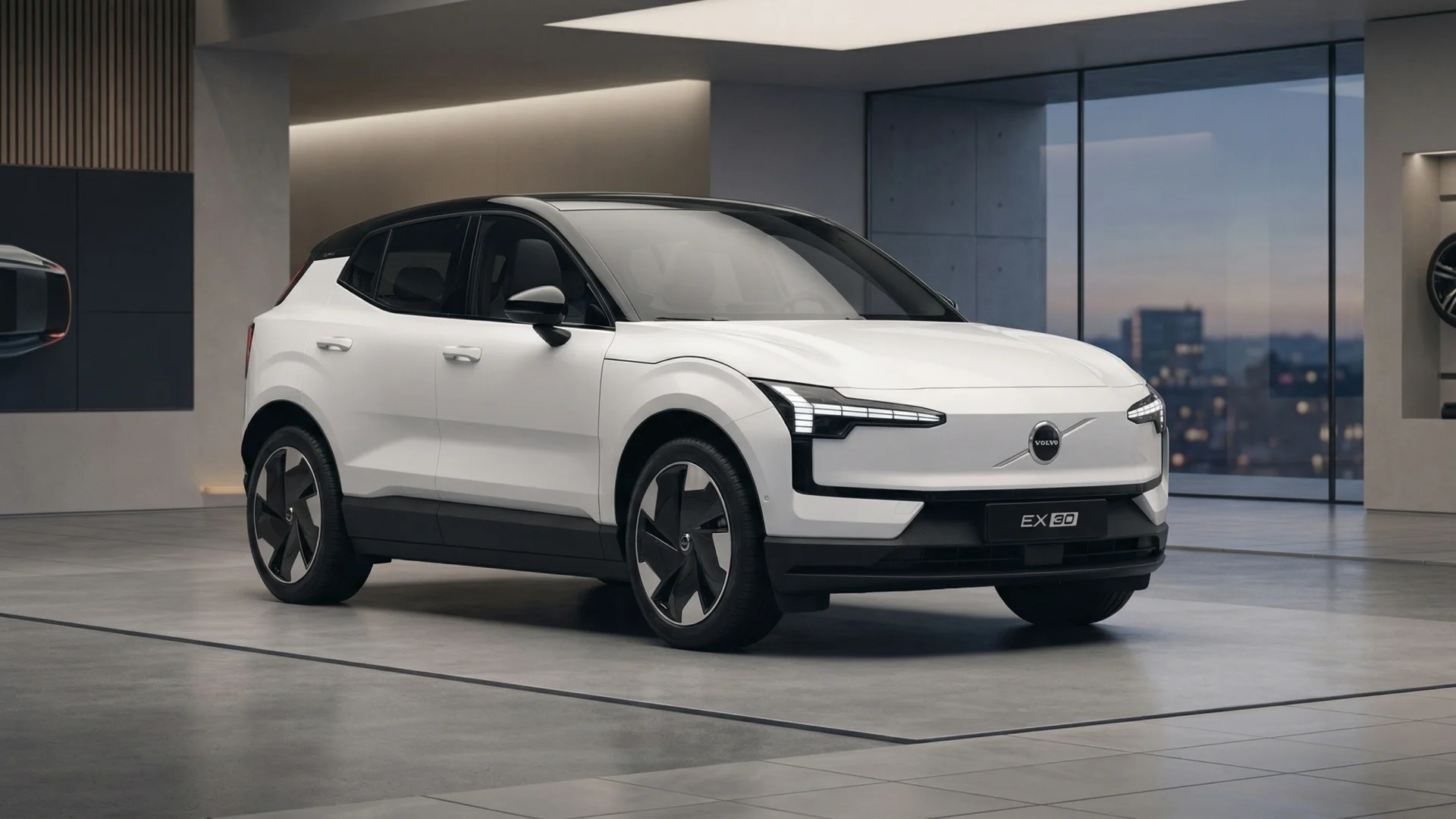
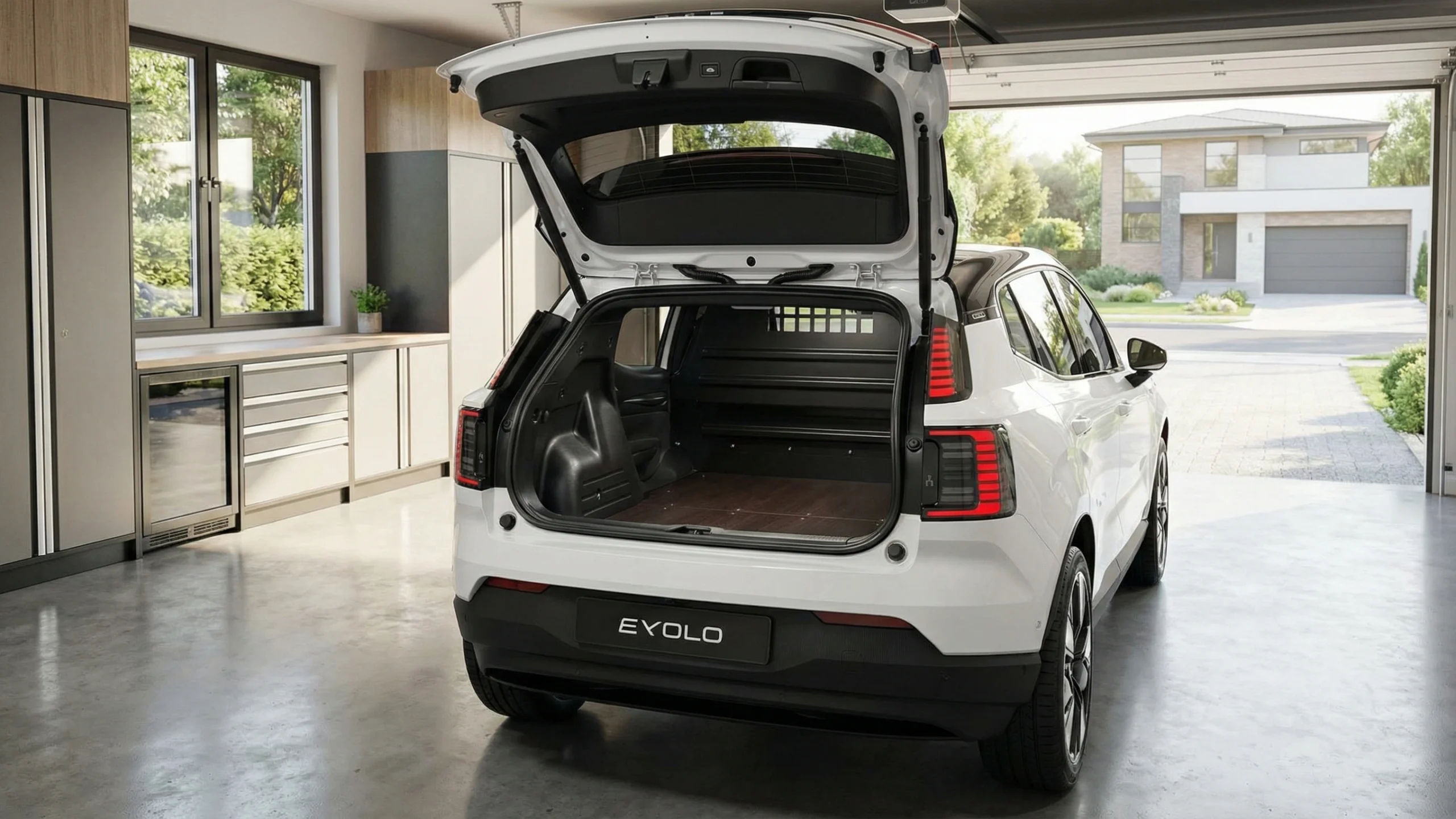
Volvo has introduced an EX30 Cargo variant optimized for commercial fleets, offering up to 31.9 cubic feet of cargo space while retaining the standard model’s 69 kWh battery and up to 261-mile range. This two-seat configuration removes rear seats to maximize load volume, targeting urban delivery and service fleets seeking zero-emission efficiency. Fleet operators benefit from lower operating costs and Volvo’s safety features adapted for cargo use.
Background: Volvo’s Push into Electric Commercial Vehicles
Volvo Cars, a leader in electric vehicle adoption, launched the EX30 in 2024 as its smallest fully electric SUV, built on the sustainable SEA platform. The standard EX30 offers rear-wheel-drive (RWD) or all-wheel-drive (AWD) options with 268 hp or 422 hp, respectively, and emphasizes affordability with a starting price under $35,000 in the US market. By 2026, production in Belgium will support global demand, including fleet applications.
The EX30 Cargo builds on this by adapting the passenger model for business use, similar to how competitors like Volkswagen offer ID.Buzz Cargo. Volvo’s fleet strategy aligns with its goal of 100% electric sales by 2030, focusing on total cost of ownership through fast charging and durable batteries. Details on exact pricing or availability for the Cargo variant remain unconfirmed beyond initial announcements.
Key Specifications
| Specification | Details |
|---|---|
| Powertrain Options | RWD: 268 hp, 253 lb-ft; AWD: 422 hp, 400 lb-ft |
| Battery Capacity | 69 kWh (64 kWh usable) |
| Electric Range (EPA est.) | Up to 261 miles (RWD); 253 miles (AWD) |
| 0-60 mph | 5.1 s (RWD); 3.4 s (AWD) |
| DC Fast Charging (10-80%) | 28 min (up to 153 kW) |
| Cargo Capacity (Cargo Variant) | Up to 31.9 cu. ft. |
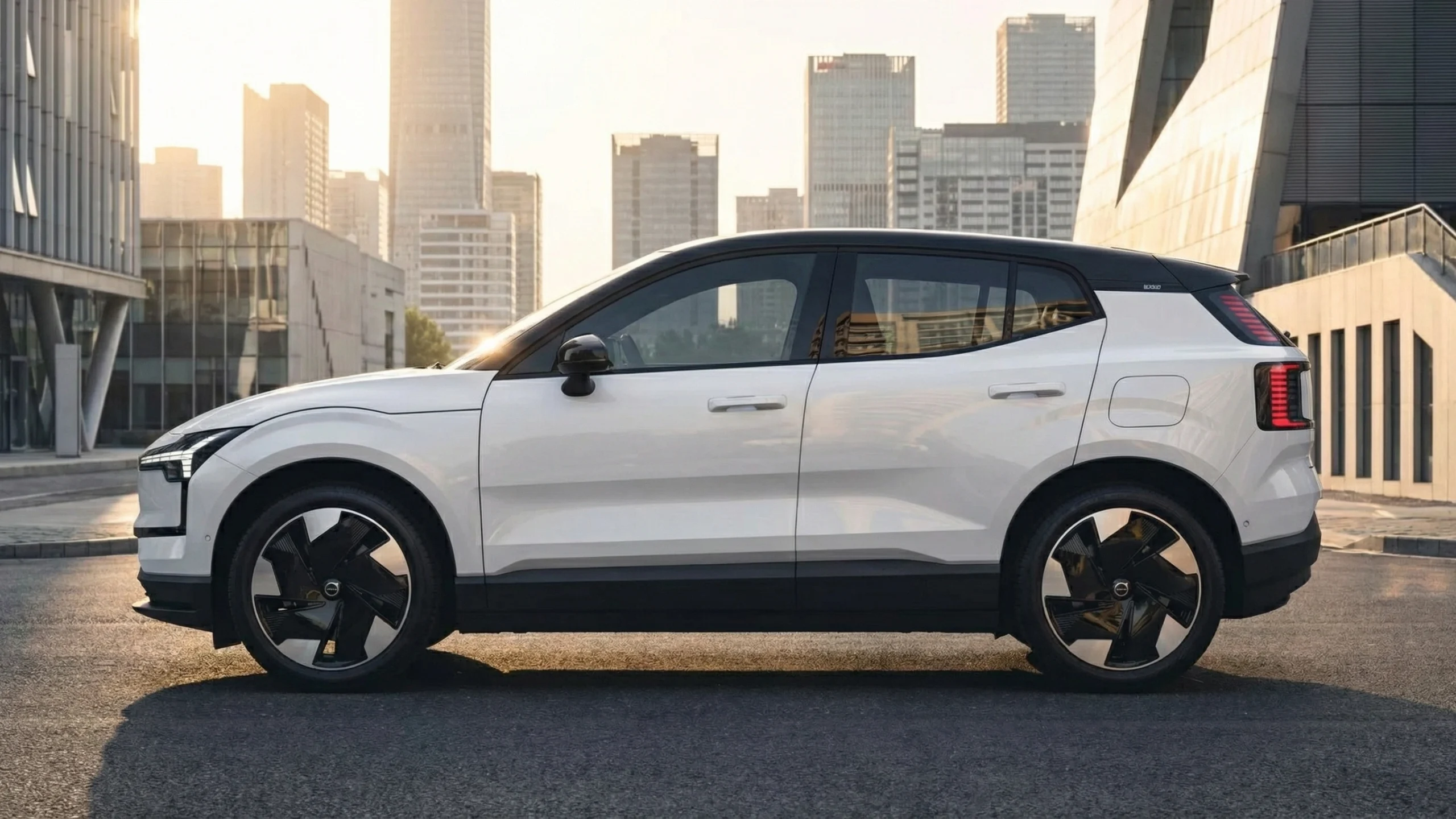
| Dimensions (L x W x H) | 166.7 x 72.3 x 61 in |
| Max Towing | 2,000 lbs |
| Curb Weight | 3,913 lbs (RWD); 4,151 lbs (AWD) |
| Seating (Cargo Variant) | 2 seats |
Performance and Efficiency Analysis
The EX30 Cargo inherits the standard model’s dual-motor AWD setup, delivering 422 hp and 400 lb-ft of torque for quick acceleration suited to city traffic—0-60 mph in 3.4 seconds. Its 69 kWh battery supports up to 261 miles of range on RWD models, with real-world tests showing 160 miles at highway speeds. Efficiency stands at 116 MPGe combined (EPA), translating to about $58 monthly fuel costs for average drivers.
Charging is practical for fleets: 10-80% in 28 minutes via 153 kW DC, or full charge in 8 hours on 11 kW AC. The underfloor battery placement lowers the center of gravity, aiding handling with heavy loads up to 2,000 lbs towing. However, maximum cargo payload specifics for the Cargo variant are not yet confirmed.
 Cars
Cars
Ford Unveils 2026 Mustang Mach-E GT California Special: Price, Specs, and Release Date
Ford’s Electric Pony Gets a 60s-Inspired Makeover Ford has officially revealed the 2026 Mustang Mach-E GT California Special, a nostalgic,...
 News
News
Xiaomi’s Remarkable Sales of the Xiaomi SU7 Electric Sedan
In a remarkable feat, Xiaomi managed to sell nearly 90,000 units of the Xiaomi SU7 electric sedan in just one...
 Cars
Cars
Porsche GEN4 Formula E Car Delivers 600kW Power with Permanent AWD – Biggest Performance Leap in Series History
Porsche has begun track testing its GEN4 Formula E car, featuring 600kW (816 PS) peak power, permanent all-wheel drive, and...
Cargo Capacity and Practicality
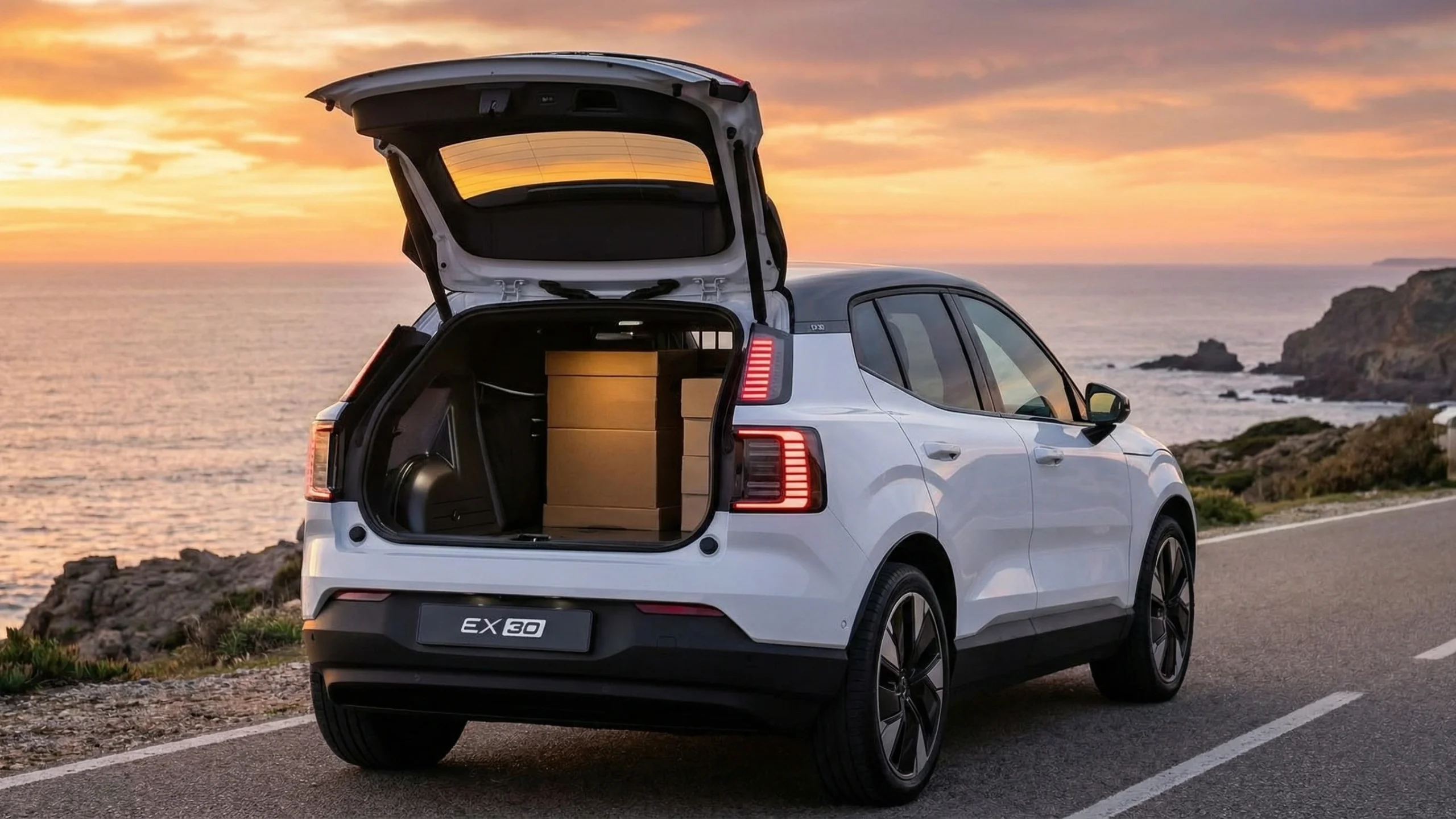
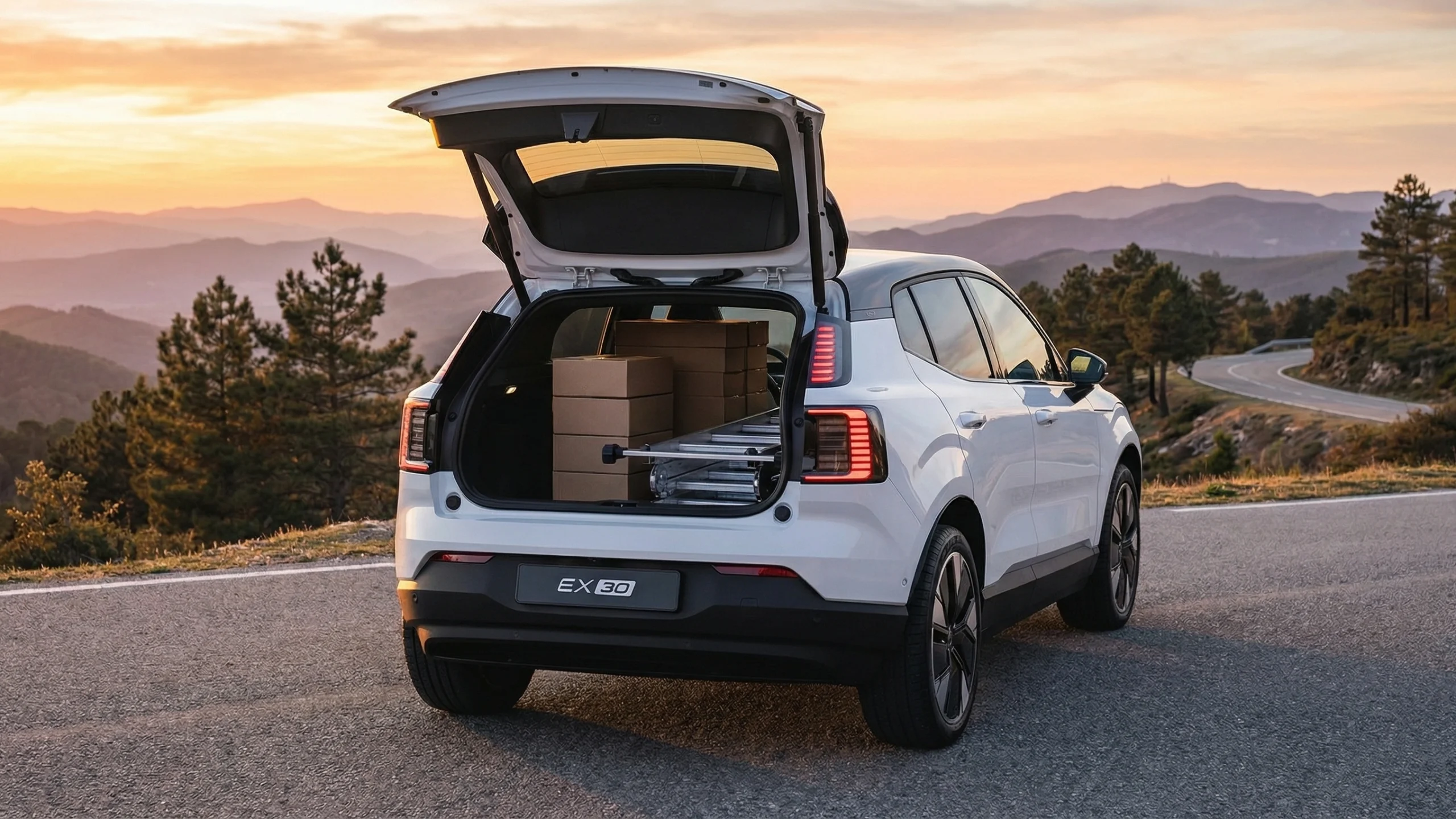
The EX30 Cargo’s standout feature is its 31.9 cu. ft. capacity, a significant increase over the passenger model’s 12.4 cu. ft. (seats up) or 27.8 cu. ft. (folded). This flat load floor from the removed rear seats accommodates larger items like tools or packages, with a low load height of around 7 inches of ground clearance. Front frunk adds 0.25 cu. ft. for small items.
Volvo equips it with fleet-friendly features like acoustic vehicle alerting and multiple airbags, though rear seating removal may adjust safety ratings. Drag coefficient of 0.28 Cd enhances efficiency for frequent stops. Unanswered questions include the exact payload capacity and modifications for cargo security.
Fleet Integration and Charging
For fleets, the EX30 Cargo supports Type 2/CCS2 charging up to 11 kW AC and 153 kW DC, with water-cooled batteries for reliability. Volvo’s four-year/50,000-mile warranty covers the battery and vehicle, reducing downtime risks. Urban fleets gain from its compact 166.7-inch length and 35.1 ft. turning circle, ideal for tight deliveries.
Comparison with Competitors
| Model | Range (miles) | Power (hp) | Cargo Volume (cu. ft.) | 0-60 mph (s) |
|---|---|---|---|---|
| Volvo EX30 Cargo | 261 | 422 (AWD) | 31.9 | 3.4 |
| Volkswagen ID. Buzz Cargo | 234 | 282 | 53.7 (max) | 6.5 |
| Ford E-Transit Custom | 196 | 286 | 43.1 | ~9.0 |
| Mercedes eCitan | 186 | 116 | 22.2 | ~11.0 |
The EX30 Cargo outperforms in power and acceleration versus the ID. Buzz Cargo and E-Transit, though it trails in max volume. Its premium safety and range edge make it competitive for high-utilization fleets.
Verdict
The Volvo EX30 Cargo positions as a premium electric van alternative for small-to-medium fleets, prioritizing performance, range, and brand reliability over sheer volume. It’s ideal for urban service companies or delivery operations needing quick charging and low running costs, but larger payloads may require bigger models. Wait for confirmed payload and pricing details before committing—strong potential if Volvo delivers on fleet-specific support.