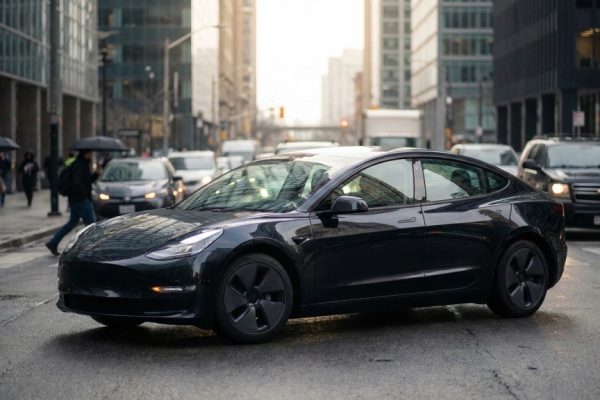

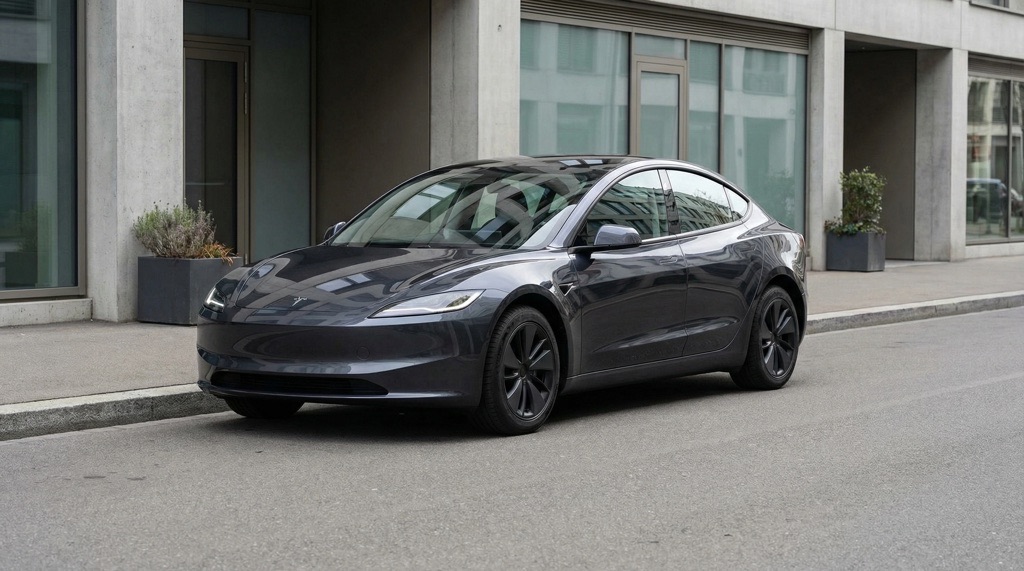
This review covers the Tesla Model 3 Model Year 2025 (Highland refresh), evaluated as a new car on sale and used in 2026 real-world conditions.
TL;DR
✅ Buy the Tesla Model 3 if you want:
- One of the most reliable real-world ranges in the segment
- Very high efficiency without relying on ideal test conditions
- A mature EV platform with low ownership complexity
❌ Skip it if you need:
- 800-V architecture and class-leading fast charging
- A luxury-oriented interior with physical controls
- Maximum rear-seat and cargo flexibility
🏆 Best for: daily commuters, mixed city–highway use, frequent long trips
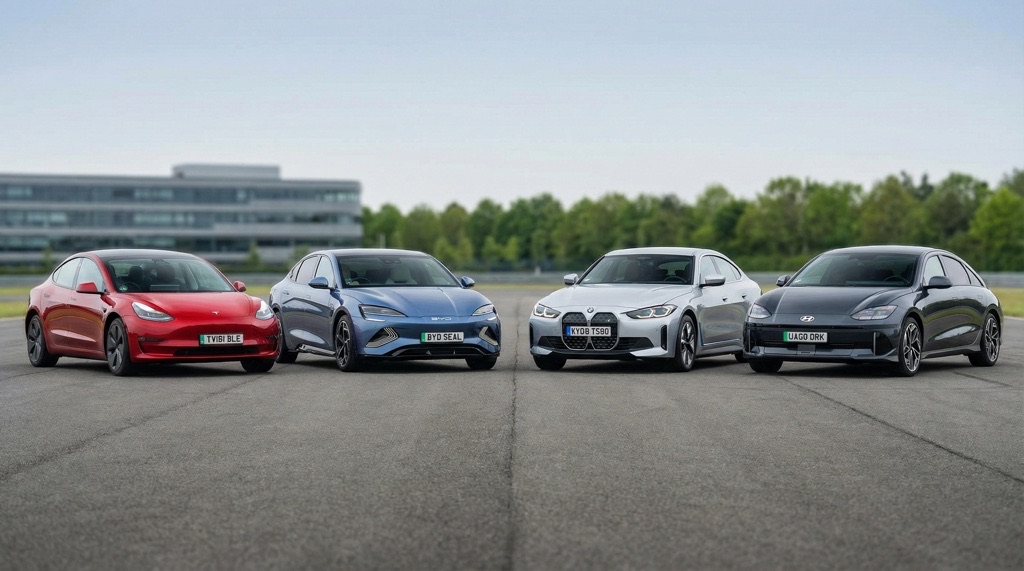
⚖️ Main rivals: BYD Seal, BMW i4 eDrive40, Hyundai Ioniq 6
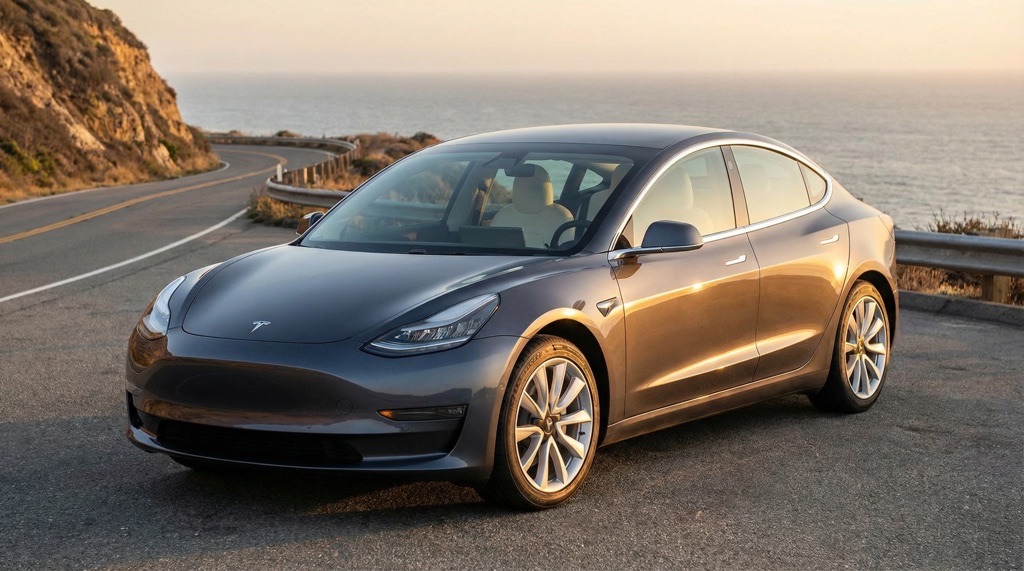
Quick Verdict
- One of the strongest electric sedans you can buy in 2026
- Predictable real-world range in both summer and winter
- Proven battery and thermal management
- Not aimed at buyers prioritizing premium interior design
Tesla Model 3 (Highland, MY2025) — Key Technical Specs
Segment: D-segment electric sedan
Platform: Tesla EV (Highland update)
Model 3 RWD
- Battery: ≈60 kWh (LFP, usable ~57 kWh)
- Drive: Rear-wheel drive (RWD)
- Power: ≈283 hp (208 kW)
- 0–100 km/h: ~6.1 s
Model 3 Long Range AWD
- Battery: ≈78 kWh (NMC, usable ~75 kWh)
- Drive: All-wheel drive (AWD)
- Power: ≈498 hp (366 kW)
- 0–100 km/h: ~4.4 s
Estimated price (2026): from ~$40,000
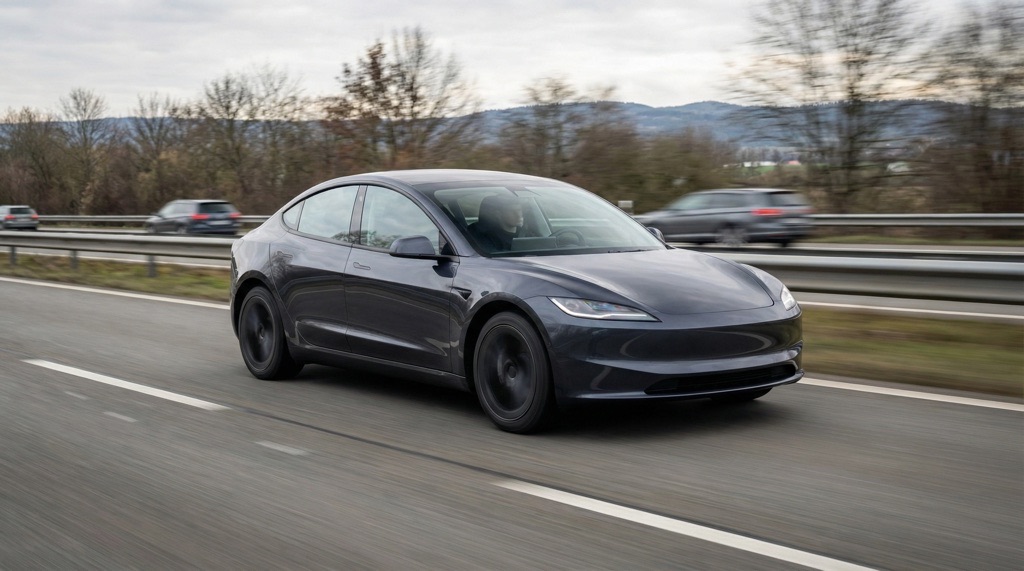
Why the Tesla Model 3 Still Matters in 2026
The Highland refresh didn’t change the Model 3’s fundamentals, but it refined the areas that matter most in daily use:
 Reviews
Electric Motorcycle Buying Guide 2026: The No-Regret Switch to Electric
If you’re thinking about switching from gas to electric in 2026, you’re not too early. You’re just deciding whether it...
 Reviews
Horwin CR6 Review (2024): Urban Electric Café — The Smart Switch or a Stylish Compromise?
INTRODUCTION — Who Is This Bike Really For? The Horwin CR6 is a café racer-styled electric motorcyclele built for urban...
 Reviews
Black Tea Motorcycles Delivers Practical, Modular Electric Bikes for Real Riders
While many electric motorcycle brands chase radical styling and software-heavy tech, Black Tea Motorcycles is carving its own path. Founded...
- Noticeably quieter cabin at highway speeds
- Softer suspension tuning without sacrificing stability
- Lower and more consistent energy consumption
- Improved cold-weather predictability
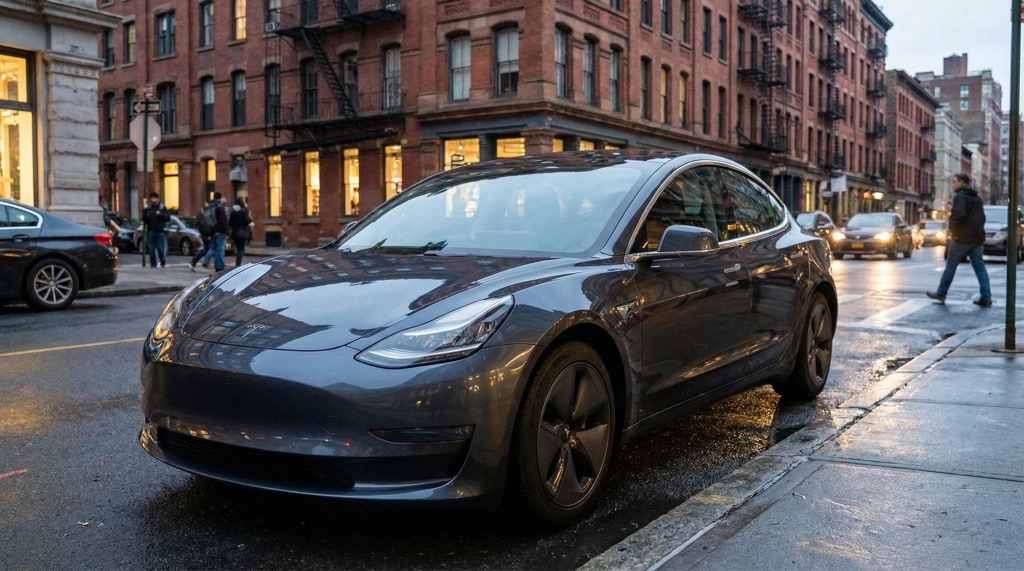
Based on aggregated independent tests and long-term owner data from 2023–2025, the Model 3 remains a reference point for efficiency and usable range, not marketing numbers.
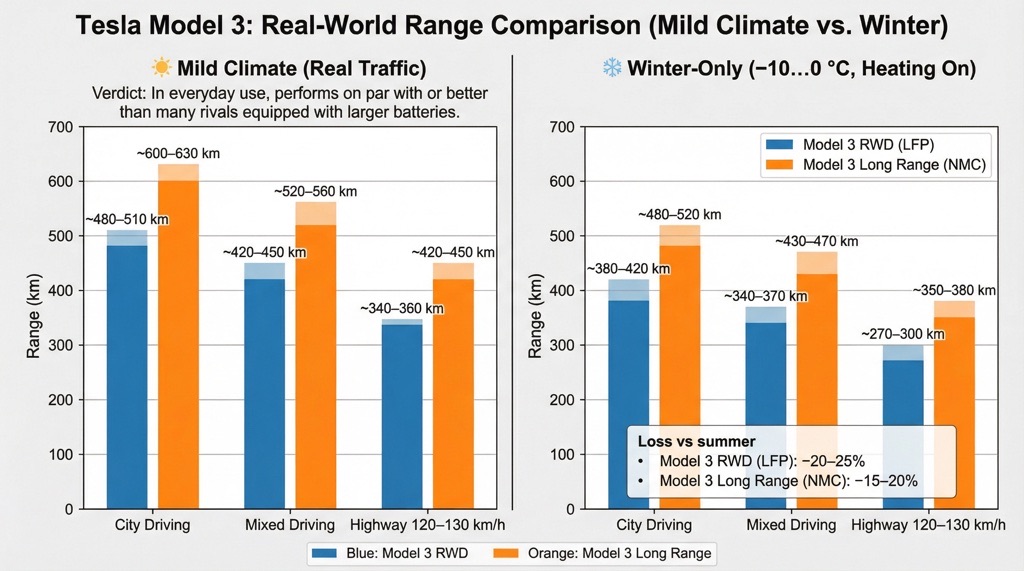
Real-World Range (Mild Climate)
Measured in real traffic, not WLTP or EPA cycles.
| Driving conditions | Model 3 RWD | Model 3 Long Range |
|---|---|---|
| City driving | ~480–510 km | ~600–630 km |
| Mixed driving | ~420–450 km | ~520–560 km |
| Highway 120–130 km/h | ~340–360 km | ~420–450 km |
Verdict: In everyday use, the Model 3 performs on par with or better than many rivals equipped with larger batteries.
❄️ Winter-Only Real-World Range
Conditions: −10…0 °C, winter tires, cabin heating on, real traffic speeds.
| Driving conditions | Model 3 RWD (LFP) | Model 3 Long Range (NMC) |
|---|---|---|
| City driving | ~380–420 km | ~480–520 km |
| Mixed driving | ~340–370 km | ~430–470 km |
| Highway 120–130 km/h | ~270–300 km | ~350–380 km |
| Loss vs summer | −20–25% | −15–20% |
Winter verdict
- The Long Range version is clearly more stable in cold conditions
- LFP batteries are more temperature-sensitive
- The heat pump helps, but winter losses are unavoidable
Efficiency
- Average real-world consumption: 14–16 kWh / 100 km
- Among the most efficient EVs in the segment
- Strong aerodynamics and well-optimized power electronics
Charging & Battery
Charging performance
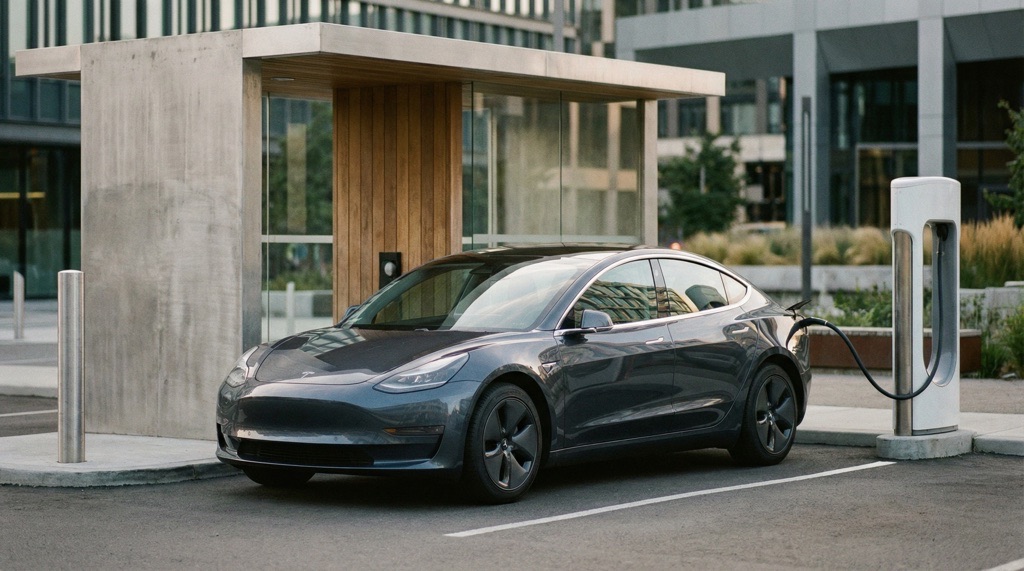
- Charging standard: CCS / Tesla Supercharger network
- AC home charging: ~7–8 hours (0–100%)
- DC fast charging: 10–80% in ~25–30 minutes (with a warm battery)
Battery characteristics
- LFP (RWD): long cycle life, safe to charge to 100% daily
- NMC (Long Range): higher energy density and better highway efficiency
- Real-world degradation: ~1–2% per year
Verdict: Charging speeds are not class-leading, but behavior is stable and repeatable.
Performance & Driving Experience
- Acceleration: instant and linear
- Highway driving: confident at sustained 130–140 km/h
- Ride comfort: ⭐⭐⭐⭐☆
- Handling & stability: ⭐⭐⭐⭐☆
❗ No hype — this is a well-balanced electric sedan, tuned for everyday driving.
Practicality & Daily Use
- City usability: ⭐⭐⭐⭐⭐
- Highway comfort: ⭐⭐⭐⭐☆
- Interior space: ⭐⭐⭐⭐☆
- Trunk + frunk: ⭐⭐⭐⭐☆
Main drawback: minimalist interior design and reliance on touchscreen controls.
Tesla Model 3 vs Main Rivals (2026)
| Model | Real-world range | DC charging | Price | Key advantage |
|---|---|---|---|---|
| Tesla Model 3 | ~520 km | ~30 min | ~$40k | Efficiency |
| BYD Seal | ~500 km | ~28 min | ~$42k | Comfort |
| BMW i4 | ~480 km | ~31 min | ~$55k | Premium feel |
| Hyundai Ioniq 6 | ~500 km | ~18 min | ~$45k | 800-V platform |
True Ownership Cost (2026)
- Annual electricity cost: ~$350–500
- Maintenance: minimal (no oil, gearbox, or exhaust)
- Battery warranty: 8 years / 160,000 km
Verdict: One of the lowest-cost EVs to own in its class.
Is the Tesla Model 3 Worth Buying in 2026?
Yes, if you prioritize efficiency, real-world range, and predictable ownership.
No, if your priorities are luxury materials, ultra-fast charging, or hatchback practicality.
Final Verdict
The Tesla Model 3 remains one of the most complete electric sedans on the market in 2026.
It doesn’t chase emotions or luxury trends — it delivers real kilometers, stable winter performance, and low running costs.
FAQ
Is the Tesla Model 3 worth buying in 2026?
Yes, especially for buyers focused on efficiency and long-term usability.
What is the real-world range?
Around 520 km in mixed driving for the Long Range version.
How does it perform in winter?
Expect a 15–25% range reduction, with the Long Range model performing better.
Tesla Model 3 or BYD Seal?
Model 3 is more efficient and cheaper to run; BYD Seal offers a more traditional, comfortable interior.