
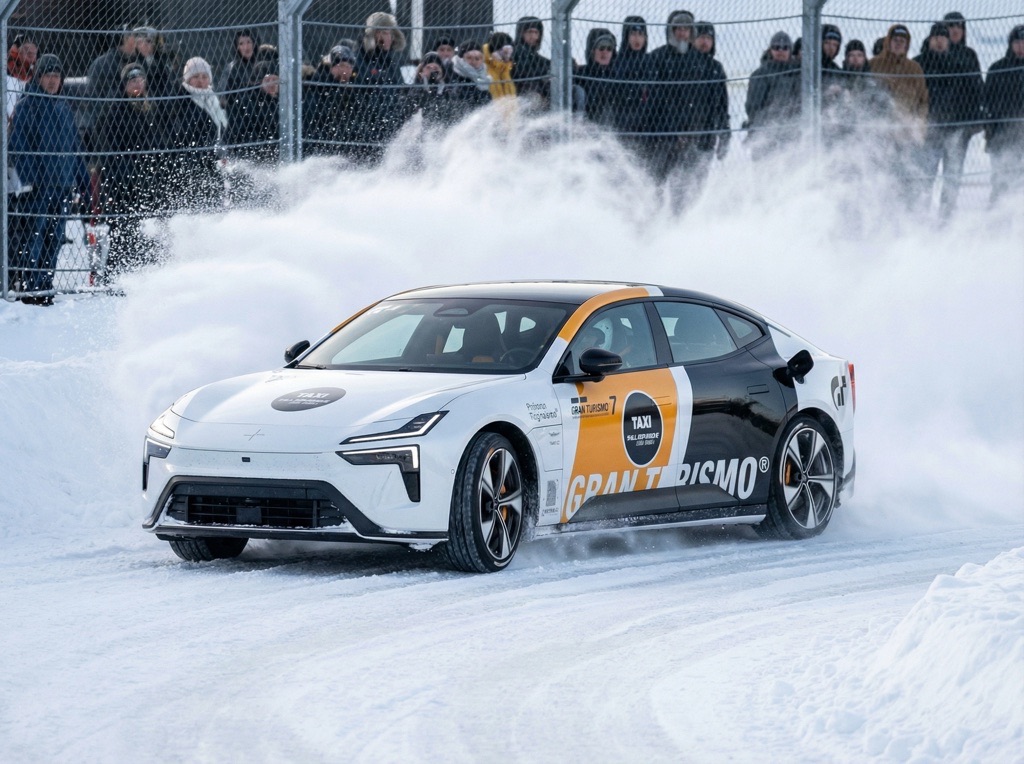
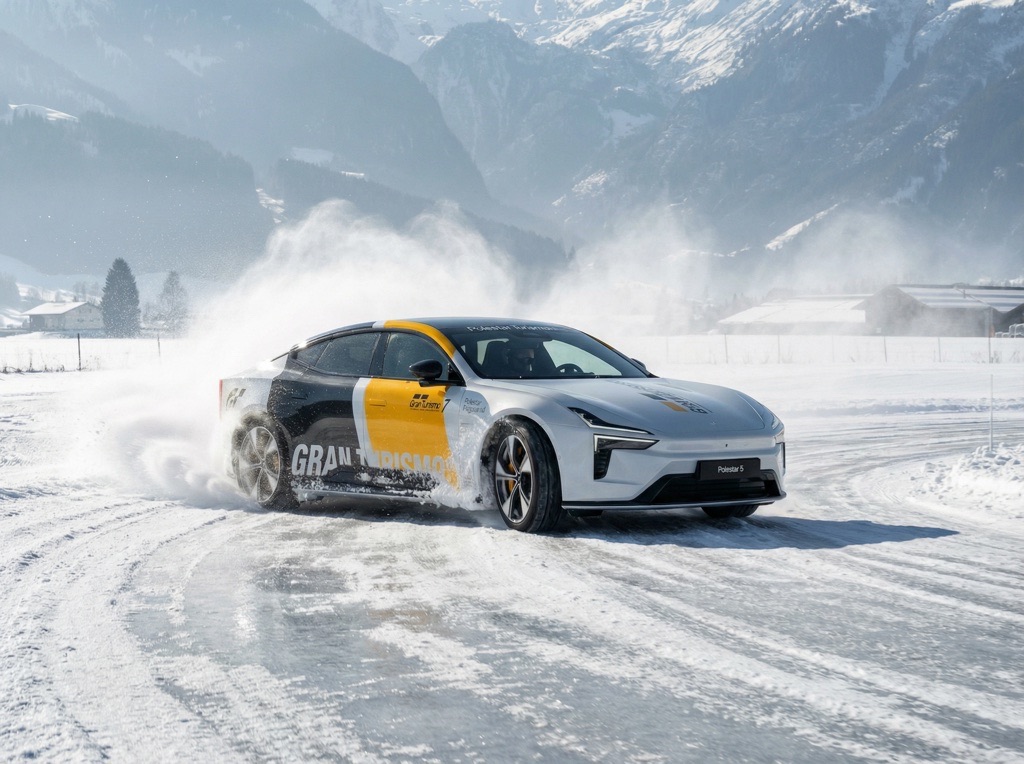
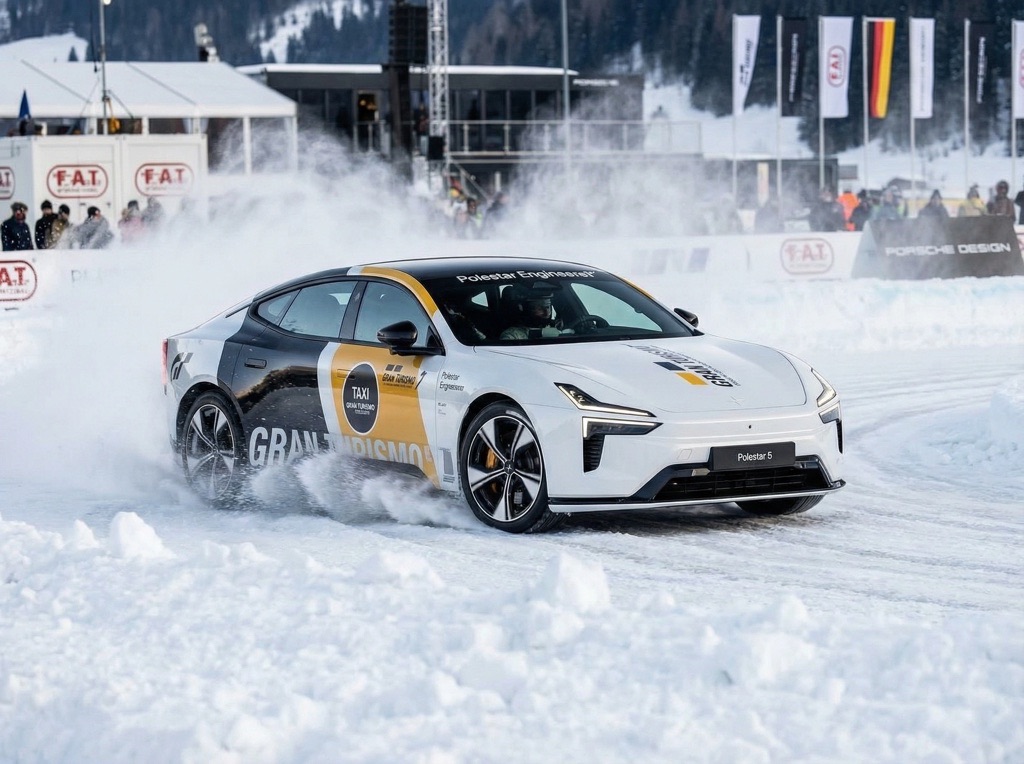
Polestar unveiled the 884-hp Polestar 5 Performance at the FAT Ice Race in Zell am See, Austria, where it demonstrated exceptional handling on a frozen track. Professional driver Ted Björk praised its stability during sideways drifts, while Gran Turismo creator Kazunori Yamauchi noted its unmatched smooth ride compared to gas cars. This debut highlights the Polestar 5’s capability as a luxury EV grand tourer that performs in sub-zero conditions, challenging perceptions of EVs in cold weather.
Background: Polestar’s Rise in the EV Luxury Segment
Polestar, spun off from Volvo in 2017, has positioned itself as a premium EV brand focused on performance and sustainable design. The Polestar 2 sedan established its reputation, followed by the Polestar 3 SUV and the innovative Polestar 4 crossover, which introduced the no-rear-window camera system now featured on the 5. As a grand tourer over 5 meters long and just 1.42 meters tall, the Polestar 5 targets buyers seeking luxury four-door EVs with supercar acceleration. Its aluminum spaceframe, bonded with structural adhesive instead of welds, delivers chassis stiffness ideal for high-speed stability—proven on the ice.
Polestar recently secured $400 million in investment, bolstering production plans for models like the 5, expected to launch in 2026. The brand’s market position pits it against established luxury players, emphasizing Scandinavian minimalism and green materials like recycled fishing nets and flax in the interior.
Key Specifications
| Specification | Details |
|---|---|
| Power (Performance model) | 650 kW (884 hp), dual electric motors, AWD |
| 0-100 km/h (0-62 mph) | 3.2 seconds |
| Charging | 800V architecture, 10-80% in 22 minutes (on ultra-fast charger) |
| Range (WLTP) | Dual Motor: 678 km (421 miles); Performance: 558 km (347 miles) |
| Dimensions | Length: >5 m (16+ ft); Height: 1.42 m (4.66 ft) |
| Cargo | Frunk: 62 L (2.19 ft³); Trunk: 365 L (12.9 ft³), expands to 1,128 L (39.8 ft³) |
| Price (est.) | Europe: from €120,000; US: ~$100,000 base to $160,000 Performance |
| Unique Features | No rear window (HD camera/mirror), 5 seats, sustainable interior |
Note: Prices vary by market; US figures are estimates. All specs from Polestar via ArenaEV.
Performance on Ice: Handling and Power Delivery
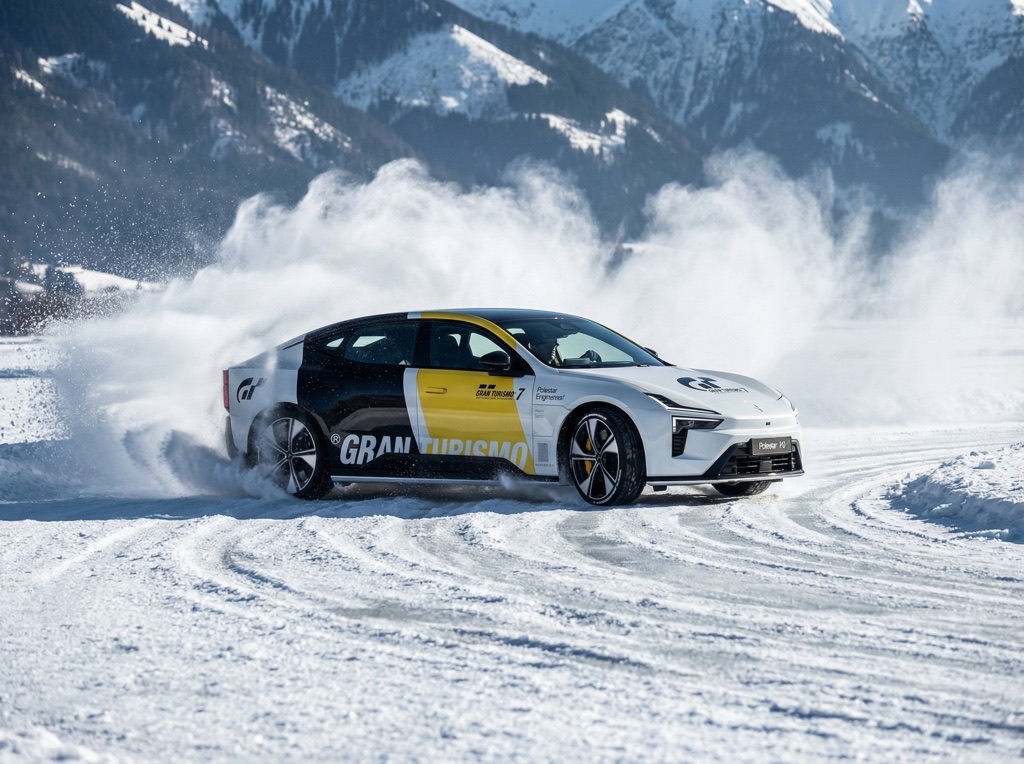
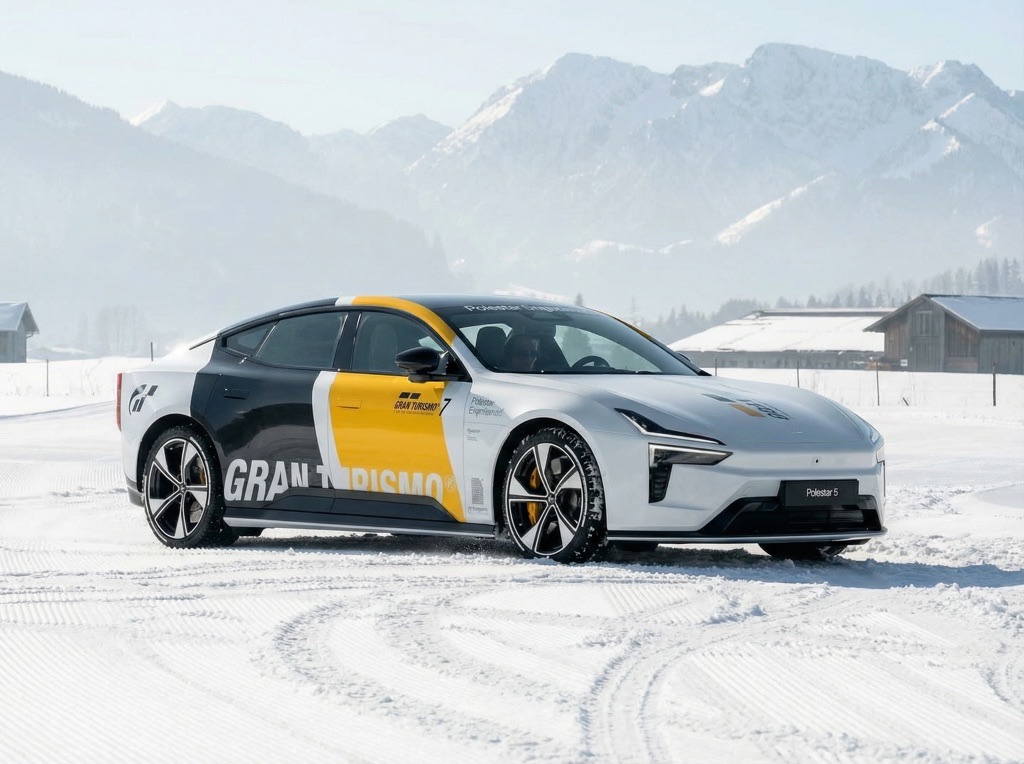
At the FAT Ice Race on February 7, 2026, Polestar showcased two Polestar 5 prototypes on a frozen airfield. The standout Performance variant, liveried in Gran Turismo-inspired yellow and black, was piloted by WTCR champion Ted Björk. He executed precise drifts, noting the car’s stability: “It went exactly where I steered it.” The instant torque from its 650 kW dual motors provided confident control on the slippery surface, countering typical EV concerns like reduced battery efficiency in cold.
 Cars
Cars
Avatr 06T Shooting Brake Debuts Huawei’s 192-Line LiDAR and ADS 4.0 Autonomous Tech
Avatr has officially unveiled the 06T shooting brake, extending its luxury sedan lineup with a wagon variant that marks the...
 Cars
Cars
Porsche Unveils Cayenne Electric 2025: Price, Specs, and Release Date
An All-Electric SUV With Hypercar Performance and Porsche Luxury Porsche has officially revealed the all-new Cayenne Electric 2025, the first...
 Cars
Cars
Caterham Targets the US Market With Project V, a Radical Electric Sports Car
Caterham Finally Turns Its Attention to America For more than 50 years, Caterham largely ignored the United States — despite...
Kazunori Yamauchi, Gran Turismo creator, rode shotgun and endorsed the EV’s linear power delivery as superior to combustion engines, signaling a shift in driving enjoyment. This event builds on Polestar’s motorsport heritage, proving the 5’s low center of gravity and stiff chassis excel beyond pavement.
Design and Everyday Luxury
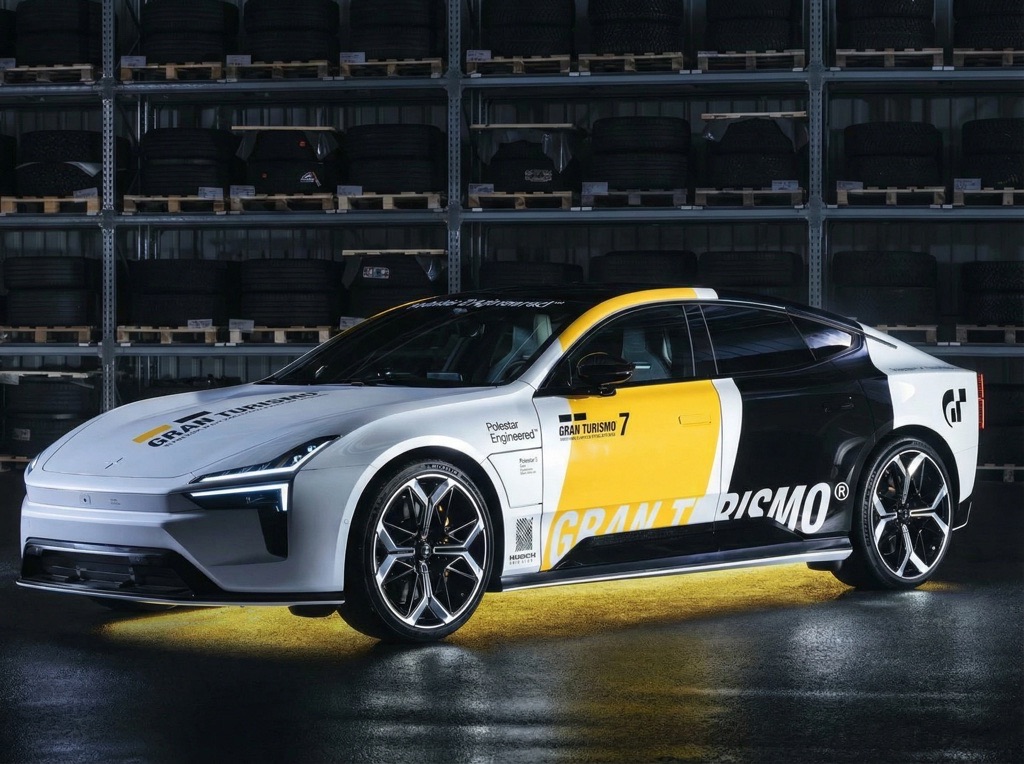
The Polestar 5’s sloping roofline, enabled by a rear camera replacing the traditional window, enhances aerodynamics—a design echoed from the Polestar 4. At 1.42 m tall, it offers a coupe-like profile in a practical four-door package seating five. Cargo space includes a 62 L frunk and 365 L trunk (expandable to 1,128 L), adequate but not class-leading for a GT.
Sustainability defines the cabin with recycled plastics from fishing nets and flax textiles. The 800V system promises real-world usability, with 22-minute 10-80% charges on compatible stations. Range figures—678 km for the standard Dual Motor—position it competitively for long tours, though real-world cold-weather impact remains unquantified beyond this demo.
Comparison with Competitors
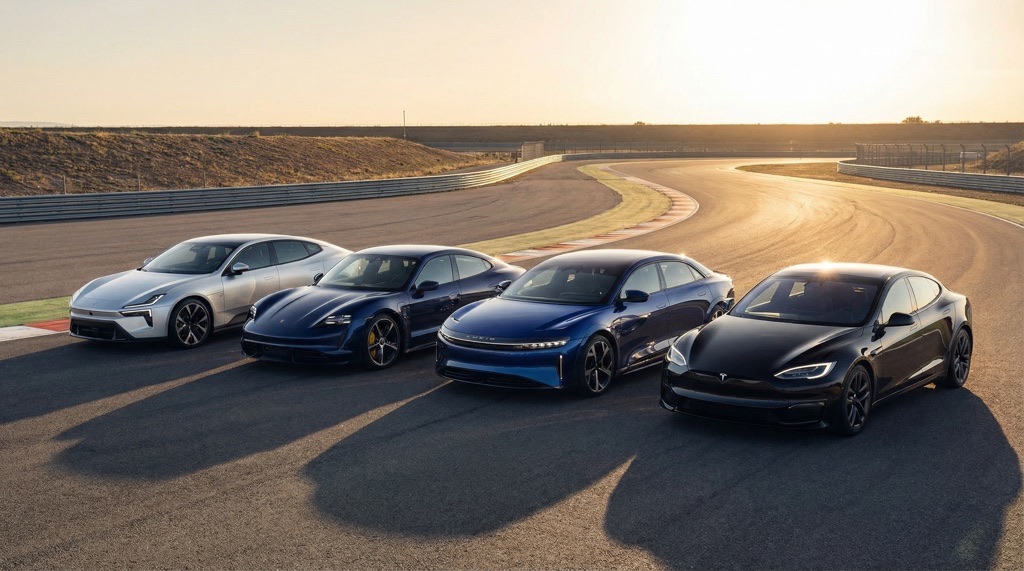
The Polestar 5 slots into a crowded luxury EV GT space. Against the Porsche Taycan Turbo S (over 900 hp, 0-100 km/h in 2.8s, ~500 km range, starting ~€190,000), the 5 offers a similar pace at a lower price but trails in the top-end range. The Lucid Air Sapphire (1,234 hp, sub-2s 0-60 mph, 676 km range, ~$250,000) outpowers it dramatically, yet the 5’s bonded aluminum structure may edge it in chassis feel. Versus the Tesla Model S Plaid (1,020 hp, 2.1s 0-60 mph, 652 km range, ~$90,000), Polestar provides premium materials and build quality, though Tesla’s software and charging network lead.
| Model | Power (hp) | 0-100 km/h (s) | Range WLTP (km) | Price Est. (€) |
|---|---|---|---|---|
| Polestar 5 Perf. | 884 | 3.2 | 558 | 137k |
| Porsche Taycan TS | 938 | 2.8 | 500+ | 190k+ |
| Lucid Air Sapphire | 1,234 | ~2.0 | 676 | 230k+ |
| Tesla Model S Plaid | 1,020 | 2.1 | 652 | 85k+ |
Verdict
The Polestar 5 emerges as a compelling luxury EV grand tourer for enthusiasts prioritizing precise handling, sustainable luxury, and grand tourer poise over raw hypercar speed. Its ice race debut validates EV prowess in extremes, ideal for affluent buyers in Europe and the US seeking a refined alternative to Porsche or Tesla. Unanswered questions linger on final battery capacity, exact US pricing, and cold-range degradation—details not yet confirmed. Production starts late 2026; early adopters get a fresh take on high-performance EVs.