Electric car range in 2026 is no longer about brochure numbers.
What matters today is predictable real-world performance: how far an EV actually drives in mixed conditions, how much range it loses in winter, and how consistently it charges on long trips.
This article is based on aggregated independent road tests (2024–2026), long-term owner data, and winter-driving results — not on WLTP optimism.
TL;DR
✅ Real-world range in 2026 equals 70–85% of WLTP
✅ City driving still delivers the best efficiency
❌ Highway speed and winter remain the biggest range killers
⚡ Charging curve quality matters more than battery size
🏆 Best EVs are the most predictable, not the longest-range on paper
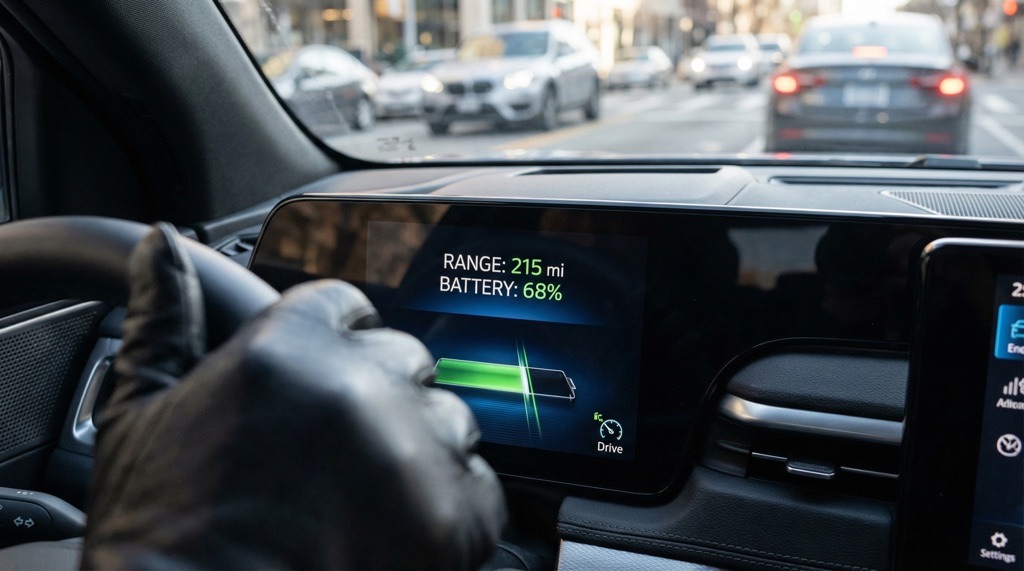
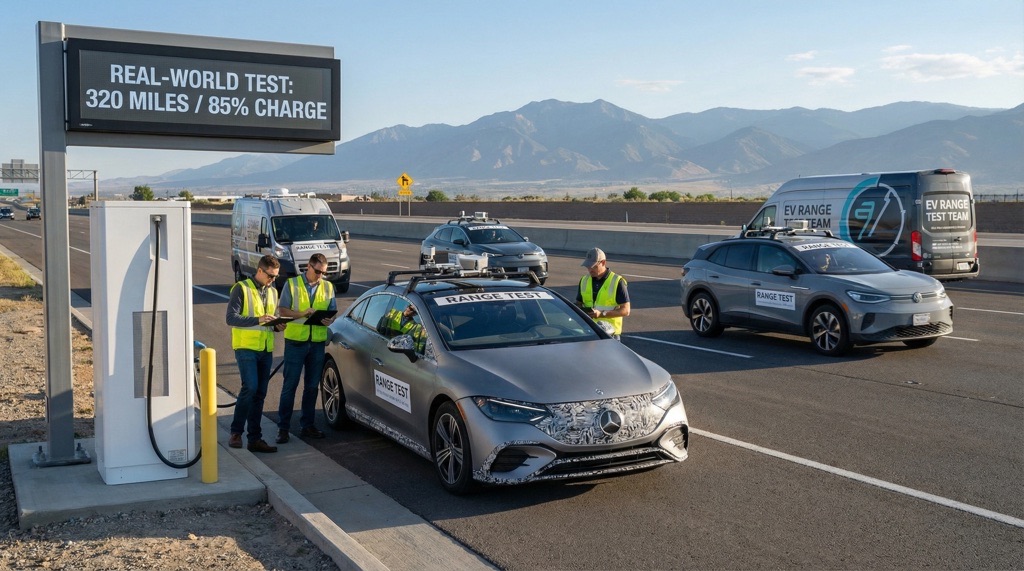
How Real-World Range Is Tested
All data reflects real driving, not laboratory cycles.
Test conditions:
- Mixed driving: 50% city / 50% highway
- Highway test: constant 120–130 km/h
- Temperatures: +20°C (ideal) and −5°C to −10°C (winter)
- Climate control: ON
- No drafting, no eco-driving tricks
This is how EVs are actually used.
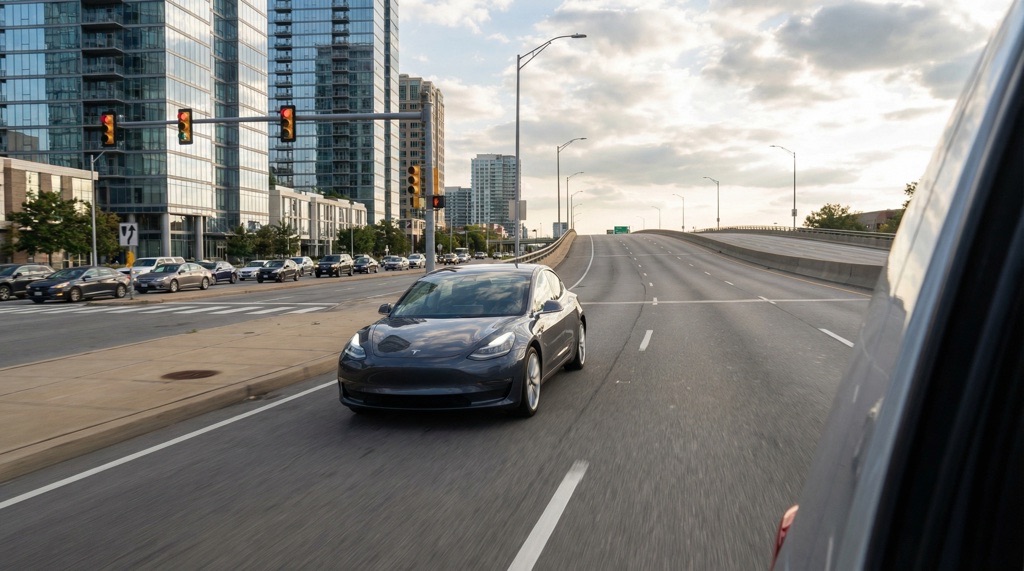
Real-World Range by Driving Scenario
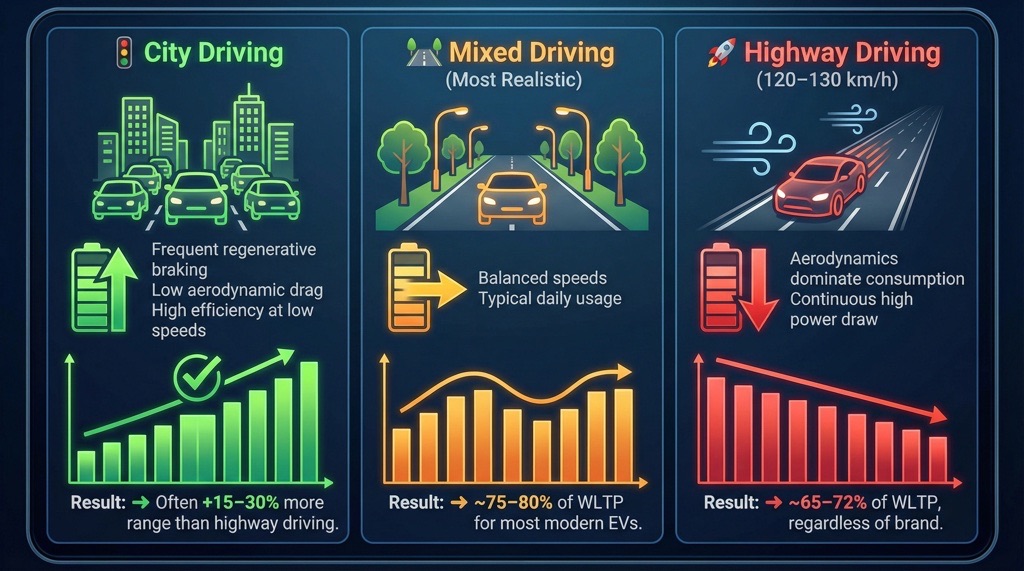
🚦 City Driving
- Frequent regenerative braking
- Low aerodynamic drag
- High efficiency at low speeds
Result:
➡️ Often +15–30% more range than highway driving.
🛣️ Mixed Driving (Most Realistic)
- Balanced speeds
- Typical daily usage
Result:
➡️ ~75–80% of WLTP for most modern EVs.
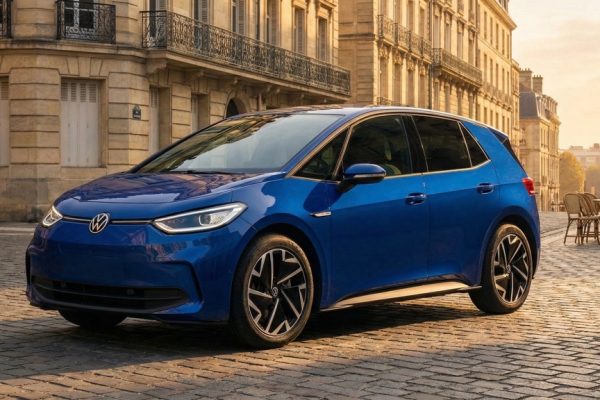 Reviews
VW ID.3 Review (2026): Real-World Range, Charging, Ownership Costs & Ultimate Verdict
The Volkswagen ID.3 was supposed to be the electric Golf. In 2026, it finally feels like one. After early software...
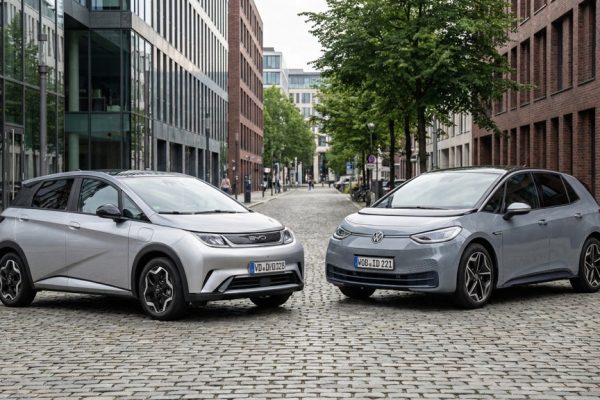 Reviews
BYD Dolphin vs Volkswagen ID.3 (2026): Which One Is the Better Buy?
Choosing between the BYD Dolphin and the Volkswagen ID.3 is no longer about specs. It’s about money vs refinement. One...
 Cars
Cars
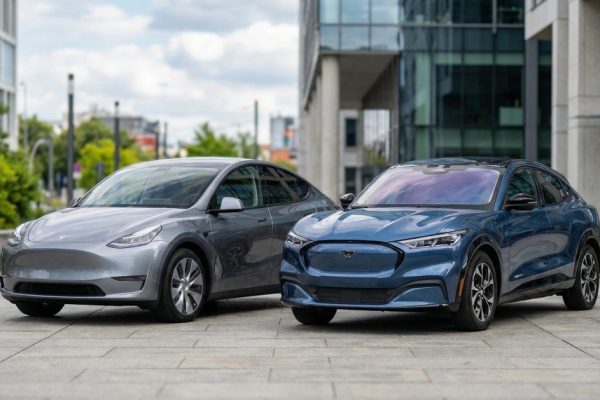
Tesla Model Y vs Ford Mustang Mach-E (2026): Range, Charging, Price & Verdict
TL;DR • Choose Tesla Model Y if you want superior charging speed, better straight-line performance. • Choose Ford Mustang Mach-E...
🚀 Highway Driving (120–130 km/h)
- Aerodynamics dominate consumption
- Continuous high power draw
Result:
➡️ ~65–72% of WLTP, regardless of brand.
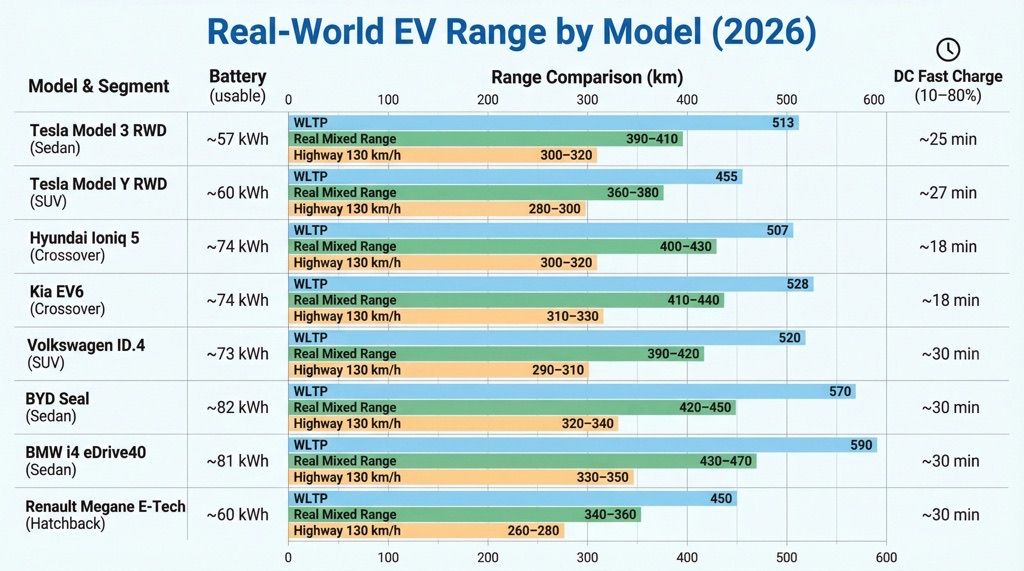
Real-World EV Range by Model (2026)
| Model | Segment | Battery (usable) | WLTP | Real Mixed Range | Highway 130 km/h | DC Fast Charge (10–80%) |
|---|---|---|---|---|---|---|
| Tesla Model 3 RWD | Sedan | ~57 kWh | 513 km | 390–410 km | 300–320 km | ~25 min |
| Tesla Model Y RWD | SUV | ~60 kWh | 455 km | 360–380 km | 280–300 km | ~27 min |
| Hyundai Ioniq 5 (77 kWh) | Crossover | ~74 kWh | 507 km | 400–430 km | 300–320 km | ~18 min |
| Kia EV6 (77 kWh) | Crossover | ~74 kWh | 528 km | 410–440 km | 310–330 km | ~18 min |
| Volkswagen ID.4 (77 kWh) | SUV | ~73 kWh | 520 km | 390–420 km | 290–310 km | ~30 min |
| BYD Seal (82 kWh) | Sedan | ~82 kWh | 570 km | 420–450 km | 320–340 km | ~30 min |
| BMW i4 eDrive40 | Sedan | ~81 kWh | 590 km | 430–470 km | 330–350 km | ~30 min |
| Renault Megane E-Tech | Hatchback | ~60 kWh | 450 km | 340–360 km | 260–280 km | ~30 min |
Key insight:
Real-world efficiency aligns closely across brands — body shape and charging behavior matter more than battery size.
❄️ Winter-Only Real-World Range Test
Cold weather remains the toughest scenario for any EV.
| Model | Winter Mixed Range | Winter Loss | Winter Highway |
|---|---|---|---|
| Tesla Model 3 RWD | 310–340 km | −18–22% | 230–250 km |
| Tesla Model Y RWD | 290–320 km | −20–25% | 220–240 km |
| Hyundai Ioniq 5 | 330–360 km | −18–22% | 250–270 km |
| Kia EV6 | 340–370 km | −17–21% | 260–280 km |
| VW ID.4 | 300–330 km | −22–28% | 230–250 km |
| BYD Seal (LFP) | 350–380 km | −15–18% | 270–290 km |
| BMW i4 | 360–400 km | −15–20% | 280–300 km |
| Renault Megane E-Tech | 270–300 km | −20–25% | 210–230 km |
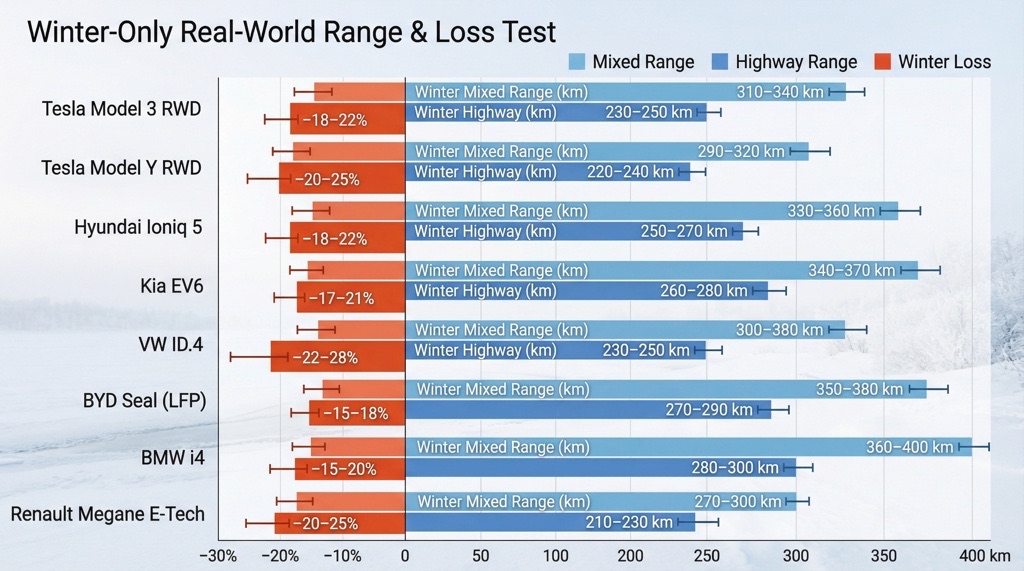
Winter Verdict
- ~20% loss is normal
- Heat pump + battery preconditioning significantly reduces losses
- Sedans outperform SUVs in cold conditions
- LFP batteries show stable winter behavior, but add weight
⚡ Why Charging Curves Matter More Than Range
A charging curve shows how long an EV can sustain high power, not just peak kW.
Flat & Stable Curves (Best Experience)
- Examples: Ioniq 5, EV6
- High power maintained from ~10% to ~60%
- Short, predictable charging stops
➡️ Feels fast on real road trips
Balanced Curves
- Examples: Tesla Model 3 / Model Y
- Strong initial power
- Gradual taper after ~55–60%
➡️ Consistent and predictable
Aggressive Tapering
- Examples: some MEB-based EVs
- Early power drop after peak
➡️ Longer real charging stops despite good specs
Common Buyer Mistakes About EV Range
❌ Trusting WLTP numbers blindly
❌ Ignoring winter performance
❌ Focusing on battery size instead of efficiency
❌ Underestimating charging behavior
✅ What actually matters:
- Mixed real-world range
- Winter loss percentage
- Charging curve stability
- Highway efficiency
Final Verdict: Real-World EV Range in 2026
Electric cars in 2026 are mature, predictable, and efficient, but physics still applies.
The best EVs are not those with the biggest batteries, but those that:
- Deliver a stable real-world range
- Lose less range in winter
- Charge fast and consistently
- Remain efficient at highway speeds
Range anxiety is mostly solved — charging quality is now the differentiator.
FAQ
Is EV range finally enough in 2026?
Yes. Charging behavior matters more than absolute range.
How much WLTP range is realistic?
Around 75–80% in mixed driving.
What driving gives the best range?
City driving, thanks to regeneration.
What hurts EV range the most?
High speeds and cold weather.