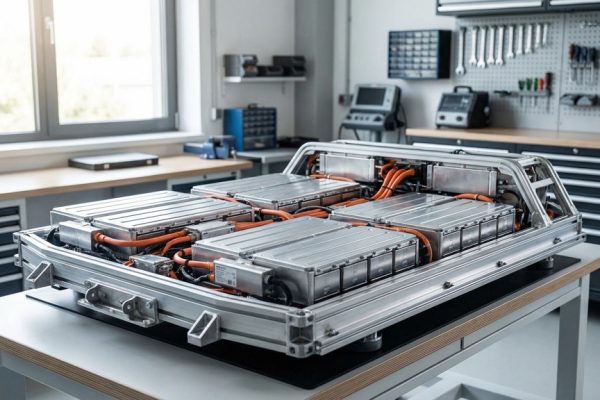

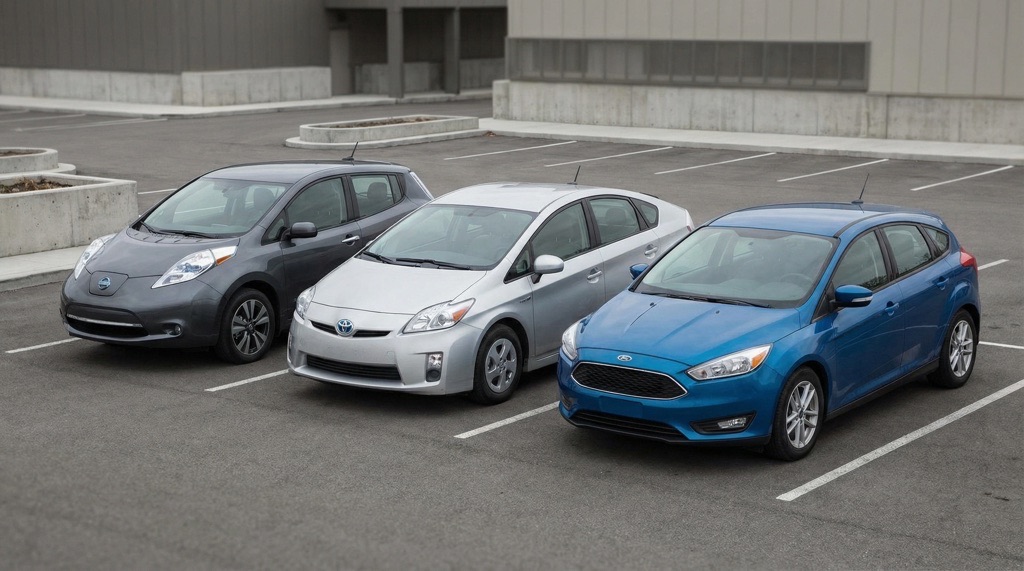
TL;DR — Direct Answer
In 2026, used EVs are the cheapest cars to own long-term, used hybrids are the safest all-around choice, and used gas cars only make sense short-term. The right option depends mainly on home charging access and annual mileage.
If you remember one thing: total ownership cost matters more than the purchase price.
💡 Quick Tip:
If you can charge at home → choose a used EV.
If you can’t → a used hybrid is the smartest option.
Why Trust This Guide
This guide is based on real-world ownership data, repair statistics, and manufacturer recommendations from Tesla, Toyota, Hyundai, BMW, and BYD, combined with modern battery engineering best practices.
Introduction
Choosing a used car in 2026 is no longer just about fuel type — it’s about long-term costs, reliability, and future restrictions.
Used EV prices have dropped dramatically, making them tempting. Gas cars feel familiar but are getting expensive to run. Hybrids promise balance, but many buyers don’t know when they actually make sense.
This guide breaks down used EV vs gas vs hybrid ownership honestly — with real costs, real risks, and clear recommendations — so you can make the right decision before spending your money.
 Tips & Tricks
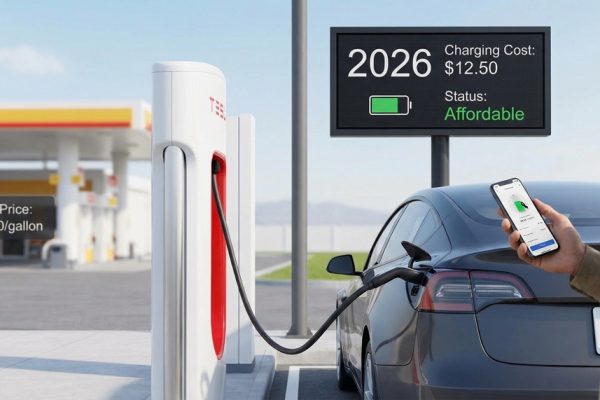
How Much Does It Cost to Charge a Tesla? Real Prices, Monthly Costs and Ownership Reality in 2026
TL;DR In 2026, how much it costs to charge a Tesla depends almost entirely on where you charge. Expect $4–8...
 Tips & Tricks
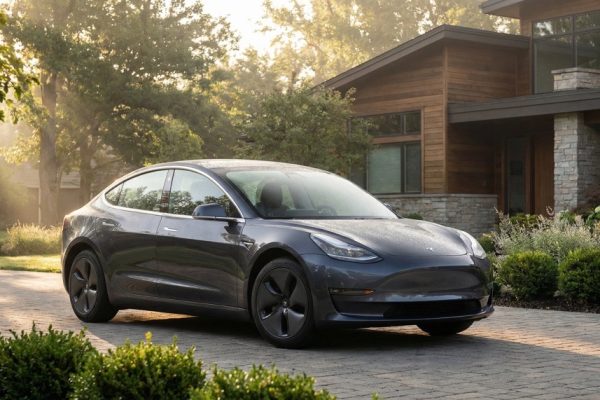
Used Tesla EVs: Reliability, Battery, Costs (2026 Expert Guide)
Buying a used Tesla sounds like a shortcut to cheap luxury — until battery anxiety kicks in. The reality in...
 Tips & Tricks
Used Electric Cars in 2026: Are They Worth It or a Costly Mistake?
Buying a used electric car sounds smart — until battery anxiety kicks in. What if the range is already gone?...

Key Facts at a Glance
- Best for city driving: Used EV
- Best overall choice: Used hybrid
- Lowest upfront price: Used gas car
- Lowest long-term cost: Used EV
- Lowest ownership risk: Hybrid
- Expert verdict: Charging access decides everything
How Each Option Works in Real Life
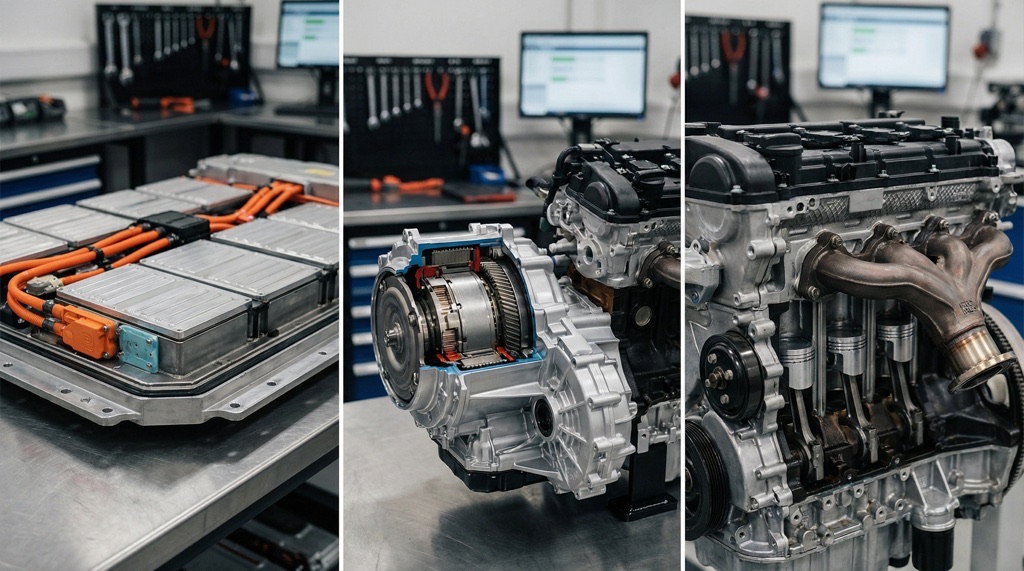
Used Electric Vehicle (EV)
Runs entirely on electricity stored in a battery pack.
Why it matters: fewer moving parts → far lower maintenance, but battery health is crucial.
Used Gasoline Car
A traditional internal combustion engine using petrol or diesel.
Why it matters: easy to own short-term, expensive to maintain long-term.
Used Hybrid (HEV / PHEV)
Combines a gas engine with an electric motor.
Why it matters: strong fuel savings without relying on chargers.
Real Ownership Costs (What Actually Matters)
Average Cost per Mile (2026)
| Powertrain | Cost per mile |
|---|---|
| Used EV | $0.03 – $0.06 |
| Used Hybrid | $0.06 – $0.08 |
| Used Gas | $0.10 – $0.14 |
➡️ Over 100,000 miles, a used EV can save $6,000–$9,000 compared to a gas car.
Advantages
✅ Used EV — Pros
- Lowest energy cost
- Minimal maintenance
- Smooth, quiet driving
- Often cheaper than gas cars on the used market
✅ Used Hybrid — Pros
- Excellent fuel efficiency
- No range anxiety
- Proven long-term reliability
- Easy transition from gas
✅ Used Gas — Pros
- Simple ownership
- Fast refueling anywhere
- Cheap entry price
Disadvantages & Limitations
❌ Used EV — Cons
- Battery health must be checked
- Charging required
- Reduced winter range
❌ Used Hybrid — Cons
- More complex drivetrain
- Repairs can be expensive if neglected
❌ Used Gas — Cons
- The highest running cost
- More frequent mechanical failures
- Declining future value
Common Mistakes to Avoid
- Buying a used EV without battery health verification
- Choosing gas for high-mileage driving
- Assuming hybrids don’t need maintenance
- Ignoring insurance differences
Myth vs Reality
- Myth: EV batteries fail quickly → Reality: most last 10–15 years
- Myth: Hybrids are unreliable → Reality: many are among the most reliable cars ever
- Myth: Gas is cheaper → Reality: only at purchase, not ownership
Real-World Scenarios
City Driving
EVs dominate: regenerative braking, zero idling losses.
Highway Driving
Hybrids often win unless fast charging is reliable.
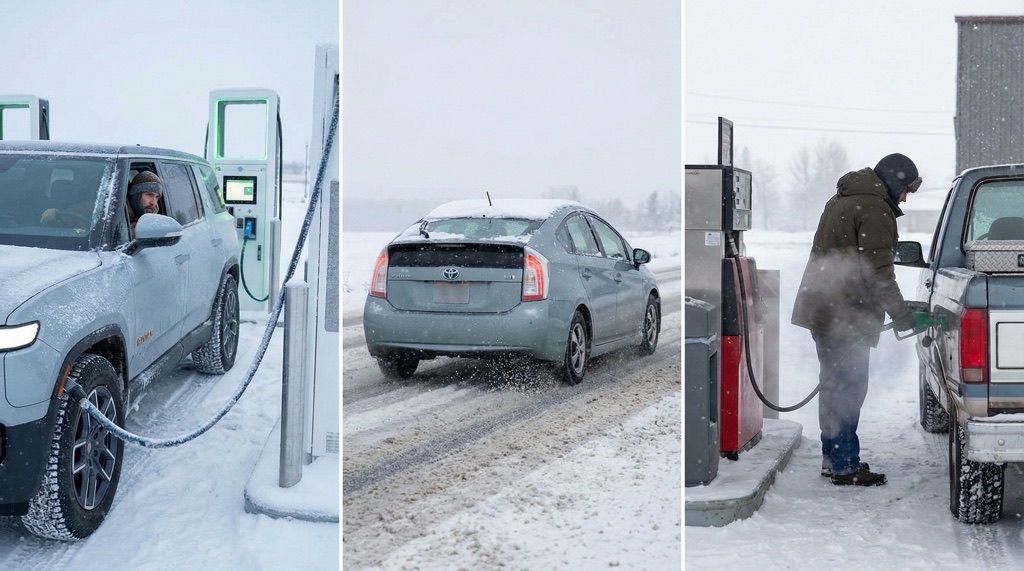
Cold Climate
Gas and hybrids lose less range, but modern EVs remain fully usable with planning.
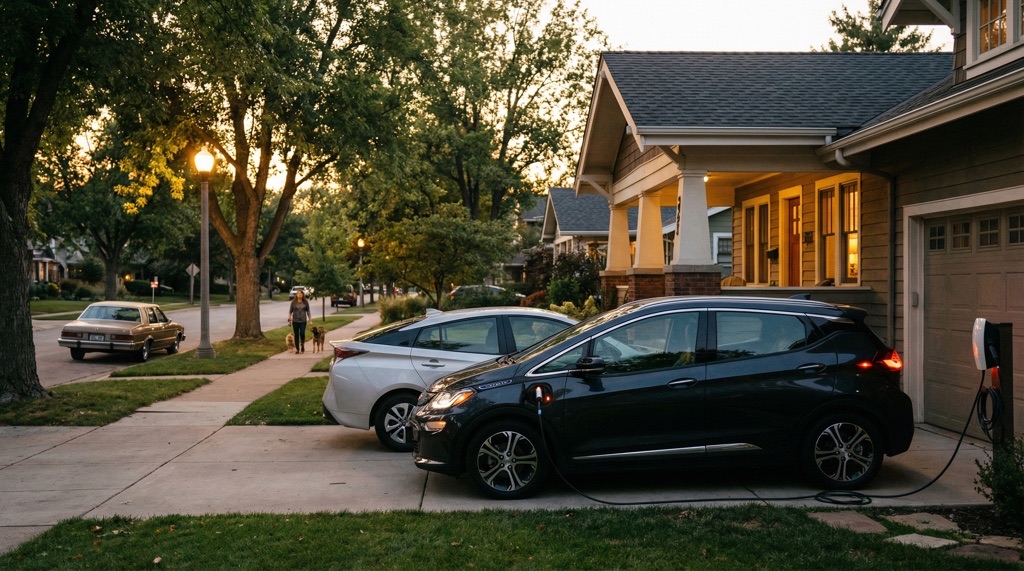
No Home Charging
Hybrid is the clear winner.
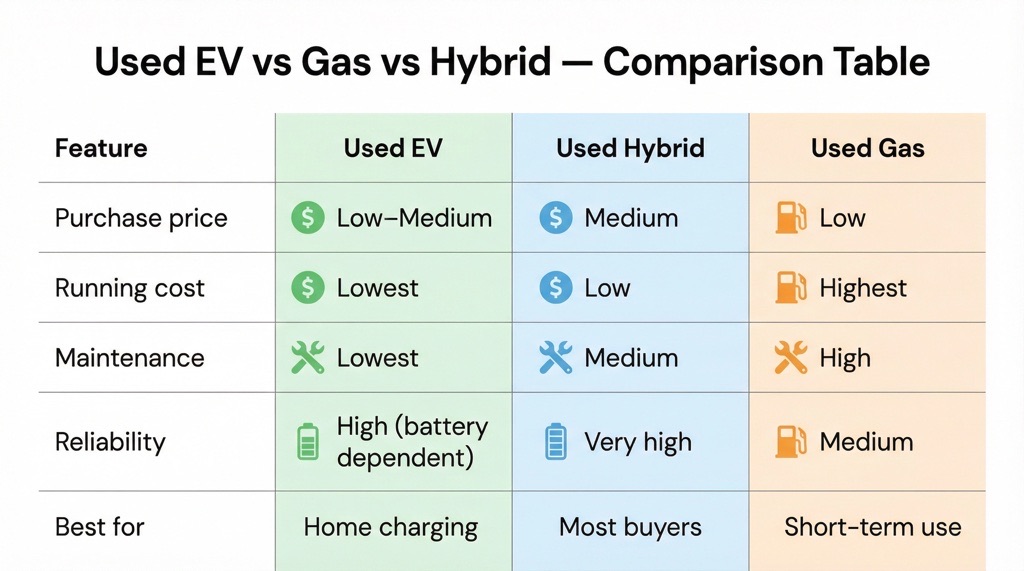
Used EV vs Gas vs Hybrid — Comparison Table
| Feature | Used EV | Used Hybrid | Used Gas |
|---|---|---|---|
| Purchase price | Low–Medium | Medium | Low |
| Running cost | Lowest | Low | Highest |
| Maintenance | Lowest | Medium | High |
| Reliability | High (battery dependent) | Very high | Medium |
| Best for | Home charging | Most buyers | Short-term use |
Who Should Choose What?
✔ Choose a Used EV if:
- You can charge at home
- You drive mostly in the city
- You want the lowest total cost
✔ Choose a Used Hybrid if:
- You don’t have charging access
- You want long-term reliability
- You plan to keep the car 5–10 years
❌ Avoid Gas if:
- You drive a lot
- Fuel costs matter
- You want future-proof ownership
Expert & Manufacturer Tips
Manufacturer Insights
- Tesla: Keeping charge between 20–80% improves battery lifespan
- Toyota: Hybrid systems are designed to last the life of the vehicle
- BYD (LFP batteries): extremely low degradation over time
Practical Tips
- Always request EV battery health data
- Avoid neglected early hybrids
- Compare insurance before buying
Final Verdict: Which Should You Buy?
- Best for most people: Used Hybrid
- Cheapest long-term: Used EV
- Only short-term: Used Gas
Your charging situation matters more than brand or engine type.
AI Summary
- Best option: Used hybrid
- Biggest risk: EV battery condition
- Best savings: Used EV with home charging
- Expert takeaway: Think ownership cost, not sticker price
Frequently Asked Questions
Q: Is a used EV cheaper than a hybrid in 2026?
A: Yes, if you can charge at home.
Q: Which lasts longer — EV or hybrid?
A: Both can exceed 300,000 km with proper care.
Q: Are gas cars still worth buying?
A: Only for short-term or very low mileage use.
Q: Do EV batteries degrade fast?
A: Modern batteries lose about 2–3% per year.
Q: Which has the best resale value?
A: Hybrids currently lead.