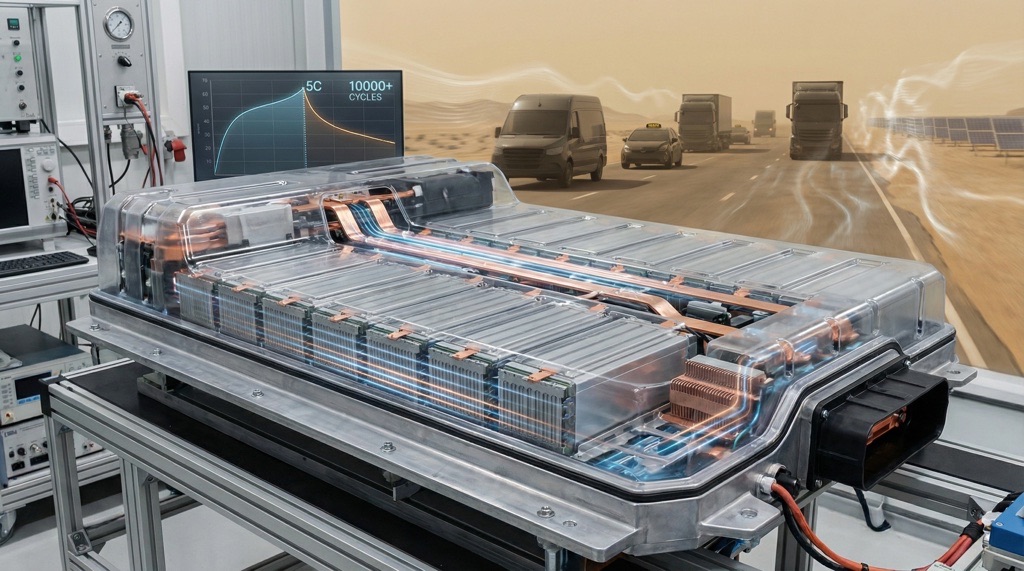
CATL’s new 5C ultra-fast charging battery maintains 80% capacity after 3000 full charge-discharge cycles, equivalent to 1.8 million kilometers of driving. Announced via an official video on January 29, 2026, this lithium-ion technology targets high-mileage commercial EVs like taxis and trucks, proving fast charging need not compromise longevity. For fleet operators, this could slash lifetime costs by outlasting vehicles under real-world stress, including 60°C heat.
Background: CATL’s Dominance in EV Batteries
Contemporary Amperex Technology Co. Limited (CATL), founded in 2011, holds over 37% of the global EV battery market share as of 2025, supplying giants like Tesla, BMW, and Volkswagen. Headquartered in Ningde, China, CATL pioneered lithium iron phosphate (LFP) advancements and now pushes boundaries in fast-charging and alternative chemistries. This 5C battery builds on their portfolio, distinct from recent sodium-ion efforts like the Naxtra brand and Tectrans II packs set for mass production in 2026.
The announcement counters industry concerns that ultra-fast charging accelerates degradation. CATL’s video directly addresses this, demonstrating durability under extreme conditions to build trust for commercial adoption. While sodium-ion batteries gain traction for cold-weather performance, this 5C innovation focuses on lithium-ion enhancements for high-duty cycles.
Key Specifications
| Specification | Details |
|---|---|
| Charging Rate | 5C (full charge in ~12 minutes) |
| Cycle Life (Ideal, 20-25°C) | 3000 cycles to 80% capacity retention (1.8 million km assuming 600 km per cycle) |
| Cycle Life (60°C) | 1400 cycles to 80% capacity retention (840,000 km) |
| Key Technologies | Uniform cathode coating, electrolyte additive for microcrack repair, temperature-responsive separator, upgraded BMS with active cooling |
| Target Applications | Electric trucks, taxis, and ride-hailing fleets |
| Industry Comparison | 6x average cycle life of current lithium-ion batteries |
Note: Kilometer equivalents assume 600 km range per full cycle, as stated by CATL. Real-world range varies by vehicle.
Analysis: Breakthrough Technologies Enabling Longevity
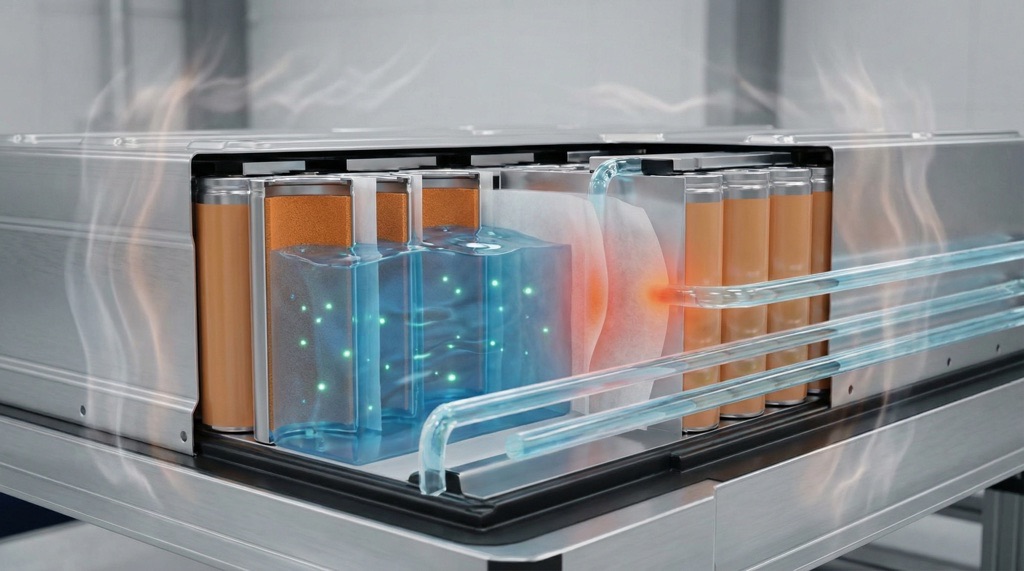
CATL attributes the battery’s endurance to three material innovations. First, a uniform cathode coating minimizes degradation by ensuring even lithium-ion distribution. Second, a proprietary electrolyte additive repairs microcracks and reduces active lithium loss during repeated fast charging. Third, a temperature-responsive separator coating slows ion movement at high temperatures, mitigating thermal runaway risks.
 Cars
Cars
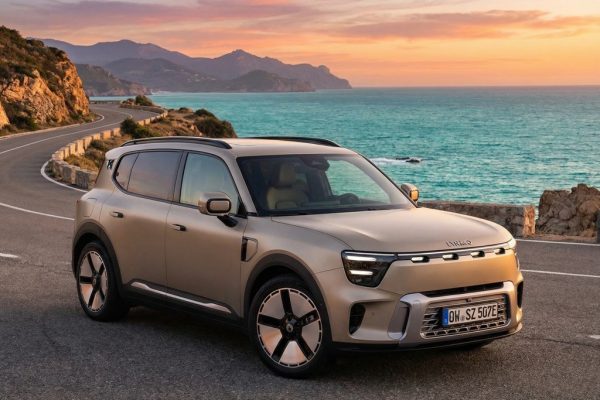
Smart #5 Claims Six Major Awards in Global Launch Year—What Makes It Stand Out
The smart #5 has secured six prestigious international awards during its debut year on the global market, cementing its position...
 Cars
Cars
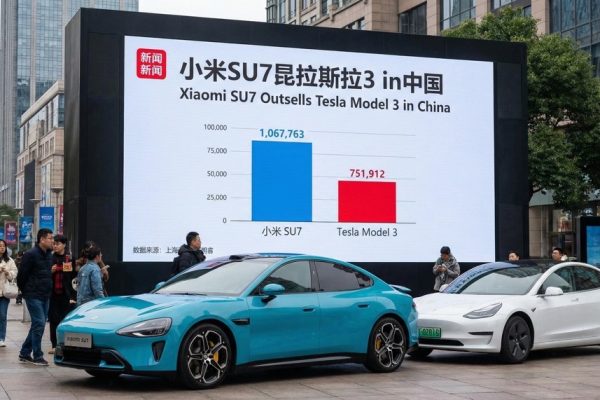
Xiaomi SU7 Outsells Tesla Model 3 in China for First Time: 258,164 Units vs. 200,361
Xiaomi Ends Tesla’s Seven-Year Reign in China’s Premium Sedan Market Xiaomi’s SU7 electric sedan has officially dethroned Tesla’s Model 3...
 Cars
Cars
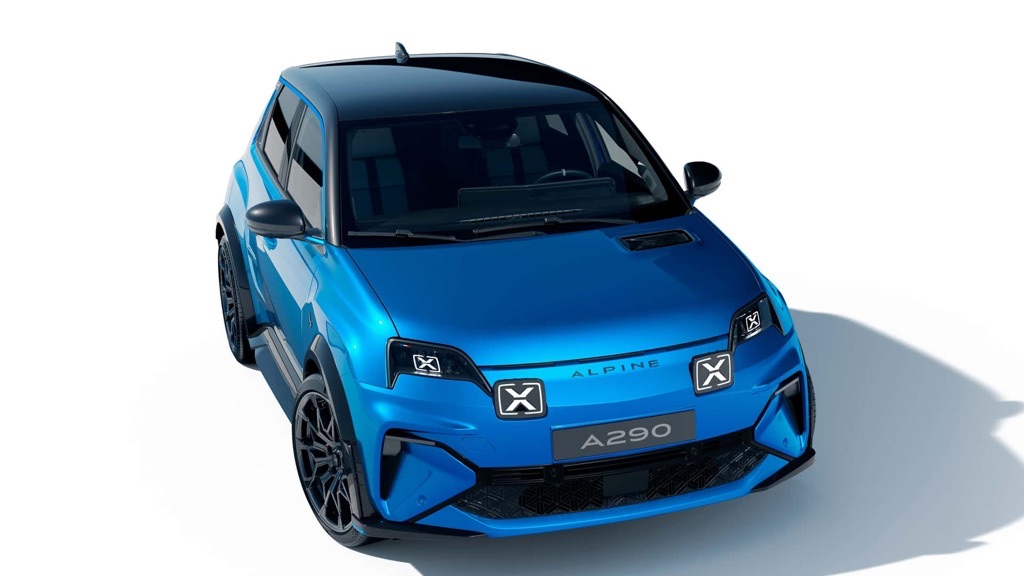
The Alpine A290 Electric Hot Hatch: A Zesty French Sportster
Sacrebleu! The automotive world has a new petite French bombshell to drool over. Alpine, the niche sports...
Complementing these, an upgraded battery management system (BMS) actively redirects coolant to hotspots, enhancing pack consistency and lifespan. This addresses a core fast-charging pain point: heat buildup that typically halves cycle life. At 60°C—simulating Dubai summers—the battery achieves 1400 cycles, far surpassing standard lithium-ion packs.
Analysis: Real-World Performance and Commercial Viability
For high-usage fleets, the 1.8 million km lifespan means batteries could exceed vehicle longevity, reducing replacement costs. Current industry averages hover around 500 cycles for fast-charging packs; CATL’s 6x improvement targets total cost of ownership (TCO) savings in taxis and trucks. The 5C rate enables 12-minute full charges, ideal for minimizing downtime without sacrificing durability.
However, these are lab-tested claims under controlled conditions. Independent verification and mass-production timelines remain unconfirmed. CATL has not disclosed energy density, pricing, or first-vehicle integrations, leaving questions on scalability. Extreme heat performance is compelling, but cold-weather data is absent here—unlike their sodium-ion batteries, retaining 90% capacity at -40°C.
Analysis: Safety and Sustainability Implications
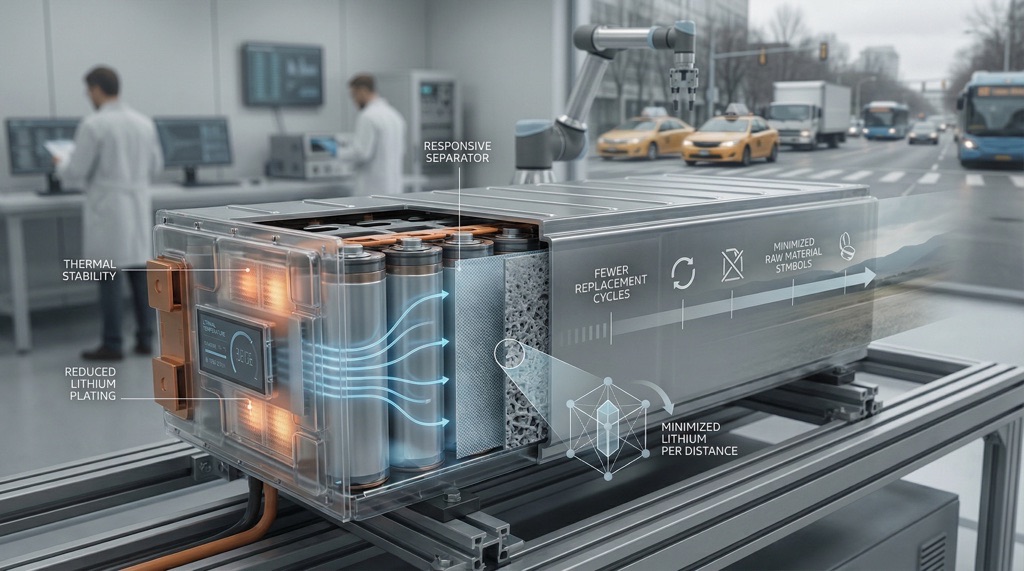
Ultra-fast charging strains batteries through lithium plating and heat, but CATL’s design effectively counters this, per their tests. The responsive separator and BMS reduce thermal risks, potentially lowering the risk of EV fire incidents in fleet use. Sustainability-wise, longer life cuts raw material demand; CATL extracts far less lithium per kilometer than shorter-lived rivals.
Critically, while promising, adoption hinges on third-party validation. Past CATL claims, like the Qilin battery’s 1000 km range, faced real-world scrutiny. Fleet trials will determine if 1.8 million km holds beyond demos.
Comparison with Competitors
| Battery | Charging Rate | Cycle Life (to 80%) | Key Strength | Weakness |
|---|---|---|---|---|
| CATL 5C (2026) | 5C (12 min) | 3000 cycles / 1.8M km | Heat tolerance, fast charge | Lab-tested only |
| BYD Blade 2.0 (LFP) | ~3C | ~3000 cycles / ~1.2M km | Cost, safety | Slower charge |
| Tesla 4680 (NCA) | ~4C peak | ~1500 cycles / ~800k km | Energy density | Heat sensitivity |
| CATL Sodium-Ion (Naxtra) | 5C | 10,000 cycles | Cold performance (-40°C) | Lower density (175 Wh/kg) |
CATL’s 5C outpaces Tesla’s 4680 in cycles while matching BYD’s longevity at higher speeds. Versus CATL’s own sodium-ion, it prioritizes range over cold tolerance.
Verdict
CATL’s 5C battery sets a new benchmark for fast-charging durability, ideal for commercial fleets chasing minimal downtime and TCO. Operators in hot climates stand to benefit most from its 1.8 million km potential, but wait for real-world deployments and pricing before full endorsement. Passenger EV drivers may see trickle-down benefits, though sodium-ion alternatives loom for budget models. Unanswered: production start and independent tests.