
Tesla’s Flagship EVs Face Discontinuation as Company Pivots to Robotics
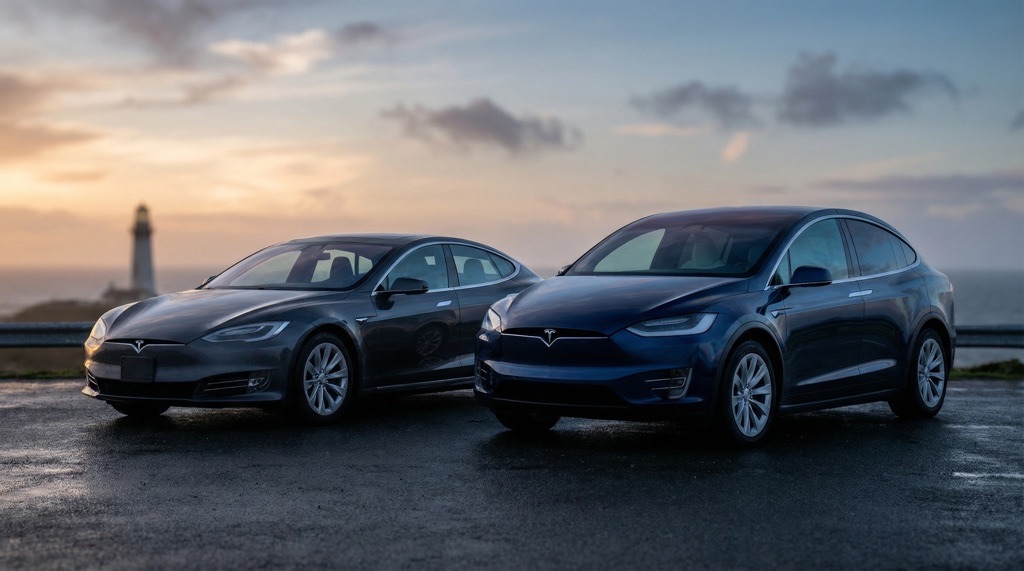
Tesla will discontinue its iconic Model S sedan and Model X SUV by the end of Q2 2026, CEO Elon Musk announced during the company’s Q4 2025 earnings call on January 28, 2026. The decision marks the end of a 14-year production run for the Model S, which launched in 2012 and became the vehicle that transformed Tesla from a niche automaker into a mainstream EV manufacturer. The Model X, which debuted in 2015, will also cease production as Tesla reconfigures its Fremont, California factory to manufacture Optimus humanoid robots.
Musk described the discontinuation as bringing the Model S and X programs to “an honorable discharge,” signaling the end of Tesla’s focus on traditional passenger vehicles. The move represents a dramatic strategic shift: rather than replace aging platforms with new generations, Tesla is abandoning its flagship luxury segment entirely to pursue autonomous vehicles and AI-powered robotics as its core business.
The Decline of Tesla’s Luxury Segment
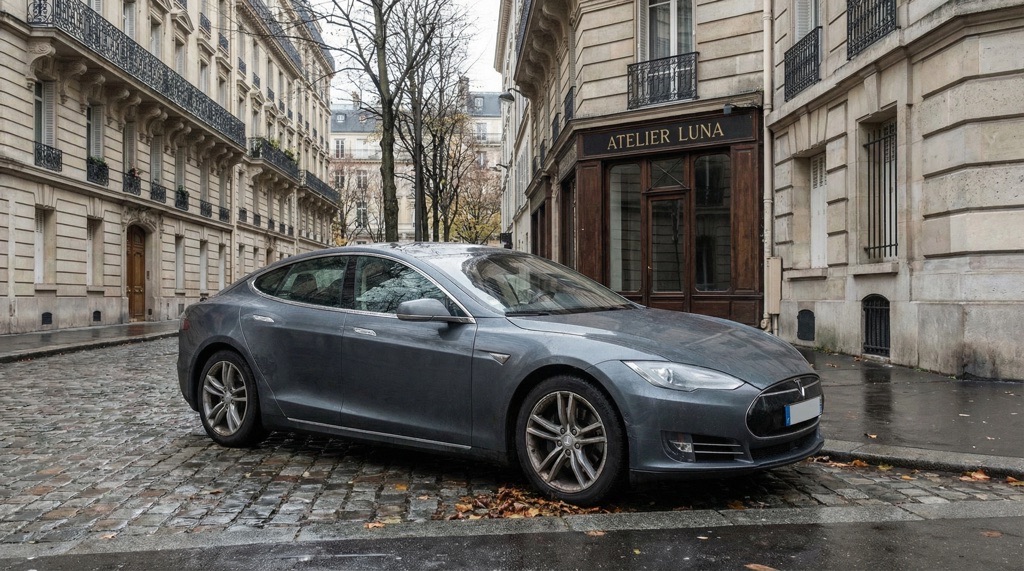
The Model S and Model X have experienced significant sales erosion over the past two years. Model S deliveries in the U.S. fell by one-third in 2025, while Model X volume was roughly halved during the same period. Industry estimates suggest that by late 2024, combined global deliveries for both models had dropped below 50,000 units annually, representing a decline of over 30% year-over-year.
The decline accelerated despite Tesla’s attempt to refresh both vehicles in mid-2025. That update—which Electrek described as “a very mild update, to say the least”—included a new paint color, front bumper camera, slightly improved range, and ambient lighting features already available on the Model 3 and Model Y. The refresh came with a $5,000 price increase, pushing the Model S to $84,990 and the Model X to $89,990. Rather than revitalize demand, the update proved to be a farewell tour for vehicles that had become outdated relative to their competition.
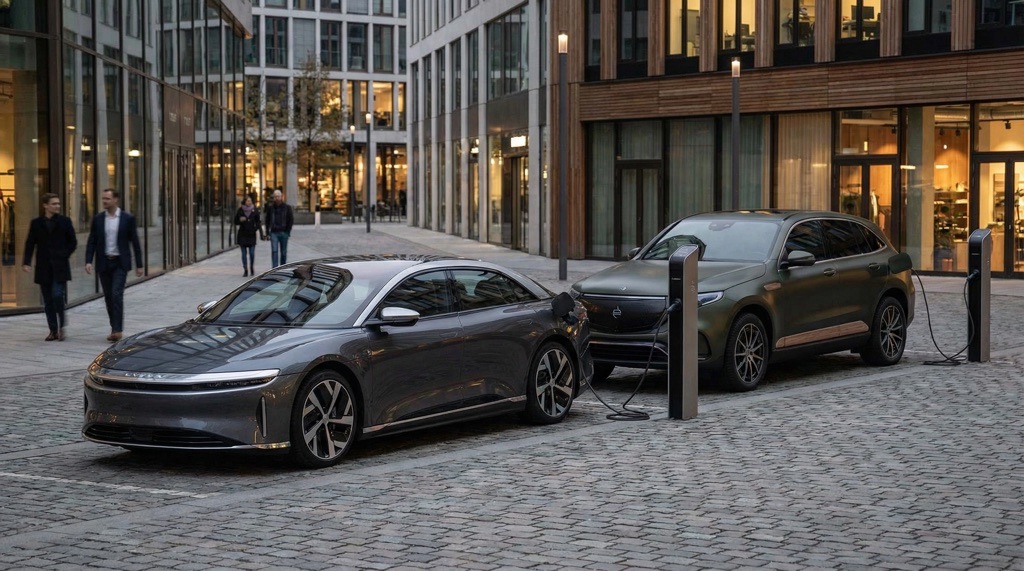
Lucid Air has now surpassed the Model S in the luxury sedan segment, while Rivian R1S outcompetes the Model X in the premium SUV category. Both Tesla models operate on platforms that haven’t fundamentally changed since their original launches, despite incremental updates, including the 2021 interior refresh that introduced the controversial yoke steering wheel.
Optimus Over Automobiles: Tesla’s Strategic Pivot
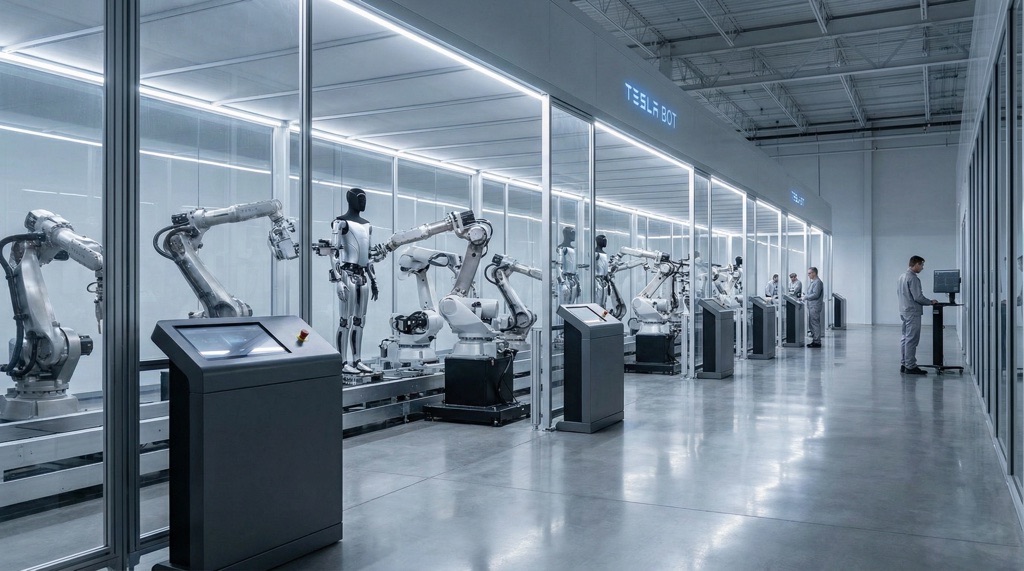
Musk’s stated reason for discontinuing the Model S and X was “autonomy,” though this explanation initially seemed contradictory since both vehicles are equipped with the same Level 2 autonomous driving capabilities and hardware as other Tesla models. The rationale became clearer when Musk revealed that the Fremont production line would be converted to manufacture Optimus robots, Tesla’s planned humanoid robot platform.
 Cars
Cars
Toyota Unveils Corolla EV Concept 2025: A Bold Electric Future for the World’s Best-Selling Car
The Toyota Corolla Goes Electric — Futuristic Design, Flexible Powertrains, and a New Vision for Everyone The world’s favorite car...
 Cars
Cars
BYD Seal 08 Flagship Sedan Enters Winter Testing – Ocean Series’ 2026 Q1 Launch Nears
BYD has released winter testing images of the Seal 08 flagship sedan, confirming active development ahead of its Q1 2026...
 Cars
Cars
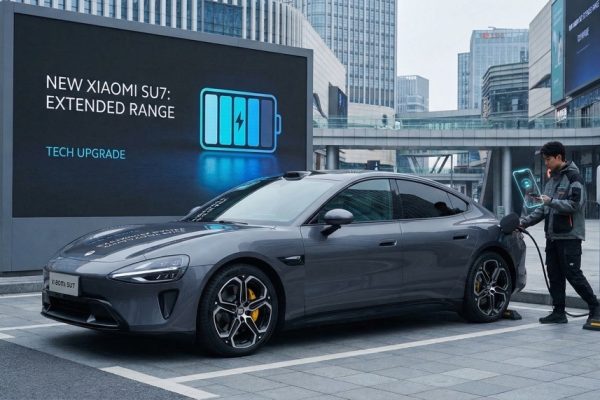
Updated Xiaomi SU7 Electric Sedan Gets Longer Range and Major Tech Upgrade
Xiaomi Pushes the SU7 Forward Ahead of Official 2026 Launch Xiaomi is once again proving how quickly the electric car...
This represents a fundamental transformation of Tesla’s business model. Rather than competing in the traditional automotive market, Tesla is positioning itself as an AI and robotics company. Musk stated that “the only vehicle we will make that’s not autonomous” will be the Roadster, which Tesla hopes to debut in April 2026. The company is also developing the Cybercab, a two-seat autonomous vehicle without a steering wheel or pedals, also targeted for April production.
Tesla’s long-term vision centers on an Airbnb-style business model where owners can “rent” their autonomous vehicles to generate income, potentially allowing consumers to purchase or lease a Model 3 or Y at no net cost. Musk has stated that Tesla aims to produce 1 million Optimus units annually, suggesting the company views humanoid robots as a more valuable business opportunity than luxury electric vehicles.
Legacy and Market Impact
| Model | Launch Year | Production End | Production Lifespan | Final Price (2025) |
|---|---|---|---|---|
| Model S | 2012 | Q2 2026 | 14 years | $84,990 |
| Model X | 2015 | Q2 2026 | 11 years | $89,990 |
The Model S established Tesla as a serious automaker and funded development of the mass-market Model 3 and Model Y, which have become the company’s volume drivers. Motor Trend named the Model S its Car of the Year in 2013, cementing its status as a transformative vehicle in the EV industry. The Model X became known for its distinctive gullwing doors and established Tesla’s presence in the premium SUV segment.
However, both vehicles have been overshadowed by Tesla’s own newer offerings. The Model 3 and Model Y, launched in 2017 and 2020, respectively, captured significantly higher sales volumes at lower price points. The Cybertruck, which entered production in 2024, has become Tesla’s flagship vehicle in terms of media attention and consumer interest, despite ongoing production challenges and delivery delays.
The discontinuation raises questions about Tesla’s commitment to the traditional automotive market at a time when the EV industry is rapidly expanding. While legacy automakers continue investing in electric vehicle platforms and new models, Tesla is consolidating its vehicle lineup and redirecting manufacturing capacity toward robotics—a market that remains largely unproven at scale.
What This Means for Tesla Owners and the EV Market
Existing Model S and Model X owners will retain their vehicles, but the discontinuation signals the end of new model development for these platforms. No next-generation Model S or Model X has been announced, and Musk’s comments suggest Tesla has no plans to develop successors. This leaves the luxury EV sedan and SUV segments to competitors like Lucid, Rivian, and traditional automakers’ electric offerings.
For consumers seeking a Tesla luxury vehicle after Q2 2026, options will be limited to the Roadster (if it launches as planned in April) and future autonomous vehicles like the Cybercab. This represents a significant narrowing of Tesla’s product portfolio in the premium segment, potentially ceding market share to competitors who continue offering luxury EV options.
Verdict
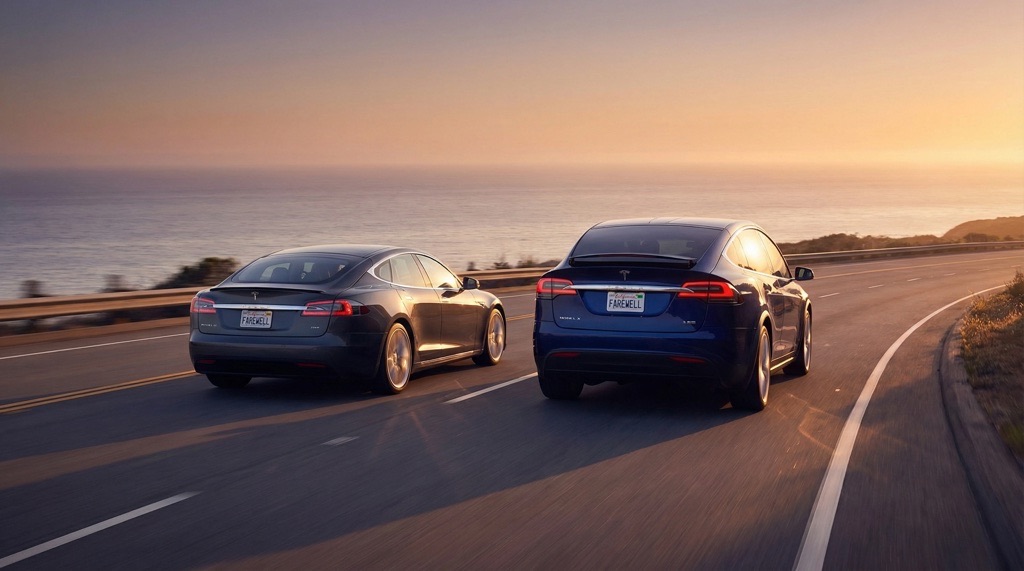
Tesla’s discontinuation of the Model S and Model X marks the end of an era for the company and the EV industry. While these vehicles established Tesla’s credibility and funded its growth, they have become casualties of the company’s pivot toward autonomous vehicles and robotics. For EV enthusiasts who value Tesla’s engineering heritage, this decision represents a bittersweet moment—the vehicles that proved electric cars could be desirable are being retired in favor of an uncertain robotics future. For potential buyers, the message is clear: if you want a Tesla luxury vehicle, the window is closing by mid-2026.