
Xiaomi Ends Tesla’s Seven-Year Reign in China’s Premium Sedan Market
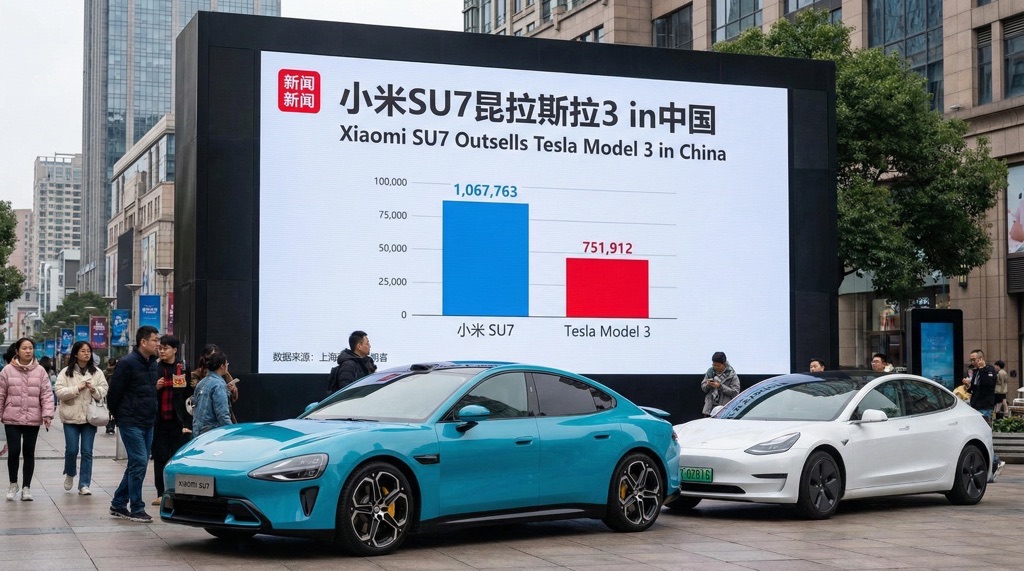
Xiaomi’s SU7 electric sedan has officially dethroned Tesla’s Model 3 in China, delivering 258,164 units in 2025 compared to the Model 3’s 200,361 deliveries—a decisive 29% margin that marks the first time since 2019 that another automaker has outsold Tesla in the premium sedan segment. This milestone represents a fundamental shift in China’s EV market, where Tesla had maintained unchallenged dominance for nearly seven years.
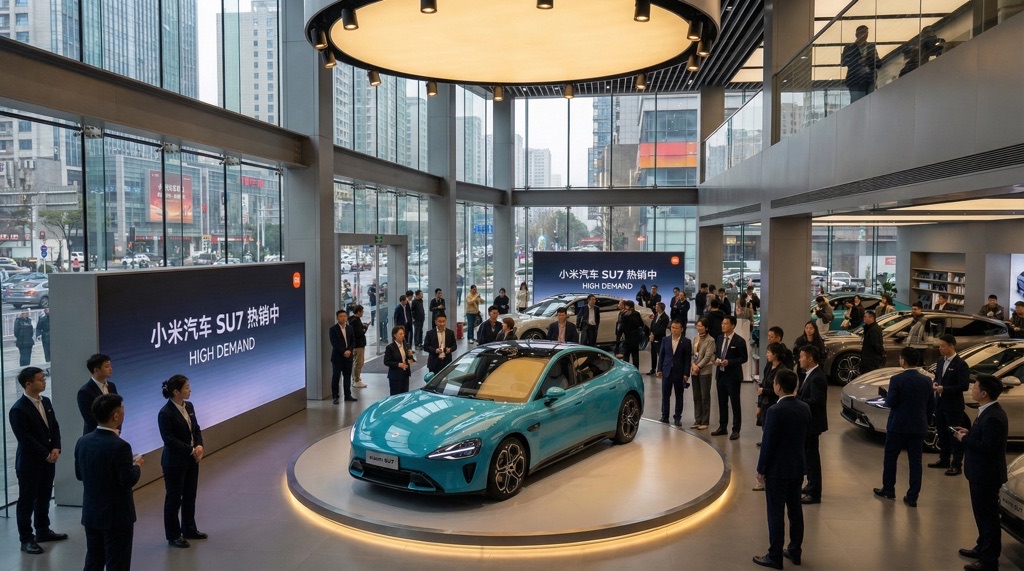
The achievement is particularly striking given that the SU7 launched just 21 months earlier, in March 2024. Within that timeframe, Xiaomi’s first production vehicle has not only caught up to but decisively surpassed the world’s most recognizable EV brand in its largest market. The victory underscores how aggressively Chinese automakers are competing on price, technology, and integration with consumer ecosystems—advantages that traditional automotive expertise alone no longer guarantees.
How Xiaomi Undercut Tesla on Price and Specs
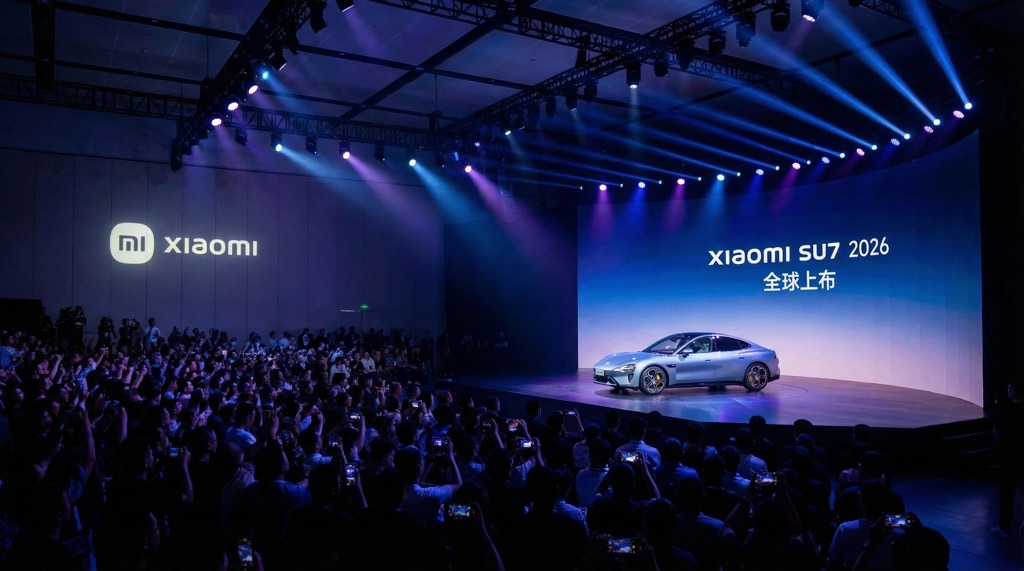
The SU7’s competitive advantage rests on three pillars: price, range, and integrated technology. The base model starts at RMB 215,900 (approximately $31,000), roughly 9% cheaper than the Model 3’s RMB 235,500 ($33,800). Despite the lower entry price, the SU7 delivers superior range: its CLTC-rated 700 km exceeds the Model 3 RWD’s 634 km by approximately 10%.
More significantly, Xiaomi bundled advanced driver assistance features as standard equipment, whereas Tesla charges premium prices for its Autopilot suite. The refreshed 2026 SU7 now includes LiDAR as standard across all variants—a feature Tesla reserves for higher trims or omits entirely on base models. The updated model also introduces a 752V/897V silicon carbide high-voltage platform, 700 TOPS of computing power for autonomous driving capabilities, and extends CLTC range to 902 kilometers.
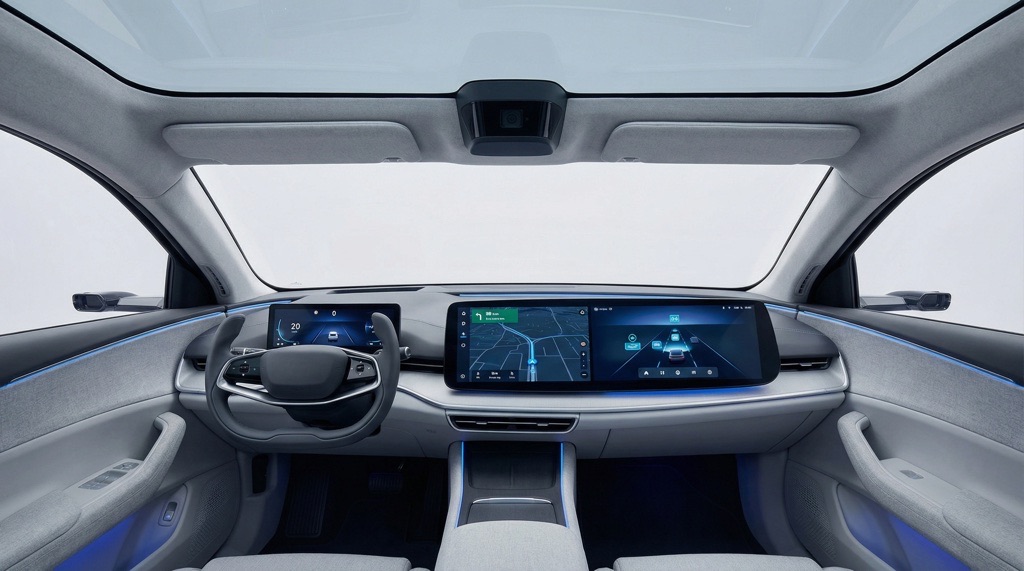
This positioning directly targets Tesla’s traditional weakness in the Chinese market: premium pricing without corresponding feature parity at entry levels. Xiaomi’s smartphone heritage enabled seamless HyperOS ecosystem integration, creating switching costs that benefit the company’s broader product portfolio.
 Cars
Cars
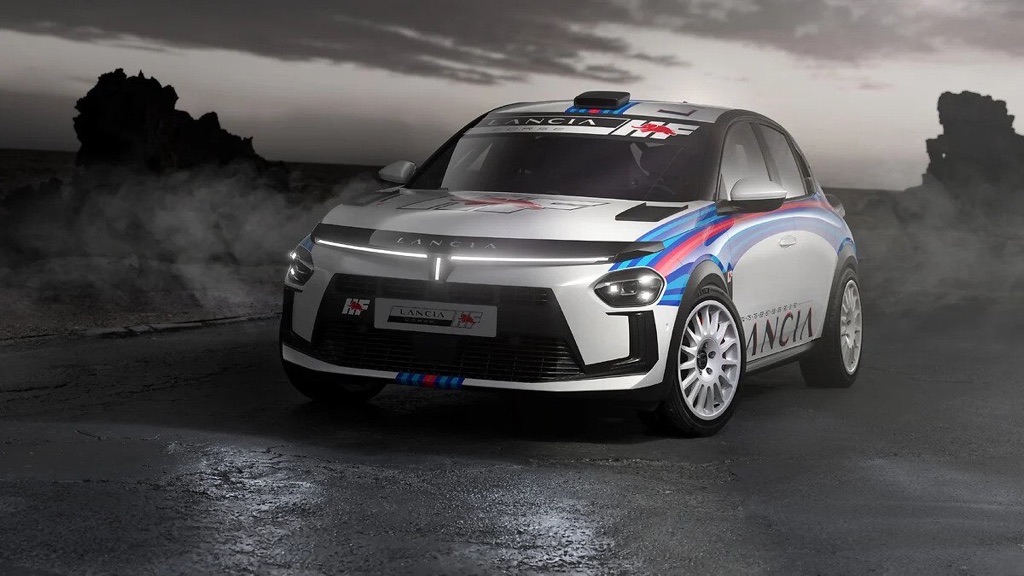
The Electrifying Return of Lancia: Ypsilon HF and Ypsilon Rally 4 HF
Ypsilon HF – The Electric Hot Hatch That’ll Jolt Your Senses After years of hibernation, Italian automaker Lancia is back...
 Cars
Cars
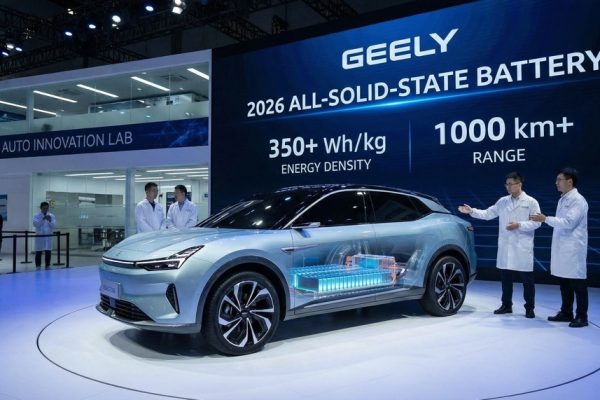
Geely’s 2026 All-Solid-State Battery Production: 350+ Wh/kg Densities Enable 1000 km EV Range
Geely Auto will complete production of its first all-solid-state battery pack in 2026, marking a pivotal shift as Chinese automakers...
 Cars
Cars
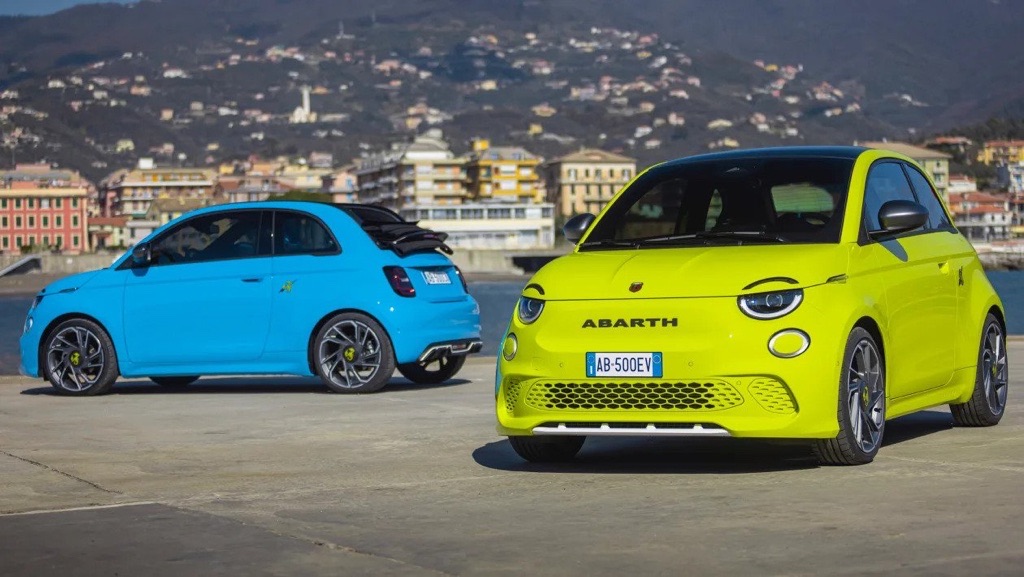
Abarth’s Electric Revolution: The Scorpion’s New Sting
In a bold move that signals the end of an era, Abarth, Fiat’s legendary performance division, is embracing an all-electric...
Momentum Accelerates with Refreshed Model
Xiaomi’s dominance shows no signs of slowing. The company launched pre-orders for the refreshed SU7 on January 7, 2026, and accumulated nearly 100,000 advance orders within just 15 days. The new base price of RMB 229,900 ($32,500) represents a 6.5% increase over the previous model, yet demand remained robust—suggesting strong brand momentum and customer confidence in the product roadmap.
Beyond the sedan, Xiaomi is expanding its assault on Tesla’s market position. The YU7 mid-size SUV, launched in the second half of 2025, is generating comparable enthusiasm and directly challenges the Model Y, which remains China’s best-selling SUV overall but experienced an 11.45% sales decline in 2025. Xiaomi has set an ambitious target of 550,000 total deliveries for 2026 and plans to introduce two additional models, signaling an intent to compete across multiple segments simultaneously.
Tesla’s China Decline Accelerates
Tesla’s 2025 performance in China deteriorated significantly. Total mainland deliveries fell 4.78% year-over-year to 625,698 units, marking the company’s first annual sales decline in the market. The Model 3 specifically grew only 13% despite favorable market conditions, a growth rate substantially underperforming the broader EV segment. The Model Y’s 11.45% decline is particularly concerning, as it had been Tesla’s volume anchor in China.
This weakness reflects broader competitive pressures. Chinese automakers, including Nio, Xpeng, and IM Motor,s have steadily improved product quality and pricing competitiveness over the past three years. However, Xiaomi’s victory is qualitatively different: it demonstrates that a company with zero automotive heritage can achieve market leadership within two years by leveraging superior capital, manufacturing scale, and ecosystem integration advantages.
Comparative Analysis: SU7 vs. Model 3 vs. Competitors
| Specification | Xiaomi SU7 (2026) | Tesla Model 3 RWD | Xpeng P7+ (Reference) |
|---|---|---|---|
| Base Price (USD) | $32,500 | $33,800 | ~$35,000 |
| CLTC Range | 902 km | 634 km | ~850 km |
| LiDAR Standard | Yes (all trims) | No | Yes (higher trims) |
| Driver Assistance | Free, standard | Paid subscription | Paid subscription |
| 2025 Annual Sales | 258,164 | 200,361 | ~180,000 |
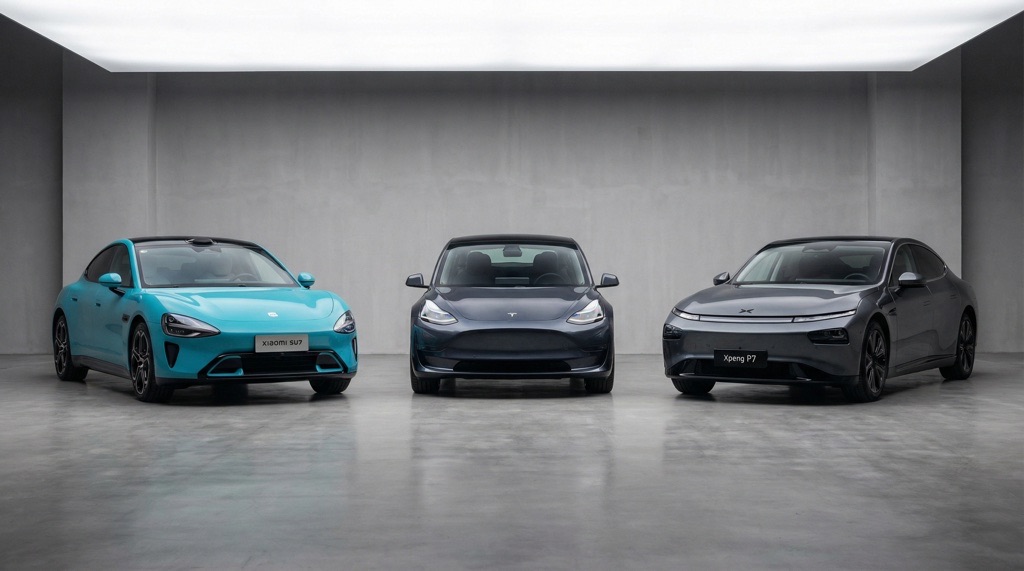
The SU7’s positioning is unambiguous: it offers Tesla-comparable performance and superior range at a lower price point with more generous standard equipment. While competitors like Xpeng offer comparable technology, Xiaomi’s brand strength and ecosystem integration provide differentiation that pure automotive specifications cannot capture.
Market Implications and Unanswered Questions
Xiaomi’s victory raises critical questions about Tesla’s China strategy. The company has not announced significant price reductions or feature upgrades to the Model 3 in response to competitive pressure, instead focusing on cost reduction through manufacturing efficiency. Whether this approach will stabilize market share remains uncertain, particularly as Chinese competitors continue launching new models with superior technology at comparable or lower prices.
Internationally, the SU7 remains unavailable outside China due to regulatory and supply chain constraints. However, the vehicle’s success has generated substantial interest from Western consumers, with some American buyers expressing willingness to purchase if export becomes feasible. Tesla’s global dominance in premium sedans remains intact, but the China precedent demonstrates that market leadership is not permanent when competitors achieve superior value propositions.
For Xiaomi, the challenge shifts from proving competitiveness to sustaining growth while managing profitability. The company’s aggressive pricing and feature bundling may compress margins, and scaling production to 550,000 units annually while maintaining quality will test manufacturing capabilities. Additionally, the company must navigate potential tariff barriers if it pursues international expansion, a complexity Tesla has managed for over a decade.
Verdict
Xiaomi’s SU7 has achieved a genuinely historic milestone: the first non-Tesla victory in China’s premium sedan market since 2019. The achievement reflects not exceptional engineering but rather superior execution on price, range, and feature integration—the fundamentals that matter most to mass-market buyers. For consumers, this competition is unambiguously positive, forcing Tesla to justify premium pricing through tangible advantages rather than brand prestige alone. For investors and industry observers, the SU7’s success signals that automotive market leadership is contestable even for established players, provided competitors offer measurably better value. The SU7 is designed for pragmatic buyers who prioritize range, technology, and cost over brand heritage—a demographic that appears far larger than Tesla anticipated.