
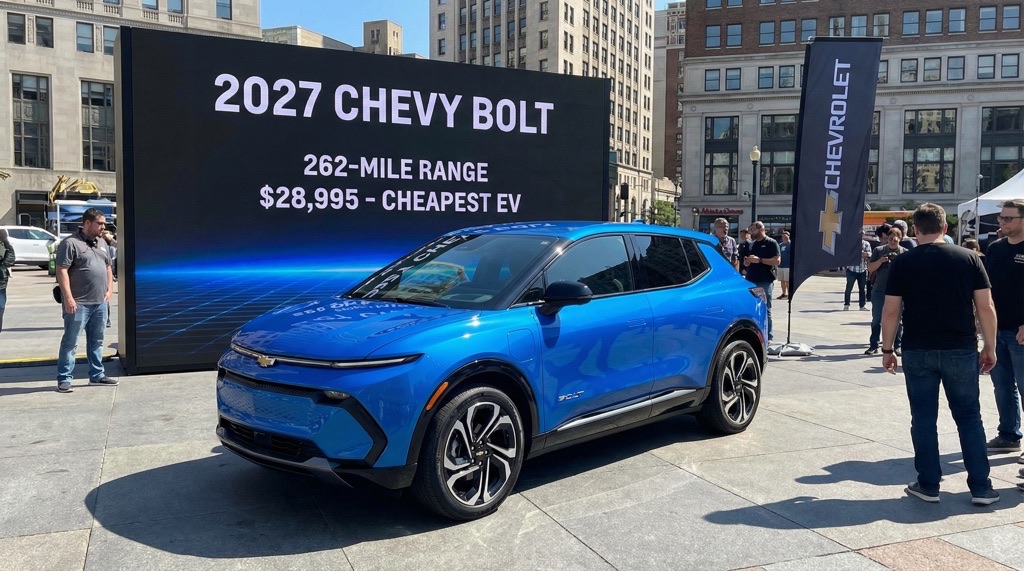
The 2027 Chevrolet Bolt now delivers an official EPA-rated range of 262 miles, surpassing GM’s initial 255-mile estimate and the prior model’s 259 miles. Starting at $28,995 including destination, it claims the title of America’s cheapest EV, undercutting the Nissan Leaf’s $31,485 base price while offering native NACS charging for Tesla Superchargers. This revival positions the Bolt as a value leader in the intensifying affordable EV market, now arriving at U.S. dealerships.
Background: Chevy Bolt’s Return After Battery Recalls
General Motors discontinued the original Chevy Bolt EV and Bolt EUV in late 2023 after selling over 300,000 units as America’s top non-Tesla EV, halted by recalls tied to battery fire risks from its unique chemistry. The 2027 Bolt revives the nameplate with a standardized lithium iron phosphate (LFP) battery shared across GM’s EV lineup, from the Equinox EV to the Escalade IQ, addressing past durability concerns while cutting costs. Produced at GM’s Fairfax Assembly Plant in Ohio, this local manufacturing supports GM’s mass-market EV push amid rising competition from Nissan, Hyundai, and budget Chinese imports.
GM unveiled the refreshed Bolt in October 2025 with a preliminary 255-mile range projection, but final EPA testing confirmed 262 miles, beating the old Bolt’s 259 miles and EUV’s 247 miles. Now rolling into showrooms in early 2026, the Bolt targets budget-conscious buyers seeking over 250 miles without exceeding $30,000.




Key Specifications
| Specification | Details |
|---|---|
| EPA Range | 262 miles |
| Battery | 65 kWh LFP (lithium iron phosphate) |
| Power | 210 hp, 169 lb-ft torque (single motor, shared with Equinox EV) |
| DC Fast Charging | 10-80% in 26 minutes at 150 kW |
| Pricing (incl. destination) | LT: $28,995 (later 2026); Initial: $29,990; RS: $32,995 |
| Charging Port | Native NACS (Tesla Supercharger compatible) |
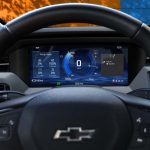
| Key Features | Super Cruise option, V2H bidirectional charging, 11.3-inch infotainment with Google built-in, 11-inch digital cluster |
| Production | GM Fairfax Assembly Plant |
Performance and Range Analysis
The 262-mile EPA range stems from the efficient 65 kWh LFP battery, chosen for its longevity—retaining over 75% capacity after 1,000 cycles—and lower cost compared to nickel-manganese-cobalt packs. Paired with a 210 hp motor, the Bolt accelerates adequately for city and highway use, though top speed and 0-60 times remain unconfirmed beyond prior models’ 6.5-second estimates. Real-world testing could vary, especially in cold weather, where LFP batteries hold up better than some rivals but still lose 20-30% range.
Charging stands out: Native NACS access opens 15,000+ Tesla Superchargers, a first for Chevrolet, plus 150 kW DC speeds hitting 10-80% in 26 minutes—over twice as fast as the old Bolt. Vehicle-to-Home (V2H) bidirectional charging requires GM Energy equipment, enabling home power during outages, adding utility for reliability-focused owners.
 Cars
Cars
No Plans for a 2026 Kia Seltos EV Despite Shared Hyundai Platform
Kia has officially confirmed that there will be no fully electric version of the next-generation Kia Seltos, despite the model...
 Cars
Cars
Battery-Electric Cars Dominate Norway as EVs Take Over New Sales and Fleets
Norway once again confirms its global leadership in electric mobility. New 2025 registration data shows that battery-electric vehicles (BEVs) now...
 Cars
Cars
GAC AION UT Arrives Q2 2026: 500km Range Compact EV Confirmed for Australia
GAC’s Fourth Australian Model Brings Affordable Electric Hatchback to Market GAC has confirmed the AION UT compact electric hatchback will...


Design and Technology Upgrades
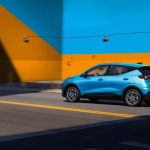
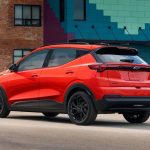
Exterior styling borrows from the Bolt EUV with a modern hatchback profile, bold colors like Atomic Yellow and Relic Green Metallic, a dual-panel sunroof, and an illuminated charge port. The interior refresh features improved materials, an 11.3-inch touchscreen with Google built in (no Apple CarPlay/Android Auto yet; GM’s projection system planned), and an 11-inch digital cluster for cleaner usability.
Super Cruise hands-free driving is optional on compatible highways, bundled with enhanced ADAS, connectivity, and GM’s PowerUp NACS charger. These updates elevate the Bolt from budget basic to tech-competitive, though questions linger on software reliability post-launch.
Safety and Manufacturing Shift
LFP chemistry eliminates the fire risks that plagued the original Bolt, aligning with GM’s Ultium platform for consistent quality control. Fairfax production localizes supply chains, potentially qualifying for IRA incentives up to $7,500 federal tax credit—details not yet confirmed for all trims. Crash test ratings are pending, but shared Equinox EV bones suggest strong structure.
Comparison with Competitors
| Model | Starting Price (incl. dest.) | EPA Range | Fast Charge (10-80%) | Key Edge |
|---|---|---|---|---|
| 2027 Chevy Bolt LT | $28,995 | 262 miles | 26 min (150 kW) | NACS, V2H, Super Cruise opt. |
| 2026 Nissan Leaf | $31,485 | 303 miles | Not specified | Longer range, but CCS only |
| 2024 Hyundai Kona Electric | $34,425 | 261 miles | ~40 min (100 kW) | Warranty, but pricier |
| 2026 Chevy Equinox EV | $34,995 | 319 miles | 10-80% in 10 min (150 kW) | SUV size, more range |
The Bolt underprices the Leaf despite 41 fewer miles, winning on charging network and features; it trails the Equinox EV in range but beats it on affordability.
Verdict
The 2027 Chevy Bolt delivers compelling value at 262 miles and $28,995, ideal for urban commuters and first-time EV buyers prioritizing cost, Supercharger access, and reliability over maximum range. It won’t thrill performance seekers or long-haul drivers, and lacks confirmed tax credit eligibility or full real-world data. GM’s limited-run strategy raises questions on longevity versus Nissan’s ongoing Leaf, but for now, it resets the affordable EV benchmark—watch for sales volume to confirm its staying power.