


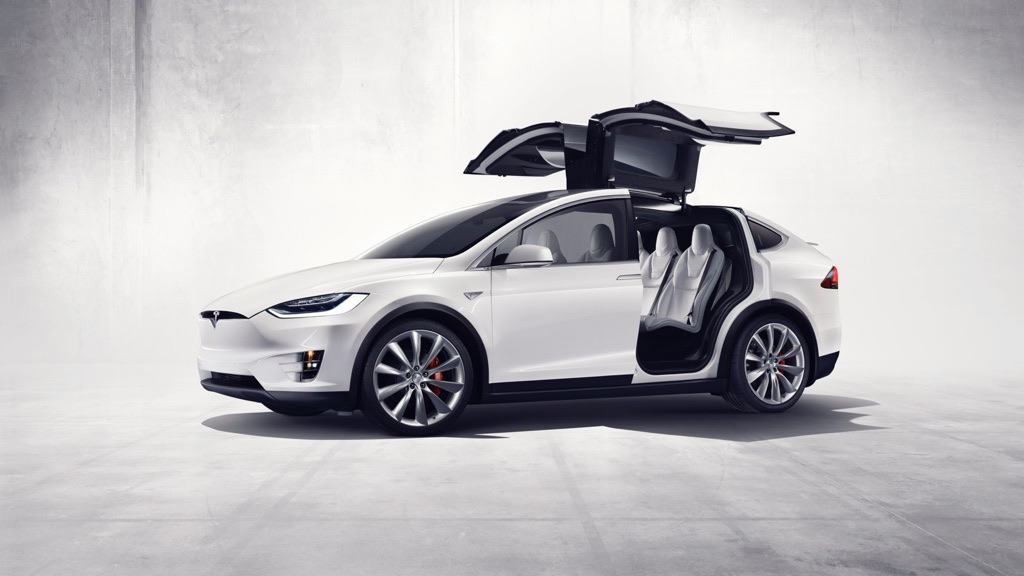
Tesla’s U.S. sales have taken a sharp hit in November, falling to an estimated 39,800 units, according to new data from Cox Automotive. It marks one of the steepest month-to-month declines for the automaker in recent memory and highlights the immediate impact of losing the federal EV tax credit.
The numbers are an early indicator of how sensitive the U.S. EV market remains to government incentives — and how even the strongest EV brand is not immune.
Sales Fall 23% Year-over-Year as Incentives Vanish
Tesla no longer qualifies for the $7,500 federal EV tax credit, which expired at the end of September. A surge of end-of-quarter purchases in Q3 was expected, but few anticipated such a dramatic slowdown afterward.
Key figures:
-
39,800 Tesla vehicles sold in November 2025 (estimate)
-
Down 23% from 51,513 sales in November 2024
-
Tesla’s lowest U.S. sales month since January 2022
Tesla does not report monthly sales, so these figures are aggregated estimates based on Cox Automotive’s data modeling.




Discounted “Standard Range” Models Have Limited Impact
To soften the blow of losing the tax credit, Tesla launched lower-priced Standard Range versions of the Model 3 and Model Y in October — roughly $5,000 cheaper than the previous base trims.
Analysts expected these versions to stabilize demand into 2026, but so far their impact appears muted.
 Cars
Cars
First Toyota bZ4X Robotaxi Rolls Off Production Line with Pony.ai’s 7th-Gen Tech for China Deployment
The first mass-produced Toyota bZ4X robotaxi, developed by GAC Toyota and Pony.ai, has rolled off the production line, marking the...
 Cars
Cars
Smart #5 Claims Six Major Awards in Global Launch Year—What Makes It Stand Out
The smart #5 has secured six prestigious international awards during its debut year on the global market, cementing its position...
 Cars
Cars
MG Begins Deliveries of MG4 With Semi-Solid-State Battery, Marking a First for Affordable EVs
Chinese automotive giant SAIC Motor has officially started customer deliveries of the MG4 Anxin Edition, a special version of the...
Cox Automotive’s Stephanie Valdez Streaty notes:
-
Demand for Standard versions is weaker than expected
-
Sales of Standard trims are cannibalizing Premium trims, especially Model 3
-
Overall uplift is “not enough” to offset the tax credit loss
This means Tesla isn’t attracting many new buyers — just shifting existing buyers to cheaper models.
Context: Tesla Is Still Doing Better Than the U.S. EV Market
Despite the negative headline, the broader EV industry is suffering even more:
-
Overall U.S. EV sales declined over 41% in November
-
Tesla’s decline was smaller, so its market share rose to 56.7%, up from 43.1% last year
Most automakers relied heavily on the federal tax credit to move EV inventory. Without it, demand has evaporated far faster than at Tesla.
A Strategic Win for Tesla — But Misaligned With Its Mission
Elon Musk long argued that Tesla would outperform rivals even without federal incentives — and he was right.
However, critics note the irony:
-
Tesla used federal incentives to reach volume
-
Then successfully pushed to remove those incentives
-
Now competitors struggle to scale in the same way Tesla once did
This hurts the broader EV ecosystem and contradicts Tesla’s stated mission: accelerating the transition to sustainable transportation.
The result?
Tesla becomes a bigger fish — but in a shrinking U.S. EV market.
And unlike in the U.S., Tesla is losing ground abroad:
-
Sales are declining in Europe and China
-
Competitors’ EV sales continue to rise in those markets
The global picture is far less flattering than Tesla’s U.S. market-share bump suggests.






Tesla’s estimated U.S. sales fell to 39,800 units in November — a 23% decline and the company’s lowest monthly volume since early 2022 — following the expiration of the $7,500 federal EV tax credit. While Tesla introduced cheaper Standard Range models to offset the impact, analysts say demand remains soft and cannibalization of premium trims is rising. Despite the drop, Tesla outperformed a collapsing U.S. EV market that was down 41% overall, raising its share to 56.7%. Critics argue Tesla undermined the industry by eliminating incentives, slowing broader EV adoption.



For the reason that the admin of this site is working, no uncertainty very quickly it will be renowned, due to its quality contents.