

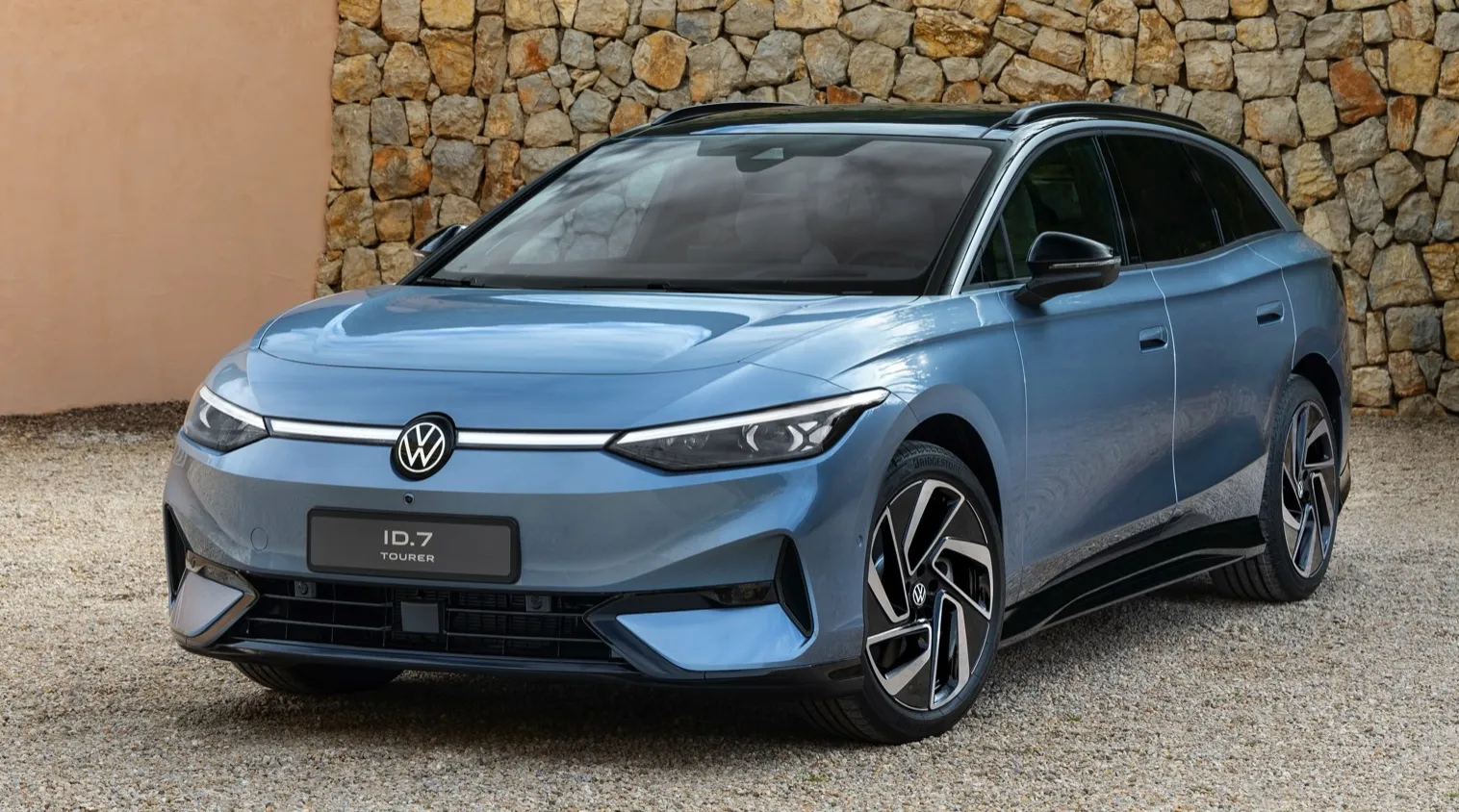
Volkswagen ID.7 Tourer Pro S
Key Specifications
Real Range Estimation
| City - Cold Weather * | 490 km |
| Highway - Cold Weather * | 375 km |
| Combined - Cold Weather * | 435 km |
between 375 - 745 km
| City - Mild Weather * | 745 km |
| Highway - Mild Weather * | 490 km |
| Combined - Mild Weather * | 600 km |
Battery
| Nominal Capacity | 91.0 kWh |
| Battery Type | Lithium-ion |
| Number of Cells | 312 |
| Architecture | 400 V |
| Warranty Period | 8 years |
| Warranty Mileage | 160,000 km |
| Useable Capacity | 86.0 kWh |
| Cathode Material | NCM |
| Pack Configuration | 104s3p |
| Nominal Voltage | 383 V |
| Form Factor | No Data |
| Name / Reference | No Data |
Performance
| Acceleration 0 - 100 km/h | 6.7 sec |
| Top Speed | 180 km/h |
| Electric Range * | 520 km |
| Total Power | 210 kW (286 PS) |
| Total Torque | 550 Nm |
| Drive | Rear |
Home and Destination Charging (0 -> 100%)
Charging is possible by using a regular wall plug or a charging station. Public charging is always done through a charging station. How fast the EV can charge depends on the charging station (EVSE) used and the maximum charging capacity of the EV. The table below shows all possible options for charging the Volkswagen ID.7 Tourer Pro S. Each option shows how fast the battery can be charged from empty to full.
Europe
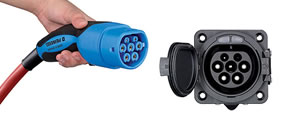
Charging an EV in Europe differs by country. Some European countries primarily use 1-phase connections to the grid, while other countries are almost exclusively using a 3-phase connection. The table below shows all possible ways the Volkswagen ID.7 Tourer Pro S can be charged, but some modes of charging might not be widely available in certain countries.
| Type 2 (Mennekes - IEC 62196) |
|---|
 |
| Charging Point | Max. Power | Power | Time | Rate |
|---|---|---|---|---|
| Wall Plug (2.3 kW) | 230V / 1x10A | 2.3 kW | 44 hours | 12 km/h |
| 1-phase 16A (3.7 kW) | 230V / 1x16A | 3.7 kW | 27h30m | 19 km/h |
| 1-phase 32A (7.4 kW) | 230V / 1x32A | 7.4 kW | 13h45m | 38 km/h |
| 3-phase 16A (11 kW) | 400V / 3x16A | 11 kW | 9h15m | 56 km/h |
| 3-phase 32A (22 kW) | 400V / 3x16A | 11 kW † | 9h15m | 56 km/h |
† = Limited by on-board charger, vehicle cannot charge faster.
Fast Charging (10 -> 80%)
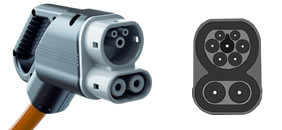
Rapid charging enables longer journeys by adding as much range as possible in the shortest amount of time. Charging power will decrease significantly after 80% state-of-charge has been reached. A typical rapid charge therefore rarely exceeds 80% SoC. The rapid charge rate of an EV depends on the charger used and the maximum charging power the EV can handle. The table below shows all details for rapid charging the Volkswagen ID.7 Tourer Pro S.
- Max. Power: maximum power provided by charge point
- Avg. Power: average power provided by charge point over a session from 10% to 80%
- Time: time needed to charge from 10% to 80%
- Rate: average charging speed over a session from 10% to 80%
| Combined Charging System (CCS Combo 2) |
|---|
 |
| Charging Point | Max. Power | Avg. Power | Time | Rate |
|---|---|---|---|---|
| CCS (50 kW DC) | 50 kW | 50 kW | 76 min | 280 km/h |
| CCS (100 kW DC) | 100 kW | 90 kW † | 42 min | 520 km/h |
| CCS (150 kW DC) | 150 kW | 115 kW † | 33 min | 660 km/h |
| CCS (175 kW DC) | 175 kW | 130 kW † | 29 min | 750 km/h |
| CCS (350 kW DC) | 200 kW † | 145 kW † | 26 min | 840 km/h |
| This vehicle does not support Autocharge |
|---|
| This vehicle supports Plug & Charge |
† = Limited by charging capabilities of vehicle
Autocharge: allows for automatic initiation of a charging session at supported CCS charging stations.
Plug & Charge: allows for automatic initiation of a charging session at supported CCS charging stations in accordance with ISO 15118.
Actual charging rates may differ from data shown due to factors like outside temperature, state of the battery and driving style.
Volkswagen Claimed Specifications
The table below shows the claimed specifications from the manufacturer for charging the Volkswagen ID.7 Tourer Pro S. The specifications can differ from the table above for a variety of reasons. If real-world charge tests are available, these differences can be signifcant. If no real-world tests are available, the table above will be based on the manufacturer specifications as per the table below.
- Max. Power: maximum charge power during charging session
- Charge From: battery percentage (% SoC) where charging session is started
- Charge To: battery percentage (% SoC) where charging session is ended
- Time: time needed for charging session
| Volkswagen Claimed Specifications |
|---|
| Max. Power | Charge From | Charge To | Time |
|---|---|---|---|
| 200 kW | 10 % | 80 % | 26 min |
Dimensions and Weight
| Length | 4961 mm |
| Width | 1862 mm |
| Width with mirrors | 2141 mm |
| Height | 1536 mm |
| Wheelbase | 2971 mm |
| Weight Unladen (EU) | 2239 kg |
| Gross Vehicle Weight (GVWR) | 2700 kg |
| Max. Payload | 536 kg |
| Cargo Volume | 605 L |
| Cargo Volume Max | 1714 L |
| Cargo Volume Frunk | 0 L |
| Roof Load | 75 kg |
| Tow Hitch Possible | Yes |
| Towing Weight Unbraked | 750 kg |
| Towing Weight Braked | 1000 kg |
| Vertical Load Max | 75 kg |
About this Vehicle
Volkswagen ID.7 Tourer Pro S Overview
The Volkswagen ID.7 Tourer Pro S is Volkswagen’s flagship electric estate, positioned as a premium family EV that blends long-range efficiency with genuine wagon practicality. As a Volkswagen electric estate, it targets drivers who need serious space for passengers, luggage, or dogs, but don’t want to move into a bulky SUV. It competes directly with high-end electric saloons and crossovers while offering a more versatile load bay and classic estate-car usability.
Built on the familiar MEB platform with a large 86 kWh net battery and a powerful rear-mounted motor, the ID.7 Tourer Pro S focuses on long-distance comfort, refined tech, and impressive EV specs rather than outright sportiness. A minimalist cabin, large infotainment screen, augmented reality head-up display, and heat pump underline its role as a modern, efficient cruiser. Volkswagen’s latest software and driver assistance systems aim to make daily use straightforward, whether on the school run or crossing a continent.
In the current EV landscape, the Volkswagen ID.7 Tourer Pro S matters because it fills a niche that many brands ignore: a long-range electric estate with up to around 422–427 miles of WLTP range and a huge boot, making it one of the most compelling all-rounders for families and business drivers who regularly cover long distances.
—
Volkswagen ID.7 Tourer Pro S Performance and Driving Experience
On paper, the ID.7 Tourer Pro S delivers a strong blend of performance and efficiency. A rear-mounted permanent-magnet motor produces 210 kW (282 hp / 286 PS) and about 545 Nm (402–406 lb-ft) of torque, sending power to the rear wheels via a single-speed transmission. This setup enables a 0–60 mph time of roughly 6.4–6.5 seconds and 0–100 km/h in about 6.5–6.7 seconds, with a top speed of 112 mph (180 km/h). The power delivery is smooth and linear, ideal for swift overtakes and effortless motorway cruising.
Driving impressions from early tests describe a comfortable, composed ride with the typical rear-drive balance of MEB-based cars. The low-mounted battery keeps the center of gravity down, helping stability, while the long wheelbase and multi-link rear suspension prioritize comfort over corner-carving aggression. As an RWD electric estate, the ID.7 Tourer Pro S feels reassuring and planted, with brisk real-world pace rather than hot-hatch sharpness.
| Specification | Value |
|---|---|
| 0-60 mph (0-100 km/h) | 6.4–6.5 sec (0-60 mph), 6.5–6.7 sec (0-100 km/h) |
| Top Speed | 112 mph / 180 km/h |
| Power Output | 282 hp / 210 kW |
| Torque | 402–406 lb-ft / 545–550 Nm |
—
Volkswagen ID.7 Tourer Pro S Range and Battery Specifications
The Volkswagen ID.7 Tourer Pro S WLTP range is one of its standout selling points. Official figures for the 86 kWh net battery version quote around 422–427 miles (about 680–685 km) WLTP, depending on wheel size and trim. In real-world mixed driving, most owners can expect around 360–390 miles (580–630 km) on a charge in mild conditions, with motorway speeds or winter temperatures bringing that closer to 300–330 miles.
Under the floor sits a 91 kWh gross / 86 kWh usable battery using NMC (nickel-manganese-cobalt) chemistry, balancing energy density and longevity. Efficiency is strong for such a large estate, with combined consumption around 12.5–14 kWh/100 km WLTP (roughly 20–23 kWh/100 miles). The Volkswagen ID.7 Tourer Pro S battery specs make it especially suitable for high-mileage drivers, but range will still depend on speed, temperature, load, and driving style.
| Range Metric | Value |
|---|---|
| WLTP Range | ~422–427 miles / ~680–685 km |
| EPA Range | (Estimated) ~360–380 miles / ~580–610 km |
| Real-World Range | ~360–390 miles / ~580–630 km (mixed driving) |
| Battery Capacity | 86.0 kWh (usable) |
—
Volkswagen ID.7 Tourer Pro S Charging Times and Options
At home, the Volkswagen ID.7 Tourer Pro S supports up to 11 kW AC charging via its onboard charger. On a typical 7 kW wallbox, a full charge from empty to 100% takes roughly 16 hours, while a full 0–100% at 11 kW drops to about 10–11 hours. This makes overnight charging straightforward for most users with off-street parking.
On the road, DC fast charging is a strong point. The ID.7 Tourer Pro S can accept up to 200 kW on suitable CCS rapid chargers, allowing a 10–80% top-up in approximately 25–30 minutes under ideal conditions. This translates to adding hundreds of miles of range during a short coffee stop. The car is compatible with major charging networks, and intelligent thermal management helps sustain higher charging power for longer, especially on long motorway runs where you arrive with a warm battery.
| Charging Method | Time | Speed |
|---|---|---|
| Level 1 (120V) | ~40–50 hours (0–100%) | ~2 kW |
| Level 2 (240V/7kW) | ~16 hours (0–100%) | ~7 kW |
| Level 2 (240V/11kW) | ~10–11 hours (0–100%) | ~11 kW |
| DC Fast Charge (10-80%) | ~25–30 min | up to 200 kW |
—
Volkswagen ID.7 Tourer Pro S vs Competitors
In a Volkswagen ID.7 Tourer Pro S vs Tesla Model Y comparison, the VW counters the Tesla’s faster charging network and software ecosystem with more space, a quieter ride, and estate-style practicality. Compared with a Hyundai Ioniq 5 or Kia EV6, the ID.7 Tourer Pro S offers a larger boot, longer WLTP range, and a more traditional long-roof silhouette, though the Koreans can feel a bit sportier. Against premium rivals like the BMW i5 Touring or Audi Q4 e-tron, the Volkswagen undercuts on price while matching or exceeding range, making the ID.7 Tourer Pro S a compelling choice for buyers who value efficiency, space, and understated design.
—
Frequently Asked Questions
Related Vehicles
View All Volkswagen
Volkswagen ID.4 Pure
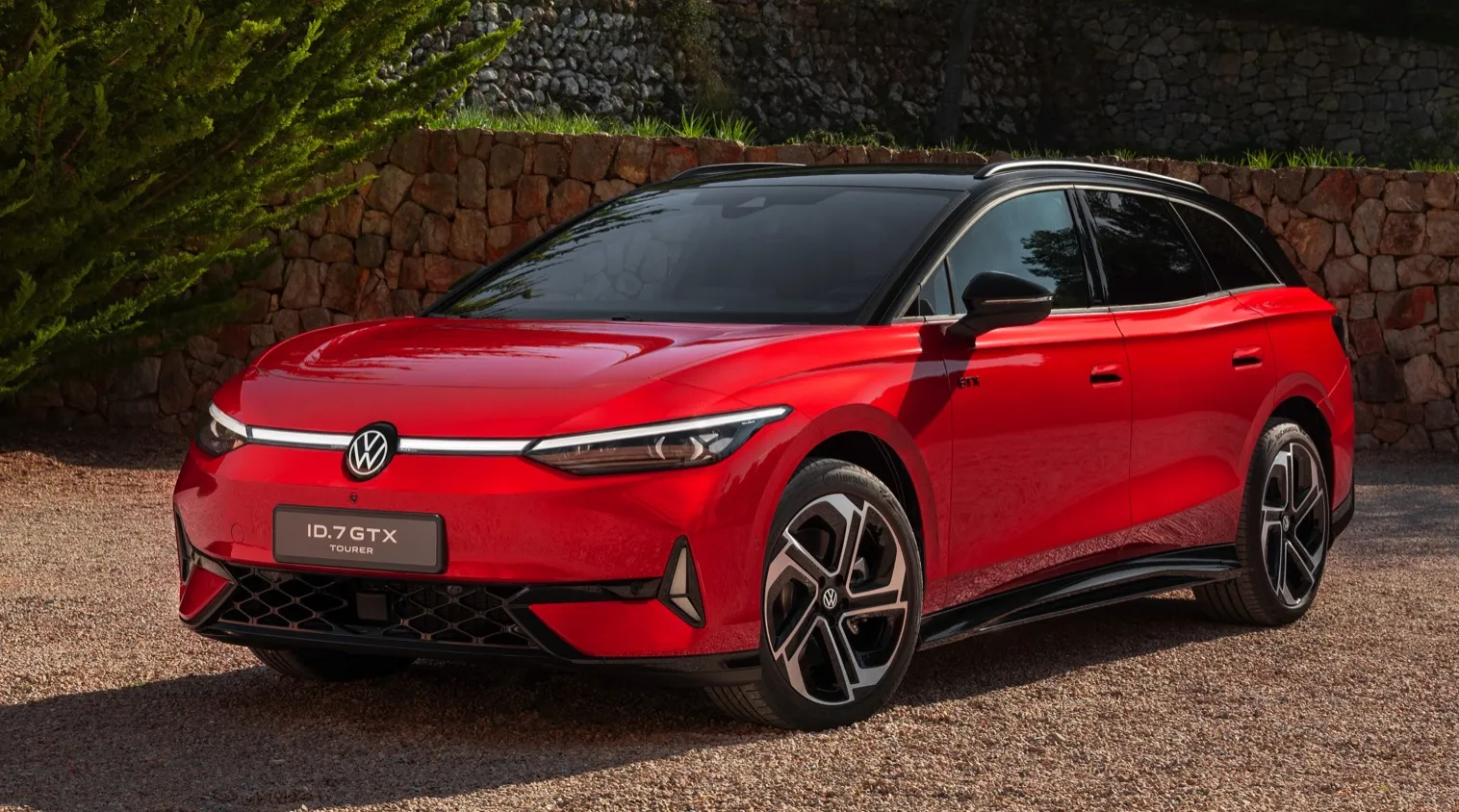 Volkswagen
Volkswagen ID.7 Tourer GTX
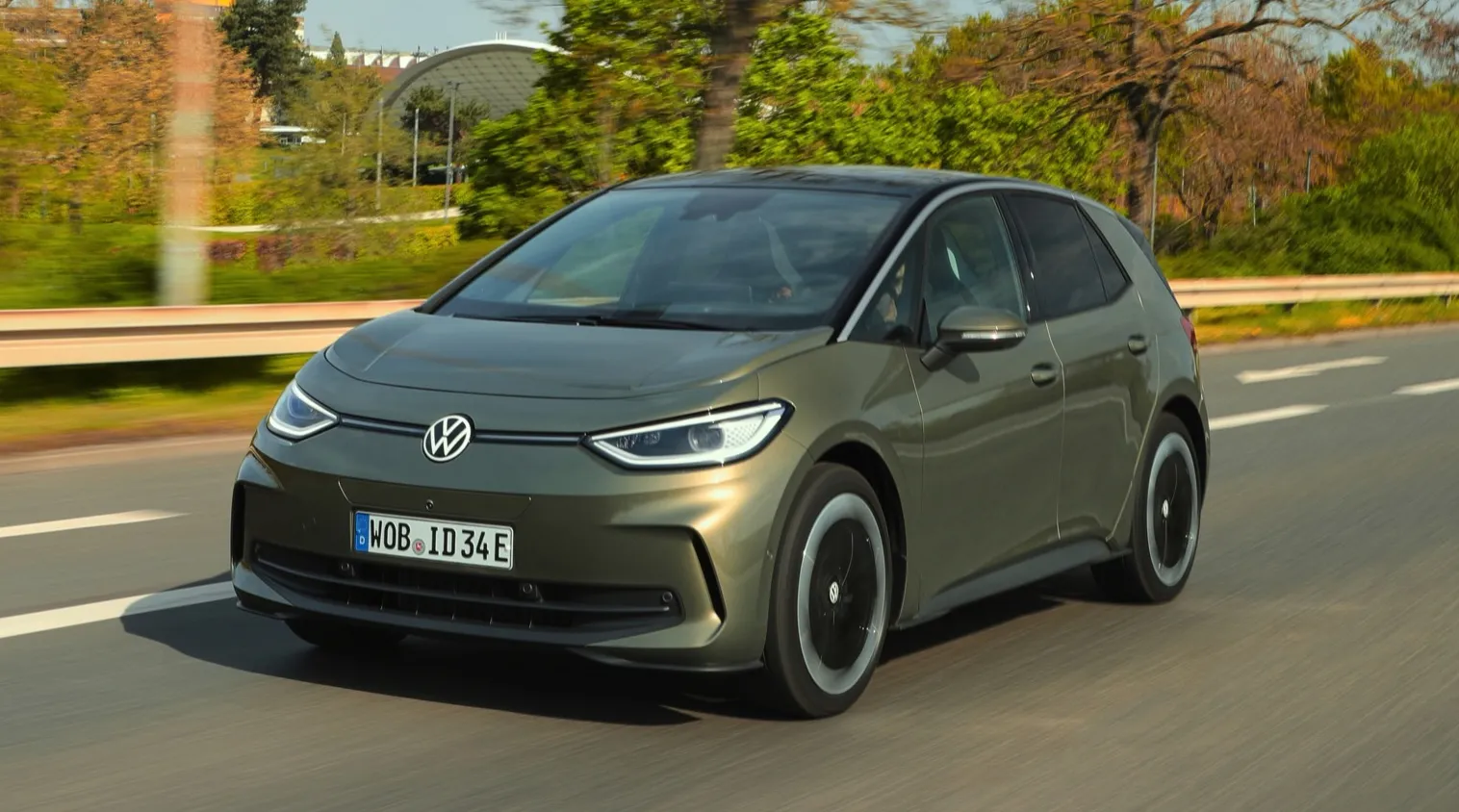 Volkswagen
Volkswagen ID.3 Pro S
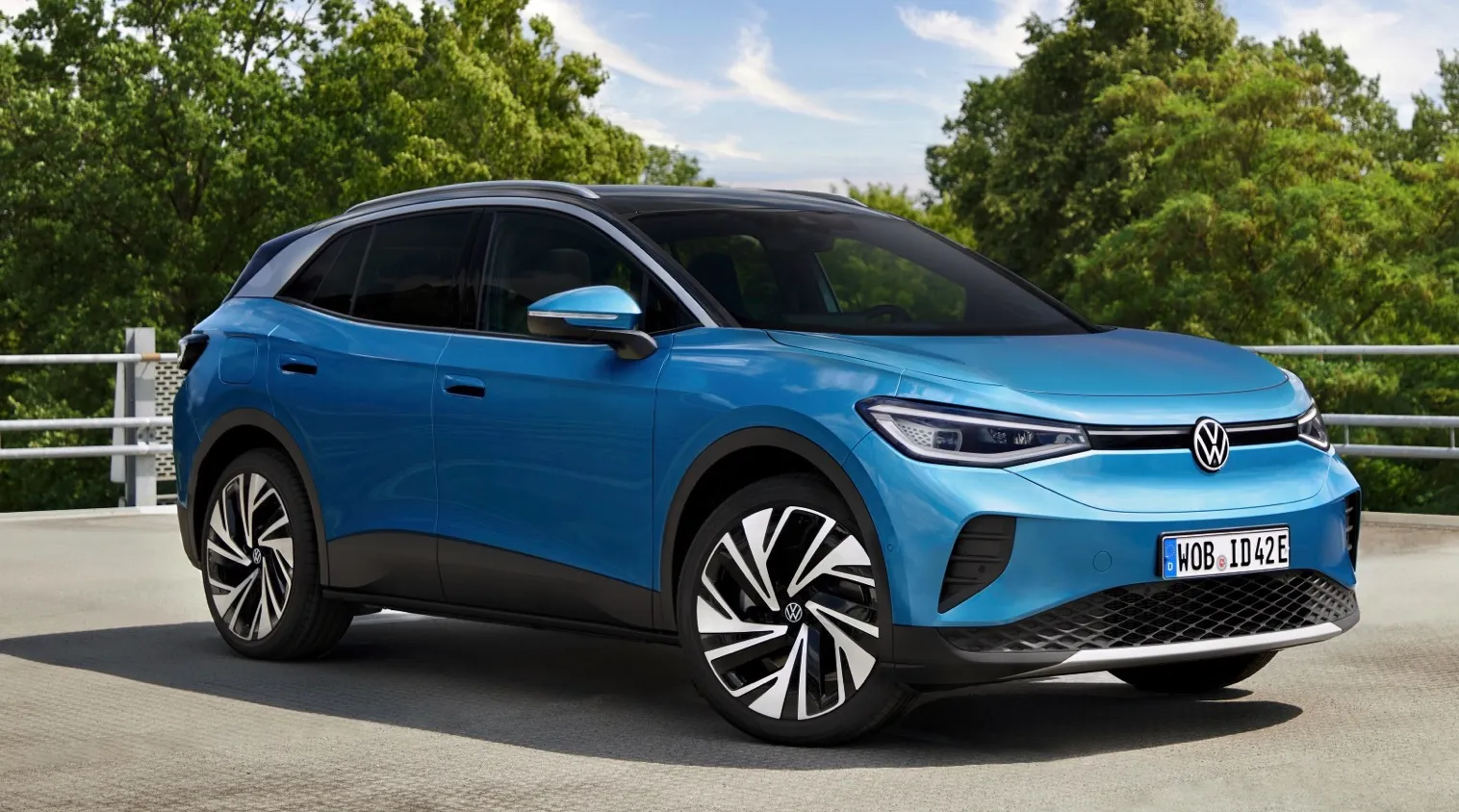 Volkswagen