

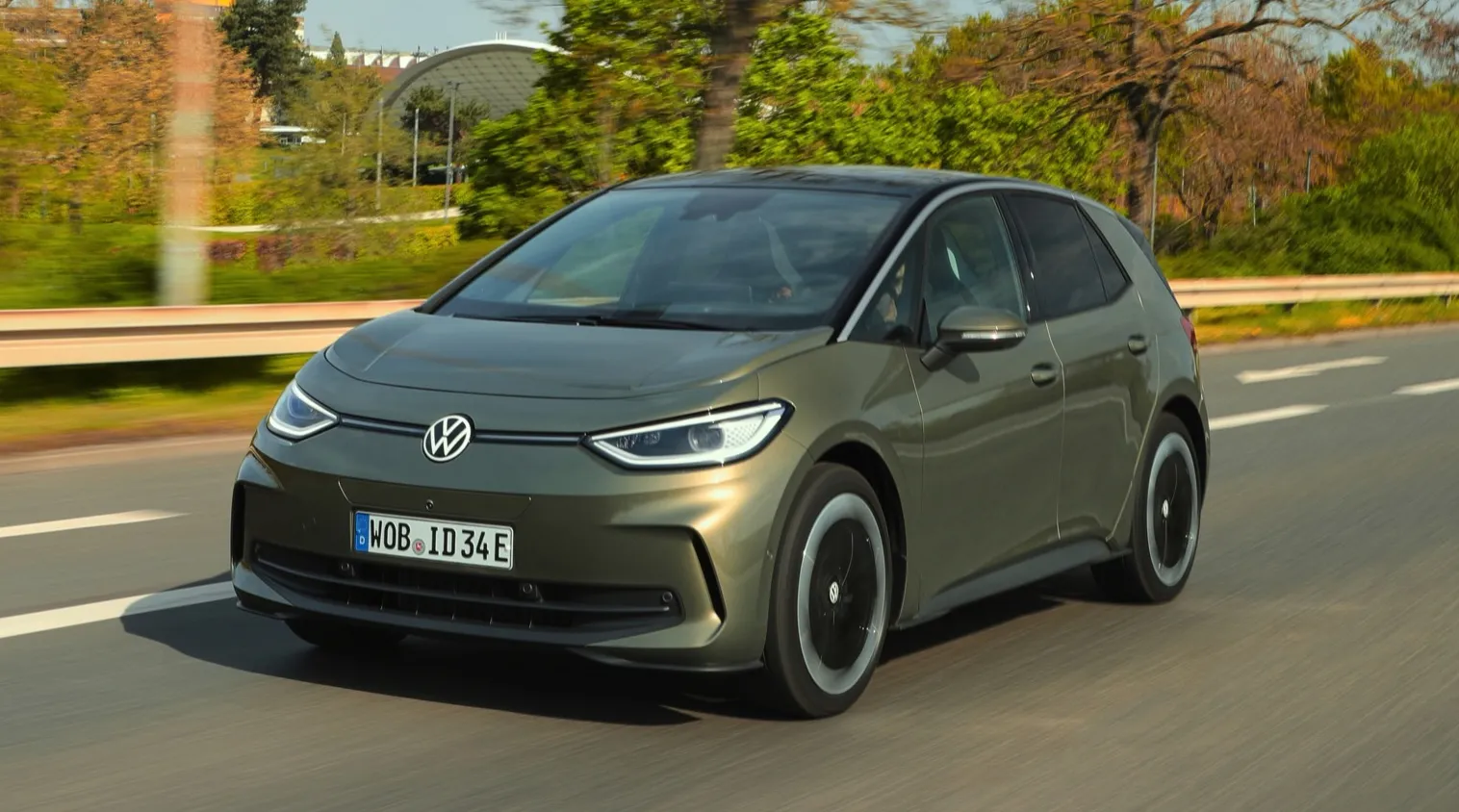
Volkswagen ID.3 Pro S
Key Specifications
Real Range Estimation
| City - Cold Weather * | 440 km |
| Highway - Cold Weather * | 325 km |
| Combined - Cold Weather * | 380 km |
between 325 - 660 km
| City - Mild Weather * | 660 km |
| Highway - Mild Weather * | 420 km |
| Combined - Mild Weather * | 520 km |
Battery
| Nominal Capacity | 82.0 kWh |
| Battery Type | Lithium-ion |
| Number of Cells | 288 |
| Architecture | 400 V |
| Warranty Period | 8 years |
| Warranty Mileage | 160,000 km |
| Useable Capacity | 77.0 kWh |
| Cathode Material | NCM |
| Pack Configuration | 96s3p |
| Nominal Voltage | 352 V |
| Form Factor | No Data |
| Name / Reference | No Data |
Performance
| Acceleration 0 - 100 km/h | 7.1 sec |
| Top Speed | 160 km/h |
| Electric Range * | 450 km |
| Total Power | 170 kW (231 PS) |
| Total Torque | 310 Nm |
| Drive | Rear |
Home and Destination Charging (0 -> 100%)
Charging is possible by using a regular wall plug or a charging station. Public charging is always done through a charging station. How fast the EV can charge depends on the charging station (EVSE) used and the maximum charging capacity of the EV. The table below shows all possible options for charging the Volkswagen ID.3 Pro S. Each option shows how fast the battery can be charged from empty to full.
Europe
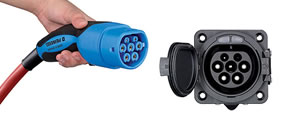
Charging an EV in Europe differs by country. Some European countries primarily use 1-phase connections to the grid, while other countries are almost exclusively using a 3-phase connection. The table below shows all possible ways the Volkswagen ID.3 Pro S can be charged, but some modes of charging might not be widely available in certain countries.
| Type 2 (Mennekes - IEC 62196) |
|---|
 |
| Charging Point | Max. Power | Power | Time | Rate |
|---|---|---|---|---|
| Wall Plug (2.3 kW) | 230V / 1x10A | 2.3 kW | 39h30m | 11 km/h |
| 1-phase 16A (3.7 kW) | 230V / 1x16A | 3.7 kW | 24h30m | 18 km/h |
| 1-phase 32A (7.4 kW) | 230V / 1x32A | 7.4 kW | 12h15m | 37 km/h |
| 3-phase 16A (11 kW) | 400V / 3x16A | 11 kW | 8h15m | 55 km/h |
| 3-phase 32A (22 kW) | 400V / 3x16A | 11 kW † | 8h15m | 55 km/h |
† = Limited by on-board charger, vehicle cannot charge faster.
Fast Charging (10 -> 80%)
Rapid charging enables longer journeys by adding as much range as possible in the shortest amount of time. Charging power will decrease significantly after 80% state-of-charge has been reached. A typical rapid charge therefore rarely exceeds 80% SoC. The rapid charge rate of an EV depends on the charger used and the maximum charging power the EV can handle. The table below shows all details for rapid charging the Volkswagen ID.3 Pro S.
- Max. Power: maximum power provided by charge point
- Avg. Power: average power provided by charge point over a session from 10% to 80%
- Time: time needed to charge from 10% to 80%
- Rate: average charging speed over a session from 10% to 80%
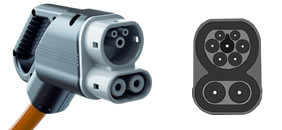
| Combined Charging System (CCS Combo 2) |
|---|
 |
| Charging Point | Max. Power | Avg. Power | Time | Rate |
|---|---|---|---|---|
| CCS (50 kW DC) | 50 kW | 50 kW | 68 min | 270 km/h |
| CCS (100 kW DC) | 100 kW | 85 kW † | 40 min | 470 km/h |
| CCS (150 kW DC) | 150 kW | 105 kW † | 32 min | 590 km/h |
| CCS (175 kW DC) | 175 kW | 120 kW † | 28 min | 670 km/h |
| CCS (350 kW DC) | 175 kW † | 120 kW † | 28 min | 670 km/h |
| This vehicle does not support Autocharge |
|---|
| This vehicle supports Plug & Charge |
† = Limited by charging capabilities of vehicle
Autocharge: allows for automatic initiation of a charging session at supported CCS charging stations.
Plug & Charge: allows for automatic initiation of a charging session at supported CCS charging stations in accordance with ISO 15118.
Actual charging rates may differ from data shown due to factors like outside temperature, state of the battery and driving style.
Volkswagen Claimed Specifications
The table below shows the claimed specifications from the manufacturer for charging the Volkswagen ID.3 Pro S. The specifications can differ from the table above for a variety of reasons. If real-world charge tests are available, these differences can be signifcant. If no real-world tests are available, the table above will be based on the manufacturer specifications as per the table below.
- Max. Power: maximum charge power during charging session
- Charge From: battery percentage (% SoC) where charging session is started
- Charge To: battery percentage (% SoC) where charging session is ended
- Time: time needed for charging session
| Volkswagen Claimed Specifications |
|---|
| Max. Power | Charge From | Charge To | Time |
|---|---|---|---|
| 175 kW | 10 % | 80 % | 28 min |
Dimensions and Weight
| Length | 4264 mm |
| Width | 1809 mm |
| Width with mirrors | 2070 mm |
| Height | 1564 mm |
| Wheelbase | 2770 mm |
| Weight Unladen (EU) | 1962 kg |
| Gross Vehicle Weight (GVWR) | 2420 kg |
| Max. Payload | 533 kg |
| Cargo Volume | 385 L |
| Cargo Volume Max | 1267 L |
| Cargo Volume Frunk | 0 L |
| Roof Load | 0 kg |
| Tow Hitch Possible | Yes |
| Towing Weight Unbraked | 0 kg |
| Towing Weight Braked | 0 kg |
| Vertical Load Max | 75 kg |
About this Vehicle
Volkswagen ID.3 Pro S Overview
The Volkswagen ID.3 Pro S positions itself as a premium mainstream electric hatchback in the Volkswagen electric lineup, blending accessible pricing around £43,010 with advanced EV technology on the dedicated MEB platform. Targeted at urban families and commuters seeking a practical electric vehicle with hatchback versatility, the ID.3 Pro S stands out in the EV specs landscape for its spacious 385-1267 liter trunk, low 0.263 drag coefficient, and rear-wheel-drive efficiency. This Volkswagen ID.3 Pro S review highlights its role as a refined daily driver in Europe’s competitive compact EV segment.
Key distinguishing features include a 77 kWh usable NMC battery, smooth 201 hp powertrain, and intuitive ID. software for seamless connectivity. In the broader electric vehicle range market, the ID.3 Pro S matters as Volkswagen’s EV pioneer, offering ID.3 Pro S balanced performance, up to 347 miles WLTP range, and family-friendly dimensions (4264 mm long, 1564 mm high). It’s ideal for those prioritizing efficiency over outright speed, competing in a space dominated by Tesla and Hyundai models.
Volkswagen ID.3 Pro S Performance and Driving Experience
The Volkswagen ID.3 Pro S delivers responsive acceleration with its single rear-mounted electric motor producing 201 hp and 229 lb-ft torque, achieving 0-62 mph in 7.4-7.9 seconds depending on conditions. Power delivery is instant from standstill, making city driving eager and smooth, though it tapers at higher speeds—typical for EVs. Handling benefits from a 49/51% weight distribution, 10.3 m turning circle, and composed dynamics on the MEB platform, with real-world impressions praising its stability and quiet cabin around town.
Rear-wheel drive enhances efficiency and fun-to-drive feel without AWD complexity, topping out at 99 mph. Drivers note punchy low-end torque for overtaking, paired with regenerative braking for one-pedal efficiency.
| Specification | Value |
|---|---|
| 0-60 mph (0-100 km/h) | 7.7 sec (7.9 sec) |
| Top Speed | 99 mph / 160 km/h |
| Power Output | 201 hp / 150 kW |
| Torque | 229 lb-ft / 310 Nm |
Volkswagen ID.3 Pro S Range and Battery Specifications
Official Volkswagen ID.3 Pro S WLTP range reaches 347 miles (559 km TEL), but real-world range typically falls to 250-340 miles in mixed conditions, influenced by cold weather, highway speeds, and driving style. The 77 kWh usable (82 kWh gross) Lithium Nickel Manganese Cobalt battery achieves 15.3 kWh/100 km efficiency, excelling in urban cycles but dipping in adverse terrain or heat.
ID.3 Pro S battery specs include heating/cooling for optimal performance, with factors like aggressive acceleration reducing range by 20-30%. Energy use averages 24.6 kWh/100 miles, making it efficient for its 1933 kg curb weight.
| Range Metric | Value |
|---|---|
| WLTP Range | 347 miles / 559 km |
| EPA Range | N/A (WLTP primary) |
| Real-World Range | 280-340 miles / 450-550 km |
| Battery Capacity | 77 kWh (usable) |
Volkswagen ID.3 Pro S Charging Times and Options
The Volkswagen ID.3 Pro S supports 11 kW AC on-board charging for home Level 2 setups, fully charging in about 7-8 hours from a 32A wallbox—ideal for overnight top-ups adding 55 km/h. Level 1 (120V) is slower at ~2-3 kW, suitable for emergencies. CCS port enables DC fast charging up to 170 kW, hitting 10-80% in under 30 minutes under optimal conditions, compatible with major networks like Electrify America or Ionity.
Practical scenarios include 15-minute highway stops regaining 100+ miles, with battery preconditioning enhancing speeds. Real-world peaks may hit 125-170 kW depending on temperature.
| Charging Method | Time | Speed |
|---|---|---|
| Level 1 (120V) | 24-30 hours | ~2.3 kW |
| Level 2 (240V/7kW) | 11 hours | ~7 kW |
| Level 2 (240V/11kW) | 7-8 hours | ~11 kW |
| DC Fast Charge (10-80%) | 28 min | up to 170 kW |
Volkswagen ID.3 Pro S vs Competitors
The Volkswagen ID.3 Pro S vs Tesla Model 3 favors VW’s hatchback practicality and lower price over Tesla’s superior range and supercharging, while ID.3 Pro S vs Hyundai Ioniq 5 highlights similar 77 kWh capacity but ID.3’s superior efficiency (15.3 kWh/100 km vs Ioniq’s 17+). Against the Kia EV6, the Volkswagen ID.3 Pro S comparison shows competitive 7.7s acceleration but trails in AWD options, winning on boot space and MEB refinement for European buyers.
Frequently Asked Questions
Related Vehicles
View All Volkswagen
Volkswagen ID.4 Pure
 Volkswagen
Volkswagen ID.7 Tourer GTX
 Volkswagen
Volkswagen ID.7 Tourer Pro S
 Volkswagen