

Opel Frontera 44 kWh
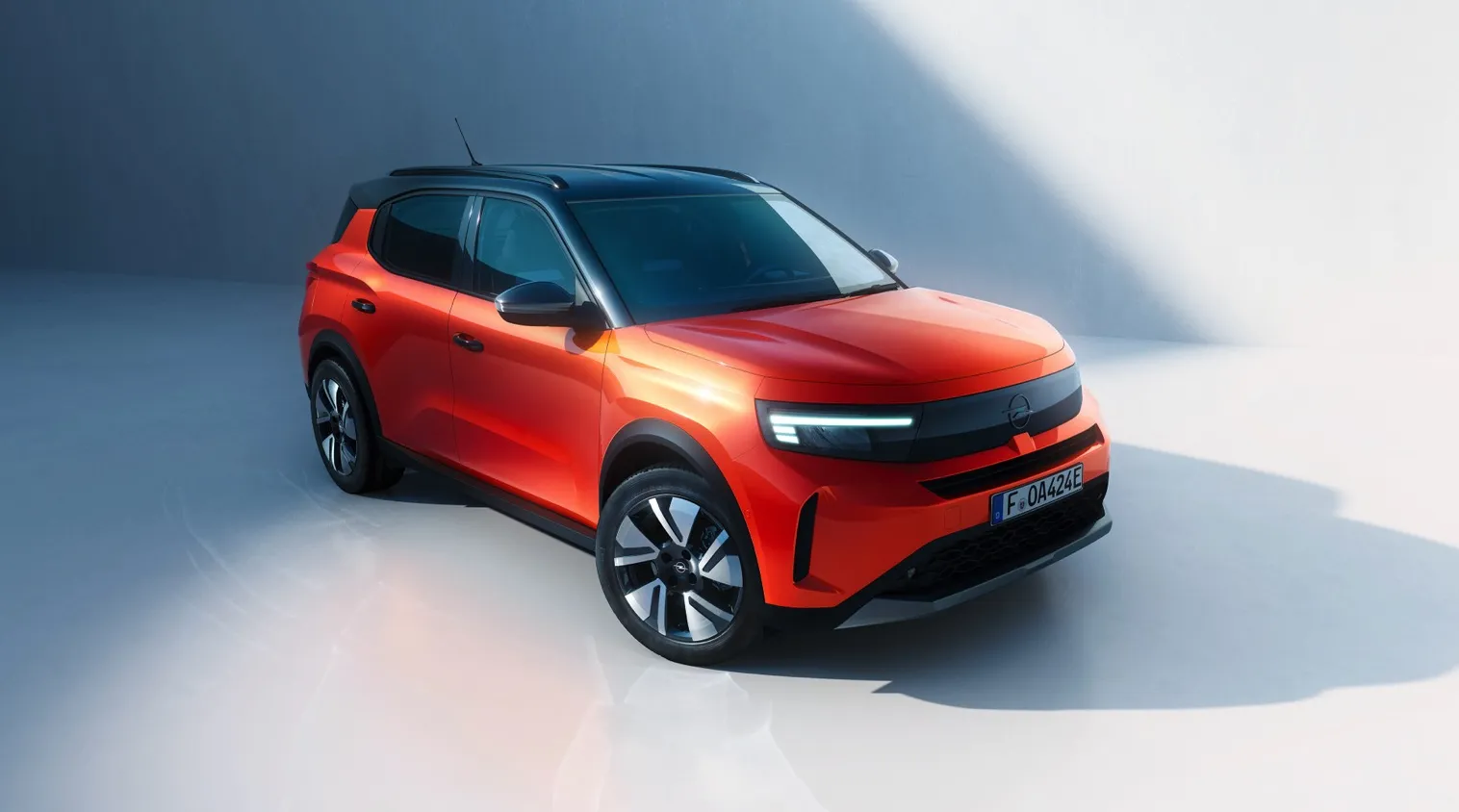
Key Specifications
Real Range Estimation
| City - Cold Weather * | 255 km |
| Highway - Cold Weather * | 175 km |
| Combined - Cold Weather * | 210 km |
between 175 - 380 km
| City - Mild Weather * | 380 km |
| Highway - Mild Weather * | 225 km |
| Combined - Mild Weather * | 285 km |
Battery
| Nominal Capacity* | 45.0 kWh |
| Battery Type | Lithium-ion |
| Number of Cells | No Data |
| Architecture | 400 V |
| Warranty Period | No Data |
| Warranty Mileage | No Data |
| Useable Capacity | 44.0 kWh |
| Cathode Material | LFP |
| Pack Configuration | No Data |
| Nominal Voltage | No Data |
| Form Factor | No Data |
| Name / Reference | No Data |
Performance
| Acceleration 0 - 100 km/h | 12.1 sec |
| Top Speed | 140 km/h |
| Electric Range * | 250 km |
| Total Power | 83 kW (113 PS) |
| Total Torque | 120 Nm |
| Drive | Front |
Home and Destination Charging (0 -> 100%)
Charging is possible by using a regular wall plug or a charging station. Public charging is always done through a charging station. How fast the EV can charge depends on the charging station (EVSE) used and the maximum charging capacity of the EV. The table below shows all possible options for charging the Opel Frontera 44 kWh. Each option shows how fast the battery can be charged from empty to full.
Europe
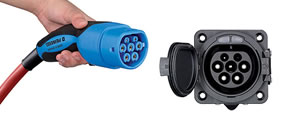
Charging an EV in Europe differs by country. Some European countries primarily use 1-phase connections to the grid, while other countries are almost exclusively using a 3-phase connection. The table below shows all possible ways the Opel Frontera 44 kWh can be charged, but some modes of charging might not be widely available in certain countries.
| Type 2 (Mennekes - IEC 62196) |
|---|
 |
| Charging Point | Max. Power | Power | Time | Rate |
|---|---|---|---|---|
| Standard 7.4 kW On-Board Charger | ||||
| Wall Plug (2.3 kW) | 230V / 1x10A | 2.3 kW | 22h30m | 11 km/h |
| 1-phase 16A (3.7 kW) | 230V / 1x16A | 3.7 kW | 14 hours | 18 km/h |
| 1-phase 32A (7.4 kW) | 230V / 1x32A | 7.4 kW | 7 hours | 36 km/h |
| 3-phase 16A (11 kW) | 230V / 1x16A | 3.7 kW † | 14 hours | 18 km/h |
| 3-phase 32A (22 kW) | 230V / 1x32A | 7.4 kW † | 7 hours | 36 km/h |
| Optional 11.0kW On-Board Charger | ||||
| Wall Plug (2.3 kW) | 230V / 1x10A | 2.3 kW | 22h30m | 11 km/h |
| 1-phase 16A (3.7 kW) | 230V / 1x16A | 3.7 kW | 14 hours | 18 km/h |
| 1-phase 32A (7.4 kW) | 230V / 1x32A | 7.4 kW | 7 hours | 36 km/h |
| 3-phase 16A (11 kW) | 400V / 3x16A | 11 kW | 4h45m | 53 km/h |
| 3-phase 32A (22 kW) | 400V / 3x16A | 11 kW † | 4h45m | 53 km/h |
† = Limited by on-board charger, vehicle cannot charge faster.
Fast Charging (10 -> 80%)
Rapid charging enables longer journeys by adding as much range as possible in the shortest amount of time. Charging power will decrease significantly after 80% state-of-charge has been reached. A typical rapid charge therefore rarely exceeds 80% SoC. The rapid charge rate of an EV depends on the charger used and the maximum charging power the EV can handle. The table below shows all details for rapid charging the Opel Frontera 44 kWh.
- Max. Power: maximum power provided by charge point
- Avg. Power: average power provided by charge point over a session from 10% to 80%
- Time: time needed to charge from 10% to 80%
- Rate: average charging speed over a session from 10% to 80%
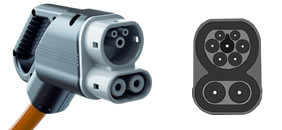
| Combined Charging System (CCS Combo 2) |
|---|
 |
| Charging Point | Max. Power | Avg. Power | Time | Rate |
|---|---|---|---|---|
| CCS (50 kW DC) | 50 kW | 40 kW † | 49 min | 210 km/h |
| CCS (100 kW DC) | 100 kW | 60 kW † | 32 min | 320 km/h |
| CCS (150 kW DC) | 100 kW † | 60 kW † | 32 min | 320 km/h |
| This vehicle supports Autocharge |
|---|
| This vehicle does not support Plug & Charge |
† = Limited by charging capabilities of vehicle
Autocharge: allows for automatic initiation of a charging session at supported CCS charging stations.
Plug & Charge: allows for automatic initiation of a charging session at supported CCS charging stations in accordance with ISO 15118.
Actual charging rates may differ from data shown due to factors like outside temperature, state of the battery and driving style.
Opel Claimed Specifications
The table below shows the claimed specifications from the manufacturer for charging the Opel Frontera 44 kWh. The specifications can differ from the table above for a variety of reasons. If real-world charge tests are available, these differences can be signifcant. If no real-world tests are available, the table above will be based on the manufacturer specifications as per the table below.
- Max. Power: maximum charge power during charging session
- Charge From: battery percentage (% SoC) where charging session is started
- Charge To: battery percentage (% SoC) where charging session is ended
- Time: time needed for charging session
| Opel Claimed Specifications |
|---|
| Max. Power | Charge From | Charge To | Time |
|---|---|---|---|
| 100 kW | 20 % | 80 % | 26 min |
Dimensions and Weight
| Length | 4385 mm |
| Width | 1795 mm |
| Width with mirrors | 1813 mm |
| Height | 1635 mm |
| Wheelbase | 2672 mm |
| Weight Unladen (EU) | 1514 kg |
| Gross Vehicle Weight (GVWR) | 2030 kg |
| Max. Payload | 591 kg |
| Cargo Volume | 460 L |
| Cargo Volume Max | 1594 L |
| Cargo Volume Frunk | No Data |
| Roof Load | No Data |
| Tow Hitch Possible | Yes |
| Towing Weight Unbraked | 350 kg |
| Towing Weight Braked | 350 kg |
| Vertical Load Max | 65 kg |
About this Vehicle
Opel Frontera 44 kWh Overview
The Opel Frontera 44 kWh is positioned as a compact, budget-friendly Opel electric SUV aimed at families and urban drivers who want practical zero-emission mobility without premium price tags. With seating for five, generous cargo space, and a straightforward spec sheet, it targets the mainstream European crossover segment where running costs and usability matter more than outright performance.
Built on Stellantis’ latest small EV platform, the Opel Frontera 44 kWh focuses on efficiency, comfort, and space utilization rather than sporty dynamics. Its clean, boxy design maximizes interior room, while the signature Opel Vizor front end and simple surfacing give it a modern but unfussy look. Inside, the cabin is designed to be user-friendly, with physical controls for key functions and a digital cluster that clearly presents EV specs such as range and consumption.
In the current EV landscape, the Opel Frontera 44 kWh matters because it brings electric motoring into reach for buyers who previously only considered petrol crossovers. With a WLTP range of around 305 km and a usable 44 kWh battery, it offers enough capability for commuting and weekend trips, making it a compelling choice for budget-conscious shoppers researching an Opel Frontera review or comparing compact electric SUVs.
—
Opel Frontera 44 kWh Performance and Driving Experience
Performance in the Opel Frontera Electric 44 kWh is tuned for calm, efficient driving rather than thrills. A single front-mounted permanent magnet motor delivers about 113 hp (83 kW) and 120–125 Nm of torque, sending power to the front wheels via a single-speed transmission. Acceleration from 0–100 km/h takes roughly 12.1 seconds, and top speed is limited to about 140 km/h (87 mph), which is perfectly adequate for urban and motorway use.
On the road, the Frontera prioritizes comfort and predictability. Light steering and a soft suspension tune make it easy to maneuver in tight city streets and relax on longer drives. Front-wheel drive and a low-mounted battery help keep the car stable, and the instant torque from the electric motor makes stop‑start traffic feel smoother than a comparable petrol SUV.
| Specification | Value |
|---|---|
| 0-60 mph (0-100 km/h) | 11.7–12.1 sec |
| Top Speed | 87 mph / 140 km/h |
| Power Output | 113 hp / 83 kW |
| Torque | 89–92 lb-ft / 120–125 Nm |
—
Opel Frontera 44 kWh Range and Battery Specifications
Officially, the Opel Frontera 44 kWh WLTP range is around 305 km (190 miles) on the combined cycle, placing it in line with other small electric SUVs focused on city and suburban driving. Independent estimates suggest a real-world range between roughly 165 and 260 km, depending heavily on weather, speed, and driving style. In mixed everyday use, many drivers can expect around 160–190 miles per charge.
The Opel Frontera 44 kWh battery specs include a nominal capacity of about 44 kWh, with energy consumption in the 18–18.5 kWh/100 km range. Efficiency is best at city speeds and in mild temperatures; high motorway speeds, cold weather, and heavy loads will reduce the Opel Frontera’s real-world range. An 8‑year / 160,000 km battery warranty (to 70% capacity) underscores Opel’s confidence in the pack’s longevity.
| Range Metric | Value |
|---|---|
| WLTP Range | 190 miles / 305 km |
| EPA Range | N/A (not officially rated) |
| Real-World Range | ~160–190 miles / 260–300 km |
| Battery Capacity | 44.0 kWh (usable approx.) |
—
Opel Frontera 44 kWh Charging Times and Options
The Opel Frontera Electric 44 kWh supports both home and public charging with flexible AC and DC options. On AC, the standard onboard charger is 7.4 kW, with an optional 11 kW unit available in some markets. At 7.4 kW, a 0–100% charge takes around 7–8 hours, ideal for overnight home charging. At 11 kW, a 20–80% top‑up can be completed in under 3 hours, making workplace or destination charging highly practical.
On DC, the Frontera supports up to 100 kW rapid charging. Under optimal conditions, a 20–80% charge takes roughly 26–32 minutes, making it viable for longer journeys with short breaks. The car uses a CCS connector, compatible with most European fast‑charging networks, and places the charge port at the rear left for easy access at typical charging bays.
| Charging Method | Time | Speed |
|---|---|---|
| Level 1 (120V) | ~24–30 hours (0–100%) | ~2 kW (market dependent) |
| Level 2 (240V/7kW) | ~7–8 hours (0–100%) | ~7.4 kW |
| Level 2 (240V/11kW) | ~3 hours (20–80%) | ~11 kW |
| DC Fast Charge (10-80%) | ~26–30 min | up to 100 kW |
—
Opel Frontera 44 kWh vs Competitors
In an Opel Frontera vs Tesla Model Y comparison, the Tesla offers significantly more range and performance, but at a much higher price point and with a larger footprint. Against compact rivals like the Hyundai Kona Electric or Kia Niro EV, the Opel Frontera 44 kWh trades some range and power for a lower entry cost and simpler spec. Compared with in‑house competitors such as the Opel Mokka Electric, the Frontera emphasizes practicality, space, and value, making it a strong option for buyers whose priority is affordable family-friendly electric transport rather than long-distance capability.
—
Frequently Asked Questions
Related Vehicles
View All Opel
Opel
Opel Grandland 73 kWh
 Opel
Opel
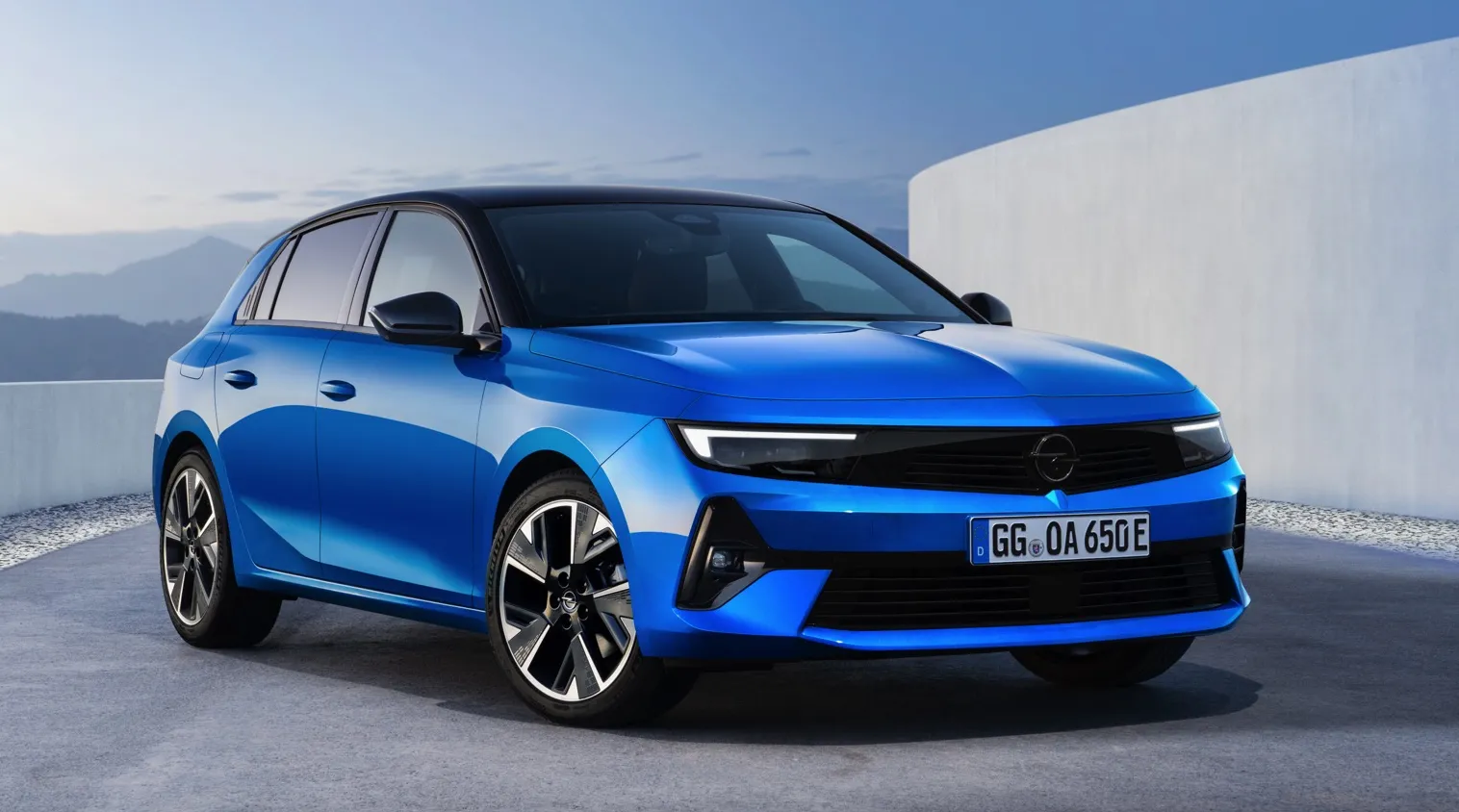
Opel Astra Electric
 Opel
Opel
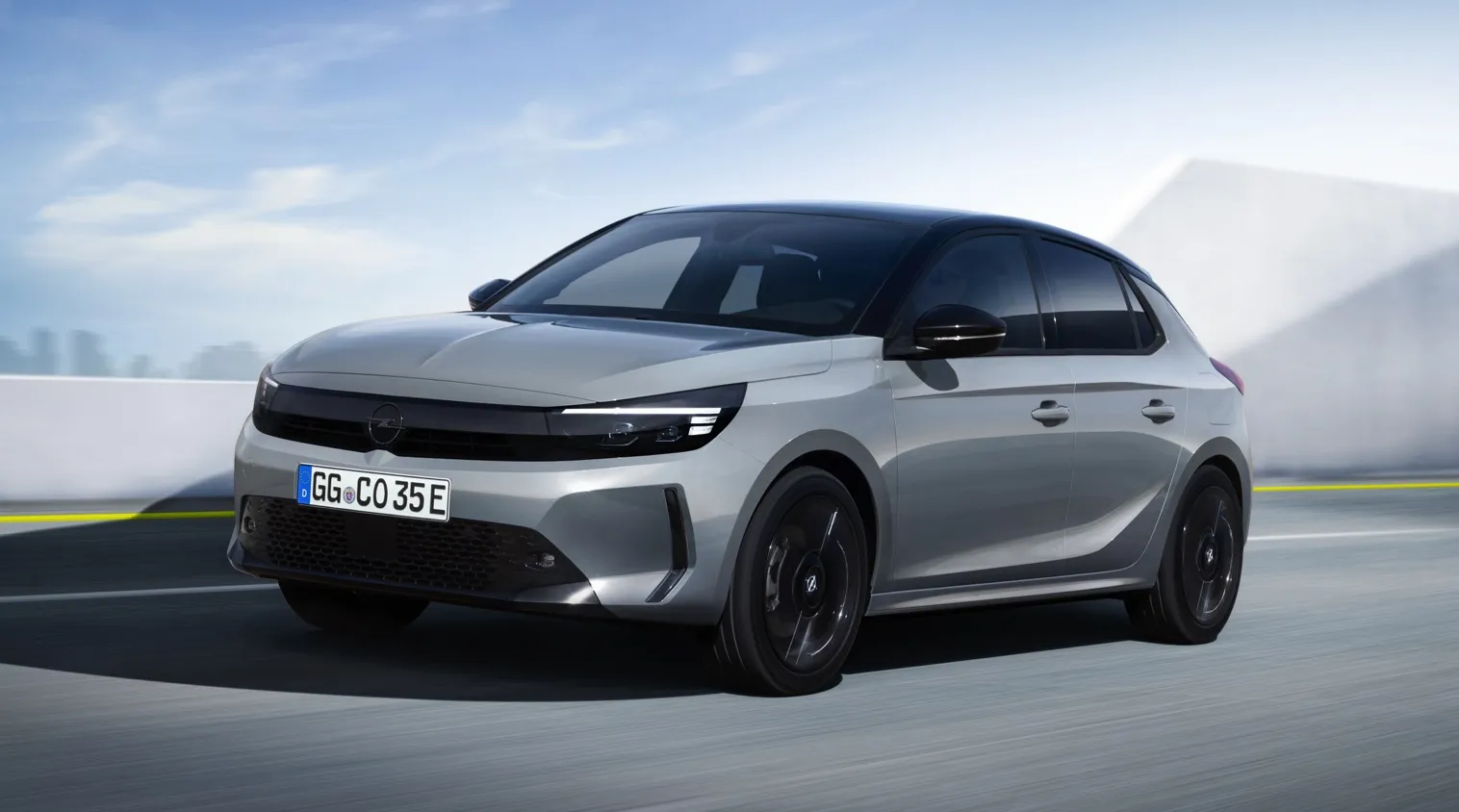
Opel Corsa Electric 51 kWh
 Opel
Opel