

Audi Q4 e-tron 35

Key Specifications
Real Range Estimation
| City - Cold Weather * | 285 km |
| Highway - Cold Weather * | 205 km |
| Combined - Cold Weather * | 240 km |
between 205 - 420 km
| City - Mild Weather * | 420 km |
| Highway - Mild Weather * | 260 km |
| Combined - Mild Weather * | 325 km |
Battery
| Nominal Capacity | 55.0 kWh |
| Battery Type | Lithium-ion |
| Number of Cells | 192 |
| Architecture | 400 V |
| Warranty Period | 8 years |
| Warranty Mileage | 160,000 km |
| Useable Capacity | 52.0 kWh |
| Cathode Material | NCM |
| Pack Configuration | 96s2p |
| Nominal Voltage | 352 V |
| Form Factor | No Data |
| Name / Reference | No Data |
Performance
| Acceleration 0 - 100 km/h | 9.0 sec |
| Top Speed | 160 km/h |
| Electric Range * | 285 km |
| Total Power | 125 kW (170 PS) |
| Total Torque | 310 Nm |
| Drive | Rear |
Home and Destination Charging (0 -> 100%)
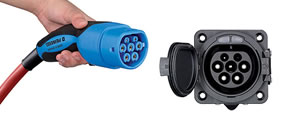
Charging is possible by using a regular wall plug or a charging station. Public charging is always done through a charging station. How fast the EV can charge depends on the charging station (EVSE) used and the maximum charging capacity of the EV. The table below shows all possible options for charging the Audi Q4 e-tron 35. Each option shows how fast the battery can be charged from empty to full.
Europe
Charging an EV in Europe differs by country. Some European countries primarily use 1-phase connections to the grid, while other countries are almost exclusively using a 3-phase connection. The table below shows all possible ways the Audi Q4 e-tron 35 can be charged, but some modes of charging might not be widely available in certain countries.
| Type 2 (Mennekes - IEC 62196) |
|---|
 |
| Charging Point | Max. Power | Power | Time | Rate |
|---|---|---|---|---|
| Wall Plug (2.3 kW) | 230V / 1x10A | 2.3 kW | 26h45m | 11 km/h |
| 1-phase 16A (3.7 kW) | 230V / 1x16A | 3.7 kW | 16h45m | 17 km/h |
| 1-phase 32A (7.4 kW) | 230V / 1x32A | 7.4 kW | 8h30m | 34 km/h |
| 3-phase 16A (11 kW) | 400V / 3x16A | 11 kW | 5h45m | 50 km/h |
| 3-phase 32A (22 kW) | 400V / 3x16A | 11 kW † | 5h45m | 50 km/h |
† = Limited by on-board charger, vehicle cannot charge faster.
Fast Charging (10 -> 80%)
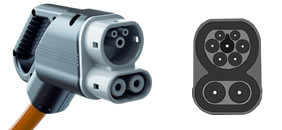
Rapid charging enables longer journeys by adding as much range as possible in the shortest amount of time. Charging power will decrease significantly after 80% state-of-charge has been reached. A typical rapid charge therefore rarely exceeds 80% SoC. The rapid charge rate of an EV depends on the charger used and the maximum charging power the EV can handle. The table below shows all details for rapid charging the Audi Q4 e-tron 35.
- Max. Power: maximum power provided by charge point
- Avg. Power: average power provided by charge point over a session from 10% to 80%
- Time: time needed to charge from 10% to 80%
- Rate: average charging speed over a session from 10% to 80%
| Combined Charging System (CCS Combo 2) |
|---|
 |
| Charging Point | Max. Power | Avg. Power | Time | Rate |
|---|---|---|---|---|
| CCS (50 kW DC) | 50 kW | 40 kW † | 57 min | 210 km/h |
| CCS (100 kW DC) | 100 kW | 70 kW † | 33 min | 360 km/h |
| CCS (150 kW DC) | 145 kW † | 90 kW † | 26 min | 460 km/h |
| This vehicle does not support Autocharge |
|---|
| This vehicle supports Plug & Charge |
† = Limited by charging capabilities of vehicle
Autocharge: allows for automatic initiation of a charging session at supported CCS charging stations.
Plug & Charge: allows for automatic initiation of a charging session at supported CCS charging stations in accordance with ISO 15118.
Actual charging rates may differ from data shown due to factors like outside temperature, state of the battery and driving style.
Audi Claimed Specifications
The table below shows the claimed specifications from the manufacturer for charging the Audi Q4 e-tron 35. The specifications can differ from the table above for a variety of reasons. If real-world charge tests are available, these differences can be signifcant. If no real-world tests are available, the table above will be based on the manufacturer specifications as per the table below.
- Max. Power: maximum charge power during charging session
- Charge From: battery percentage (% SoC) where charging session is started
- Charge To: battery percentage (% SoC) where charging session is ended
- Time: time needed for charging session
| Audi Claimed Specifications |
|---|
| Max. Power | Charge From | Charge To | Time |
|---|---|---|---|
| 145 kW | 10 % | 80 % | 25 min |
Dimensions and Weight
| Length | 4588 mm |
| Width | 1865 mm |
| Width with mirrors | 2108 mm |
| Height | 1632 mm |
| Wheelbase | 2764 mm |
| Weight Unladen (EU) | 1990 kg |
| Gross Vehicle Weight (GVWR) | 2500 kg |
| Max. Payload | 585 kg |
| Cargo Volume | 520 L |
| Cargo Volume Max | 1490 L |
| Cargo Volume Frunk | 0 L |
| Roof Load | 75 kg |
| Tow Hitch Possible | Yes |
| Towing Weight Unbraked | 750 kg |
| Towing Weight Braked | 1000 kg |
| Vertical Load Max | 75 kg |
About this Vehicle
# 2026 Audi Q4 e-tron Overview
The Audi Q4 e-tron represents a compelling entry point into the premium electric SUV segment, combining German engineering with practical everyday usability. This midsize luxury electric SUV targets environmentally conscious buyers seeking a balance between performance, range, and affordability without compromising on brand prestige. The Q4 e-tron lineup features Audi’s signature design language with a modern, aerodynamic profile that emphasizes efficiency and sophistication. Available in both standard and Sportback variants, the Q4 e-tron distinguishes itself through its dual powertrain options, advanced technology integration, and the legendary quattro all-wheel drive system on higher trims. The model matters significantly in today’s EV landscape as it democratizes premium electric mobility, offering buyers a genuine alternative to Tesla’s Model Y while delivering the refinement and technology Audi is known for.
The 2026 Audi Q4 e-tron comes in multiple configurations, with the 45 e-tron and 55 e-tron quattro powertrains providing flexibility for different driving needs. The Q4 e-tron features Audi’s MMI touch display with wireless Apple CarPlay and Android Auto, heated steering wheel options, and SONOS Premium sound systems on higher trims. The Q4 e-tron’s fine-tuned suspension delivers an engaging driving experience while maintaining comfort, and the regenerative braking system offers three selectable levels via steering wheel paddles for enhanced control and efficiency.
2026 Audi Q4 e-tron Performance and Driving Experience
The Audi Q4 e-tron delivers responsive acceleration and refined handling that reflects its premium positioning. The 45 e-tron produces 282 horsepower with rear-wheel drive, offering smooth, linear power delivery ideal for daily driving. The performance-focused 55 e-tron quattro elevates the experience with 335 horsepower and dual electric motors providing standard all-wheel drive, enabling more dynamic acceleration and enhanced traction in varied conditions. The Q4 e-tron’s suspension geometry, infused with Audi DNA, balances sportiness with comfort, while the regenerative braking system allows drivers to customize energy recovery through three distinct levels or automatic mode via the MMI interface.
Real-world driving impressions of the Q4 e-tron highlight its composed highway manners, responsive steering, and predictable handling characteristics. The Q4 e-tron’s electric powertrain delivers instant torque, making city driving effortless, while the refined cabin insulation minimizes road and wind noise at highway speeds.
| Specification | 45 e-tron | 55 e-tron quattro |
|---|---|---|
| 0-60 mph | ~6.7 sec | ~5.4 sec |
| Top Speed | 112 mph | 112 mph |
| Power Output | 282 hp | 335 hp |
| Drivetrain | RWD | AWD quattro |
2026 Audi Q4 e-tron Range and Battery Specifications
The Audi Q4 e-tron offers impressive EPA-estimated range that varies by powertrain configuration. The 45 e-tron delivers 288 miles of EPA-estimated range, making it the optimal choice for maximizing distance on a single charge. The 55 e-tron quattro achieves 258 miles of EPA-estimated range, with the all-wheel drive system accounting for the modest reduction. Real-world range depends on driving style, weather conditions, terrain, and highway versus city driving patterns. Cold temperatures can reduce range by 20-30 percent, while aggressive acceleration and highway speeds above 70 mph also impact efficiency.
The Q4 e-tron utilizes an 82 kWh battery pack (77 kWh usable), providing substantial energy storage for extended driving. The Q4 e-tron’s battery chemistry and thermal management system ensure consistent performance across varying conditions. Energy efficiency metrics for the Q4 e-tron range from 3.6 to 3.7 miles per kilowatt-hour, demonstrating competitive efficiency in the premium electric SUV segment.
| Range Metric | 45 e-tron | 55 e-tron quattro |
|---|---|---|
| EPA Range | 288 miles | 258 miles |
| Real-World Range | ~270 miles | ~240 miles |
| Battery Capacity | 82 kWh (77 kWh usable) | 82 kWh (77 kWh usable) |
| Efficiency | 3.6-3.7 mi/kWh | 3.6-3.7 mi/kWh |
2026 Audi Q4 e-tron Charging Times and Options
The Audi Q4 e-tron supports multiple charging scenarios to accommodate various lifestyles. Home charging via Level 2 (240V) provides convenient overnight charging, while DC fast charging enables rapid top-ups during road trips. The Q4 e-tron accepts up to 175 kW DC fast-charging speeds, allowing drivers to reach 80 percent battery capacity in approximately 24-28 minutes. The Q4 e-tron’s charging port is located on the right side rear, and the vehicle is compatible with major charging networks across North America.
| Charging Method | Time | Speed |
|---|---|---|
| Level 1 (120V) | ~40 hours | ~1.4 kW |
| Level 2 (240V/7kW) | ~13 hours | 7 kW |
| Level 2 (240V/11kW) | ~8 hours | 11 kW |
| DC Fast Charge (10-80%) | 24-28 min | up to 175 kW |
2026 Audi Q4 e-tron vs Competitors
The Audi Q4 e-tron competes directly with the Tesla Model Y, BMW iX xDrive40, and Hyundai Ioniq 5. Compared to the Model Y, the Q4 e-tron offers superior interior refinement and technology integration, though Tesla maintains a charging network advantage. Against the BMW iX, the Q4 e-tron provides better efficiency and lower pricing while delivering comparable performance. The Hyundai Ioniq 5 matches the Q4 e-tron’s charging speed but offers less premium cabin materials. The Q4 e-tron distinguishes itself through legendary Audi build quality, the quattro all-wheel drive system, and competitive EPA range figures that rival or exceed comparable competitors.
Frequently Asked Questions
Related Vehicles
View All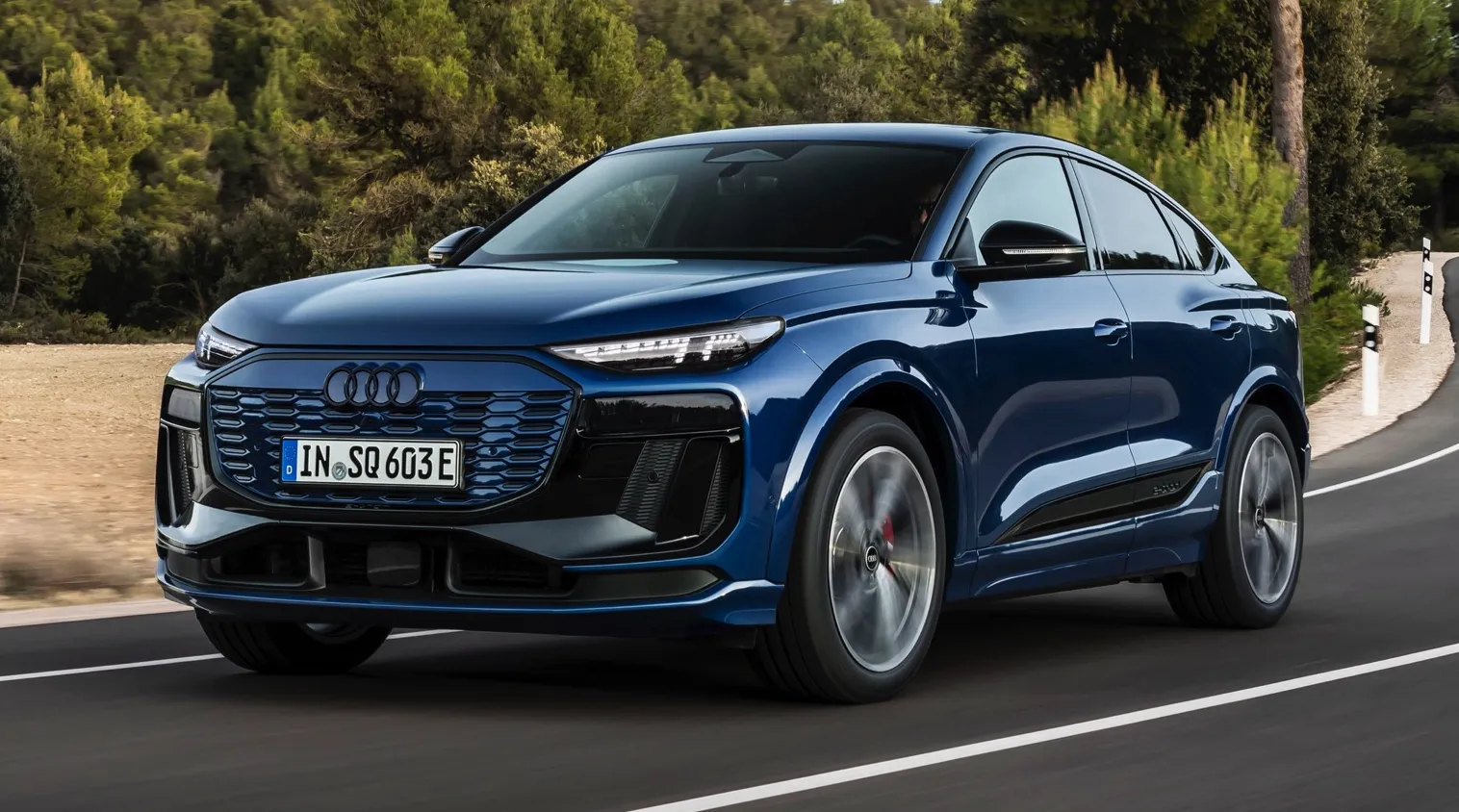 Audi
Audi
Audi SQ6 e-tron Sportback
 Audi
Audi
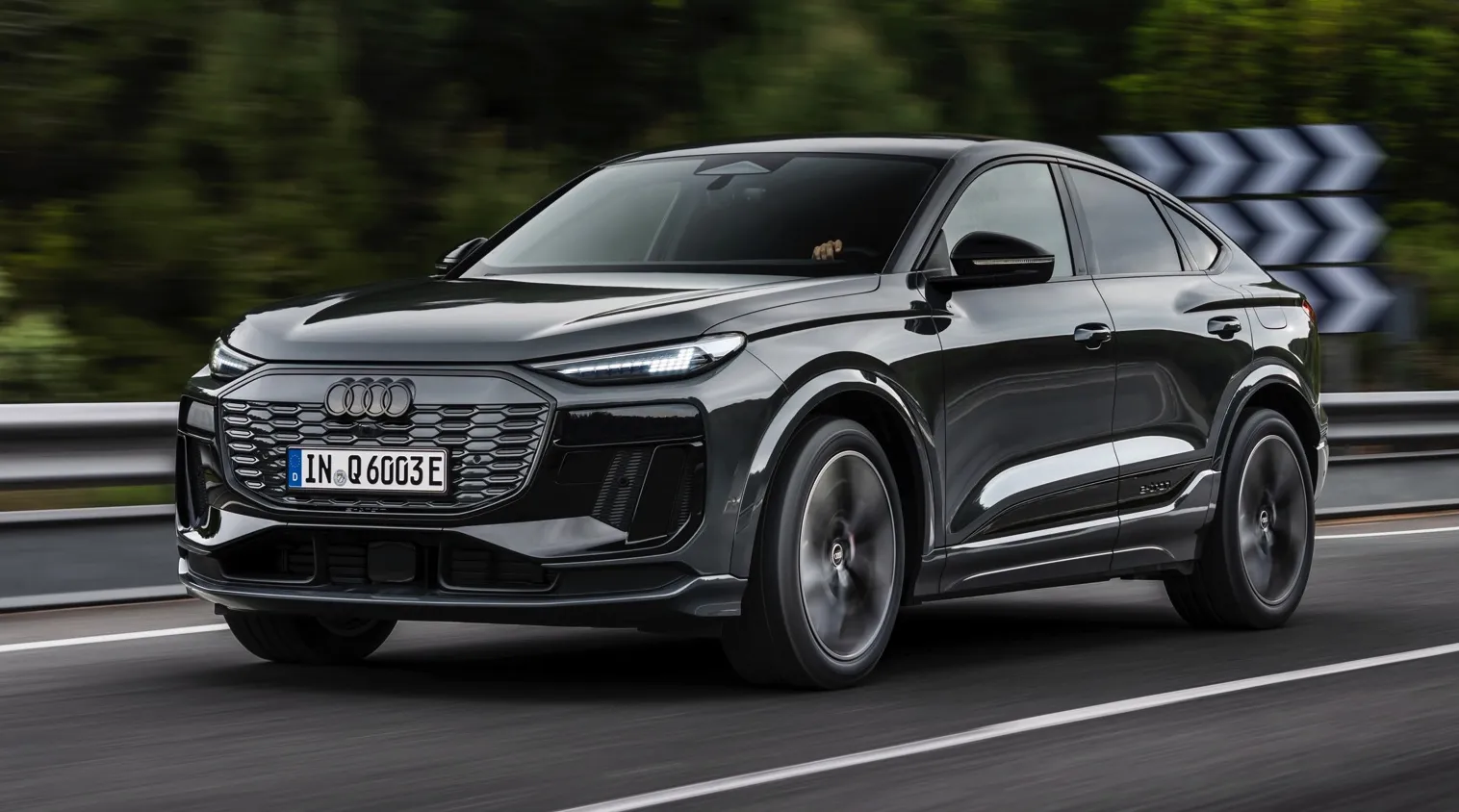
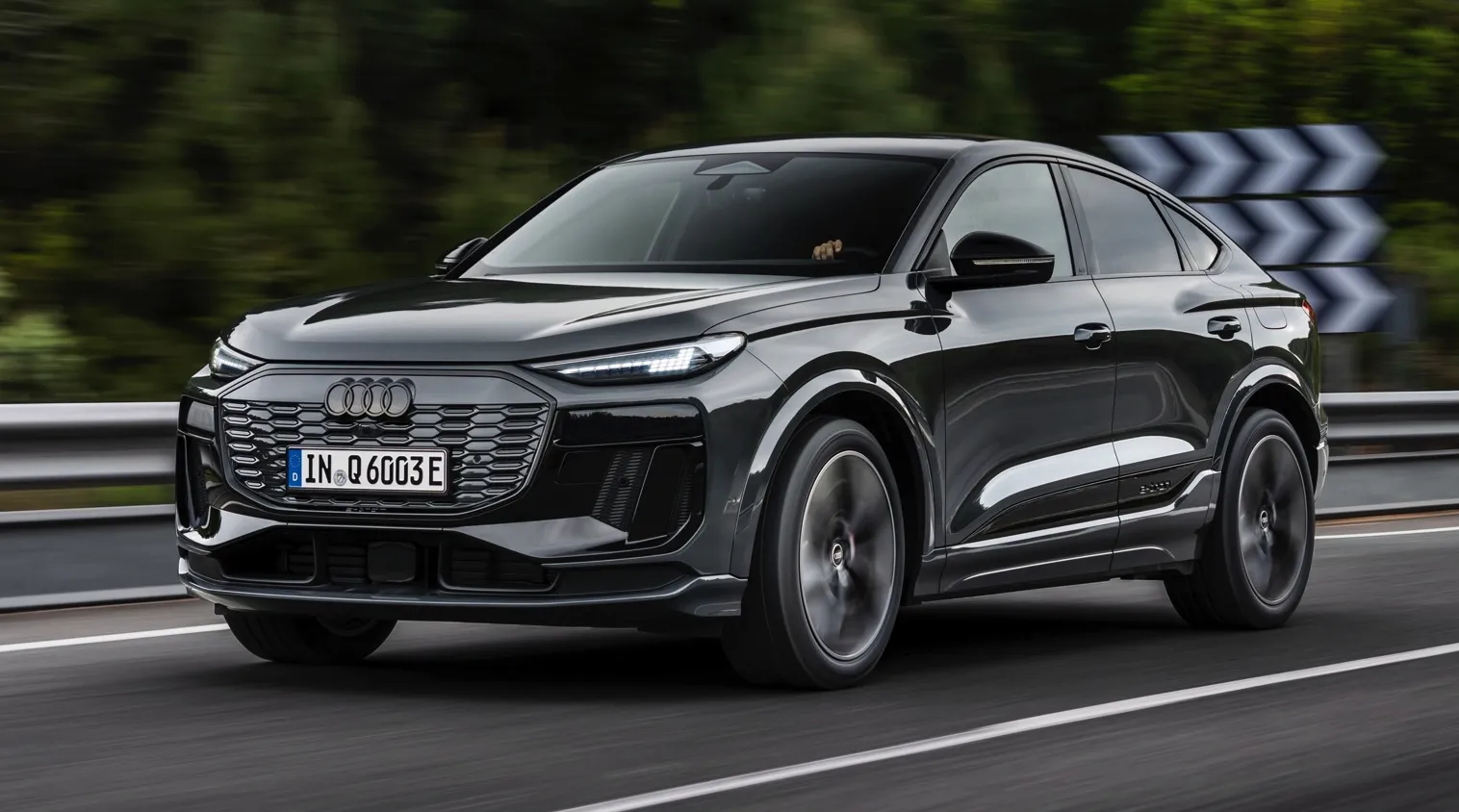
Audi Q6 e-tron Sportback quattro
 Audi
Audi
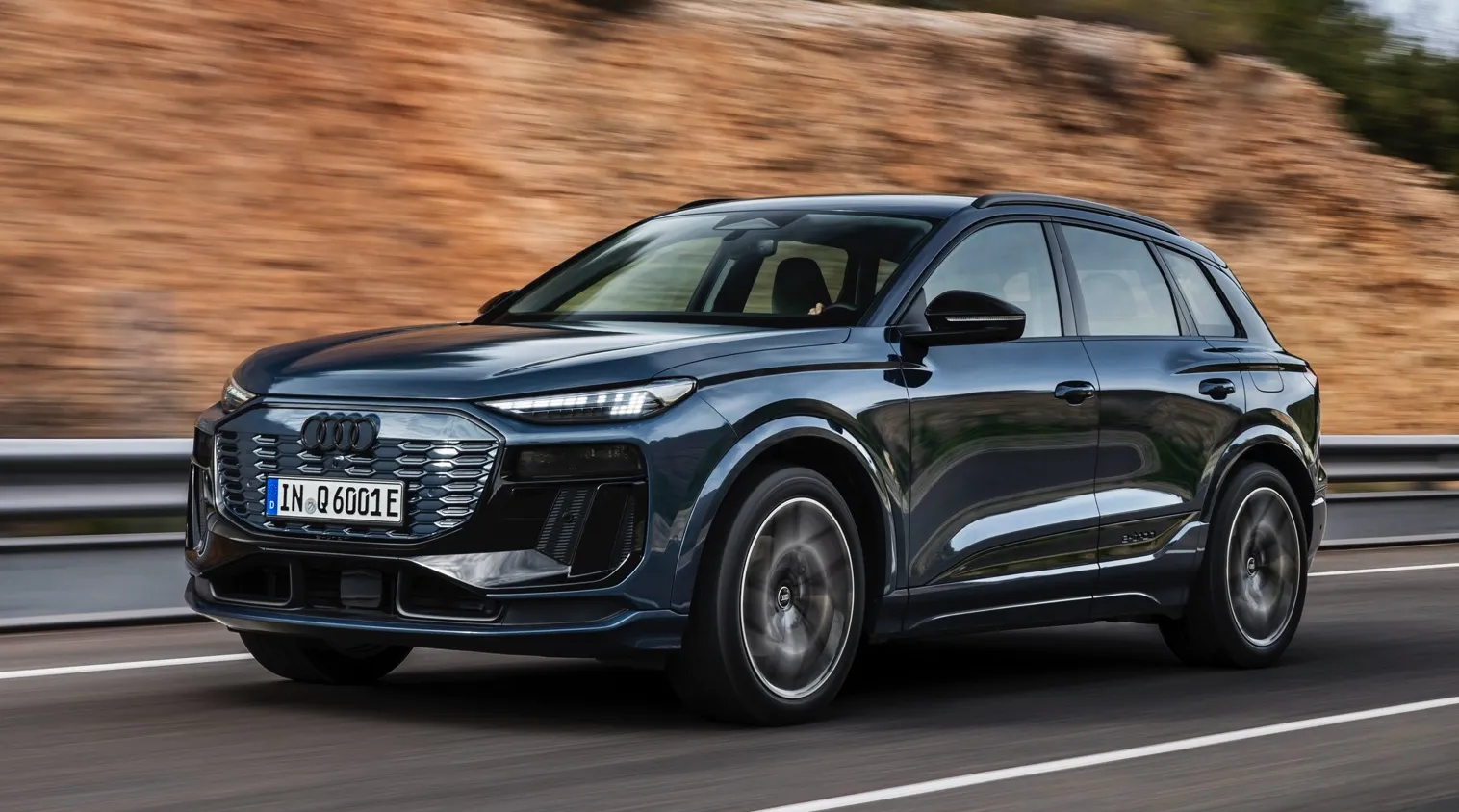
Audi Q6 e-tron
 Audi
Audi