TL;DR
Tesla Home Charging in 2026 is the foundation of practical EV ownership. A properly installed 48A Level 2 EV charger adds 55–75 km of range per hour, cuts charging costs by up to 70% compared to DC fast charging, and eliminates daily infrastructure dependency.
However, breaker sizing, 100A vs 200A service panels, permit timelines, and installation quality determine whether your setup is smooth or expensive.
If you own property and drive more than 12,000–15,000 km per year, home charging is not optional — it is infrastructure.
Introduction: Why Tesla Home Charging Is Essential in 2026
Tesla Home Charging has evolved from a convenience feature into a core ownership requirement. As public charging prices rise and DC fast chargers become busier in urcharging at home defines the real costs the real cost and experience of owning a Tesla.
Whether you drive a Tesla Model 3, Tesla Model Y, Tesla Model S, Tesla Model X, or Tesla Cybertruck, your satisfaction will depend more on your charging setup than on acceleration figures.
This guide explains:
- Tesla Wall Connector installation cost
- 32A vs 48A charging differences
- 100A vs 200A electrical panels
- Breaker sizing and wiring requiremenSolar and Powerwall integration model
- Solar and Powerwall integration
- Real ROI calculations
- Permit and inspection realities
No marketing language — just engineering and ownership logic.
What Tesla Home Charging Actually Means
Tesla home charging refers to AC charging using:
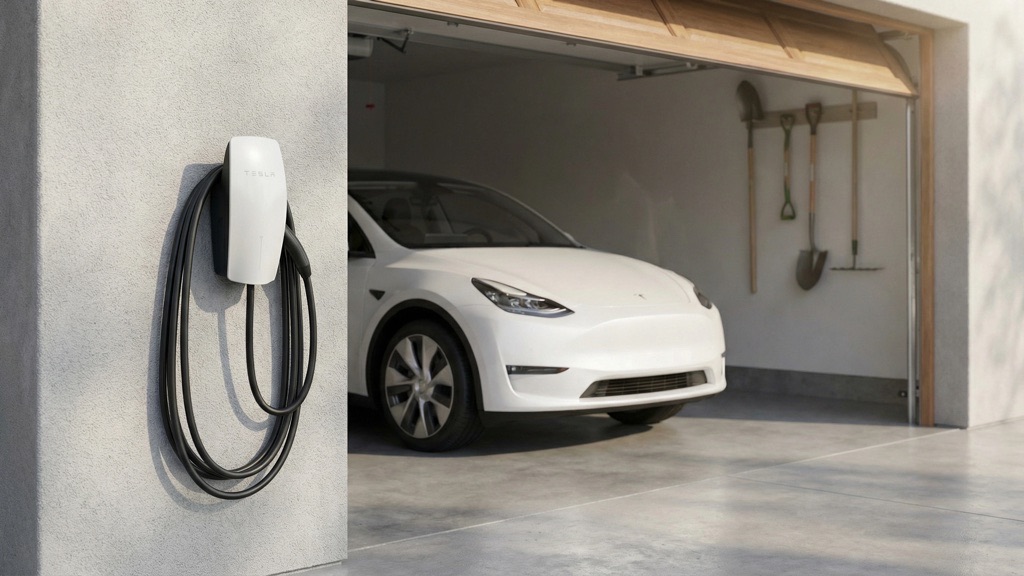
- Tesla Wall Connector (hardwired Level 2 EV charger)
- Tesla Mobile Connector
- Third-party Level 2 chargers
It does not include DC Supercharging.
AC charging is slower than DC, but:
- Thermally gentler
- Better for battery longevity
- Significantly cheaper
- Ideal for overnight use
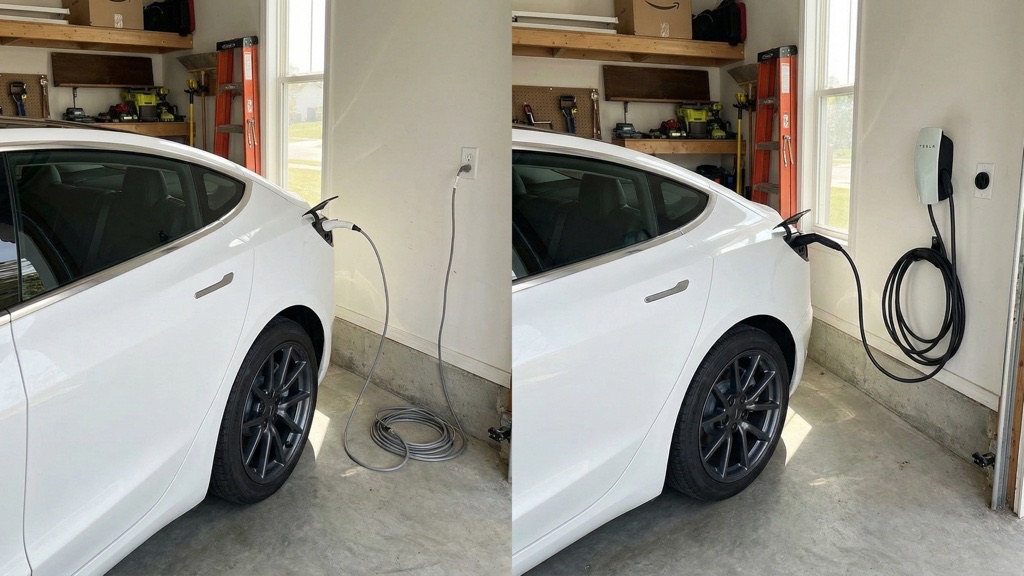
Level 1 vs Level 2 EV Charging
| Type | Voltage | Power | Range Added per Hour | Practical Use |
|---|---|---|---|---|
| Level 1 | 120V | 1.3–1.9 kW | 5–8 km | Emergency only |
| Level 2 (32A) | 240V | 7.4 kW | 35–45 km | Standard home |
| Level 2 (40A) | 240V | 9.6 kW | 45–55 km | Strong option |
| Level 2 (48A) | 240V | 11.5 kW | 55–70 km | Optimal |
| 3-Phase (EU) | 400V | 11–22 kW | 60–75 km | High-end residential |
For most U.S. homes, 48A Tesla charging requires a 60A breaker due to the continuous load rule.
Tesla Wall Connector Installation (Gen 3)
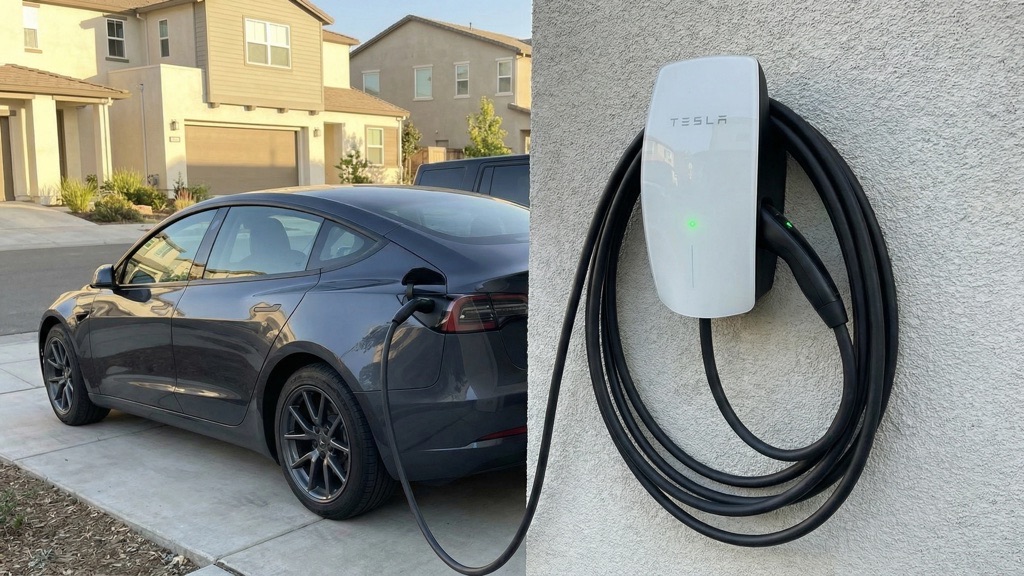
The Tesla Wall Connector is the most robust long-term solution.
Technical Specifications (U.S. Typical)
| Parameter | Value |
|---|---|
| Max Output | 48A |
| Max Power | 11.5 kW |
| Required Breaker | 60A |
| Continuous Load Rule | 125% |
| Typical Wiring | 6 AWG copper |
| Charging Efficiency | 92–95% |
Continuous Load Rule Explained
Under the National Electrical Code (NEC), EV chargers are treated as continuous loads.
48A × 125% = 60A breaker required.
A 48A setup on a 50A breaker is not code-compliant.
Breaker Size, Wire Gauge, and Charging Output

| Breaker | Max Charging | Wire Gauge | Best For |
|---|---|---|---|
| 40A | 32A | 8 AWG | 100A panels |
| 50A | 40A | 6–8 AWG | Balanced setup |
| 60A | 48A | 6 AWG | 200A panels |
| 70A+ | Rare residential | 4–6 AWG | Specialty installs |
Correct breaker sizing affects:
- Safety
- Insurance validity
- Inspection approval
- Long-term reliability
100A vs 200A Electrical Panel: Real Constraints
200A Service
- Usually supports 48A charging
- Minimal load conflict
- Recommended for dual-EV homes
100A Service
Common in older houses.
Limitations:
 Tips & Tricks
Used Electric Car Battery Life Explained (2026 Guide)
Buying a used electric car sounds smart — until one question ruins the mood: “What if the battery is already...
 Tips & Tricks
Is Buying a Used Electric Car Worth It in the USA in 2026?
Buying a used electric car sounds like a smart financial move — until battery anxiety kicks in. What if the...
 Tips & Tricks
What Happens at 0% Battery in an Electric Car? (2026 Guide)
TL;DR — Quick Answer When your electric car shows 0% battery, it is not empty. Most EVs keep a hidden...
- HVAC + oven + dryer + EV may exceed load capacity
- 48A may fail the load calculation
- Panel upgrade cost: $1,500–$3,500
Load Management Alternative
Smart load management can dynamically reduce EV current when the total house load spikes.
This often allows safe installation without upgrading to 200A service.
Tesla Charging Time at Home by Model
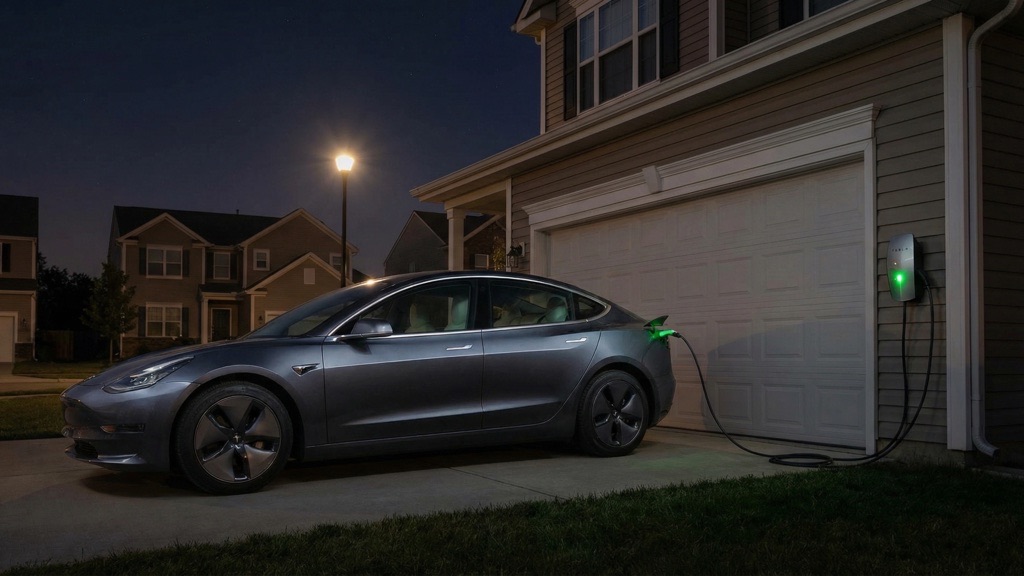
Realistic 10–80% charging times using Level 2 charging.
| Model | Usable Battery | 32A (7.4 kW) | 48A (11.5 kW) | 0–100% (48A) |
|---|---|---|---|---|
| Model 3 RWD | ~57 kWh | ~5.5 h | ~3.8 h | ~6 h |
| Model 3 Long Range | ~75 kWh | ~7 h | ~4.8 h | ~8 h |
| Model Y Long Range | ~75 kWh | ~7 h | ~4.8 h | ~8 h |
| Model S | ~95 kWh | ~9 h | ~6.2 h | ~10 h |
| Cybertruck AWD | ~120 kWh | ~11 h | ~7.8 h | ~12–13 h |
Key Insight
48A charging is ~30–35% faster than 32A.
However, for daily top-ups (20–50 km), even 32A replenishes usage in 1–2 hours.
Tesla Wall Connector vs NEMA 14-50 Outlet
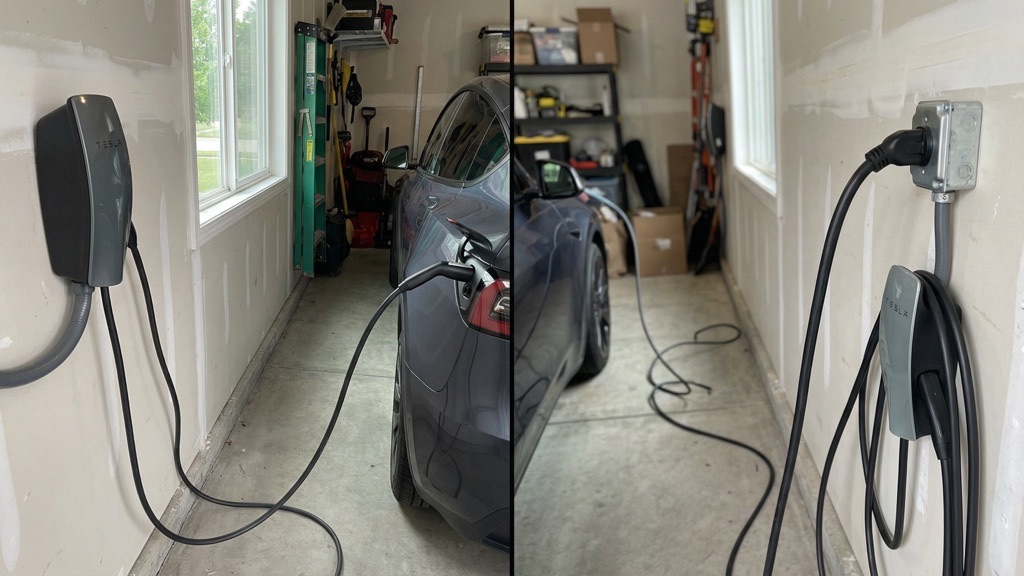
| Factor | Wall Connector | NEMA 14-50 |
|---|---|---|
| Max Output | 48A | 40A |
| Breaker | 60A | 50A |
| Smart Features | Yes | No |
| Plug Wear | None | Possible |
| Outdoor Durability | Strong | Depends on the enclosure |
| Future EV Ready | Excellent | Moderate |
Wall Connector is more durable and future-proof.
NEMA 14-50 is a practical, lower-cost alternative.
Tesla Wall Connector Installation Cost (2026)
| Scenario | Estimated Cost |
|---|---|
| Short-run install | $500–$900 |
| Moderate wiring distance | $900–$1,500 |
| Panel upgrade required | $2,000–$4,000 |
| Outdoor trenching | +$500–$2,000 |
National average: ~$1,200.
Permit timeline: 1–4 weeks, depending on jurisdiction.
HOA approvals may extend this significantly.
Tesla Charging Cost Per kWh
| Charging Type | Cost per kWh | Cost per 100 km |
|---|---|---|
| Night home rate | $0.10 | ~$1.80 |
| Standard home rate | $0.20 | ~$3.50 |
| Supercharger | $0.40 | ~$7–8 |
| Third-party DC | $0.55 | ~$9–11 |
Home charging typically cuts per-km cost by 50–70%.
ROI: When Does Tesla Home Charging Pay Off?
Assumptions:
- 18 kWh / 100 km consumption
- $0.30/kWh savings vs DC
- $1,200 installation
Savings per 1,000 km:
18 × $0.30 = $5.40
Break-even distance:
$1,200 ÷ $5.40 ≈ 22,000 km
Most drivers exceed this within 1–2 years.
Higher mileage → faster payback.
Solar Panels and Powerwall Integration
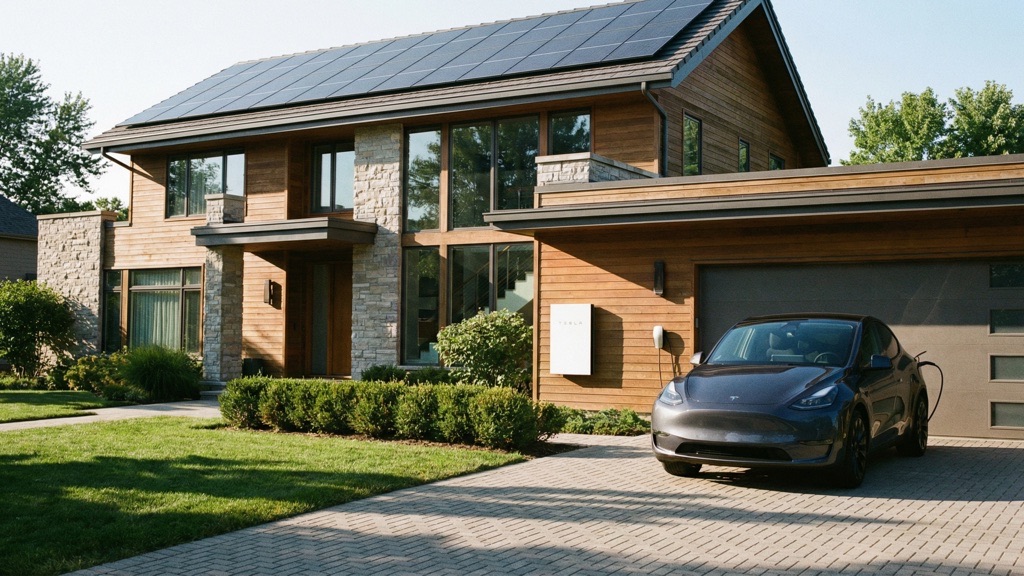
Integration with Tesla Powerwall can:
- Store excess solar production
- Enable solar-only vehicle charging
- Provide backup during outages
- Reduce peak-rate grid usage
Typical Powerwall installed cost: $8,000–$12,000.
Solar ROI depends heavily on:
- Electricity pricing
- Net metering availability
- Regional sunlight
Solar increases energy independence.
It does not automatically guarantee financial optimization.
Charging Efficiency and Energy Loss
Home AC charging efficiency: ~92–95%.
Loss sources:
- Wiring heat (1–2%)
- AC/DC conversion (3–5%)
- Battery conditioning (1–3%)
Example:
55 kWh drawn from grid → ~51–52 kWh stored.
This is normal and within engineering expectations.
Real-World Scenarios
Suburban Home, 200A Panel, 20,000 km/year
- 48A installation
- Night tariff pricing
- Charging 3–4 times per week
Result:
Fast ROI (~1 year) and near-zero charging friction.
Older Home, 100A Panel
- 32A installation
- No panel upgrade
- 2-hour nightly top-ups
Result:
Fully usable. 48A not strictly necessary.
Dual EV Household
- Two Teslas
- Power-sharing Wall Connectors
- 200A service recommended
Result:
Infrastructure becomes a long-term household asset.
Long-Term Reliability
Tesla Wall Connector:
- No scheduled maintenance
- Firmware updates via Wi-Fi
- Low failure rate when properly installed
Most issues arise from improper breaker sizing or undersized wiring — not hardware defects.
Expert Insight
Tesla ownership satisfaction correlates strongly with charging autonomy.
Drivers who install proper Level 2 Tesla Home Charging report dramatically fewer complaints than those dependent on public networks.
The vehicle is electric.
Ownership is logistical.
Final Verdict: Tesla Home Charging in 2026
Tesla Home Charging in 2026 is not an accessory — it is operational infrastructure.
- 32A is sufficient for most drivers.
- 48A is convenience and future-proofing.
- Panel capacity determines feasibility.
- Solar increases autonomy but complicates ROI.
If you plan to keep your Tesla more than two years, installing a properly sized Level 2 charger is financially justified and operationally transformative.
Without it, ownership depends on infrastructure.
With it, the car works exactly as intended.
FAQ
What breaker size do I need for Tesla Home Charging?
A 48A setup requires a 60A breaker due to the 125% continuous load rule. Lower breaker sizes reduce charging output.
Is 48A charging necessary?
Not for most drivers. 32A covers daily usage comfortably. 48A benefits high-mileage or dual-EV households.
How long does Tesla charging at home take?
Typically 4–8 hours for 10–80%, depending on model and amperage.
Can I install the Tesla Wall Connector myself?
A licensed electrician should perform hardwiring to meet code and insurance requirements.
Does home charging damage the battery?
No. Level 2 AC charging is gentler than repeated DC fast charging.