2026 XPeng P7+ Interior, Design, and Features Review
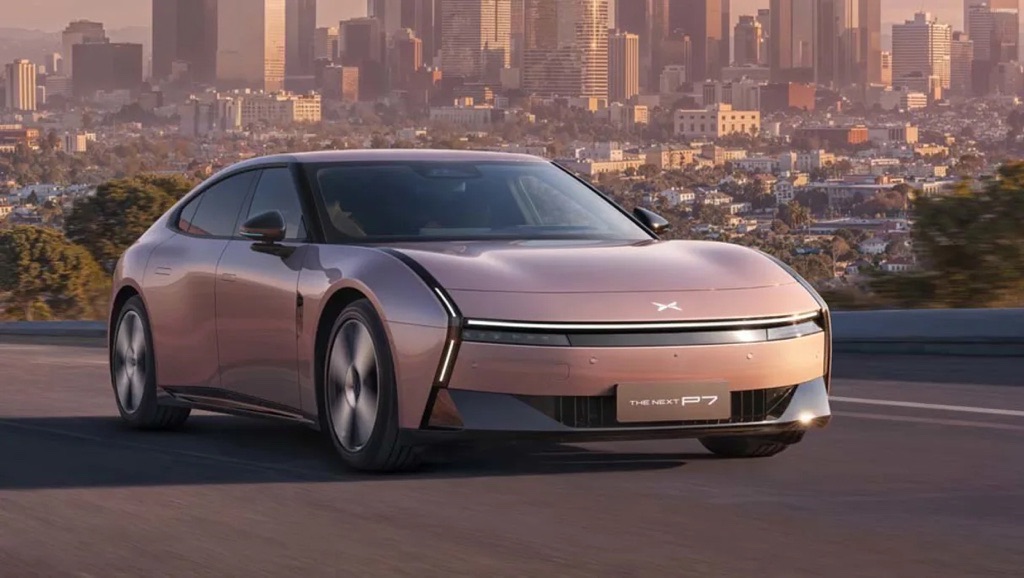
When the XPeng P7+ entered the market, it immediately signaled a turning point — not just for XPeng, but for the wider electric vehicle industry. Like Tesla, XPeng believes that the future of advanced driver assistance does not necessarily depend on expensive hardware such as LiDAR. Instead, the brand is betting heavily on vision-based systems powered by artificial intelligence.
Positioned as a family-oriented electric liftback, the P7+ represents a complete rethink of XPeng’s strategy. It combines a clean, camera-based assisted driving system with impressive range, ultra-fast charging, and an unexpectedly accessible price point. Although the model debuted several months ago, we’ve only now had the chance to examine it in detail. The question remains: is the XPeng P7+ a genuine Tesla alternative, or is its popularity driven mainly by aggressive pricing?
A New Vision-Based Approach to Assisted Driving
XPeng has long been known for pushing driver-assistance technology forward, traditionally relying on LiDAR sensors for its XNGP (Navigation Guided Pilot) system. With the P7+, that approach has been completely abandoned. Instead, the car relies on twelve external cameras, twelve ultrasonic sensors, and three millimeter-wave radar units.
This setup closely mirrors Tesla’s philosophy. XPeng argues that roads, signage, and traffic systems are designed for human vision, making cameras the most natural input for AI-based perception. Supporting this hardware is XPeng’s in-house artificial intelligence system, powered by two Nvidia Orin X processors delivering a combined 508 TOPS of computing power.
Crucially, XPeng now offers its most advanced assisted driving features as standard across the P7+ range — a major shift from earlier models where such technology was reserved for expensive trims. Independent testing in dense urban traffic shows a noticeable improvement in smoothness and decision-making, with driving behavior that feels far more human than previous generations.
XPeng plans to introduce this system in Europe by late 2025 or early 2026, although for now, full functionality remains exclusive to the Chinese market.
Powertrain, Range, and Ultra-Fast Charging
The XPeng P7+ is built on the company’s SEPA 2.0 platform, featuring an advanced 800-volt electrical architecture. This allows for extremely rapid charging speeds. While early versions used a 3C battery, XPeng has since introduced a 5C battery pack, showcased at the Shanghai Auto Show.
With this upgrade, the P7+ can charge from 10 to 80 percent in as little as 12 minutes, placing it among the fastest-charging EVs in the world. XPeng is even rolling out its own 800 kW S5 fast chargers to fully exploit this capability.
 Reviews
Top 10 Electric Motorcycles of 2026 (Range, Power & Price)
TL;DR — Top Electric Motorcycles of 2026 Buy an electric motorcycle in 2026 if you want: Real-world range up to...
 Reviews
Arc Vector Review (2026): The World’s Most Advanced Electric Motorcycle
Electric motorcycles in 2026 have finally matured into a real alternative to gasoline bikes. Most brands now focus on affordability,...
 Reviews
BYD Atto 3 vs MG ZS EV — Best Budget Electric SUV (2025 Full Comparison)
The budget electric SUV segment is rapidly growing across Europe and Asia, with two models dominating customer demand: the BYD...
The P7+ is available in two rear-wheel-drive versions, both using LFP (Lithium Iron Phosphate) batteries:
-
Long Range Max
60.7 kWh battery, 180 kW motor, 0–100 km/h in 6.8 seconds, energy consumption of just 11.6 kWh/100 km, curb weight of 1,967 kg. -
Ultra-Long Range Max
76.3 kWh battery, 230 kW motor, 0–100 km/h in 5.9 seconds, and a claimed 710 km CLTC range, despite a higher curb weight of 2,037 kg.
Interior Space and Comfort
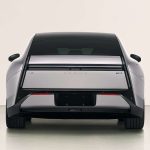
Despite its sleek liftback silhouette and impressive 0.206 Cd drag coefficient, the XPeng P7+ is clearly designed with families in mind. Measuring 5,056 mm in length, it offers generous cabin space and a commanding road presence.
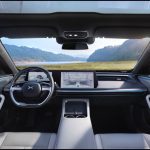
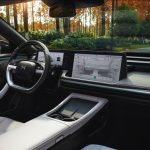
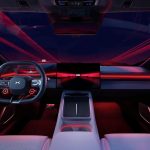
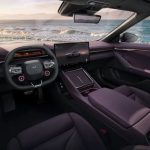
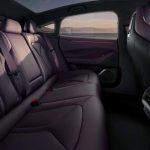
The interior quality marks a major step forward for XPeng. Even in China, where pricing starts at the equivalent of around €23,000, the P7+ features perforated leather seats, soft-touch materials throughout, and excellent overall fit and finish. The cabin feels far more premium than earlier XPeng models, easily rivaling established European brands.
From the driver’s seat, the layout feels intuitive and familiar, with solid, tactile controls and minimal clutter. Rear passengers are treated to heated, ventilated, massaging seats with electric recline, pushing the P7+ firmly into luxury territory.
Cargo space is equally impressive: 725 liters with the seats up and 2,221 liters when folded flat — enough to accommodate bulky luggage or even serve as a full-length sleeping area. While there’s no front trunk, underfloor rear storage compensates. One notable omission is a parcel shelf, which XPeng will likely address before the European launch.
Technology, AI, and Design Identity
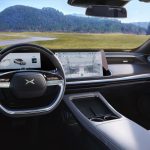
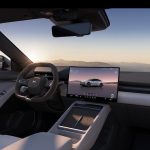
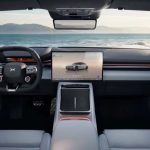
The P7+ features a thoroughly modern interior layout, centered around a 10.25-inch digital instrument cluster and a 15.6-inch floating infotainment display. Rear passengers also benefit from an 8-inch entertainment screen integrated into the center console.
Most vehicle functions can be controlled via voice using XPeng’s AI assistant, “Little P.” The system can identify who is speaking and from which seat, responding accordingly. XPeng even markets the P7+ as the “first car defined by artificial intelligence,” highlighting how deeply AI is integrated into vehicle control, energy management, and the digital cockpit.
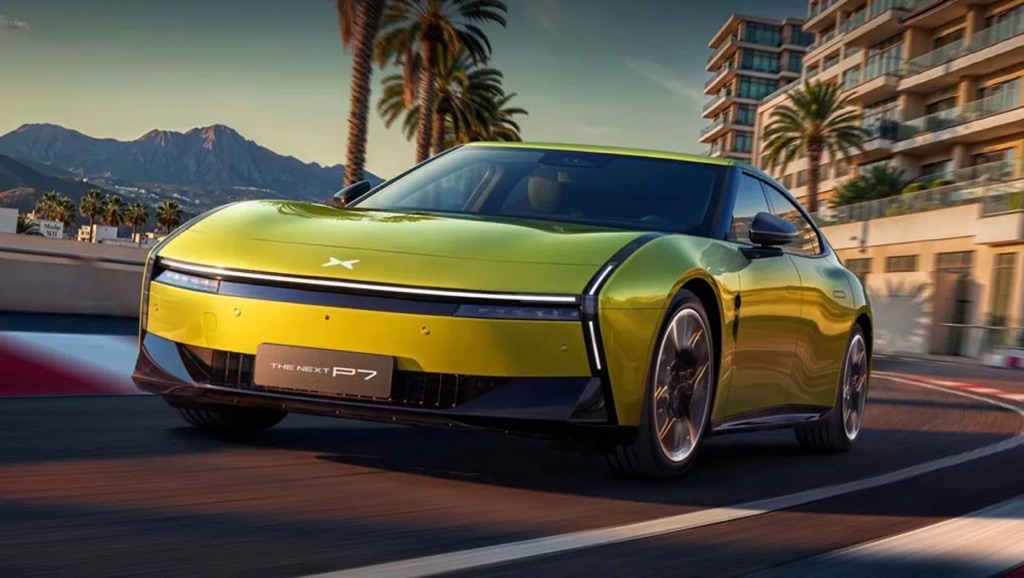
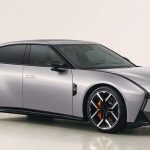
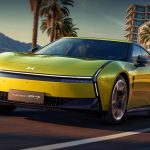
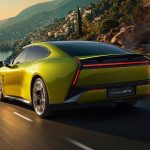
Visually, the P7+ is anything but anonymous. Its sculpted rear, wave-like body lines, and distinctive double-ended spoiler make it instantly recognizable. While the styling may divide opinions, it undeniably sets the P7+ apart from more conservative rivals.
Driving Experience
This is where the XPeng P7+ truly shines. The car feels composed, stable, and refined in all driving conditions. The suspension is tuned for comfort without becoming floaty, avoiding the overly soft setups often associated with earlier Chinese vehicles.
Acceleration from the 230 kW motor is strong but never aggressive. The car encourages a relaxed driving style, perfectly suited to family use. Power delivery is smooth, predictable, and confidence-inspiring.
Perhaps the most striking aspect of the driving experience is silence. Wind noise is virtually absent even at highway speeds, and tire noise remains subdued. Conversations are effortless at any speed, creating a calm, premium driving environment. Drivers transitioning from combustion vehicles may find the lack of noise initially deceptive, as speeds build effortlessly — but this is something most will quickly adapt to.
Ready for the Global Stage
The XPeng P7+ is far more than another Chinese EV. It represents a confident statement of intent. After its launch in China, the model toured major European automotive events, including the Paris Motor Show, Milan Design Week, and Frankfurt Auto Show.
European pricing will inevitably be higher due to tariffs. With the standard P7 starting at €49,600 in Germany, the P7+ is likely to arrive just under €60,000. To address this, XPeng has partnered with Magna in Austria to manufacture vehicles within Europe, reducing costs in the long term.
If XPeng can position the P7+ closer to €40,000, it could become one of the most compelling electric cars on the European market — offering more technology, comfort, and range than many rivals costing significantly more.
The 2026 XPeng P7+ marks a major leap forward for Chinese electric vehicles, combining a spacious premium interior, vision-based AI driving assistance, and cutting-edge 800V fast-charging technology. Powered by Nvidia Orin X chips and XPeng’s in-house XNGP system, the P7+ delivers smooth, human-like assisted driving without LiDAR. With up to 710 km of range, ultra-quiet driving, and family-focused comfort features usually reserved for luxury brands, the XPeng P7+ positions itself as one of the strongest Tesla alternatives heading to Europe in 2026.