
Understanding what it really costs to own for 5+ years is not.
In 2026, prices, battery sizes, and motor systems vary more than ever. Marketing focuses on range and power. Very few guides explain long-term maintenance cost in practical terms.
This article is based on real ownership patterns, workshop servicing trends, and long-term commuter use.
No hype. Just numbers that matter.
TL;DR (Read This First)
Average yearly maintenance cost
- Casual rider: $150–$300
- Daily commuter: $300–$500
- eMTB / heavy use: $400–$800
Biggest long-term expense: Battery (once every 3–5 years)
Cheapest to maintain: Hub motor commuter bikes
Most expensive to maintain: High-torque mid-drive mountain or cargo bikes
Typical cost per mile (5-year average):
~$0.10–$0.18 per mile
The motor is rarely the problem. Wear parts are.
Table of Contents
- What “Maintenance Cost” Actually Includes
- Battery Replacement Cost (ReMid-Drive vs Hub
- Motor & Electronics: Failure Rates Explained
- Drivetrain Wear: Mid-Drive vs Hub
- Brake & Tire Costs
- 5-Year Ownership Cost Calculator
- Cost Per Mile Breakdown
- E-Bike vs Car vs Regular Bike
- Who Spends the Least (and Most)
- FAQ
- Final Expert Verdict
What Maintenance Costs Actually Include
An e-bike is still a bicycle.
That means:
- Chain wear
- Brake pads
- Tires
- Occasional drivetrain parts
The electric system adds:
- Battery replacement (long-term)
- Possible electronics repair (rare with quality systems)
Most yearly cost comes from mechanical wear — not electronics.
Battery Replacement Cost (The Biggest Line Item)
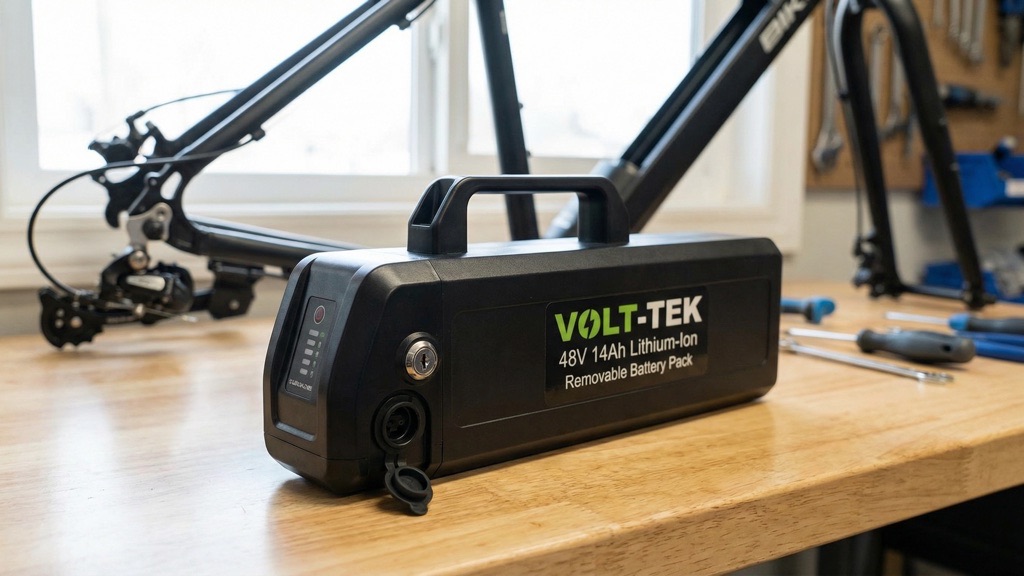
Most modern e-bikes use 400Wh–750Wh lithium-ion batteries.
2026 Replacement Prices
| Battery Size | Typical Cost |
|---|---|
| 400–500Wh | $400–$700 |
| 600–750Wh | $700–$1,000 |
| 800Wh+ | $900–$1,300 |
Real Lifespan
- 3–5 years average
- 500–1,000 full cycles
- Faster degradation in hot climates
If you ride 4,000 miles per year, expect one replacement during 5 years of ownership.
 Reviews
Tesla’s Real Battery Life: Advantages, Risks, and What Buyers Must Know in 2026
TL;DR Tesla’s Real Battery Life typically exceeds 300,000–500,000 km, with most vehicles losing only 10–15% capacity after 200,000 km. Modern...
 Reviews
Top 10 Luxury Electric Vehicles of 2025
Top 10 Luxury Electric Vehicles of 2025: Power, Prestige, and Performance The world of luxury electric vehicles (EVs) has entered...
 Reviews
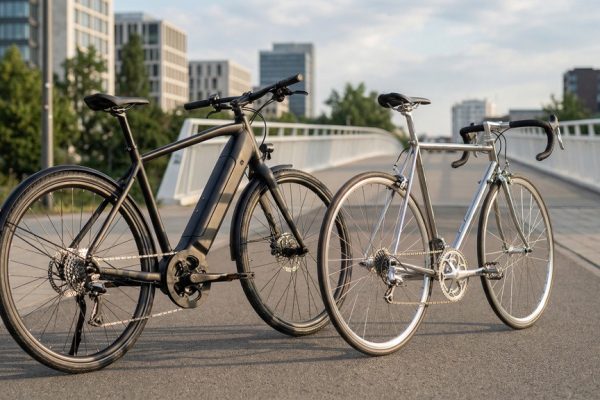
E-Bike vs Regular Bike: Is It Worth It in 2026?
Choosing between an electric bike and a regular bicycle sounds simple — until you actually try to decide. In 2026,...
Battery Cost Per Mile (Example)
$800 battery ÷ 20,000 miles
= $0.04 per mile
That’s usually lower than riders expect.
Proper storage (40–60% charge when unused) significantly reduces long-term cost.
Motor & Electronics: What Actually Fails?
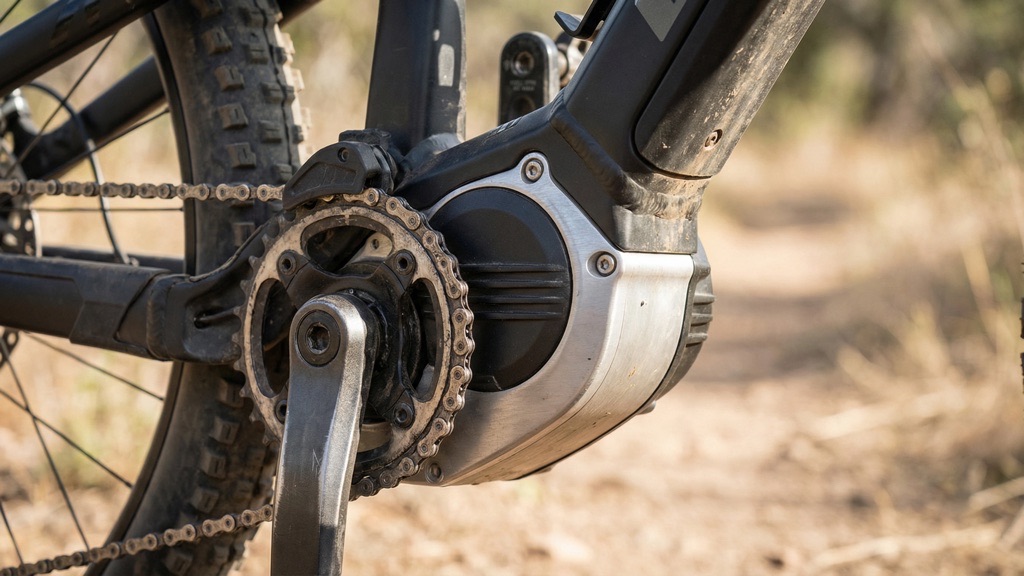
Quality systems from companies like
Bosch,
Shimano, and
BafangThey
are generally reliable.
Typical Motor Lifespan
10,000–30,000+ miles.
Motor replacement is uncommon unless:
- The bike is pressure-washed
- Connectors are damaged
- A low-quality system is used
If Something Fails
| Component | Replacement Cost |
|---|---|
| Motor | $500–$1,200 |
| Controller | $150–$400 |
| Display | $100–$300 |
Most riders never replace a motor during normal ownership.
Drivetrain Wear: Where Mid-Drives Cost More
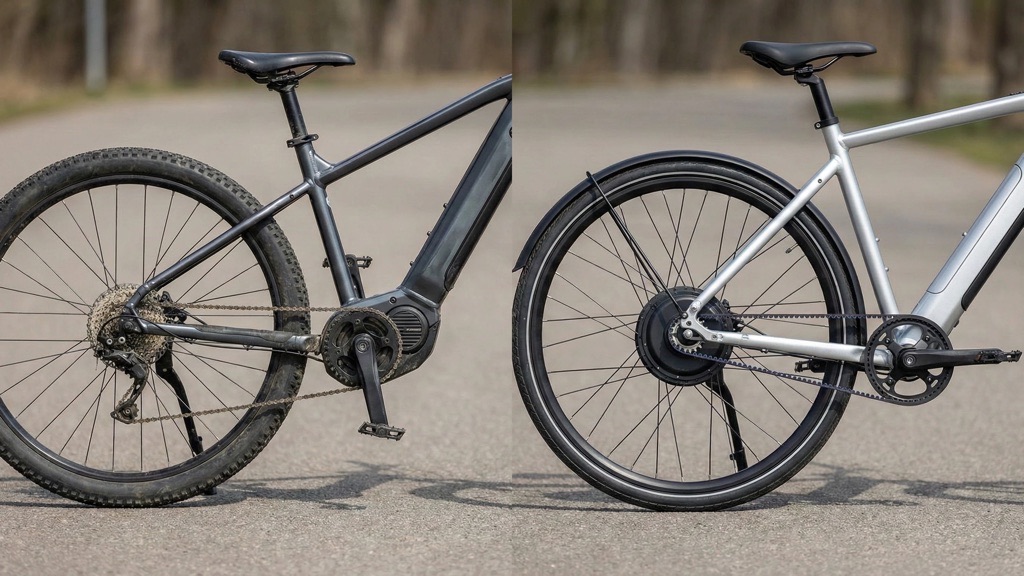
Mid-drive motors send power through the chain and cassette.
Hub motors power the wheel directly.
More torque through the chain = more wear.
Chain Life Comparison
| System | Chain Life | Cost |
|---|---|---|
| Hub motor | 2,000–3,000 miles | $25–$50 |
| Mid-drive | 1,000–1,800 miles | $30–$60 |
Over 5 Years (4,000 miles/year)
The mid-drive owner may replace:
- 6–10 chains
- 2–3 cassettes
Hub motor rider replaces fewer drivetrain parts.
This is the main long-term cost difference.
Brake Wear (Weight + Speed = Faster Consumption)
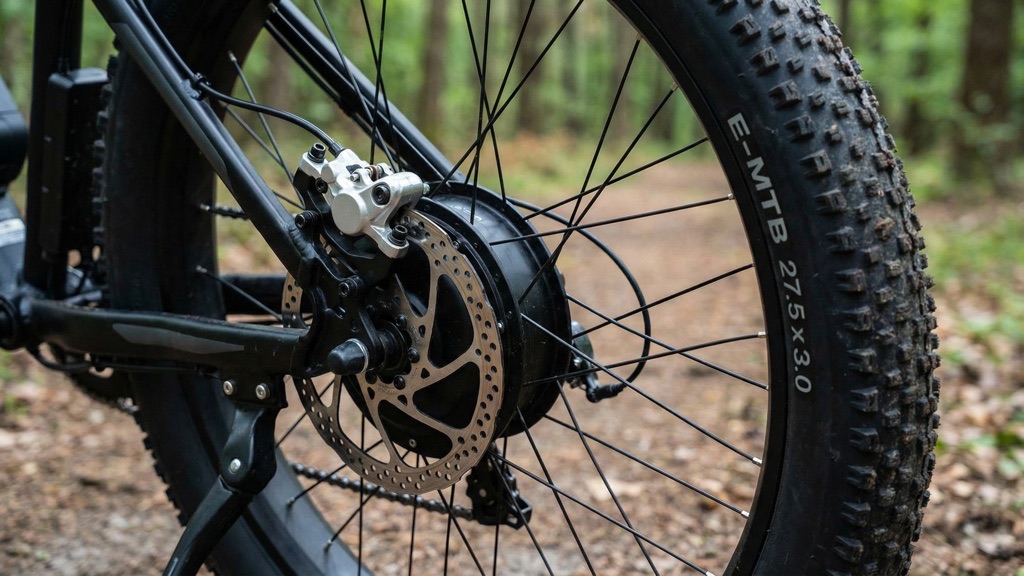
E-bikes are heavier and often ridden faster.
Brake Pad Life
- Commuter: 1,000–2,000 miles
- eMTB: 500–1,000 miles
Costs
- Pads: $20–$50 per wheel
- Rotors: $30–$80
Hydraulic systems cost more but provide better stopping power.
Tires & Routine Service
Tires wear faster due to weight.
- Commuter tires: $40–$90 each
- eMTB tires: $60–$120 each
Typical replacement interval:
2,000–4,000 miles.
Annual tune-up:
$80–$150.
5-Year Ownership Cost Calculator (Real Scenario)
Let’s model a daily commuter.
4,000 miles per year × 5 years = 20,000 miles
| Category | 5-Year Cost |
|---|---|
| Battery | $800 |
| Chains & cassette | $500 |
| Brakes | $400 |
| Tires | $450 |
| Misc service | $300 |
| Total | ~$2,450 |
Per Year:
~$490
Cost Per Mile:
$2,450 ÷ 20,000 = $0.12 per mile
This is dramatically lower than most urban car ownership.
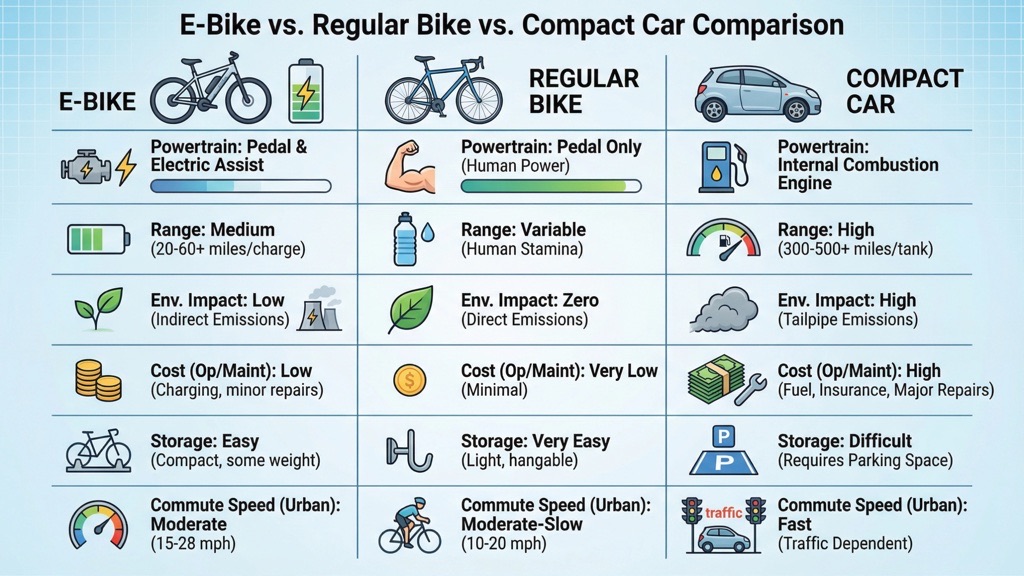
E-Bike vs Regular Bike vs Car
| Vehicle | Avg Annual Maintenance |
|---|---|
| Regular bike | $100–$250 |
| E-bike | $300–$600 |
| Car | $1,200–$2,000+ |
Even at the higher end, an e-bike remains one of the most cost-efficient transport tools available.
Where Your Money Actually Goes (5-Year Average)
- 30–35% → Battery
- 20–25% → Drivetrain
- 15–20% → Brakes
- 15–20% → Tires
- ~10% → Misc service
The motor is rarely the expensive part.
Who Spends the Least?
- Flat-terrain commuters
- Hub motor owners
- Riders under 3,000 miles/year
- Riders who clean and lube chains regularly
Average: ~$250–$350 per year
Who Spends the Most?
- eMTB riders
- High-torque mid-drive owners
- Cargo or delivery riders
- Aggressive throttle users
Average: $600–$800+ per year
Final Expert Verdict
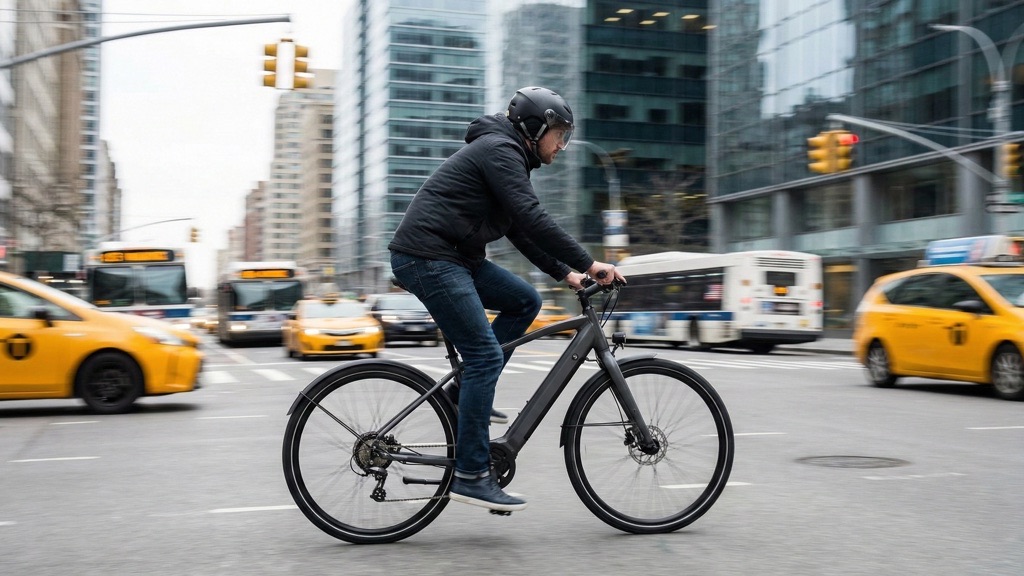
E-bikes are not maintenance-free.
But they are predictable.
For most commuters in 2026, realistic ownership cost lands between:
$300–$500 per year
$0.10–$0.18 per mile
The battery is the main long-term expense.
The motor is rarely the problem.
Drivetrain wear is where mid-drives cost more.
If your goal is the lowest ownership cost:
- Choose a hub motor for flat terrain
- Maintain your chain
- Avoid storing the battery at 100%
- Replace wear parts early
Done correctly, an e-bike remains one of the most financially efficient personal transport options available today.
FAQ
How much does e-bike maintenance cost per year?
Most riders spend $250–$500 annually, depending on mileage and motor type.
Is an e-bike cheaper to maintain than a car?
Yes. E-bike maintenance typically costs 3–5× less per year than a car.
How often do e-bike batteries need replacement?
Usually every 3–5 years or 500–1,000 charge cycles.
Do e-bike motors require servicing?
No regular servicing. Quality motors often last 10,000+ miles without issue.
Are mid-drive e-bikes more expensive to maintain?
Yes. They wear chains and cassettes faster than hub motor systems.