TL;DR
- Choose the Tesla Model 3 if you want maximum acceleration, the largest charging network, and the lowest starting price.
- Choose Polestar 2 if you want superior range, more engaging handling, and premium interior design.
- Overall winner: Tesla Model 3 for most buyers; Polestar 2 for those prioritizing range and driving dynamics.
- Best value choice: Tesla Model 3 Long Range AWD (best balance of range, performance, and price).
Overview: Why This Comparison Matters in 2026
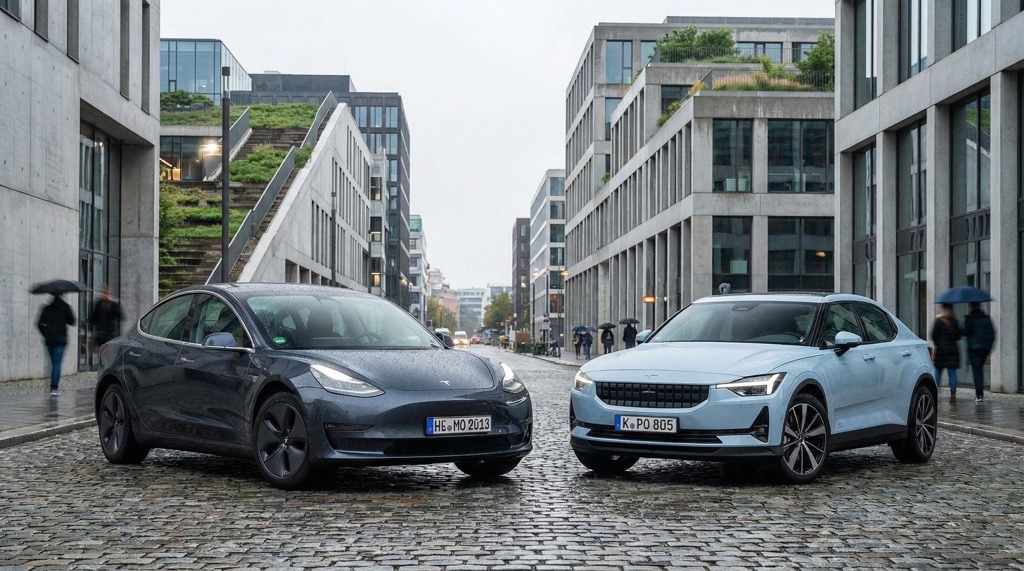
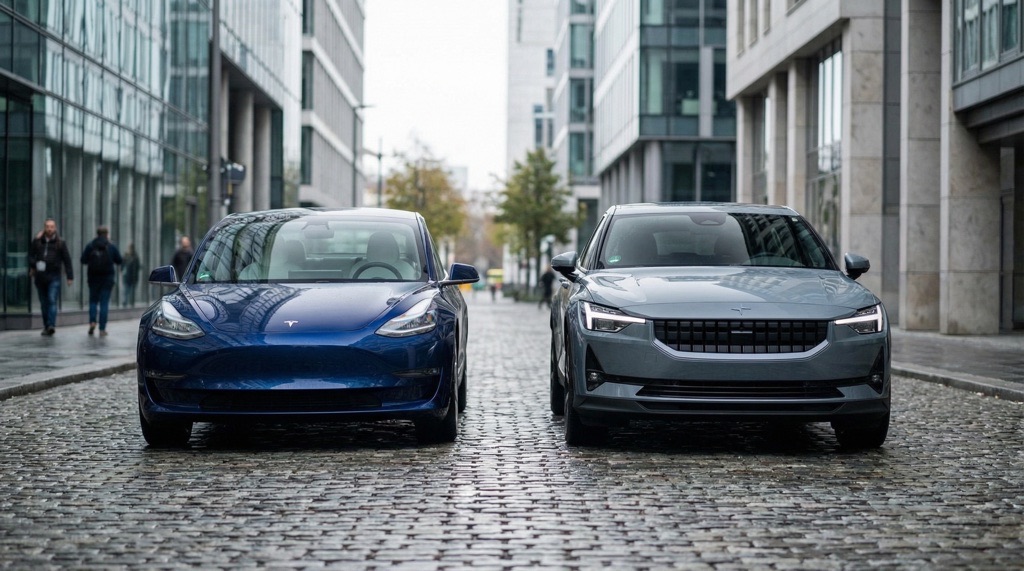
The Tesla Model 3 and Polestar 2 represent one of the most relevant EV comparisons in 2026, dominating the mid-size electric sedan segment. Both vehicles have evolved significantly, with the Polestar 2 receiving substantial updates, including a larger 82kWh battery and improved charging speeds, while the Tesla Model 3 maintains its position as the best-selling EV globally. The Model 3 appeals to buyers seeking affordability, performance, and access to Tesla’s Supercharger network. The Polestar 2, meanwhile, targets premium buyers who value Scandinavian design, superior range, and a more engaging driving experience. Understanding their differences is essential for anyone considering a mid-range electric sedan purchase in 2026.
Key Specifications Comparison
| Specification | Tesla Model 3 (Long Range AWD) | Polestar 2 (Long Range Dual Motor) |
|---|---|---|
| WLTP Range | 360 miles | 379–407 miles |
| EPA Range | 298 miles (Performance); 330+ miles (Long Range) | 292 miles (official) |
| 0–60 mph | 4.2 seconds (Long Range); 3.1 seconds (Performance) | 4.2–4.5 seconds |
| Power | 434 bhp (Long Range AWD) | 416 bhp (Dual Motor) |
| Battery | 75–80 kWh | 82 kWh |
| Peak Charging Speed | 190 kW | 205 kW |
| Charging Network | Tesla Supercharger (exclusive access) | Type 2/CCS2 (third-party networks) |
| Starting Price (US) | $38,380 | $51,300 |
| Starting Price (UK) | From £38,990 | From £48,950 |
| Warranty | 8 years / 120,000 miles (battery) | 8 years / 100,000 miles (battery) |
Real-World Range & Efficiency
Tesla Model 3: The Model 3’s exceptional efficiency (0.23Cd drag coefficient) and lightweight construction (1,847kg) deliver impressive real-world range. Independent testing shows 330 miles of actual highway range with mixed driving, and the Long Range variant achieves approximately 360 miles WLTP. The Model 3 Performance sacrifices some range for acceleration but still delivers competitive distance. Tesla’s efficiency advantage stems from its aerodynamic design and optimized powertrain, making it ideal for drivers concerned about range anxiety.
Polestar 2: The Polestar 2 excels in real-world range testing, achieving 374 miles in independent evaluations despite being heavier (2,009kg). Its larger 82kWh battery and rear-wheel-drive single-motor variants deliver superior WLTP figures (up to 407 miles for the Long Range Single Motor). However, the dual-motor AWD variant experiences modest efficiency losses, achieving 4.3 mi/kWh versus the Model 3’s 3.9 mi/kWh in comparable testing. For highway driving, Polestar estimates approximately 230 miles of motorway range per charge.
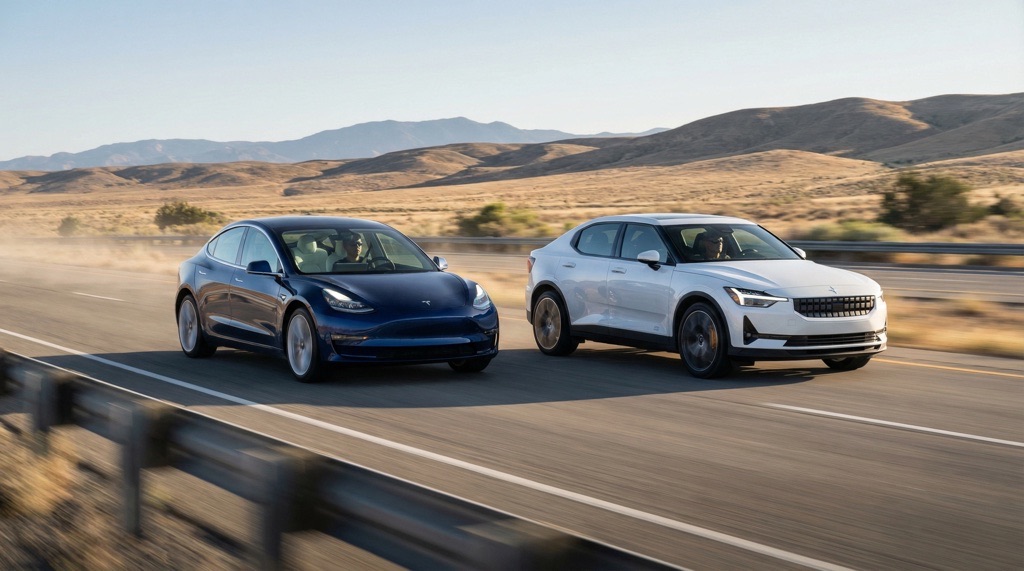
Verdict (Range): ➡️ Polestar 2 – Superior WLTP range (407 miles vs 360 miles) and real-world efficiency make it the range leader, though the Tesla Model 3 Long Range AWD offers competitive distance at lower weight.
Charging Speed & Infrastructure
Tesla Model 3: The Model 3 charges at a peak rate of 190kW, enabling 10–80% charging in approximately 27 minutes under optimal conditions. The defining advantage is exclusive access to Tesla’s Supercharger network—the world’s largest and most reliable DC fast-charging infrastructure with over 50,000 stations globally. This network advantage significantly reduces charging anxiety on long trips, particularly in North America and Europe, where Supercharger density is highest.
Polestar 2: The Polestar 2 achieves a faster peak charging rate of 205kW, completing 10–80% charging in 28 minutes (265 miles of range). However, it relies on third-party networks (Type 2/CCS2 standard), including Ionity, Electrify America, and regional providers. Charging reliability and availability vary significantly by geography, making long-distance travel less predictable than Tesla’s integrated network. AC charging tops out at 11kW for both vehicles.
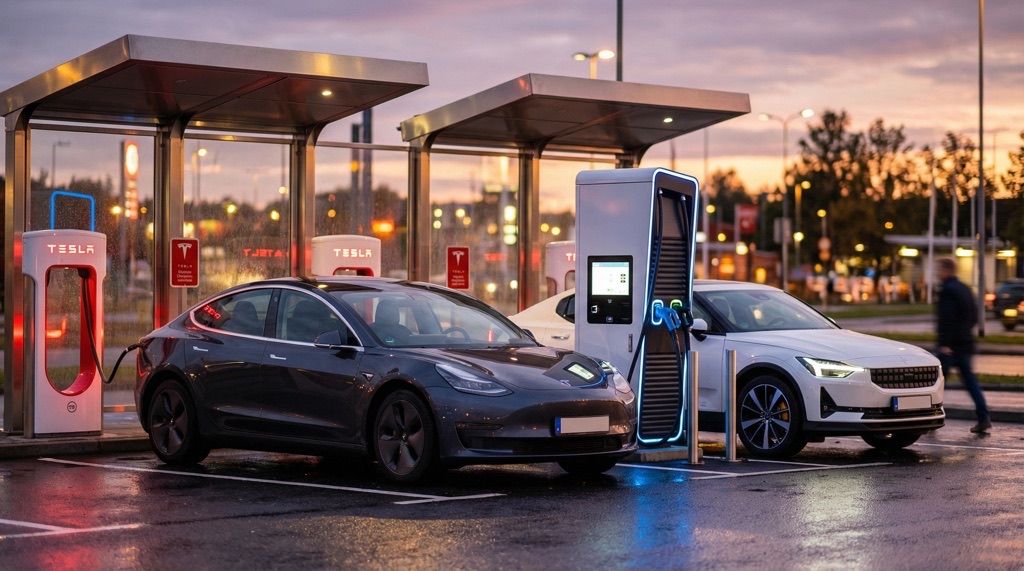
Verdict (Charging): ➡️ Tesla Model 3 – While the Polestar charges marginally faster (205kW vs 190kW), Tesla’s proprietary Supercharger network provides unmatched convenience and reliability for long-distance travel.
Performance & Driving Experience
Tesla Model 3: The Model 3 Performance delivers jaw-dropping acceleration—0–60 mph in 3.1 seconds with 434 bhp and estimated 740 Nm torque. The dual-motor setup provides excellent traction and stability, enhanced by Track Mode for circuit driving. However, steering feedback is described as artificial and disconnected, prioritizing efficiency over engagement. The ride is firm but composed, though some drivers find it less communicative than traditional sports sedans.
Polestar 2: The Polestar 2 (4.2–4.5 seconds 0–60 mph) sacrifices outright speed for superior driving dynamics. The rear-wheel-drive architecture and Brembo brakes deliver more engaging handling through corners, with minimal body roll and excellent grip. The optional Performance Pack adds Ohlins adjustable dampers, elevating the driving experience further. Steering feel is more natural and responsive than the Model 3, and the chassis balance rewards spirited driving on twisty roads. One-pedal driving is available with three regeneration levels.
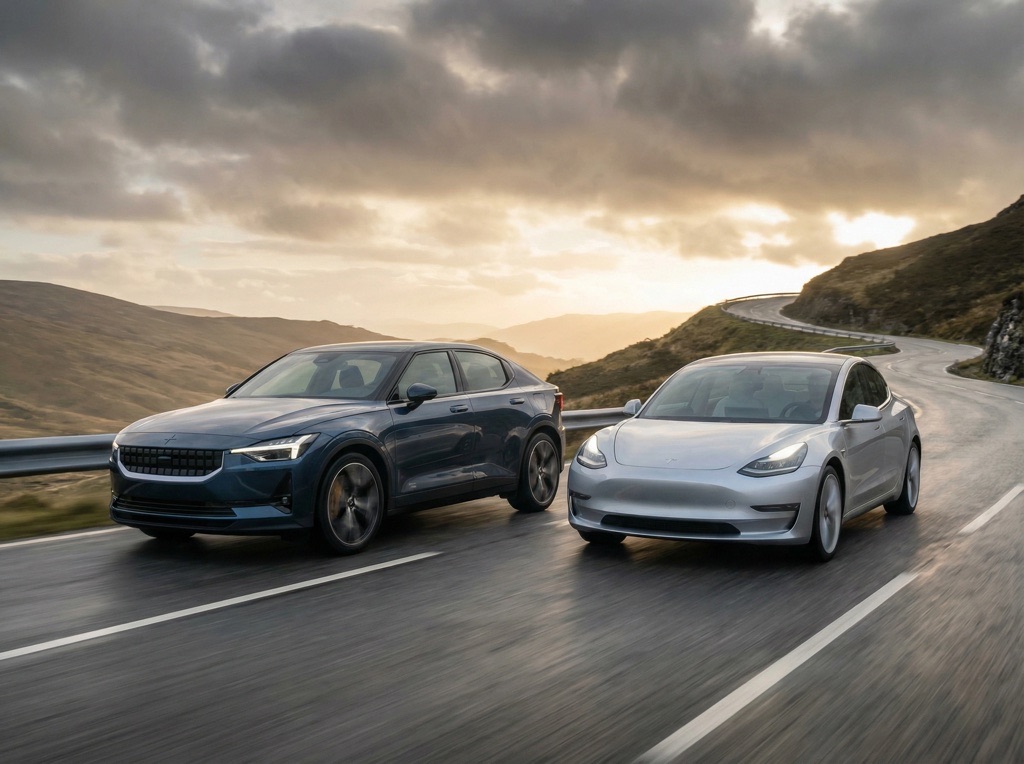
Verdict (Driving): ➡️ Tie (different priorities) – Choose Tesla Model 3 for straight-line acceleration and track capability; choose Polestar 2 for engaging handling and everyday driving pleasure.
 Reviews
Nissan Leaf vs Chevy Bolt (2026): Real-World Range, Charging Reality & 500-Mile Road Trip Test
If you’re comparing the Nissan Leaf and the Chevrolet Bolt EUV, you’re not shopping emotionally. You’re doing matBoth can be...
 Reviews
Tesla Model 3 Review 2026: Real-World Range, Charging & Verdict
This review covers the Tesla Model 3 Model Year 2025 (Highland refresh), evaluated as a new car on sale and...
 Reviews
Tesla Model S vs Porsche Taycan: Ultimate 2026 Comparison
TL;DR The Tesla Model S vs Porsche Taycan comparison in 2026 is about ownership philosophy, not just speed. Choose Tesla...
Interior, Comfort & Technology
Tesla Model 3 Interior: The Model 3 features a minimalist cabin dominated by a 15.4-inch central touchscreen controlling all functions. Physical controls are sparse—only a steering wheel stalk and a few buttons remain. The interior uses high-quality materials but prioritizes simplicity over luxury. Cabin space is spacious with a 594-liter boot plus 88-liter frunk, though the boot opening is notably small. The minimalist approach appeals to tech-forward buyers but frustrates those preferring traditional controls for climate and audio.
Polestar 2 Interior: The Polestar 2 delivers a more premium, Scandinavian-inspired cabin with higher-quality materials, ambient lighting, and a better-integrated infotainment system. Physical controls for climate and audio remain, improving usability. The interior feels more luxurious and refined than the Model 3, with better seat comfort and a more traditional layout. Boot space (407–1,097 liters with seats folded) and frunk (43 liters) provide practical versatility, though total capacity lags the Tesla’s frunk advantage.
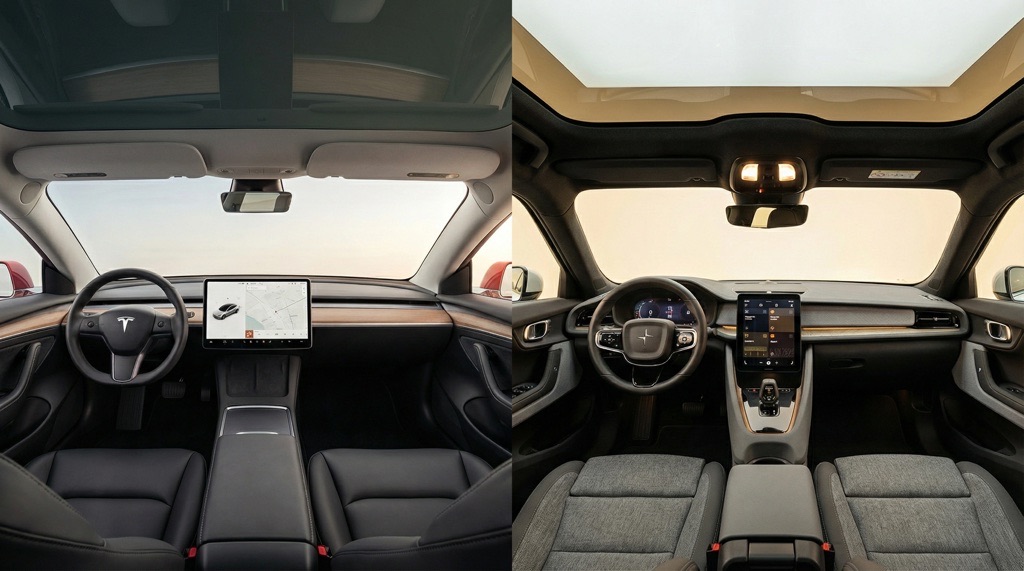
Verdict (Interior): ➡️ Polestar 2 – Superior material quality, traditional controls, and premium ambiance outweigh the Model 3’s minimalist efficiency for most luxury-focused buyers.
Safety & Driver Assistance
Both vehicles achieve top safety ratings from independent testing agencies. The Tesla Model 3 ranks #1 in Best Electric Sedans, while the Polestar 2 ranks #13 in Best Luxury Electric Cars, reflecting different market positioning rather than safety disparities. The Model 3 offers Autopilot with Full Self-Driving capability (subscription-based), while the Polestar 2 provides comprehensive ADAS features including adaptive cruise control, lane-keeping assist, and collision avoidance. Both include multiple airbags, electronic stability control, and robust structural design.
Verdict (Safety): ➡️ Tie – Both vehicles meet or exceed safety standards; choice depends on preference for Tesla’s Autopilot ecosystem versus Polestar’s traditional ADAS approach.
Reliability & Known Issues
Tesla Model 3 – Known Issues: The Model 3 has experienced patchy build quality in some production batches, including panel gaps and paint inconsistencies. Software updates occasionally introduce bugs requiring OTA fixes, though Tesla’s rapid update cycle typically resolves issues quickly. Some owners report steering feel inconsistencies and occasional infotainment glitches. However, long-term reliability data show the Model 3 performs well after addressing early production issues.
Polestar 2 – Known Issues: Early Polestar 2 models (2021–2023) experienced infotainment software delays and occasional system freezes, largely resolved in 2024–2026 updates. The 2023 redesign (rear-wheel-drive single-motor switch) introduced minor suspension tuning variations requiring software calibration. Build quality has improved significantly with the updated platform. No major structural or powertrain issues have been reported in recent model years.
Ownership Costs & Resale Value
| Factor | Tesla Model 3 | Polestar 2 |
|---|---|---|
| Efficiency (mi/kWh) | 3.9–4.2 | 4.0–4.3 |
| Annual Maintenance | $200–400 (minimal wear items) | $300–500 (brake fluid, filters) |
| Estimated Resale (3 years, 36k miles) | 65–70% of the original price | 60–65% of the original price |
| Insurance (annual estimate, US) | $1,200–1,500 | $1,400–1,700 |
| Tire Replacement Cost | $600–900 (set of 4) | $700–1,000 (set of 4) |
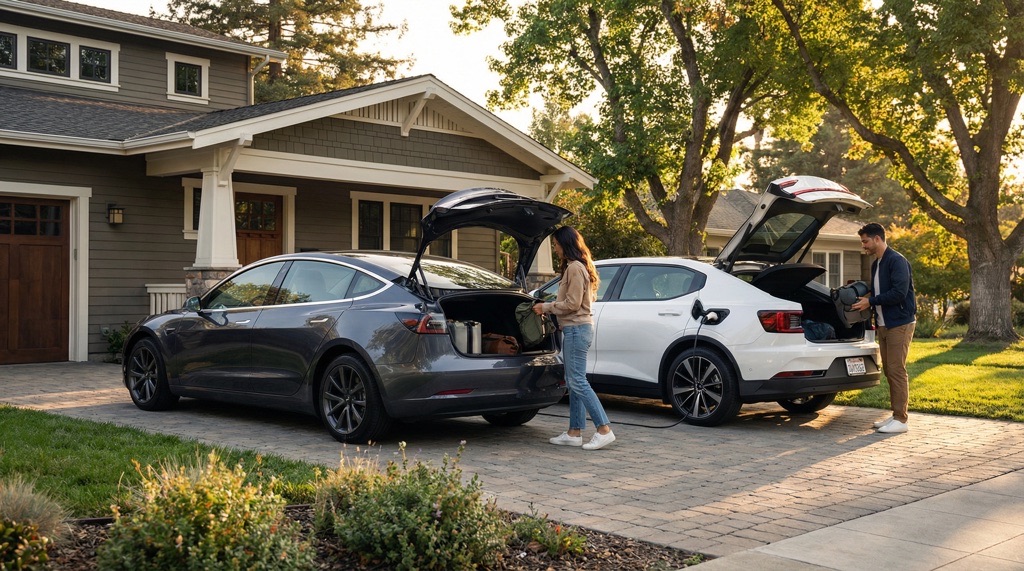
Verdict (Ownership): ➡️ Tesla Model 3 – Lower purchase price, superior resale value retention, and minimal maintenance costs make it significantly cheaper to own over a 3–5 year period. The Polestar 2’s premium pricing and steeper depreciation increase total ownership costs by approximately $8,000–12,000 over three years.
Pros & Cons
Tesla Model 3
- Pros: Rapid acceleration (3.1 seconds 0–60), excellent efficiency, exclusive Supercharger network, lowest starting price ($38,380), strong resale value, spacious frunk, minimalist design appeals to tech enthusiasts.
- Cons: Artificial steering feel, patchy build quality in some units, tiny boot opening, excessive touchscreen reliance, limited physical controls, and a smaller battery than Polestar.
Polestar 2
-
- Pros: Superior WLTP range (407 miles), engaging handling dynamics, premium interior materials, faster peak charging (205kW), Scandinavian design, traditional controls, Brembo brakes, and more engaging on twisty roads.
-
- Cons: Higher starting price ($51,300), slower acceleration than Model 3 Performance, reliance on third-party charging networks, steeper depreciation, heavier weight reduces efficiency, and less established brand recognition.
Who Should Buy Which?
Buy Tesla Model 3 if you: Prioritize acceleration and performance, want the lowest entry price, plan frequent long-distance travel (Supercharger access), value minimalist technology, seek maximum resale value, or live in regions with dense Supercharger coverage.
Buy Polestar 2 if you: Demand superior range for daily driving, prefer engaging handling and traditional controls, value premium interior design and materials, want faster DC charging speeds, enjoy Scandinavian aesthetics, or prioritize driving dynamics over outright acceleration.
Final Verdict
The Tesla Model 3 emerges as the better choice for most buyers in 2026, combining aggressive pricing ($38,380 vs $51,300), unmatched acceleration, and the world’s most reliable charging network. Its efficiency and resale value retention justify the premium over conventional cars. However, the Polestar 2 is the superior vehicle for drivers who prioritize range (407 miles WLTP), engaging handling, and premium interior quality—and can justify the $13,000 price premium. For buyers seeking the optimal balance of range, performance, and value, the Tesla Model 3 Long Range AWD ($43,000–45,000) delivers 360 miles of range, 4.2-second acceleration, and access to 50,000+ Superchargers globally. The Polestar 2 Long Range Single Motor ($48,950 UK / ~$52,000 US) maximizes range and efficiency for those willing to sacrifice acceleration for superior driving dynamics and design.
FAQ
Is the Tesla Model 3 better than the Polestar 2?
The Tesla Model 3 is better for most buyers due to lower price, faster acceleration, and superior charging infrastructure. However, the Polestar 2 offers better range, more engaging handling, and premium interior design—making it superior for drivers prioritizing those attributes.
Which EV has better range?
The Polestar 2 delivers superior WLTP range (407 miles for Long Range Single Motor vs 360 miles for Tesla Model 3 Long Range). However, the Tesla Model 3 achieves a competitive real-world range (330+ miles) with lower weight and better efficiency.
Which is better for long trips?
The Tesla Model 3 is better for long-distance travel due to exclusive access to the Supercharger network, which offers 50,000+ stations globally with superior reliability. The Polestar 2 requires reliance on third-party networks, which vary in availability and reliability by region.
Is Tesla more reliable than Polestar?
Both brands offer comparable long-term reliability. Tesla has experienced patchy build quality in some batches but excels in software updates. Polestar has resolved early infotainment issues and demonstrates solid build quality in recent model years (2024–2026).
Which EV is cheaper to own?
The Tesla Model 3 is significantly cheaper to own over 3–5 years. Lower purchase price ($38,380 vs $51,300), superior resale value (65–70% vs 60–65%), and minimal maintenance costs save approximately $8,000–12,000 compared to the Polestar 2.