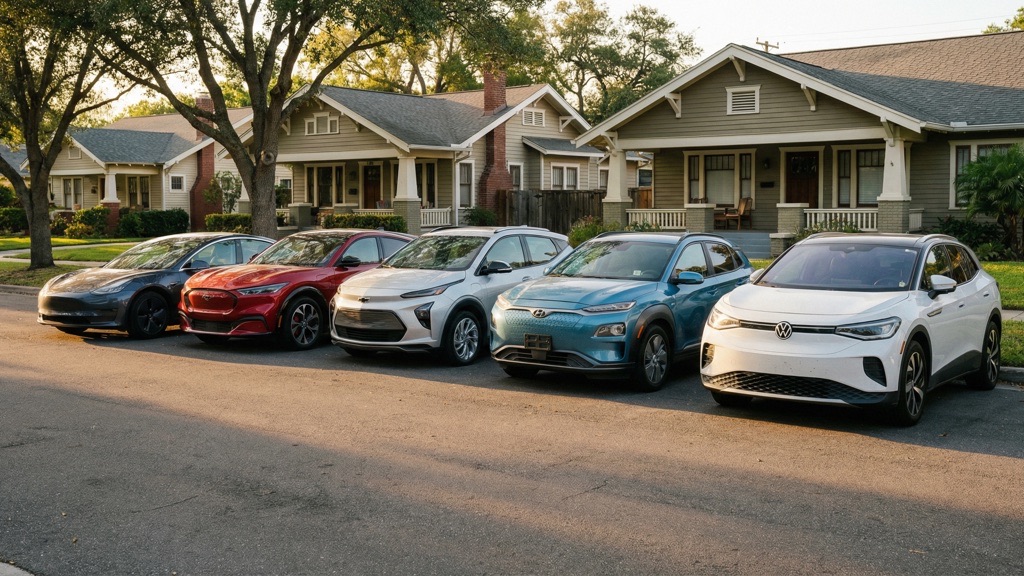
The used EV market in the US is no longer experimental. It’s now the smartest way to enter electric ownership — if you choose carefully.
Depreciation has done the heavy lifting. Cars that were $45,000–$60,000 new are now sitting in the $18,000–$30,000 range. Battery longevity data is real. The charging infrastructure is better. Software updates have fixed early issues.
But not every used EV is a smart buy.
This guide is for buyers who:
- Want 200+ miles of real range
- Care about charging speed
- Plan to keep the car 3–6 years
It’s not for:
- Ultra-low budget (<$10K short-range EV shoppers)
- Buyers without home charging
- Heavy towing use cases
Below is the real ranking — from #5 to #1 — to maximize clarity and decision-making.
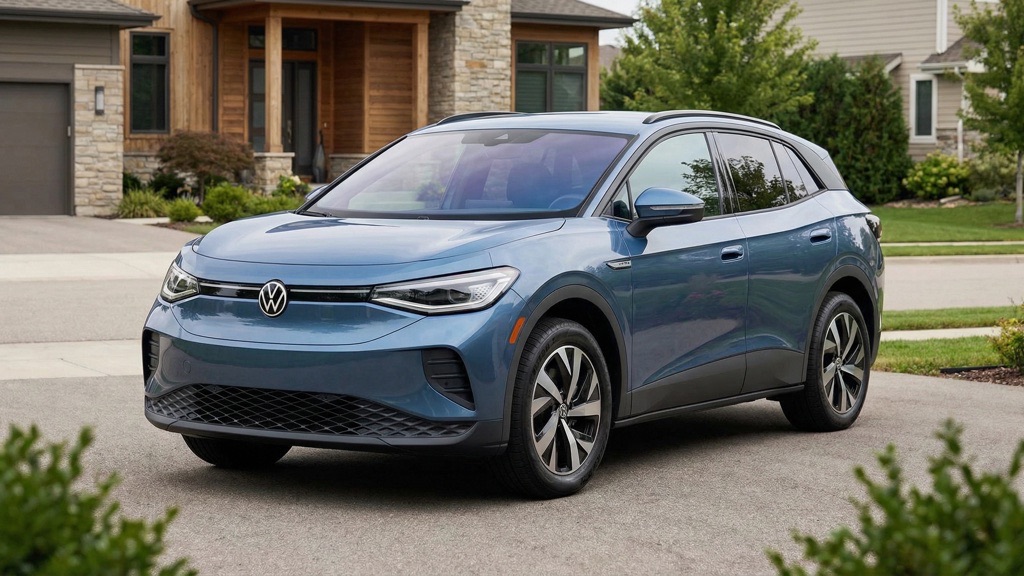
#5️⃣ Volkswagen ID.4 (2021–2023)
⚡ Quick Verdict
- Best for: Comfort-first drivers
- Avoid if: You hate laggy software
- Real-world range: 220–260 miles
- Biggest advantage: Ride quality
- Main drawback: Early software frustrations
- Rating: 8.1/10
📊 Key Specifications
| Specification | Value |
|---|---|
| Battery capacity | 62–82 kWh |
| Real-world range | 220–260 miles |
| EPA range | 209–275 miles |
| DC fast charging | 125–170 kW |
| 0–60 mph | 5.4–7.8 sec |
| Drivetrain | RWD / AWD |
| Used price | $19,000–$27,000 |
Real-World Driving
Smooth, quiet suspension tuned for comfort. Highway efficiency is decent but not class-leading. The charging curve is respectable but not consistent on early software versions.
Known Issues
- Early infotainment lag
- Touch controls frustration
- 2021 software instability
Verdict on ID.4
If you want a traditional SUV feel without Tesla minimalism,Hyundai Kona Electric not the sharpest value here.
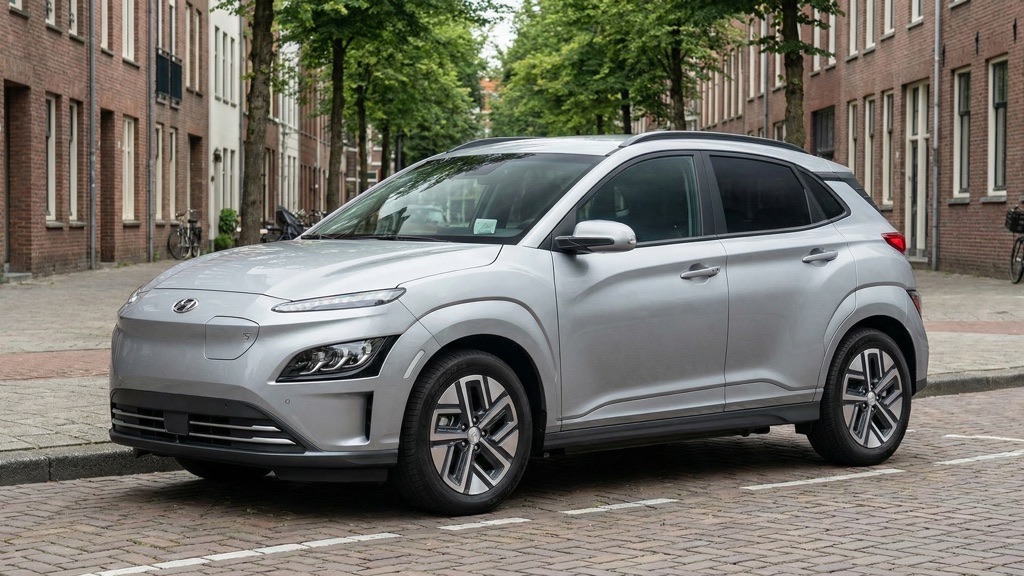
#4️⃣ Hyundai Kona Electric (2021–2023)
⚡ Quick Verdict
- Best for: Efficient commuters
- Avoid if: You need space
- Real-world range: 230–260 miles
- Biggest advantage: Efficiency
- Main drawback: Rear seat tightness
- Rating: 8.4/10
📊 Key Specifications
| Specification | Value |
|---|---|
| Battery capacity | 64 kWh |
| Real-world range | 230–260 miles |
| EPA range | 258 miles |
| DC fast charging | 77 kW |
| 0–60 mph | 6.4 sec |
| Drivetrain | FWD |
| Used price | $17,000–$23,000 |
Expert Insight
One of the most efficient non-Tesla EVs ever made. 4.0+ mi/kWh is realistic in mixed drivinBudget buyers under $20Kl crossover in disguise. Rear passenger space is the tradeoff.
#3️⃣ Chevrolet Bolt EUV (2022–2023)
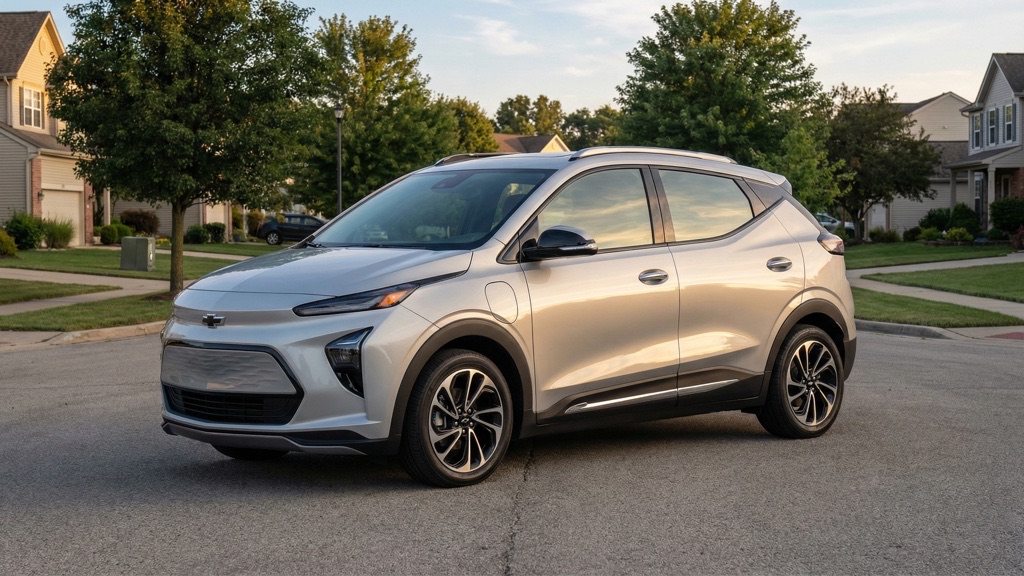
⚡ Quick Verdict
- Best for: Budget buyers under $20K
- Avoid if: You take a road trip monthly
- Real-world range: 220–240 miles
- Biggest advantage: Price-to-range ratio
- Main drawback: 55 kW DC charging cap
- Rating: 8.7/10
📊 Key Specifications
| Specification | Value |
|---|---|
| Battery capacity | 65 kWh |
| Real-world range | 220–240 miles |
| EPA range | 247 miles |
| DC fast charging | 55 kW |
| 0–60 mph | 6.8 sec |
| Drivetrain | FWD |
| Used price | $14,000–$20,000 |
The Reality
At $15–18K, nothing touches it. But charging is slow. A 10–80% session can take 45–60 minutes.
For commuters? It’s fantastic. For road-trippers? Frustrating.
#2️⃣ Ford Mustang Mach-E (2021–2023)
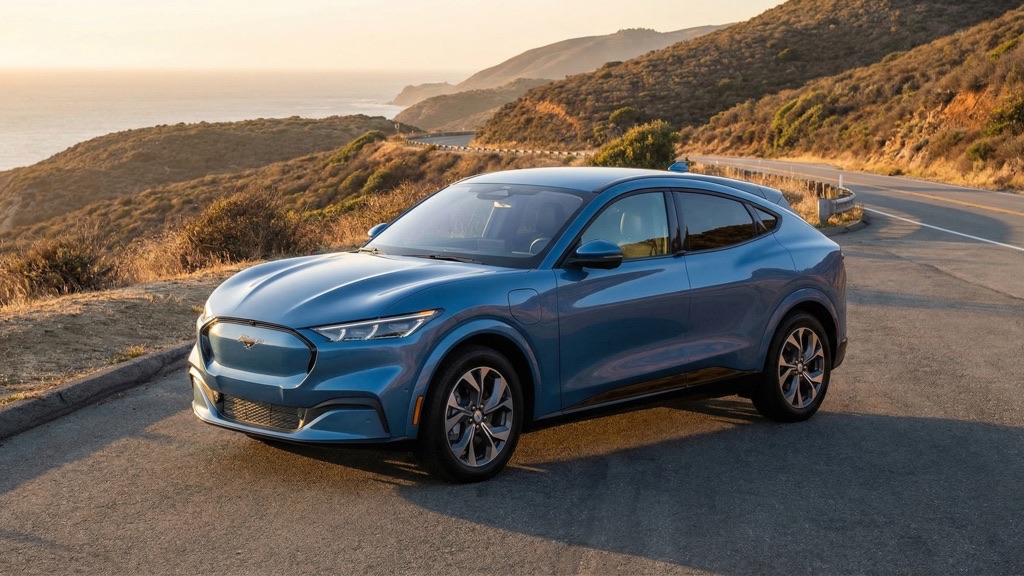
⚡ Quick Verdict
- Best for: Families + balanced performance
- Avoid if: You expect a traditional Mustang
- Real-world range: 230–300 miles
- Biggest advantage: Driving dynamics + space
- Main drawback: Early software bugs
- Rating: 8.9/10
📊 Key Specifications
| Specification | Value |
|---|---|
| Battery capacity | 68–91 kWh |
| Real-world range | 230–300 miles |
| EPA range | 224–312 miles |
| DC fast charging | Up to 150 kW |
| 0–60 mph | 3.5–6.3 sec |
| Drivetrain | RWD / AWD |
| Used price | $22,000–$32,000 |
Expert Driving Impression
Better ride isolation than Model 3. Feels more mature. Less road noise. Not quite as efficient.
If you drive long highway miles regularly, Extended Range trims are the smart pick.
#1️⃣ Tesla Model 3 (2021–2023)
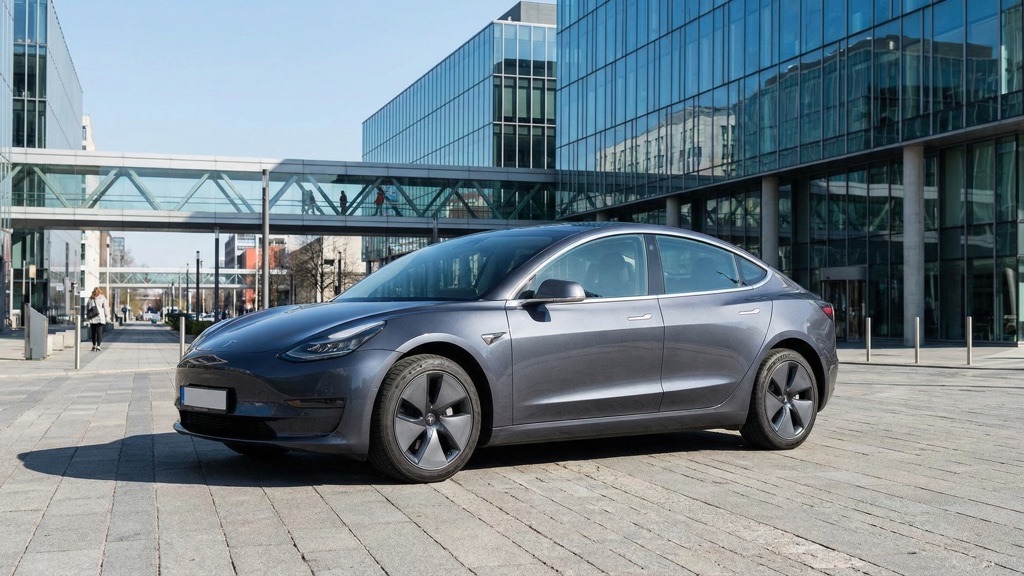
⚡ Quick Verdict
- Best for: Long-distance drivers
- Avoid if: You dislike minimal interiors
- Real-world range: 250–310 miles
- Biggest advantage: Supercharger network
- Main drawback: Ride firmness + cabin noise
- Rating: 9.3/10
📊 Key Specifications
| Specification | Value |
|---|---|
| Battery capacity | 57–82 kWh |
| Real-world range | 250–310 miles |
| EPA range | 272–358 miles |
| DC fast charging | Up to 250 kW |
| 0–60 mph | 3.1–5.8 sec |
| Drivetrain | RWD / AWD |
| Used price | $18,000–$27,000 |
Why It Wins
Efficiency. Charging speed. Software maturity.
And most importantly — Supercharger reliability. That changes the ownership experience dramatically.
Build quality can be inconsistent, but mechanically, the platform is solid.
⚠️ What to Avoid (Important)

| Model | Trim/Year to Be Careful With | Why |
|---|---|---|
| Model 3 | Early 2018 builds | Fit & finish inconsistencies |
| Bolt EUV | Pre-recall battery units | Confirm battery replacement |
| Mach-E | Standard Range AWD heavy use | Higher degradation risk |
| ID.4 | 2021 early software builds | Infotainment instability |
📊 Reliability & Long-Term Risk
| Model | Battery Durability | Common Issues | Long-Term Risk |
|---|---|---|---|
| Model 3 | Excellent | Suspension wear, cabin noise | Low |
| Bolt EUV | Very good | Charging speed limitation | Low |
| Mach-E | Very good | Early OTA glitches | Moderate |
| Kona Electric | Very good | Limited fast charging | Low |
| ID.4 | Good | Software bugs | Moderate |
🧠 Decision Tree
- Budget under $18K → Bolt EUV
- Road trips monthly → Model 3
- Need family SUV → Mach-E
- Want maximum efficiency → Kona Electric
- Prioritize comfort → ID.4
💰 Ownership & Costs
Home charging: ~$10–15 per 250 miles
Maintenance: 30–50% lower vs gas
Battery degradation: ~8–12% after 100K miles, typical
The biggest ownership variable isn’t the battery.
It’s charging access.
🧠 FINAL EXPERT VERDICT

🔹 Short Verdict
If it were my money in 2026:
- Road trips → Buy Model 3
- Tight budget → Buy Bolt EUV
- Family daily driver → Consider Mach-E
- Skip if the price difference is under $2K vs better alternative.
🔹 Detailed Verdict
The used EV market in the US is finally rational.
The safest all-around long-term bet remains the Model 3 because of its charging infrastructure and efficiency.
But the Bolt EUV is the financial winner.
If you buy smart — 2021–2023 model years, verified battery health, and remaining warranty — you’re entering EV ownership at the lowest-risk point in history.
TL;DR
🥇 Best overall: Model 3
💰 Best value: Bolt EUV
👨👩👧 Best family choice: Mach-E
⚡ Most efficient: Kona
🛋 Most comfortable: ID.4
FAQ
Is 100,000 miles too much for a used EV?
No, if battery health is verified.
Do used EVs depreciate fast?
They already did. That’s your advantage.
Is Supercharger access really that important?
If you road trip — absolutely.