
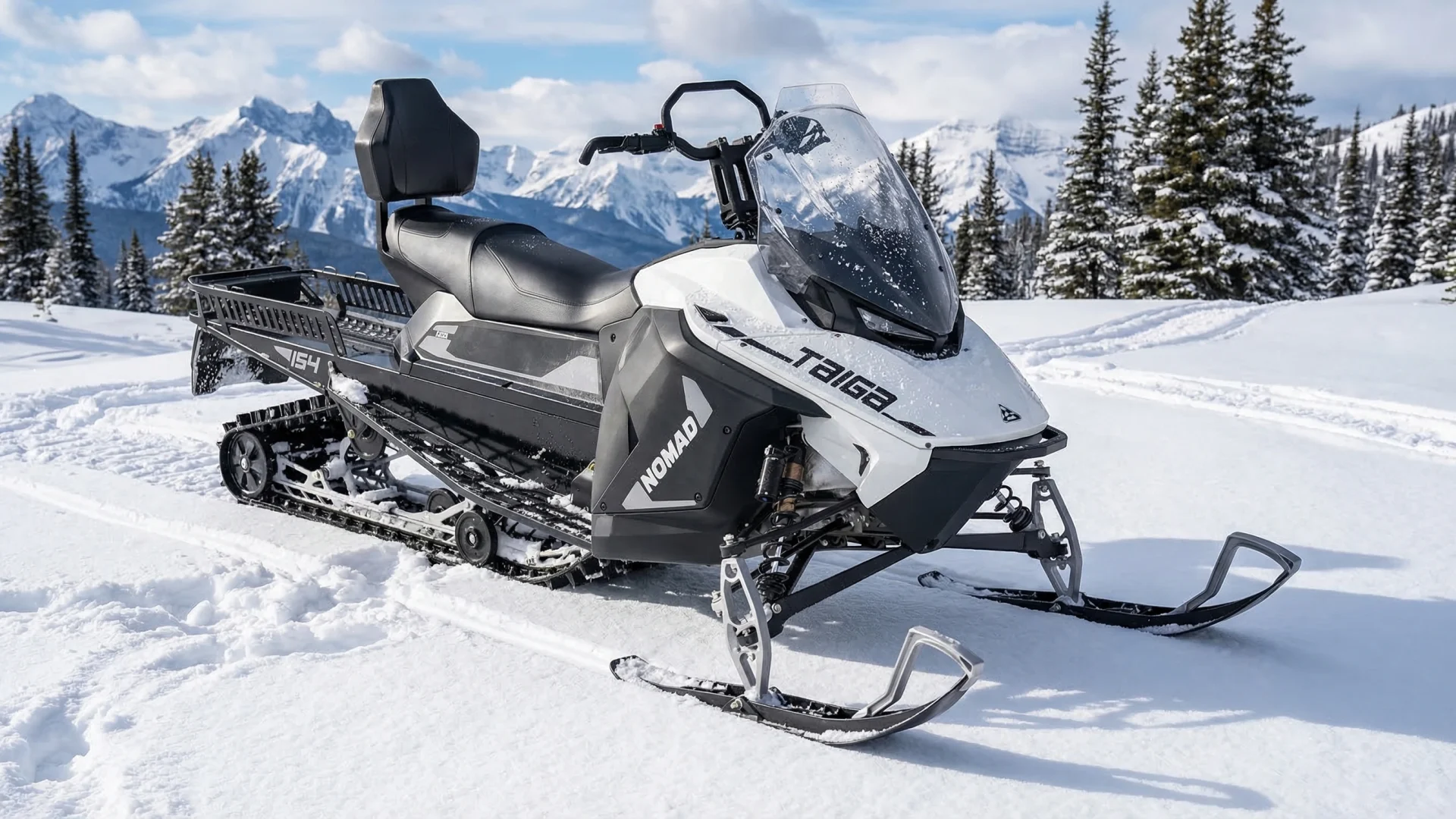
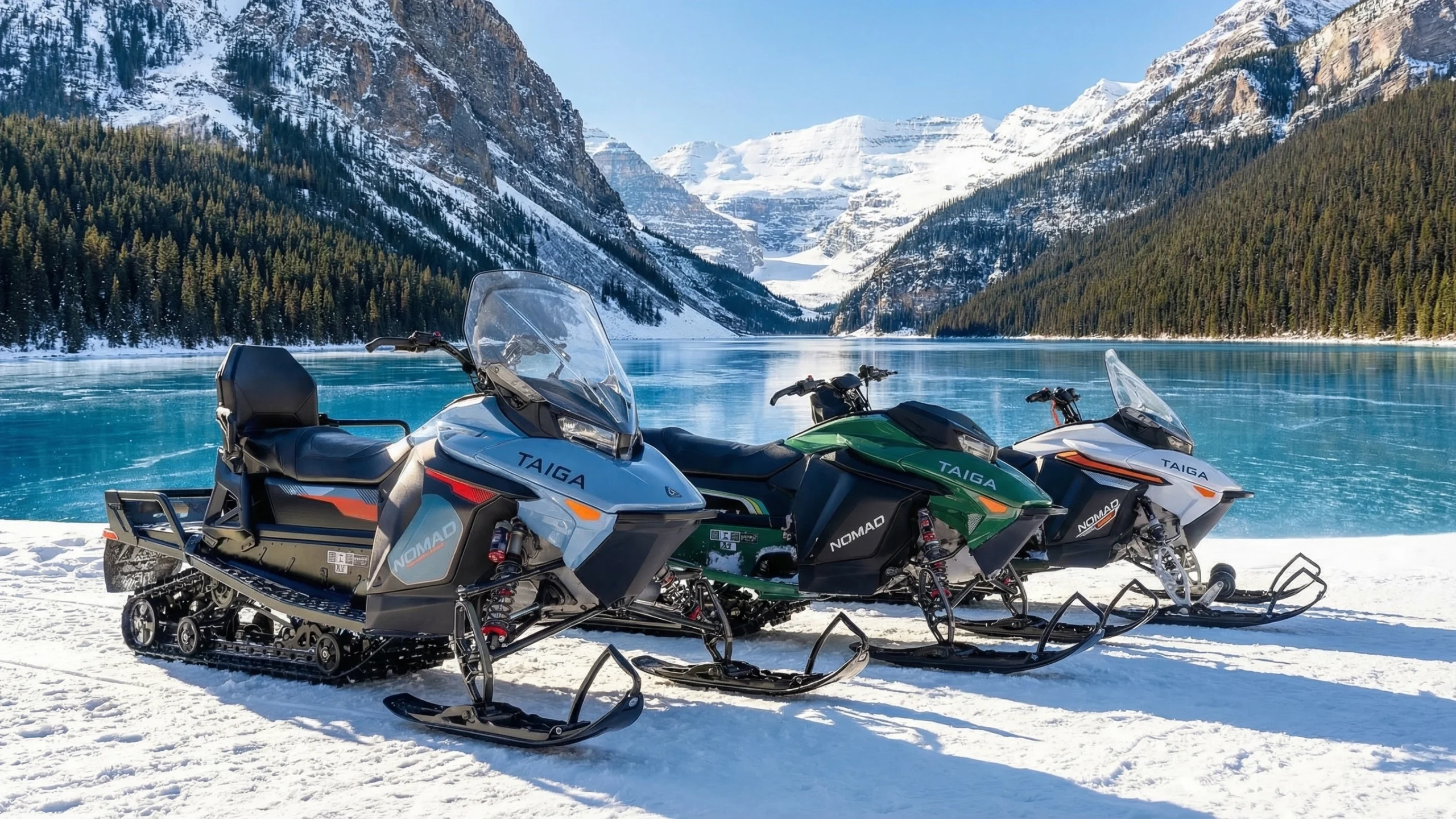
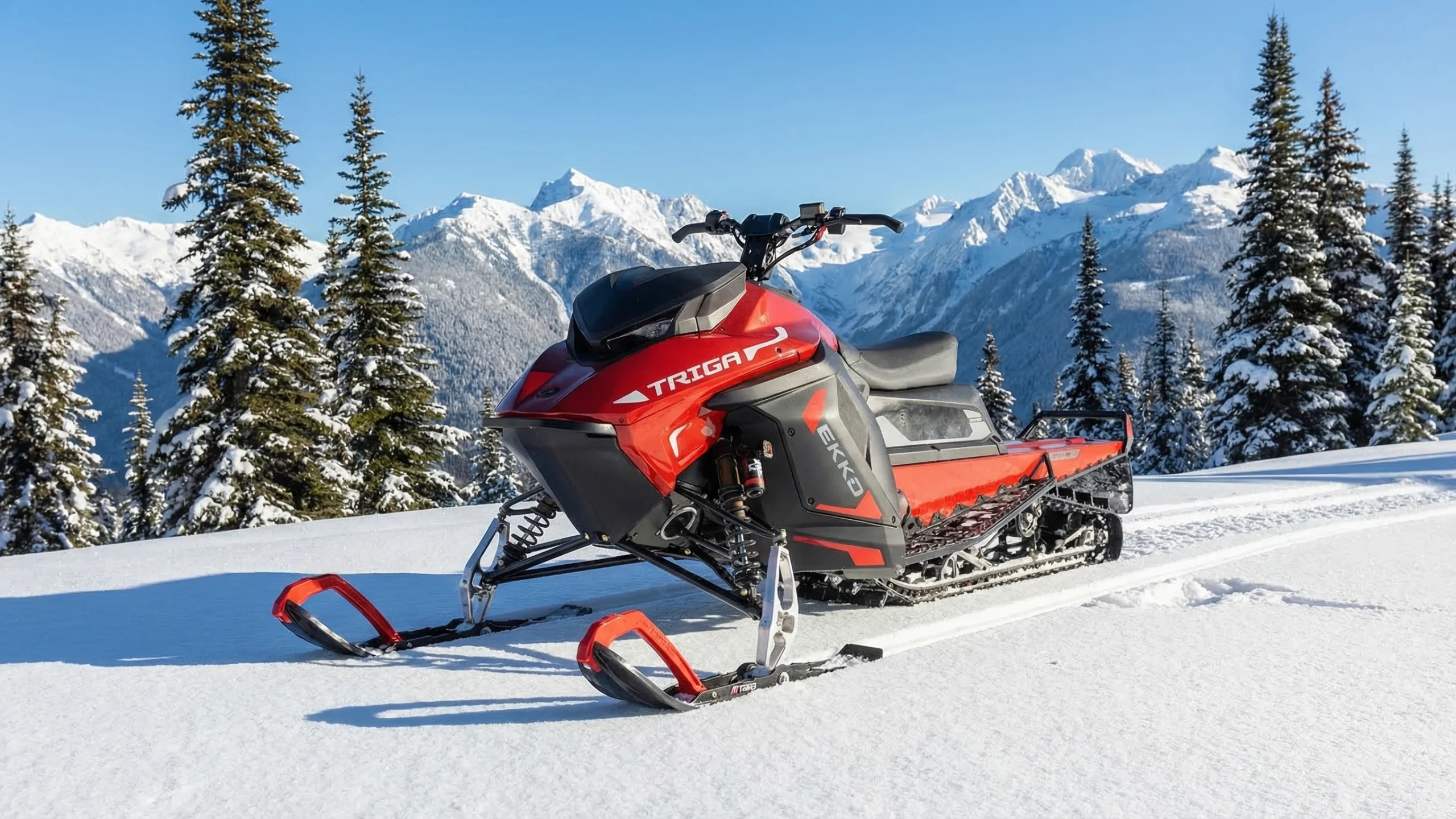
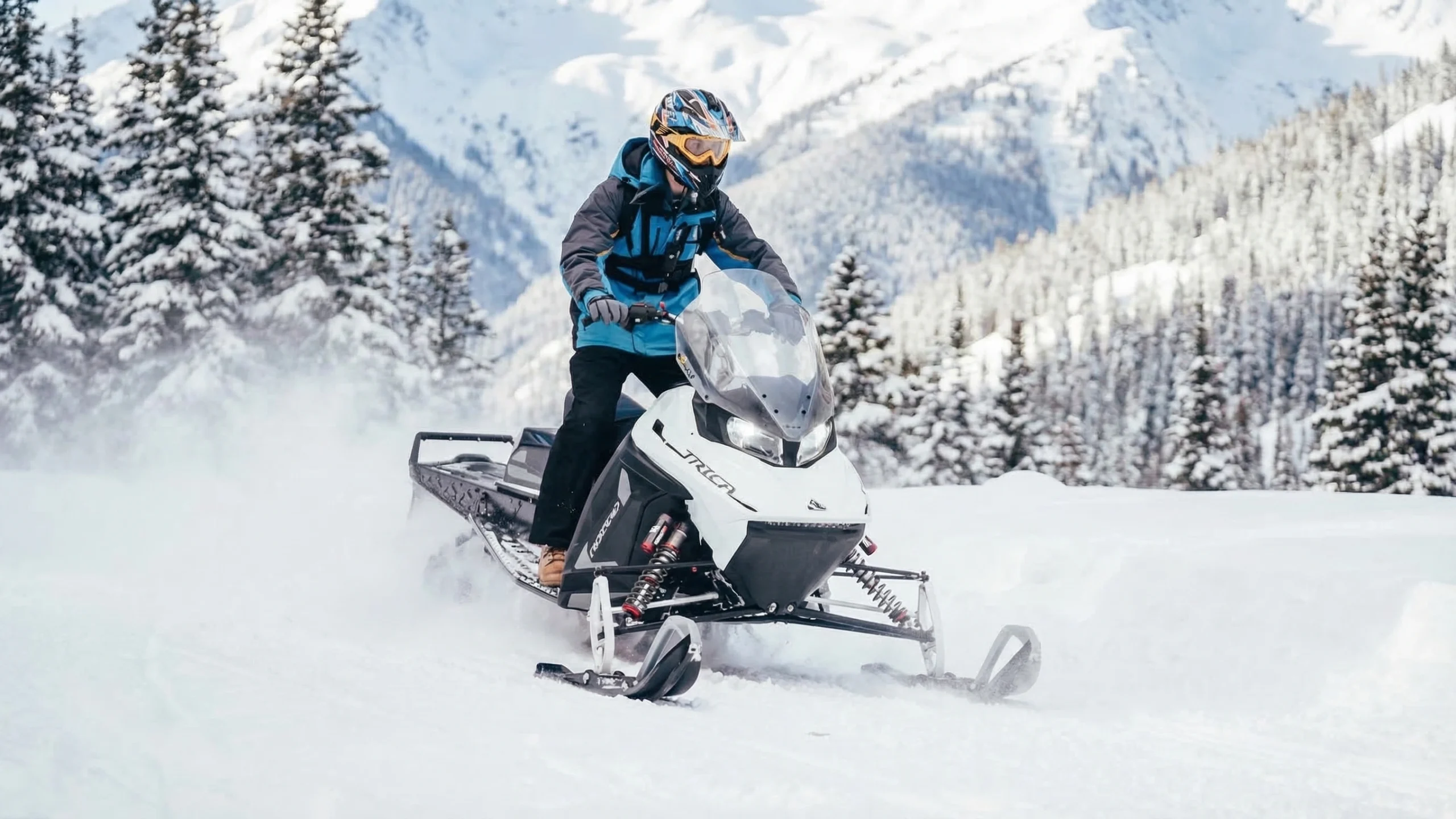
Taiga Motors has launched its Model Year 2027 electric snowmobile lineup with three purpose-built models—Nomad Pro, Nomad Performance, and Nomad Scout—marking a significant acceleration in the company’s push toward mass-market electrification of winter powersports. The Nomad Performance represents the highest-performance utility snowmobile ever built, featuring a 120kW drive unit that delivers a 33% power increase over the previous generation.
A Canadian Company Scaling Beyond Concept
Founded eight years ago and acquired by Vita Power in July 2024, Taiga has transitioned from prototype developer to operational manufacturer with real-world validation. The company now operates in over 150 commercial operations across North America, Europe, and Arctic research stations, accumulating more than one million kilometers of field data over three years of continuous development. This operational foundation distinguishes Taiga from competitors still in early-stage development phases.
The MY27 platform builds directly on this field experience, incorporating lessons from ski resorts, tour operators, and utility applications worldwide. Taiga’s manufacturing approach integrates a patented traction unit directly into the chassis via a simple timing belt, creating a compact powertrain that maximizes usable space and serviceability.
Specifications and Performance Comparison
| Model | Power Output | Key Features | Price (USD) |
|---|---|---|---|
| Nomad Pro | 67kW | Commercial workhorse, regenerative braking, fleet management | $19,499 |
| Nomad Performance | 120kW | Highest performance, 1,000 lb hauling capacity, drag-race capable | $21,999 |
| Nomad Scout | 120kW | Backcountry focused, 2-inch deeper lug track, optional Elka shocks | $22,249 |
All three models feature Combined Charging System (CCS) fast charging to 80% in 20 minutes, matching industry-standard EV charging infrastructure. The battery pack delivers full performance down to –30°C with minimal range loss, addressing the primary concern that has historically limited electric snowmobile adoption in extreme cold.

Onboard Power: Redefining Utility
A distinctive feature across the MY27 lineup is the Onboard Power system, delivering up to 3kW at both 120V and 220V. This transforms the snowmobile from a recreational vehicle into a mobile energy source capable of powering remote cabins during winter storms, supporting backcountry rescue operations, or running ice fishing setups without generators, fuel, or emissions. This capability opens entirely new use cases in Arctic communities and remote work environments.
The Nomad Performance’s 1,000-pound hauling capacity positions it as a genuine utility platform, not merely a recreational machine with electric propulsion. Combined with instant torque delivery and adjustable engine braking, the Performance model offers technical control that traditional gas snowmobiles cannot match.
 Motocycles
Join the GR1T Founders Circle and Save €1,500 on Your GR1T Electric Motorcycle
GR1T Motorcycles has officially launched the GR1T Founders Circle — a limited-time opportunity for riders to join the brand at...
 Cars
Cars
Electric Elegance: The 2024 Fiat 500e ‘Inspired By Los Angeles’ Edition
Introduction: Where Italian Charm Meets California Cool In the ever-evolving world of electric vehicles, it’s refreshing to see a brand...
 Motocycles
Tilting Into the Future: The Radical Kairos EV Three-Wheeler Concept
A French Trike Like No Other Just when you thought electric vehicles couldn’t get any weirder, the French go and...
Software-Defined Operations and Fleet Management
Every MY27 Nomad includes industry-first geofencing, remote speed limiting, digital keys, and app-based fleet control built into the platform. These capabilities address operational requirements increasingly demanded by risk managers and insurers for commercial fleet operations. Operators can adjust power modes through an app, including reduced output settings for new or younger riders.
The cloud-connected architecture enables live fleet management from anywhere, a capability that has never existed in the snowmobile category. For commercial operators running 50+ machines across multiple locations, this represents a fundamental shift in operational efficiency and safety oversight.
Cold-Weather Performance: The Critical Differentiator
Taiga designed the battery pack from a clean sheet specifically for cold-weather performance, incorporating fused cooling panel technology to improve temperature uniformity and continuous power output. The system achieves faster warm-up times and improved thermal stability without relying on snow spray for cooling—eliminating a maintenance variable that plagues traditional snowmobiles.
This engineering approach reflects Taiga’s fundamental design philosophy: cold weather wasn’t an afterthought but the starting point. The result is a platform that maintains performance in conditions where competing electric platforms would face significant degradation.
Market Position and Competitive Landscape
Taiga’s pricing positions the MY27 lineup in premium territory. The Nomad Pro at $19,499 USD targets commercial operators seeking lower total cost of ownership, while the Performance and Scout models at $21,999–$22,249 USD compete with high-end gas utility snowmobiles. Industry analysis suggests electric snowmobiles will achieve cost parity with gas machines within three years of ownership when accounting for fuel, maintenance, and service elimination.
The company’s commercial-first strategy differs from competitors’ pursuing consumer-focused launches. By establishing operational credibility with ski resorts, tour operators, and utility fleets, Taiga builds proof points that accelerate consumer adoption. Les Volatiles, a tour operation in Les Saisies, France, reports nearly two seasons of operation with minimal maintenance, significantly reduced fuel costs, and staff satisfaction with ease of use.
Unanswered Questions and Market Challenges
While the MY27 lineup addresses core performance and operational concerns, several questions remain. Range specifications for each model under various conditions are not detailed in available announcements. The scalability of Taiga’s manufacturing capacity to support rapid commercial adoption remains unclear. Additionally, the long-term durability of the battery pack beyond five years of commercial operation—particularly in extreme Arctic environments—requires extended field validation.
The competitive response from established snowmobile manufacturers (Arctic Cat, Bombardier Ski-Doo) will significantly influence market adoption rates. Traditional manufacturers possess established dealer networks, brand loyalty, and manufacturing scale that Taiga must overcome.
Verdict
The MY27 Nomad lineup represents the most mature electric snowmobile platform available for commercial and utility applications. The 33% power increase in the Performance model, combined with proven cold-weather performance, onboard power capability, and fleet management software, positions Taiga as the credible alternative to gas snowmobiles for operators prioritizing lower operating costs and reduced maintenance. The Nomad Pro is the clear choice for commercial fleet operators; the Performance model suits utility-focused riders who demand both hauling capacity and performance; the Scout targets backcountry enthusiasts willing to pay premium pricing for electric advantages. However, consumer adoption will depend on dealer availability, long-term battery durability data, and whether traditional manufacturers launch competitive electric offerings. Pre-orders opened March 12, 2026.