
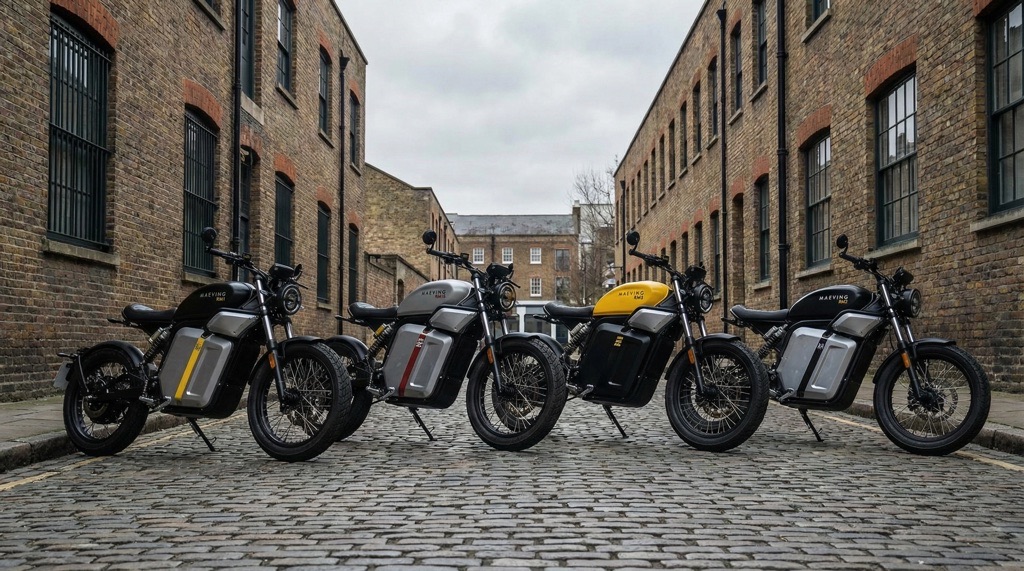
Maeving, the Coventry-based electric motorcycle maker, has raised £11 million in Series A funding to scale its US operations, where sales now account for 40% of total revenue. This investment, including a £3 million HSBC facility and £500,000 from the West Midlands Co-Investment Fund, targets production expansion, tech upgrades, and deeper market penetration in North America.
Riders and investors should note this as Maeving shifts from UK roots to global contender, prioritizing removable battery tech for urban use amid rising EV demand.
Background: From Coventry Startup to US Export Powerhouse
Maeving was founded in 2021 by Seb Inglis-Jones and Will Stirrup in Coventry, UK, building on the region’s motorcycle heritage. The company produces retro-styled electric motorcycles with removable batteries that charge via standard plugs, solving urban charging barriers. By 2024, revenue reached £5.9 million, with early 2025 data showing US sales at 40% of total. Annual production stands at around 1,600 units, employing over 70 people at its Coventry facility.
The September 8, 2025, Series A round was led by Venrex and Future Planet Capital, with an additional £8 million raised earlier for global expansion. Recent backing includes £500,000 from the West Midlands Co-Investment Fund, which Mayor Richard Parker praised for sustaining Coventry’s manufacturing legacy and creating high-skilled jobs. Co-founder Will Stirrup highlighted extraordinary US demand, while Sebastian Inglis-Jones emphasized transforming cities with cleaner transport.
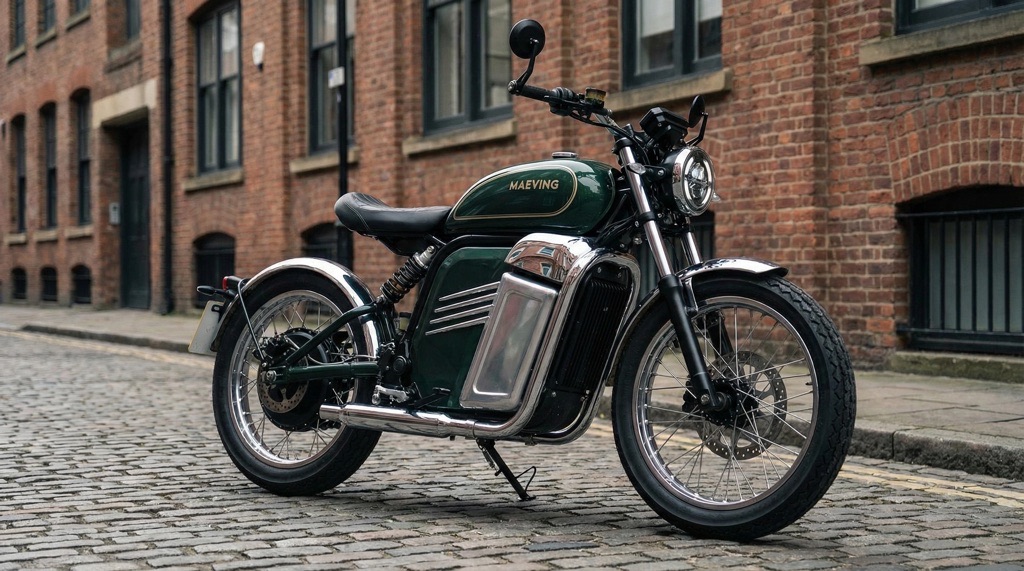
Key Specifications
| Model | Top Speed | Range | Key Features | License | Warranty |
|---|---|---|---|---|---|
| RM1 | 45 mph | Up to 80 miles | Removable batteries, urban-focused, lightweight | M1 | 2 years |
| RM1S | ~70 mph (112 km/h) | ~62 miles (100 km) | Higher speed variant, removable batteries | M1 | 2 years |
| RM2 | Not specified | Not specified | Two-up capable, more seating/carry capacity, removable batteries, now shipping to the US | M1 | 2 years |
Specifications from the official site and reports; RM2 details are limited as it’s newly introduced.
 Motocycles
Honda WN7 Electric Motorcycle Review: Great Commuter Bike, But At What Cost?
For years, riders have been waiting for Honda, the brand that brought reliable motorcycles to the masses, to take a...
 Motocycles
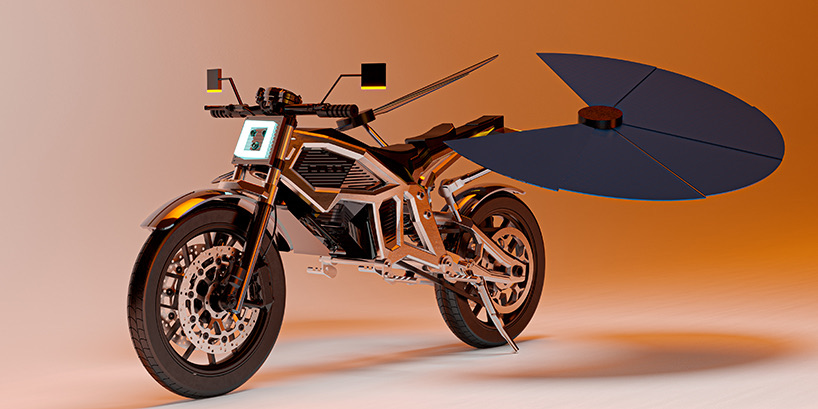
MASK Solaris Electric Motorcycle Unveiled: A Self-Charging Bike With Solar Wings
A Futuristic Concept That Uses Retractable Solar Panels to Charge Itself Range anxiety may soon become a thing of the...
 Motocycles
BBM Hiro Electric Motorcycle (2026): The 9-Minute Charging Revolution from Spain
Spanish startup BBM Motorcycles has unveiled the Hiro, an electric motorcycle that can add 62 miles of range in just...
Funding Breakdown and US Expansion Strategy
The £11 million Series A includes equity from Venrex, Future Planet Capital, and others, plus £3 million working capital from HSBC UK. An additional £500,000 was provided by the West Midlands fund, supporting overseas growth in Europe and North America. Funds will scale US operations, refine technology, and increase bike availability. Maeving’s direct-to-rider model, via partner Ekho for sales, registration, and delivery across 50 states, maintains control over pricing and data but raises logistics questions for non-metro areas.
US traction started with California footholds, including LA test rides, driving demand for RM1, RM1S, and now RM2. Early owners report positive experiences from California to Pennsylvania, though mobile servicing draws discussion in forums. Financing options include $500 minimum deposits over 12-84 months.
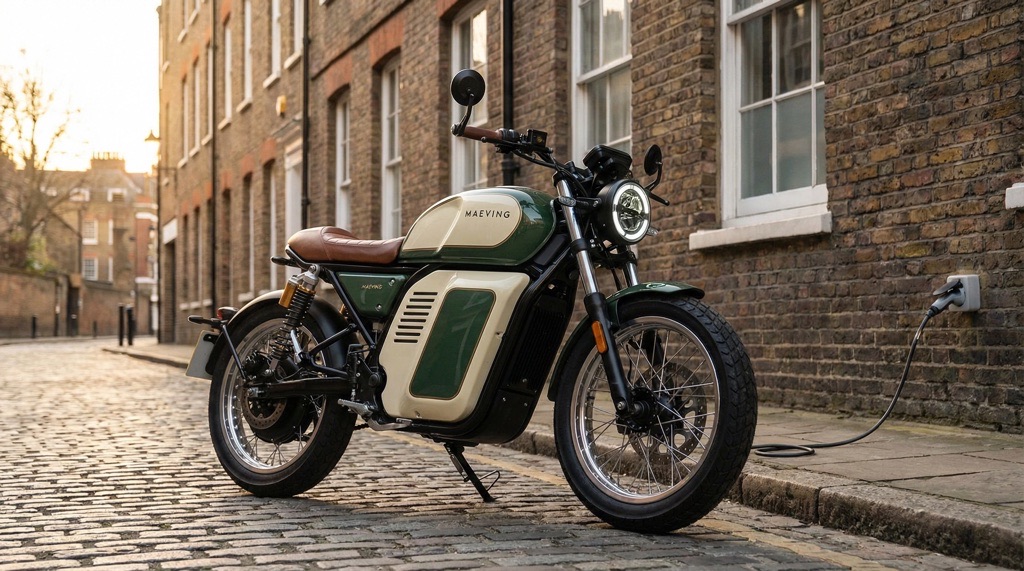
Product Focus: Removable Batteries for Everyday Riding
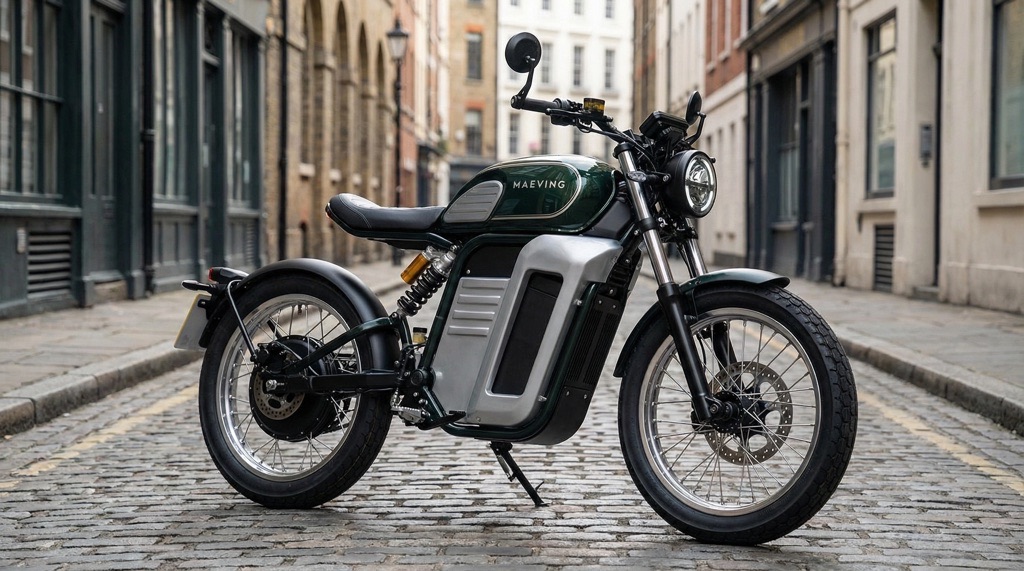
Maeving’s core innovation is removable batteries, allowing charging anywhere without fixed infrastructure. This appeals to urban riders facing range anxiety and charger scarcity. Models blend classic cafe racer aesthetics with practical features: RM1 for city commuting at 45 mph, RM1S for faster runs up to 70 mph, and RM2 as the first two-up option with expanded utility. All built in the UK, they target daily use over hype, with running costs around £0.01 per km.
2025 milestones included RM1S deliveries and rider story campaigns. For 2026, expect more test rides, RM2 rollout, and potential new markets, though Asia remains unconfirmed.
Challenges in Scaling Direct Sales
Direct sales cut dealer costs but challenge logistics. Rural US buyers rely on home delivery and mobile service, sparking owner group talks. Maeving must tighten after-sales to sustain buzz. Production at 1,600 units annually limits scale; funding aims to ramp this, but battery costs from lithium fluctuations pose risks. No full dealer network yet—will this hold as volume grows?
Comparison with Competitors
| Model/Brand | Top Speed | Range | Price Range (est.) | US Availability | Battery |
|---|---|---|---|---|---|
| Maeving RM1 | 45 mph | 80 mi | Not specified | Direct, 50 states | Removable |
| Super Soco Hunter | ~59 mph | ~75 mi | $5,000-$6,000 | Limited dealers | Fixed |
| Gogoro SuperSport | 56 mph | ~65 mi (swappable) | $3,500+ (Asia focus) | US pilot | Swappable network |
| Zero S | 98 mph | 100+ mi | $11,000+ | Dealers | Fixed |
Maeving stands out with removable batteries and retro style at urban speeds, undercutting premium like Zero on infrastructure needs but trailing in top speed/range. Super Soco offers a similar urban focus; Gogoro excels in swaps but requires stations.
Verdict
Maeving’s £11M positions it strongly for US dominance in practical e-motorcycles, ideal for urban commuters valuing style, home charging, and affordability over high performance. Success hinges on logistics fixes and production ramps—watch for RM2 reception and 2026 sales data. Best for city riders ditching cars; skeptics await dealer expansion proof.