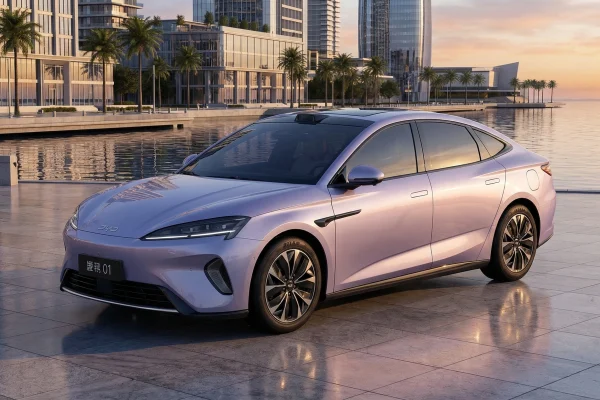
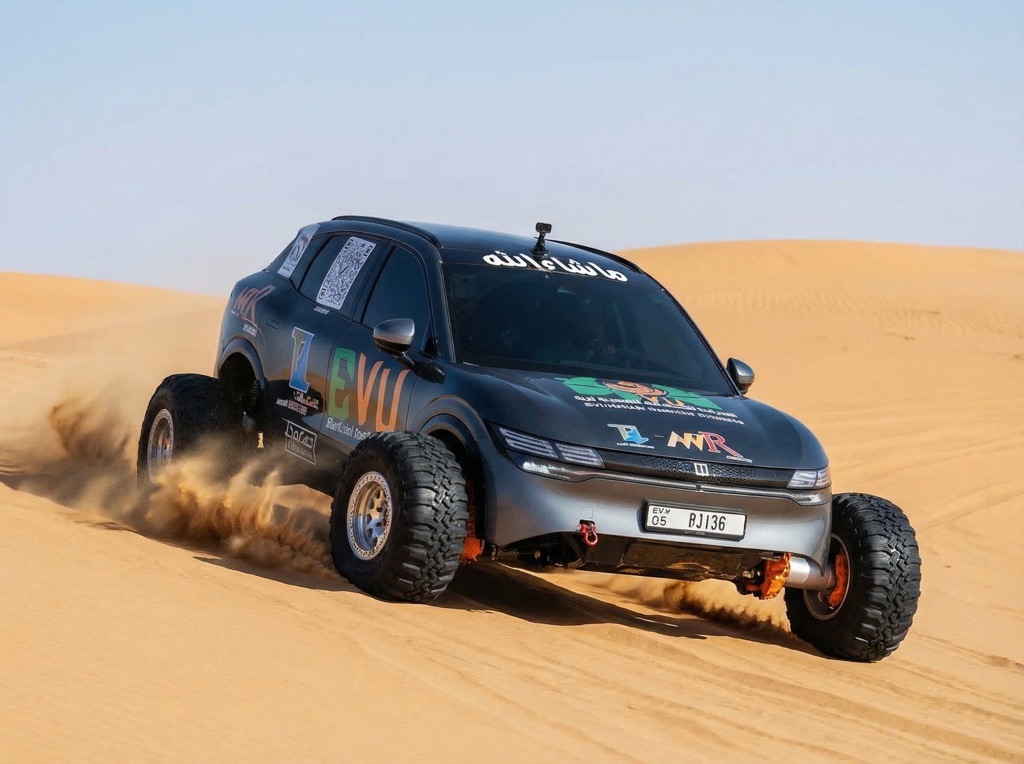
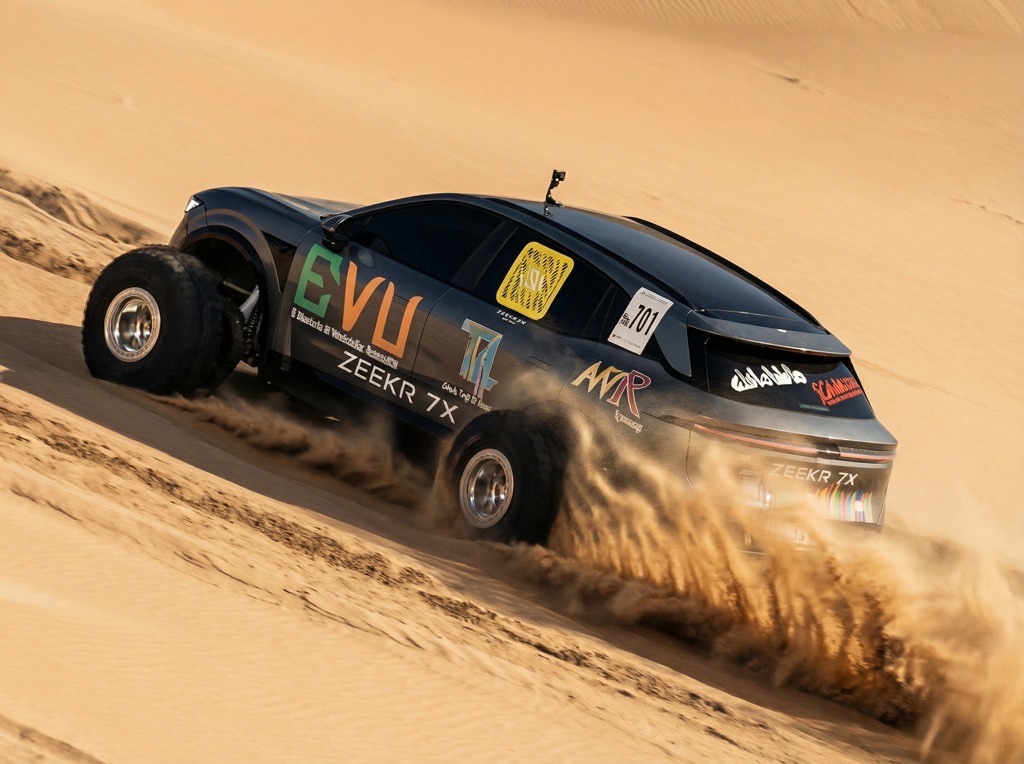
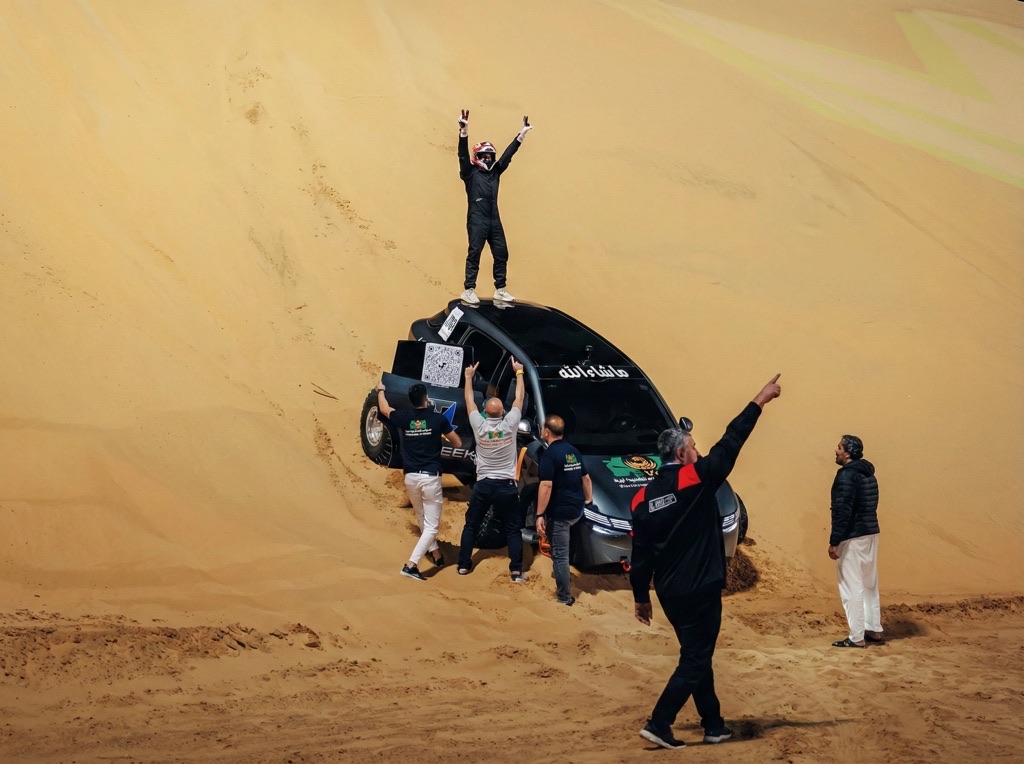
On December 31, 2025, a specially modified Zeekr 7X AWD Performance became the first all-electric vehicle to summit the legendary Moreeb Dune in Abu Dhabi, completing the 300-meter climb in just 7.343 seconds and setting a new record for both electric and hybrid vehicles. The achievement marks a watershed moment for EV performance, proving that electric powertrains can dominate terrain traditionally ruled by gasoline-powered trucks.
The Challenge: Moreeb Dune’s Extreme Terrain
Moreeb Dune, known locally as the “Hill of Fear,” presents one of the most demanding driving challenges on Earth. Standing 300 meters tall—equivalent to a 90-story building—the dune features a punishing 50-degree slip-face that has claimed countless vehicles. The soft, shifting sand actively works against upward momentum, pulling vehicles downward and testing both driver skill and mechanical capability. For decades, only heavily modified gasoline-powered 4×4 trucks have successfully tackled the climb, making the Zeekr’s achievement particularly significant.
The record attempt took place during the Moreeb Dune Cars Championship at the Liwa International Festival, a prestigious motorsport event that draws enthusiasts from across the globe and celebrates Emirati automotive heritage.
Technical Specifications: Power Meets Precision
| Specification | Details |
|---|---|
| Model | Zeekr 7X AWD Performance (modified) |
| Powertrain | Dual-motor system |
| Output | 646 horsepower, 710 Nm torque |
| Electrical Architecture | 800V system |
| Key Technology | Torque vectoring system |
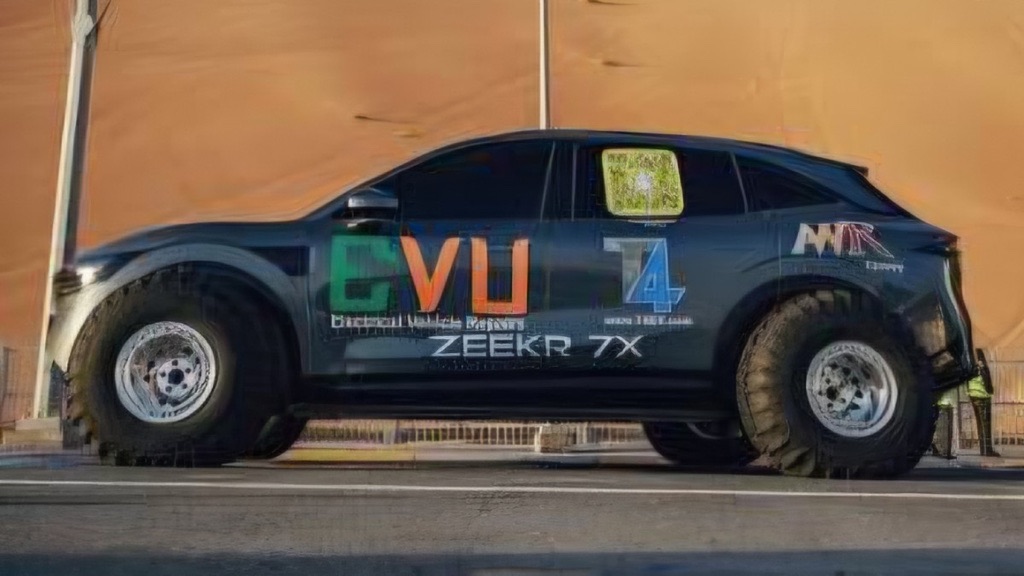
| Modifications | Off-road tires, upgraded suspension, and extended front/rear axles |
| Dune Climb Time | 7.343 seconds |
The record-setting vehicle was based on the production Zeekr 7X AWD Performance model, which produces 646 horsepower and 710 Nm of instant torque from its dual-motor setup. The critical advantage of electric powertrains became immediately apparent: EVs deliver maximum torque from zero RPM, eliminating the need for a running start or gear selection. This instantaneous power delivery proved decisive on Moreeb’s treacherous surface.
The vehicle’s advanced 800V electrical architecture maintained consistent power delivery throughout the climb, preventing the voltage sag that might occur in conventional systems under extreme load. A sophisticated torque vectoring system dynamically distributes power between wheels, preventing wasteful spinning in the soft sand and maximizing traction on each wheel independently.
Strategic Modifications: Minimal Changes, Maximum Impact
Notably, the AW Rostamani Group team made only targeted modifications to the production vehicle. The electric motors and battery pack remained identical to standard models, with changes limited to:
- Specialized off-road tires designed for sand traction
- Upgraded suspension geometry to absorb impacts
- Extended front and rear axles for increased footprint stability
This conservative approach underscores a critical message: the Zeekr 7X’s capability stems from its fundamental EV architecture rather than exotic modifications. The production version retains the same powertrain and battery technology, suggesting that buyers could theoretically access similar performance characteristics without requiring extensive customization.
 Cars
Cars
Eli Zero: The Quirky, Compact, and Fun Electric City Ca
Introduction to the Eli Zero Are you tired of battling traffic jams, fighting for parking spots, and constantly searching for...
 Cars
Cars
Lucid Air Grand Touring Hits 520 km in NAF Winter Test at -31°C – Proves EV Range in Extreme Cold
The Lucid Air Grand Touring achieved 520 km of range in the 2026 NAF Winter Test, the coldest on record...
 Cars
Cars
Polestar Overtakes Tesla and Volkswagen in Sweden With a Surprise December EV Rally
Polestar delivered one of the biggest shocks in Sweden’s electric vehicle market in December, as the Polestar 4 surged past...
Production Vehicle Specifications and Pricing
The standard Zeekr 7X is a full-size luxury SUV measuring 4,787 mm in length and 1,930 mm in width, positioning it at the larger end of the mid-size SUV segment. Interior space includes seating for families and 765 liters of cargo capacity, making it practical for daily use despite its performance credentials.
Pricing varies significantly by market:
- United Arab Emirates: Base model from 169,900 AED (€39,490); Performance variant from 209,900 AED (€48,780)
- Europe: Base model from €52,990
- China: Base model from €27,300
The substantial price variance reflects regional market positioning, with Chinese pricing significantly lower than European and Middle Eastern markets.
Competitive Context: EV Performance Benchmarking
The Zeekr 7X’s Moreeb achievement positions it against other high-performance electric SUVs, though direct comparisons are complicated by the specialized nature of dune climbing. Traditional performance metrics like 0-100 km/h acceleration times provide limited insight into sand-driving capability, where torque vectoring, suspension geometry, and tire technology become paramount.
The record’s significance lies not in outright speed but in proving EV capability in an environment where electric vehicles were previously considered unsuitable. Gasoline-powered vehicles have dominated desert motorsport for decades, and this achievement challenges that assumption fundamentally.
Implications for EV Market Perception
The Moreeb record addresses a persistent consumer concern: that electric vehicles are limited to urban driving and paved roads. By demonstrating EV performance in extreme off-road conditions, Zeekr has provided tangible evidence that modern electric powertrains can match or exceed traditional engines in demanding environments.
This achievement carries particular weight in the Middle East, where automotive culture emphasizes performance and capability. The UAE’s vision for sustainable mobility gains credibility when demonstrated through motorsport achievement rather than marketing claims alone.
However, the record’s practical relevance to typical buyers remains limited—most Zeekr 7X owners will never attempt dune climbing. The true value lies in psychological reassurance: if an EV can conquer the “Hill of Fear,” it can certainly handle daily commuting, highway driving, and occasional off-road excursions.
Verdict
The Zeekr 7X’s Moreeb Dune conquest represents a genuine milestone in EV performance validation, not a mere marketing spectacle. The 7.343-second climb proves that modern electric SUVs possess the power, torque delivery, and control systems to excel in extreme environments traditionally dominated by gasoline engines. For buyers seeking a spacious, powerful luxury SUV with proven off-road credentials, the 7X offers compelling performance backed by real-world achievement. The record is most relevant to performance-oriented buyers in the Middle East and Europe who value both sustainability and capability, and to anyone skeptical that EVs can deliver genuine driving excitement. The production vehicle’s unchanged powertrain and battery suggest this isn’t a one-off stunt but rather a demonstration of accessible technology, making the Zeekr 7X a credible choice for those unwilling to compromise performance for electrification.