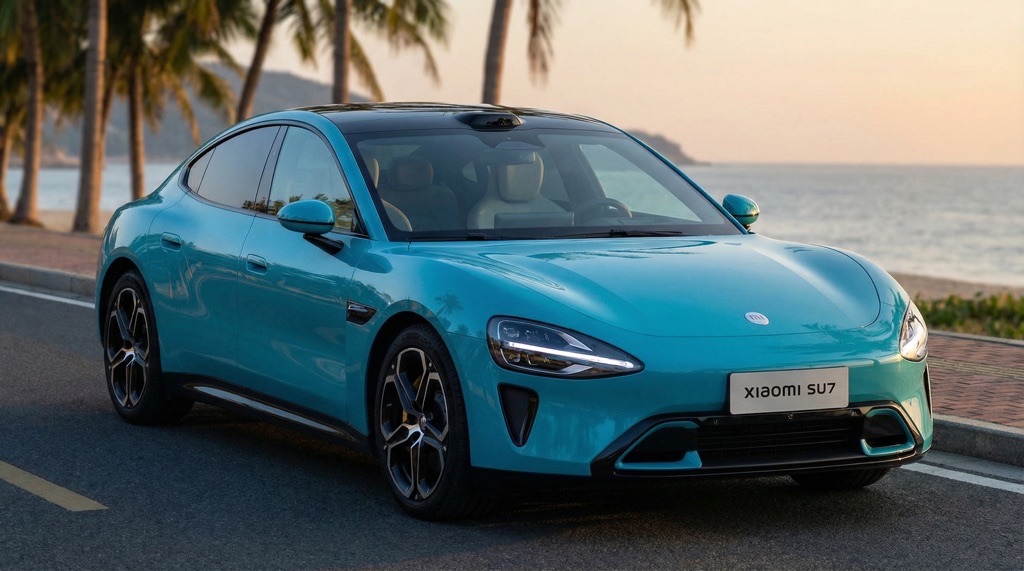
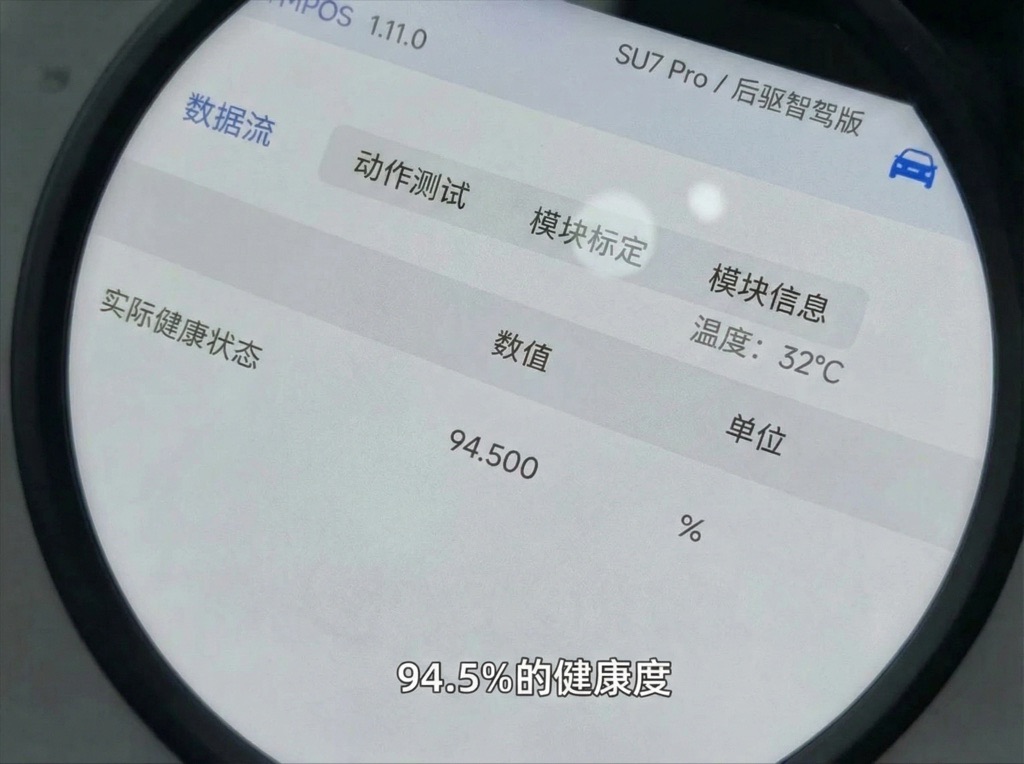
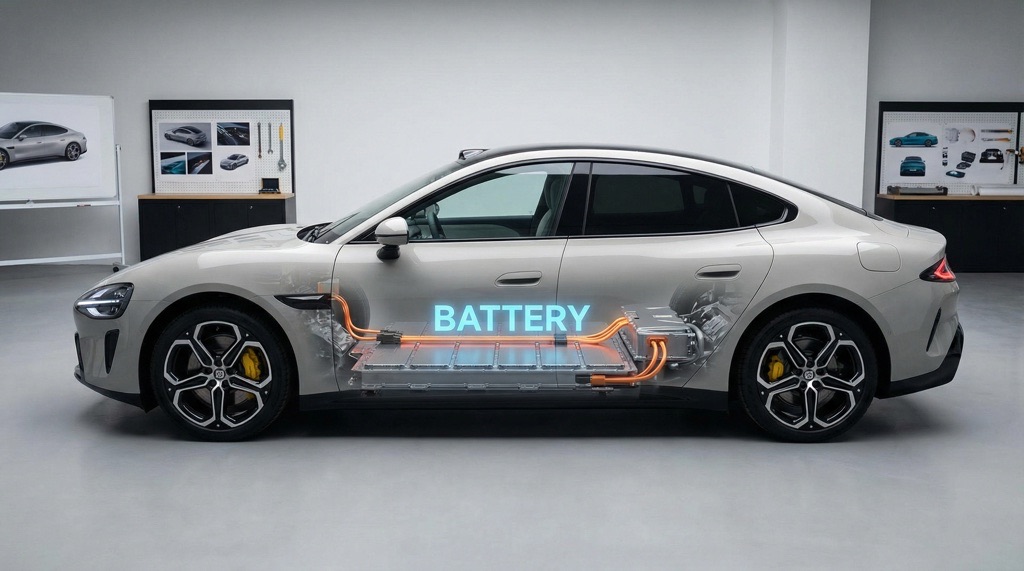
A Xiaomi SU7 has maintained 94.5% battery health after driving 265,000 km in just 18 months, demonstrating exceptional battery durability in real-world use. This milestone, reported on February 3, 2026, highlights the reliability of the SU7’s battery pack under high-mileage conditions, offering reassurance to buyers concerned about long-term EV ownership costs. For electric vehicle owners, this data underscores how modern lithium batteries can retain capacity far beyond typical expectations, potentially reducing replacement needs over a vehicle’s life.
Background: Xiaomi’s Rapid Rise in the EV Market
Xiaomi entered the electric vehicle sector in 2021 with Xiaomi EV, launching its first model, the SU7 sedan, on March 28, 2024. Positioned as a direct rival to Tesla’s Model 3, the SU7 quickly gained traction in China. In 2025, Xiaomi EV delivered 411,837 vehicles, with the SU7 accounting for 258,164 units and the YU7 SUV adding 153,673 units, bringing cumulative deliveries to 551,308.
The company plans to launch four new models in 2026, including its first extended-range EV (EREV). Recent developments include pre-orders for a facelifted SU7, set for official launch in April 2026, and the SU7 Ultra launched on February 27, 2025, for performance-focused buyers. Xiaomi’s EV strategy leverages its consumer electronics expertise, integrating HyperOS for seamless smartphone connectivity across a 16.1-inch infotainment screen and 8-inch rear display.
Key Specifications
| Variant | Power Output | Torque | 0-100 km/h | Top Speed | Battery Capacity | Range (CLTC) | Peak DC Charging | Voltage Platform |
|---|---|---|---|---|---|---|---|---|
| Standard | 320 hp | 400 Nm | 5.7 s | 210 km/h | 73.6 kWh (BYD Blade LFP) | 720 km | 250 kW | 752V |
| Pro | 320 hp | 400 Nm | 5.7 s | 210 km/h | 94.3 kWh (CATL Qilin NMC) | 902 km | 250 kW | 752V |
| Max | 690 hp | 838 Nm | 2.78 s | 265 km/h | 101 kWh (CATL Qilin NMC) | 835 km | 490 kW | 897V |
| Ultra | Details not yet confirmed | Details not yet confirmed | Details not yet confirmed | Details not yet confirmed | Details not yet confirmed | Details not yet confirmed | Details not yet confirmed | Details not yet confirmed |
Note: Real-world range estimates are lower than CLTC figures; the Pro variant achieved 784 km in mixed driving tests. Battery warranty is 8 years/150,000 km across trims.
Battery Durability: The 265,000 km Milestone
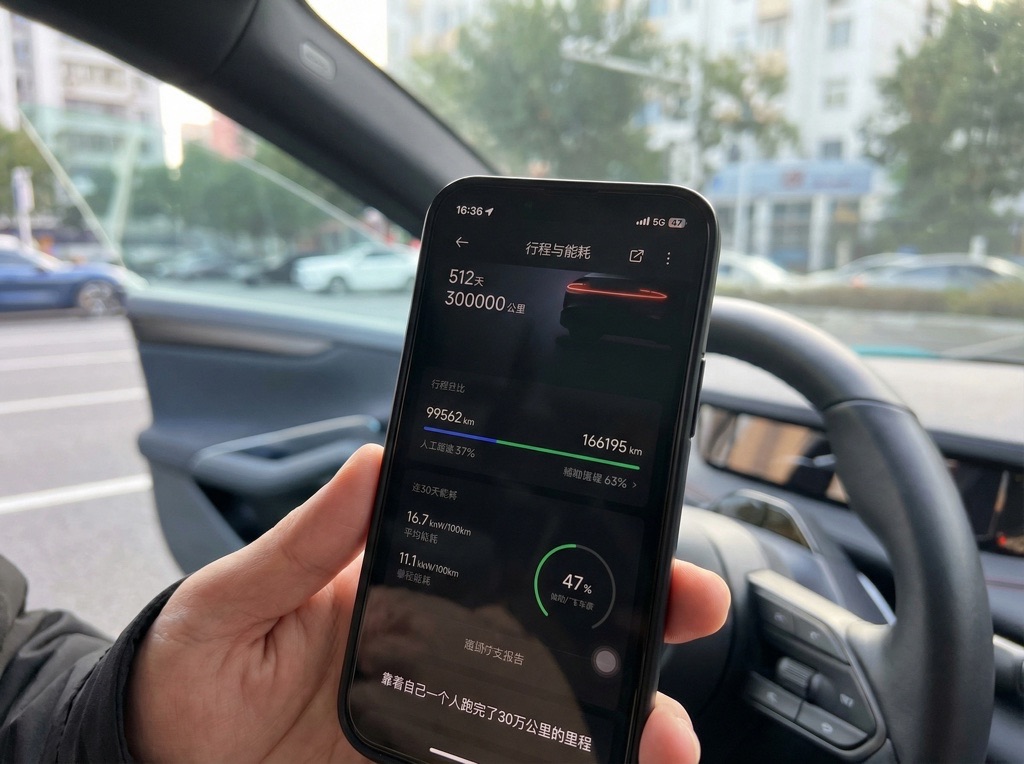
The standout achievement comes from a single SU7 owner who accumulated 265,000 km in 18 months, with the battery retaining 94.5% health. This equates to an average of about 14,722 km per month, suggesting intensive use such as ride-hailing or fleet operations. Such a retention rate after high mileage indicates robust cell chemistry and thermal management, critical for EV adoption in high-utilization scenarios.
Supporting this, the next-gen SU7 Max completed a 24-hour endurance test covering 4,264 km, a record for mass-produced vehicles, surpassing Xpeng P7’s 3,961 km. Conducted from November 20-21, 2025, in Yancheng, China, the test included speeds up to 240 km/h and used a 101.7 kWh ternary lithium battery on an 897V platform. It added 670 km range in 15 minutes, matching the SU7 Ultra’s system.
 Cars
Cars
XPeng G6 Arrives in the UK With Ultra-Fast Charging and a Complete 2026 Overhaul
XPeng continues expanding its European presence, and following its official UK entry in early 2025, the brand is introducing a...
 Cars
Cars
Tesla’s Robotaxi Crash Rate 9 Times Worse Than Human Drivers, NHTSA Data Reveals
Tesla’s Robotaxi Safety Crisis: 9x Higher Crash Rate Than Human Drivers Tesla’s autonomous vehicle program faces a significant safety challenge....
 News
News
BYD Deploys 1360 kW Megawatt Chargers Adding 400 km Range in 5 Minutes – Largest Network Planned
BYD has begun deploying Megawatt Flash Charging stations with 1360 kW peak power, capable of adding approximately 400 km of...
Durability extends to extreme tests: the SU7 Ultra passed China Automotive Technology and Research Center challenges, including 350 mm deep pits, 50 km/h speed bumps, rough gravel, continuous cornering, and long highway runs without battery failure.
Performance and Charging: High-Voltage Advantages
The SU7 Max’s V6s Plus motor spins to 22,000 rpm, enabling a 265 km/h top speed and 2.78-second 0-100 km/h sprint. Real-world testing showed consistent 220-230 kW charging from 10-50% on 752V models, with the 897V Max hitting 490 kW peaks (limited by infrastructure). Dual-gun DC charging and automatic battery preconditioning optimize sessions, adding 620 km (approx. 385 miles) in 18 minutes at 350 kW chargers.
Thermal management prevents power throttling during aggressive driving, as noted by owners comparing it favorably to the Tesla Model S and Porsche Taycan 4S. AC charging at 11 kW takes 7-9 hours for a full charge, suitable for home use.
Real-World Ownership Insights
Reviewers report 784 km real-world range on the Pro in moderate conditions, versus CLTC’s 902 km. Features like standard LiDAR, air suspension, and 16-speaker audio enhance appeal. One tester stated, “I’ve owned a Model S and a Taycan 4S. The SU7 Max feels like it costs twice what I paid,” praising tech integration. A Hindustan Times columnist echoed this after a test drive, citing impressive range and software.
Critical perspective: CLTC ranges inflate expectations—real-world drops 15-30%. Infrastructure limits 490 kW charging, and high-mileage data like 94.5% retention needs broader sampling for confirmation. Unanswered: Exact battery chemistry in the 265,000 km SU7 and long-term degradation beyond 18 months.
Comparison with Competitors
| Model | 0-100 km/h | Range (CLTC / Real Est.) | Battery Capacity | Peak DC Charging | LiDAR | Price Context |
|---|---|---|---|---|---|---|
| Xiaomi SU7 Pro | 5.7 s | 902 km / 784 km | 94.3 kWh | 250 kW | Standard | Tesla Model 3-beating price |
| Tesla Model 3 | 5,6 s (est.) | N/A / 585 km (363 mi EPA) | ~75 kWh | 250 kW | Not available | Higher base price |
| XPeng P7 (updated) | Details not confirmed | Endurance: 3,961 km (24h) | Details not confirmed | Details not confirmed | Details not confirmed | Competitive in China |
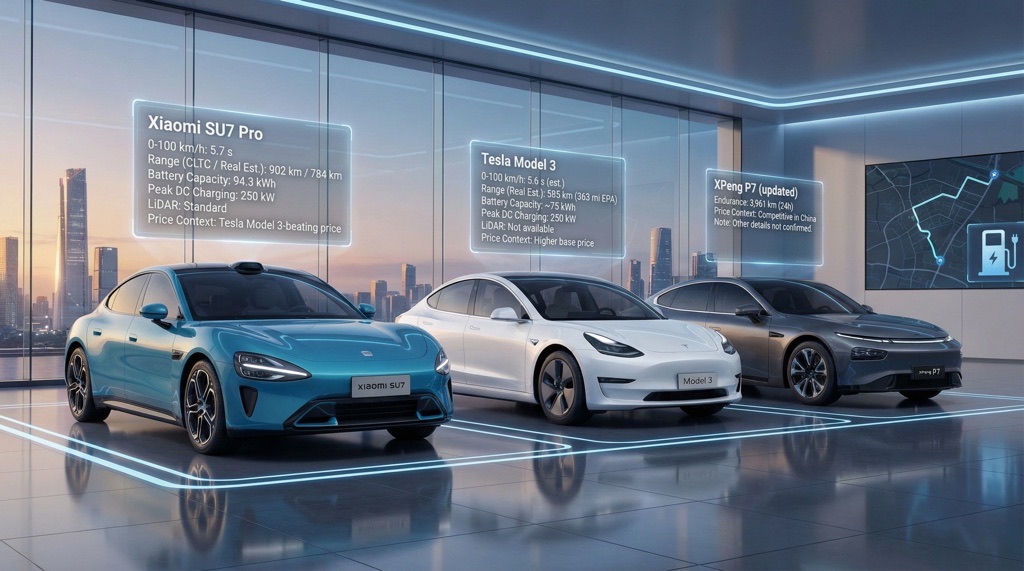
The SU7 edges Tesla Model 3 in charging curve sustainment and features like LiDAR/air suspension at similar power. It beat XPeng P7’s endurance record by 303 km. Versus Porsche Taycan (3,425 km endurance), SU7 Max shows superior range potential.
Verdict
The Xiaomi SU7 sets a benchmark for battery longevity with 94.5% health at 265,000 km, combined with record endurance and fast charging, making it ideal for high-mileage users like fleet operators or long-distance commuters in China. Buyers prioritizing durability and tech over global service networks will find it compelling, though Western markets await expansion. Unresolved questions around scaled data and international availability temper full endorsement—monitor 2026 launches for updates.