
From Smartphones to Electric Cars — Xiaomi’s Fastest Expansion Yet
Not long ago, Xiaomi was primarily known for its smartphones, smart home devices, and affordable wearables. Today, the Chinese tech giant is rapidly transforming into one of the fastest-growing electric vehicle manufacturers in the world.
During a recent livestream, Xiaomi CEO Lei Jun revealed the company’s next major ambition: delivering 550,000 electric vehicles in 2026. If achieved, this would mark another massive leap forward after Xiaomi’s already impressive EV performance in 2025.
Xiaomi’s EV Growth in Context: Why 550,000 Matters
To understand the ambitious nature of this target, it’s essential to examine Xiaomi’s recent trajectory.
Xiaomi EV Sales Performance
| Year | Target Deliveries | Actual Deliveries |
|---|---|---|
| 2024 | — | Early ramp-up |
| 2025 | 350,000 | 410,000+ |
| 2026 (target) | — | 550,000 |
Xiaomi reached its original 2025 target of 350,000 units by early December, far ahead of schedule. By year-end, deliveries exceeded 410,000 vehicles, meaning the company now expects around 34% growth year-over-year in 2026.
For a brand that only entered the automotive industry a few years ago, this scale-up is extraordinary.
A Late Entry — But a Rapid Rise
Xiaomi officially announced its entry into the automotive sector on March 30, 2021. At the time, many industry observers believed the company was too late, with Tesla and established Chinese EV brands already dominating the market.
Those doubts have since been proven wrong.
Xiaomi has become one of the quickest EV startups to reach profitability. In Q3 2025, the company’s EV division reported its first quarterly profit, after delivering 108,796 vehicles in just three months — a milestone most new automakers take years to achieve.
Current Lineup: SU7 and YU7 Drive Early Success
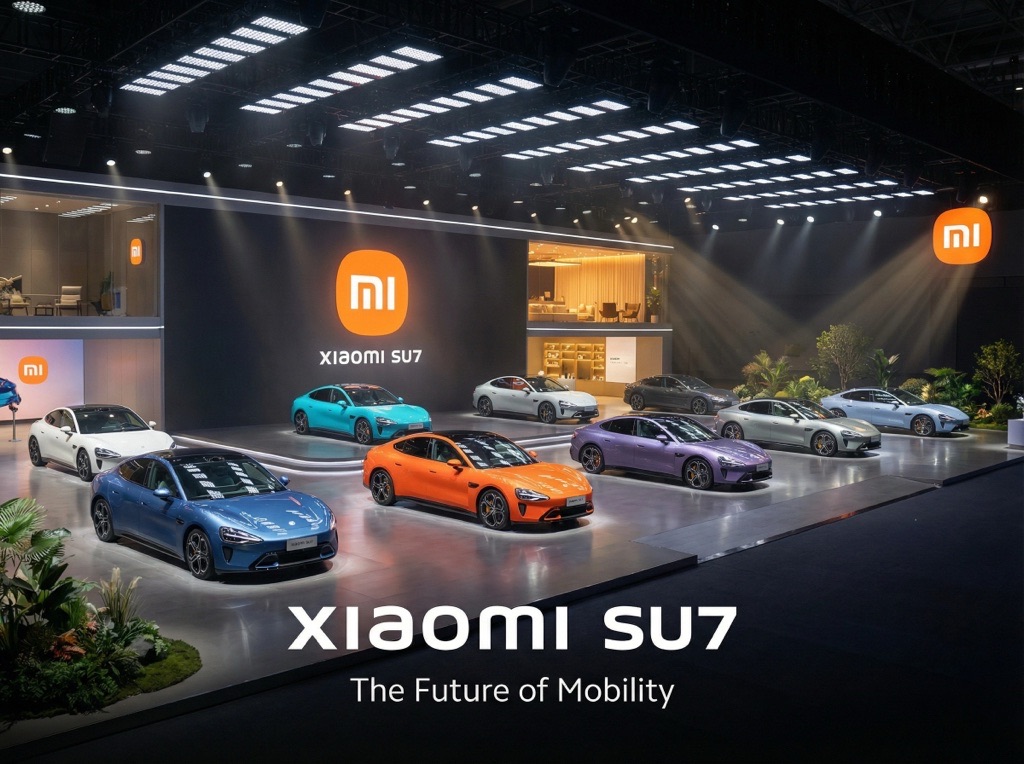
Xiaomi’s rapid growth has been powered by two core models:
-
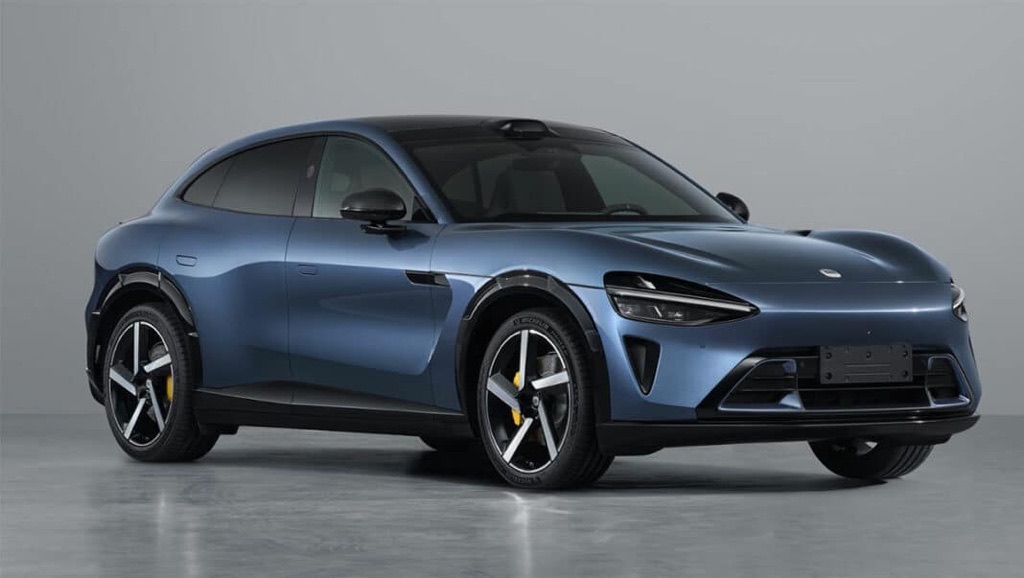
Xiaomi SU7 – a sleek, performance-focused electric sedan
-
Xiaomi YU7 – a larger SUV aimed at family buyers
 Cars
Cars
Everrati’s Electrified Mercedes-Benz Pagoda: Classic Style Meets Modern EV Power
Introducing the Electric Pagoda Restomod Everrati, the UK company known for electrifying classic cars like the Ford GT40 and Porsche...
 News
News
Chevy Equinox EV Scores 722/1000 in J.D. Power Study—Below Mass-Market Average
Chevy Equinox EV Scores 722/1000 in J.D. Power Study—Below Mass-Market Average The Chevrolet Equinox EV scored 722 out of 1,000...
 Cars
Cars
2027 BMW M3 Electric Packs Quad Motors and Over 100 kWh Battery for Track-Ready Performance
BMW’s 2027 electric M3 introduces four independent electric motors—one per wheel—on the Neue Klasse platform, delivering unprecedented torque control without...
These two vehicles established Xiaomi as a credible EV brand almost overnight. However, the company knows that two models are not enough to reach 550,000 annual deliveries.
2026 Product Offensive: Four New Models Planned
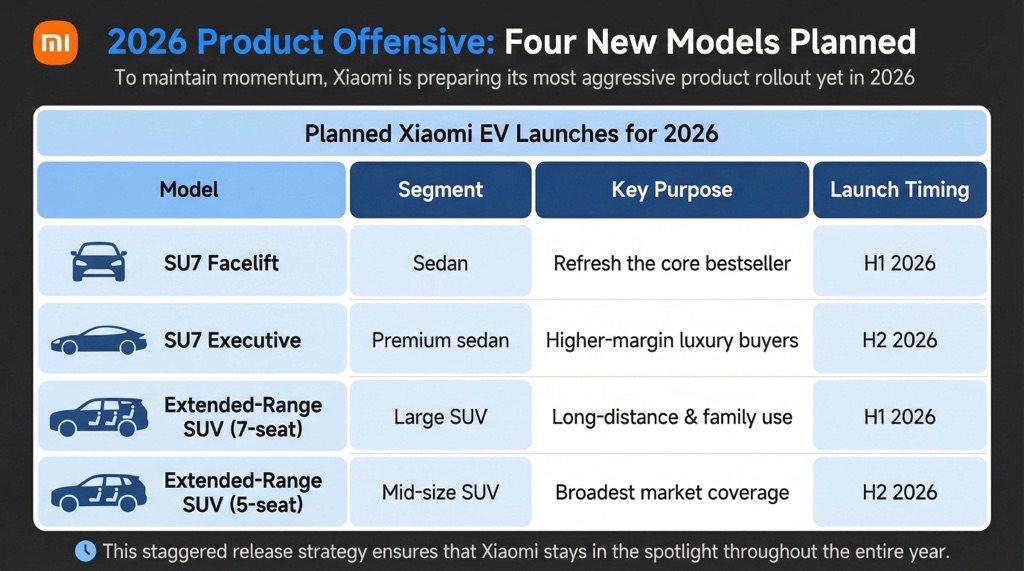
This staggered release strategy ensures that Xiaomi stays in the spotlight throughout the entire year.
Why Extended-Range EVs Are a Strategic Shift
One of the most important changes in Xiaomi’s strategy is its move into extended-range electric vehicles (EREVs).
Unlike pure battery-electric vehicles, EREVs use:
-
An electric motor for driving
-
A small gasoline engine is only to recharge the battery, not to drive the wheels
Why This Matters
-
Reduces range anxiety
-
Appeals to buyers in regions with weaker charging infrastructure
-
Expands Xiaomi’s addressable market beyond pure BEV customers
By offering both five-seat and seven-seat extended-range SUVs, Xiaomi is clearly targeting mainstream family buyers — a crucial segment for volume growth.
Timing, Volume, and Market Confidence
December 2025 alone saw over 50,000 Xiaomi EV deliveries, a new monthly record for the company. Official confirmation will arrive with the next China Passenger Car Association (CPCA) report, but momentum is undeniable.
Xiaomi’s ability to:
-
Scale production rapidly
-
Launch multiple models in parallel
-
Achieve early profitability
suggests that the company is no longer experimenting — it is executing.






Bigger Than Phones: Xiaomi Becomes a Serious Automaker
Xiaomi’s EV journey proves that technology companies can transition into car manufacturing faster than traditional automakers expected. Strong software integration, aggressive pricing, and a smartphone-style product cadence give Xiaomi a unique advantage.
If the company reaches its 550,000 delivery target in 2026, it will firmly establish itself as one of the largest EV manufacturers globally — no longer a newcomer, and no longer “just a phone company.”
Final Outlook: Can Xiaomi Hit 550,000 EVs in 2026?
The target is ambitious, but the data support it:
-
Proven demand
-
Expanding lineup
-
Early profitability
-
Strong monthly delivery growth
If Xiaomi executes its 2026 roadmap as planned, it will not only meet expectations — it may redefine how quickly a tech company can become a global automotive powerhouse.