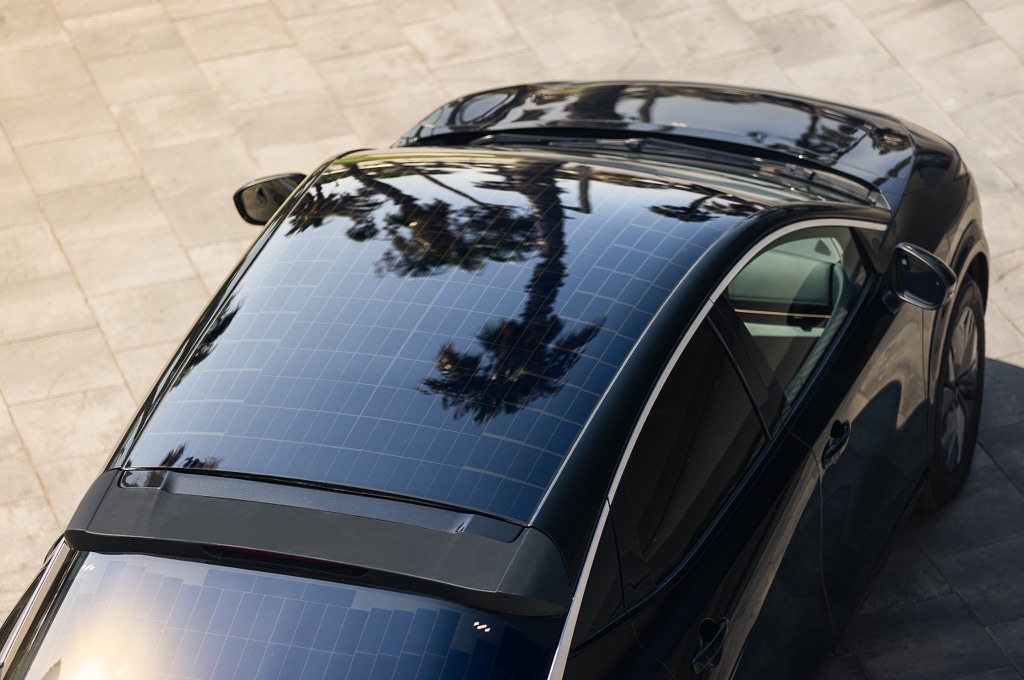

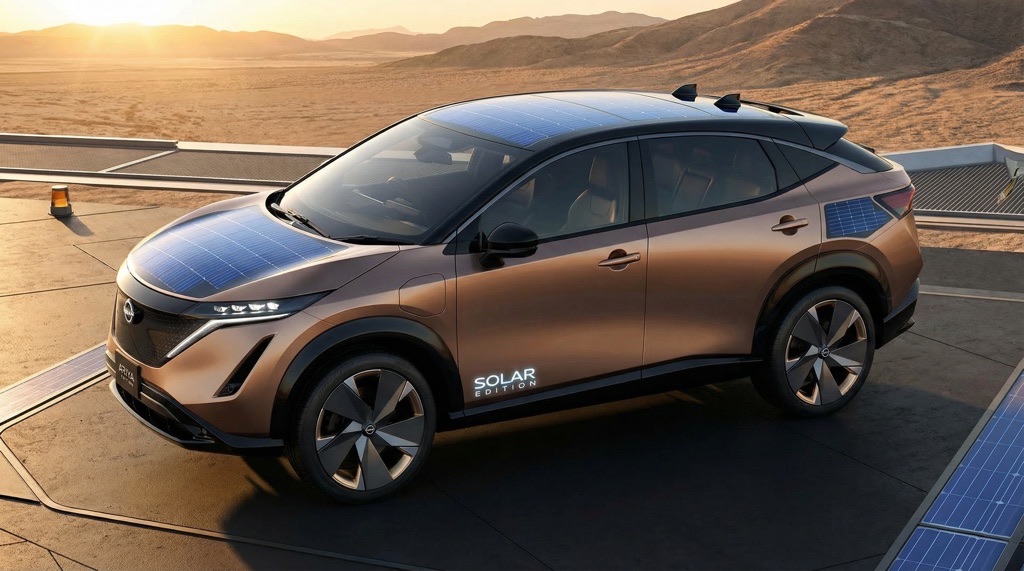
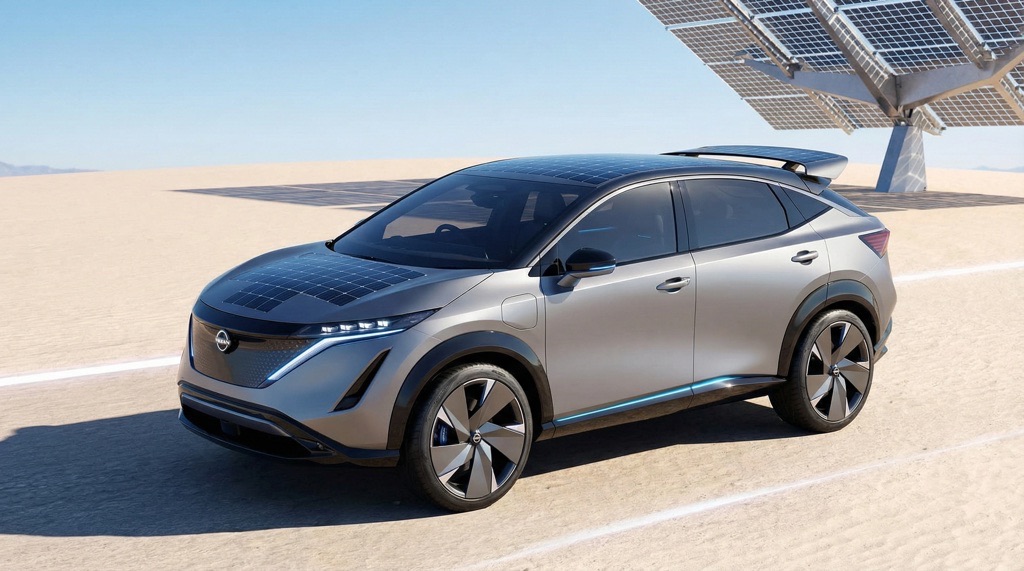
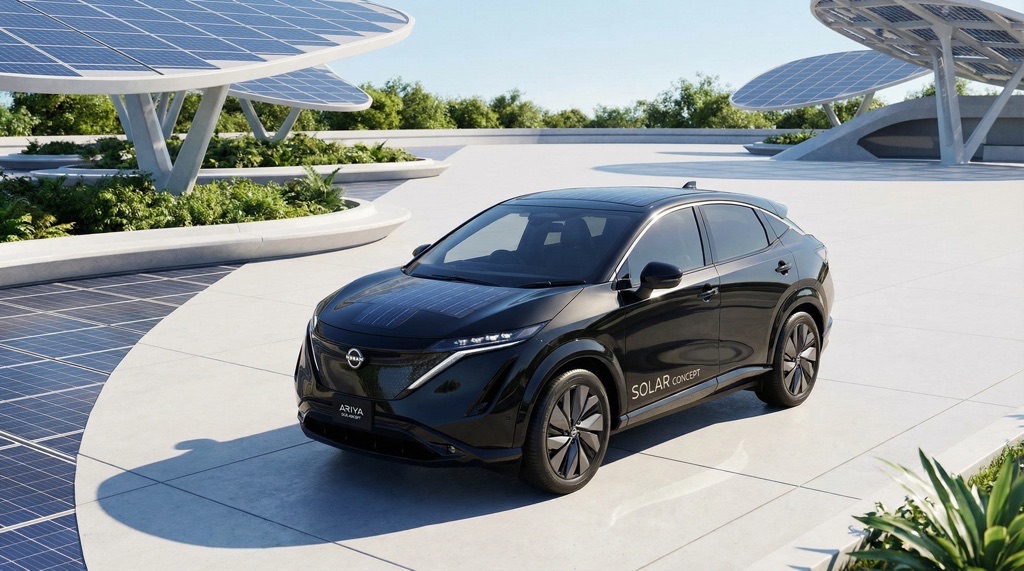
Nissan’s solar-powered Ariya concept generates up to 14.3 miles of additional daily range from sunlight captured by 3.8 square meters of panels on the hood, roof, and tailgate. Unveiled for Clean Energy Day, this prototype demonstrates potential to cut charging needs by 35-65% in sunny regions, addressing range anxiety where infrastructure lags.
Real-world tests confirm these gains on bright days, with annual averages varying by location: 6.3 miles in London, 10.9 in Barcelona, 11.7 in New Delhi, and 13.2 in Dubai. For EV owners in high-sun areas, this could mean fewer stops at chargers, extending practical usability.
Background: Nissan’s Push into Solar-Enhanced EVs
Nissan, a pioneer in mass-market EVs since the 2010 Leaf, continues innovating to meet its 2050 carbon-neutral goal across products and operations. The Ariya, launched in 2022, offers up to 330 miles of range and starts at £37,500 in its standard form, positioning Nissan strongly in the compact SUV EV segment.
This solar concept, developed by Nissan’s Advanced Product Planning team in Dubai and Powertrain Planning in Barcelona, partners with Dutch firm Lightyear for high-efficiency photovoltaic panels. Lightyear previously built a solar EV, adding over 40 miles daily, but ceased production after 12 units; similar efforts like Germany’s Sono Sion also stalled pre-production.
Shunsuke Shigemoto, Nissan’s Vice President of ePowertrain & ICE Powertrain, stated: “The solar-powered Ariya concept embodies Nissan’s belief that innovation and sustainability must move forward hand-in-hand. By exploring how vehicles can generate their own renewable energy, we are opening the door to new opportunities for customers—greater freedom, reduced charging dependency, and a cleaner future.”
 Cars
Cars
XPeng X9 PowerX Review 2026: Interior, Design, Features, Range & EREV System
XPeng Launches Its First Extended-Range MPV With Luxury Interior and 1,602 km CLTC Range XPeng has officially introduced the 2026...
 News
News
Mercedes-Benz VLE Offers 700 km WLTP Range to Redefine Electric Luxury Vans
Mercedes-Benz has unveiled the VLE, an all-electric luxury van with a 115 kWh battery delivering over 700 km on the...
 Cars
Cars
Kia EV2 to Debut on January 9 as the Brand’s Most Affordable Electric SUV
Kia has confirmed that it will unveil its smallest and most affordable electric vehicle yet — the Kia EV2 —...
Key Specifications
| Specification | Details |
|---|---|
| Solar Panel Area | 3.8 square meters (40.9 square feet) on hood, roof, tailgate |
| Max Daily Range Add (Ideal Sunny Day) | 14.3 miles (23 km) |
| Annual Average Range Add | London: 6.3 miles; Barcelona: 10.9 miles; Dubai: 13.2 miles |
| Charging Reduction Potential | 35-65% fewer sessions |
| Base Ariya Battery | 87 kWh (concept matches production) |
| Base Ariya Range | Up to 330 miles |
| Panel Aesthetics | Translucent matte-bronze tint over Akatsuki copper paint |
| Base Ariya Price (UK) | From £37,500 |
Technical Analysis: How the Solar System Works
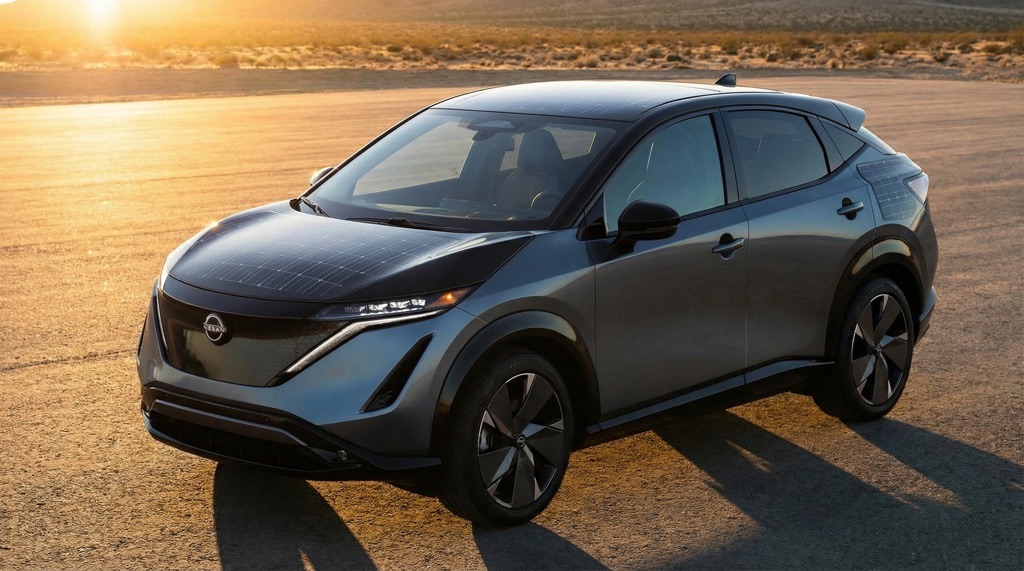
The panels convert sunlight to DC power via an advanced controller that optimizes energy flow to the 87 kWh battery, providing a trickle charge even during drives. On a two-hour sunny drive, it adds up to 1.9 miles, useful for garage-parked cars too. Location-dependent output highlights its value in sun-rich areas with sparse chargers, like parts of the Middle East or India.
Unlike bulkier prior attempts, Nissan’s integration is subtle—panels blend into the bodywork, maintaining the Ariya’s sleek design. This addresses aesthetics, a barrier for solar EVs. However, output drops in cloudy climates; London’s 6.3-mile average underscores regional limits.
Practical Benefits and Limitations
For daily drivers averaging under 40 miles, 14.3 miles covers much of the needs on sunny days, potentially enabling week-long drives without plugs in optimal spots. It supports Nissan’s sustainability aims but remains a concept—no production timeline announced.
Unanswered questions persist: cost integration, durability under weather extremes, and scalability. Past solar car ventures like Lightyear and Sono failed commercially, raising doubts about viability without breakthroughs in efficiency or falling panel prices.
Market Comparison
| Model/Concept | Daily Solar Range Add | Status | Key Notes |
|---|---|---|---|
| Nissan Ariya Solar | 14.3 miles (ideal) | Concept (2026) | 3.8 m² panels, subtle design |
| Lightyear 0 (past) | Over 40 miles | 12 units built, discontinued | Full solar body, high efficiency |
| Sono Sion (past) | 20 miles | Cancelled pre-production | Integrated panels, self-charging claim |
| Toyota Prius Solar Roof | ~4-6 miles (est.) | Production option | Hybrid, smaller area, Japan-focused |
Nissan’s approach outperforms Toyota’s modest Prius solar but trails defunct pure-solar rivals in peak output. It fits better as a range extender for existing EVs than a standalone solution.
Verdict
This Ariya concept proves solar is viable for meaningful range boosts in sunny markets, ideal for commuters in Dubai or Barcelona facing charger shortages. Urban drivers elsewhere gain modestly, but production hinges on cost and reliability—watch for updates. Skeptics note failed precedents, yet Nissan’s execution advances the tech credibly for cautious EV adopters.