
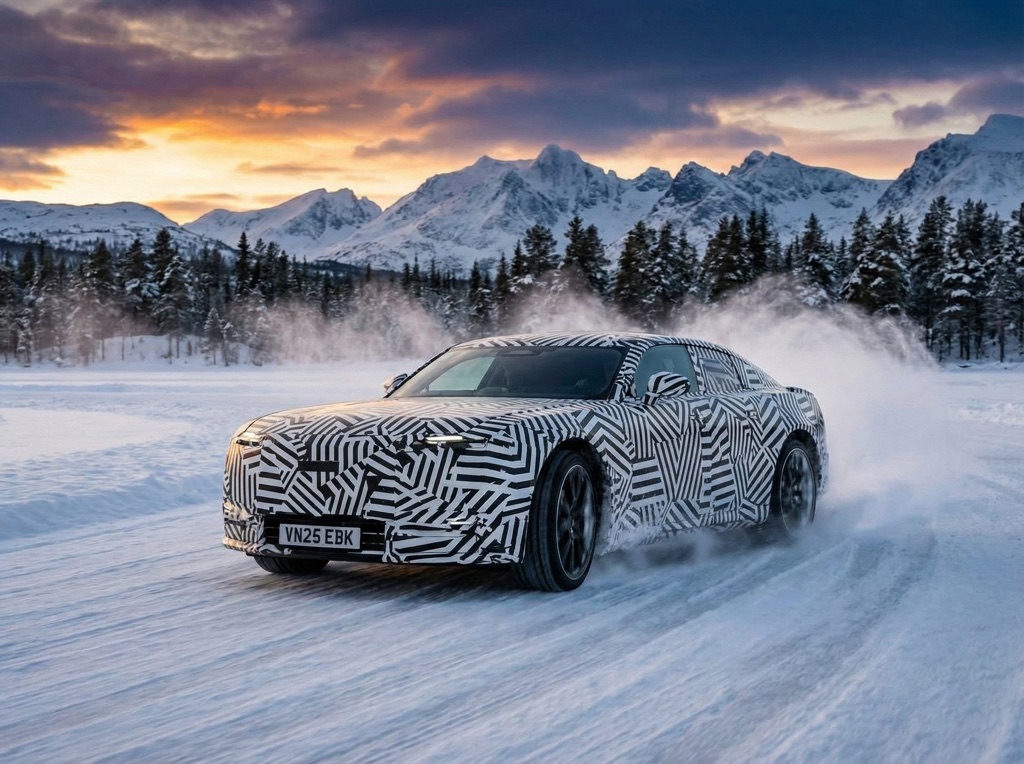
Jaguar’s upcoming electric sedan, based on the Type 00 concept, uses a novel split battery design with five modules totaling 120 kWh to deliver an EPA range of about 400 miles while maintaining a low seating position akin to a coupe. This approach avoids the high floor typical of EVs with underfloor packs, keeping the sedan’s height under 43.3 inches for sleeker proportions. For EV enthusiasts and luxury buyers, this innovation addresses a key pain point: combining long range with sports car-like driving dynamics in a four-door package.
Background: Jaguar’s Bold EV Pivot
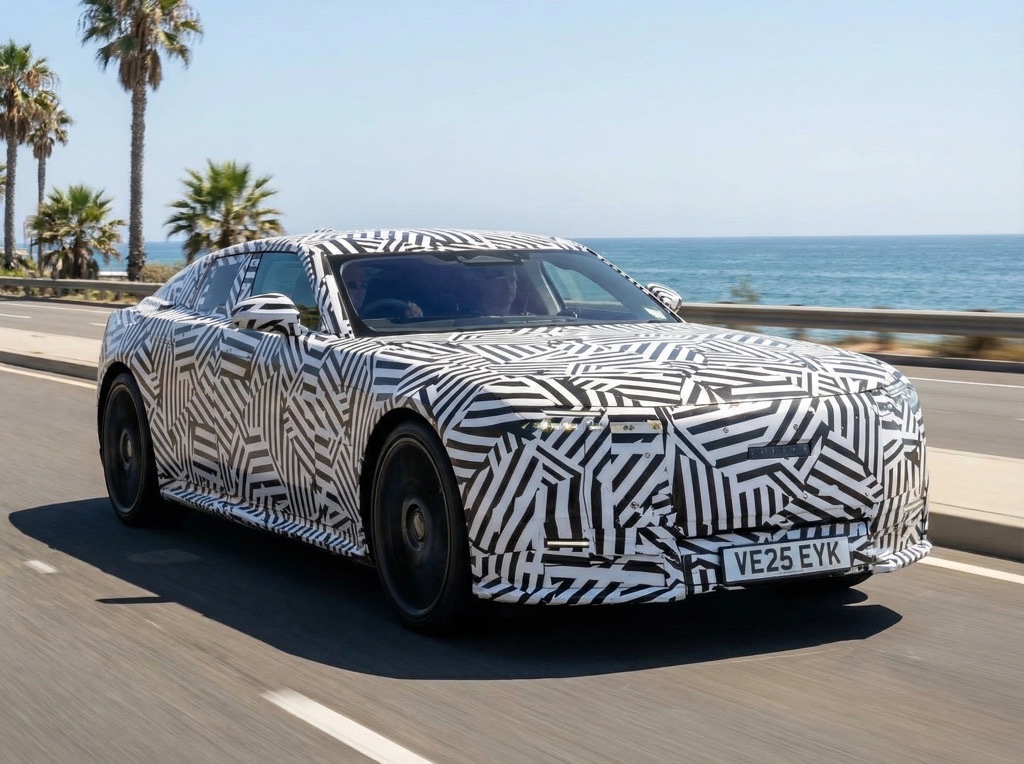
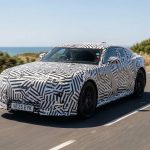
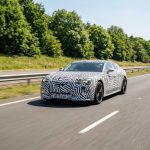
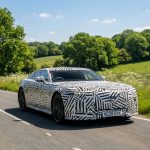
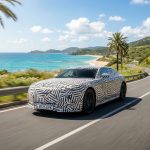
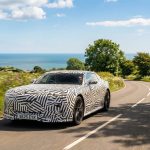
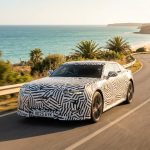
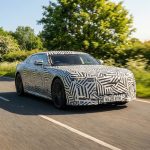
Jaguar is undergoing a complete transformation to an all-electric ultra-luxury brand, ditching internal combustion engines entirely. The Type 00 concept, revealed with a controversial minimalist design and ad campaign, previews this flagship sedan set for full reveal in summer 2026. Production prototypes—150 in total—have been tested extensively, confirming the shift from mainstream luxury competition with Mercedes-Benz and BMW to a bolder, high-end identity.
Built on the new Jaguar Electric Architecture (JEA), a dedicated EV platform, the sedan will be manufactured in the UK, unlike the I-Pace. It targets over 5.2 meters in length with no front trunk or rear window, emphasizing radical styling on 23-inch wheels. Jaguar aims for a perfect 50:50 weight distribution by centering the driver between axles, despite the massive size. This rebrand carries risks, as sales success remains uncertain amid the company’s pivot.
Key Specifications
| Specification | Details |
|---|---|
| Length | Over 204 inches (5.2 meters) |
| Height | Below 43.3 inches (1.4 meters) |
| Battery Capacity | 120 kWh total (1x 19 kWh front, 4x 25 kWh rear) |
| Range (EPA) | About 400 miles |
| Range (WLTP target) | Over 400 miles, up to 500 miles projected |
| Powertrain | Tri-motor (1 front, 2 rear); over 1,000 hp (target 1,030 hp) |
| Architecture | JEA with 800V support |
| Charging | Ultrafast DC, ~400 kW suggested; 200 miles in 15 min |
| Suspension | Air suspension, rear-wheel steering (6 degrees), torque vectoring |
| Wheels | 23-inch standard |
| Seating | 2+2 layout |











Battery Innovation: Split Packs for Low Seating
The standout feature is the battery layout: instead of a single underfloor pack that elevates the seats, Jaguar splits it into five modules—one 19 kWh pack forward of the cabin and four 25 kWh packs aft. This creates gaps for footwells, dropping driver seating height to match the F-Type sports car. At 120 kWh, it supports a 400-mile EPA range without compromising the low-slung profile.
Prototypes confirm coupe-like ergonomics in a long-wheelbase sedan, with cells positioned for balance. Weight likely exceeds two tons due to the large battery, but chassis tech like dual-rate springs and twin-valve damping (Range Rover-derived) manages it. Details on chemistry or supplier remain unconfirmed, though NMC lithium-ion around 100-110 kWh is speculated elsewhere.
 News
News
Tesla Model YL Debuts in Southeast Asia with 681 km WLTP Range and 6-Seat Layout at BIMS 2026
Tesla unveiled the Model YL, a three-row, six-seat version of its popular Model Y SUV, at the Bangkok International Motor...
 News
News
2026 Cupra Born Facelift: Design Overhaul Masks Subtle Powertrain Shuffle
TL;DR: 2026 Cupra Born Facelift Summary The 2026 Cupra Born facelift features a major shark nose design overhaul, growing 12mm...
 News
News
Tesla’s First Cybercab Rolls Off Giga Texas Line: $30,000 Robotaxi Production Begins
Tesla has achieved a critical milestone in its autonomous vehicle ambitions: the first production Cybercab rolled off the assembly line...
Performance and Dynamics: 1,000+ HP with Supercar Feel
Power comes from three motors—two rear, one front—for over 1,000 hp, targeting a total of 1,030 hp. Rear torque vectoring, six-degree rear steering, and four-corner air suspension enable agile handling despite the 5.2-meter length. Prototypes hit 150 mph smoothly in Comfort mode, with progressive acceleration avoiding typical EV torque surge.
Dynamic mode unlocks up to 900 hp at the rear for drifting capability, though not the primary focus. Perfect weight distribution pivots the car around the driver like a mid-engined supercar. Drive modes include brake regen and single-pedal driving via screens, no paddles. Top speed and 0-60 times are unconfirmed.
Platform and Charging: JEA’s High-Voltage Promise
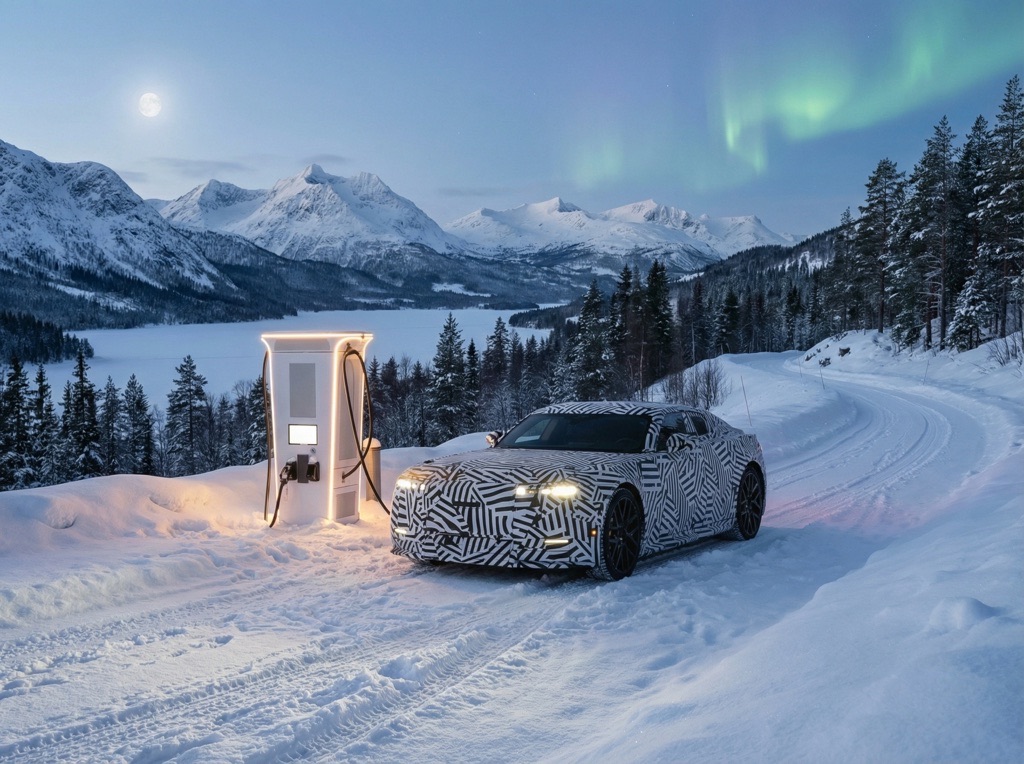
The JEA platform supports 800V architecture for fast charging, adding 200 miles in 15 minutes. Specific rates are pending, but 400 kW DC is suggested. No frunk, but a large boot is expected given the design. ADAS, infotainment, and Tesla Supercharger access are confirmed for Jaguar EVs.
Unanswered questions persist: exact pricing (luxury positioning expected), production timeline (delayed per some reports), and lower-power variants for efficiency. Range figures vary—EPA 400-430 miles, WLTP 400-500 miles—pending official confirmation.
Comparison with Competitors
| Model | Power (hp) | Battery (kWh) | Range (EPA/WLTP) | Key Edge |
|---|---|---|---|---|
| Jaguar Type 00 Sedan | 1,000+ | 120 | 400 mi EPA | Split battery, low seating |
| Porsche Taycan Turbo GT | 1,020 | 105 | 300+ mi EPA | Track focus, dual-motor variants |
| Audi e-tron GT RS | 637 | 105 | 303 mi EPA | Refined daily driver |
| Polestar 5 | 884 | 111 | 350+ mi WLTP | Lightweight chassis |
Jaguar outranges rivals with its larger battery while matching power, but its radical design and split pack set it apart from conventional underfloor setups.

Verdict
Jaguar’s Type 00 sedan delivers on its promise of extreme luxury EV performance with a 120 kWh split battery enabling 400-mile range and F-Type-like seating in a 5.2-meter four-door. It’s for bold buyers seeking a statement grand tourer that drifts, charges ultrafast, and ignores convention—ideal for those prioritizing dynamics over practicality in the ultra-luxury segment. Success hinges on execution amid rebrand risks, but prototypes prove the engineering chops; watch for summer 2026 reveal.