
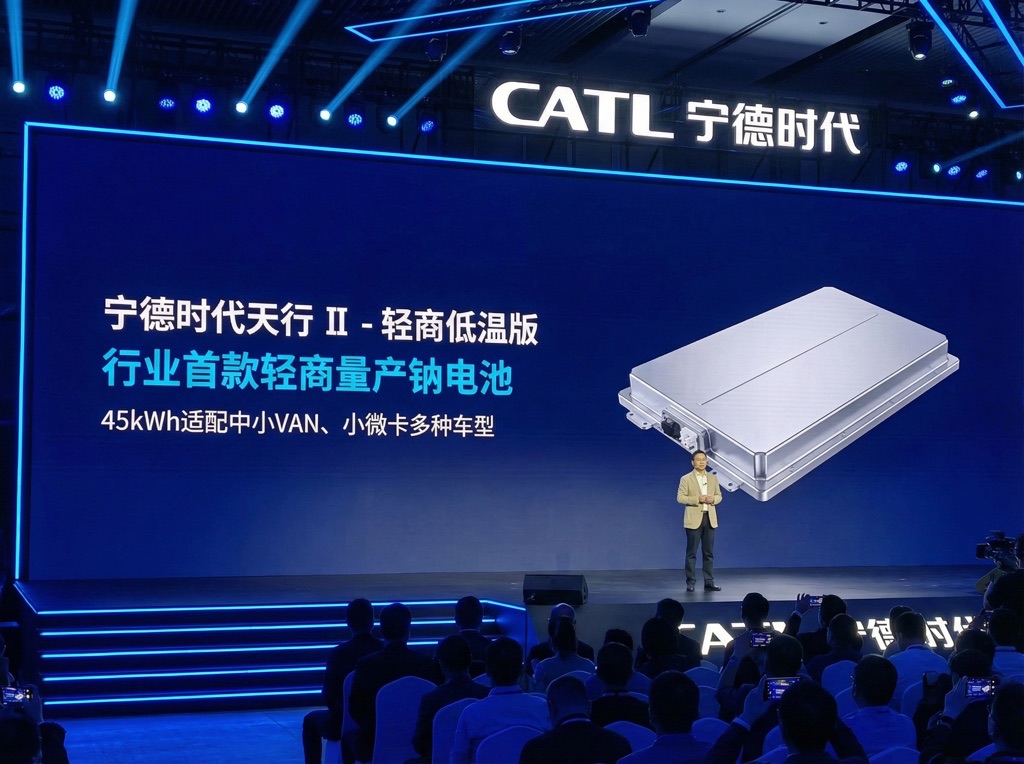
CATL has launched the Tectrans II series, including the industry’s first mass-produced 45 kWh sodium-ion battery for light commercial vehicles. This battery retains 90% of its usable capacity at -40°C and supports charging at -30°C, addressing a key limitation of lithium-ion batteries in freezing conditions. Small business owners and delivery fleets in cold regions stand to benefit from reliable winter performance without range loss.
Background: CATL’s Dominance and Sodium-Ion Push
Contemporary Amperex Technology Co. Limited (CATL), the world’s largest EV battery manufacturer, holds over 37% global market share in 2025. The company, headquartered in Ningde, China, supplies batteries to Tesla, BMW, and Volkswagen, among others. CATL launched its sodium-ion brand Naxtra in April 2025, starting large-scale production of cells with up to 175 Wh/kg energy density. These batteries passed China’s GB 38031-2025 safety standard, effective mid-2026, for thermal stability and cycling performance.
CATL predicts 2026 as the year for widespread sodium-ion adoption in passenger EVs, commercial vehicles, battery swapping, and energy storage. The firm pursues a “dual-star” strategy, advancing sodium-ion alongside lithium-ion for complementary strengths: sodium excels in cold temperatures (-40°C to 70°C operation), safety, and lower costs due to abundant sodium resources.
Key Specifications
| Feature | Details |
|---|---|
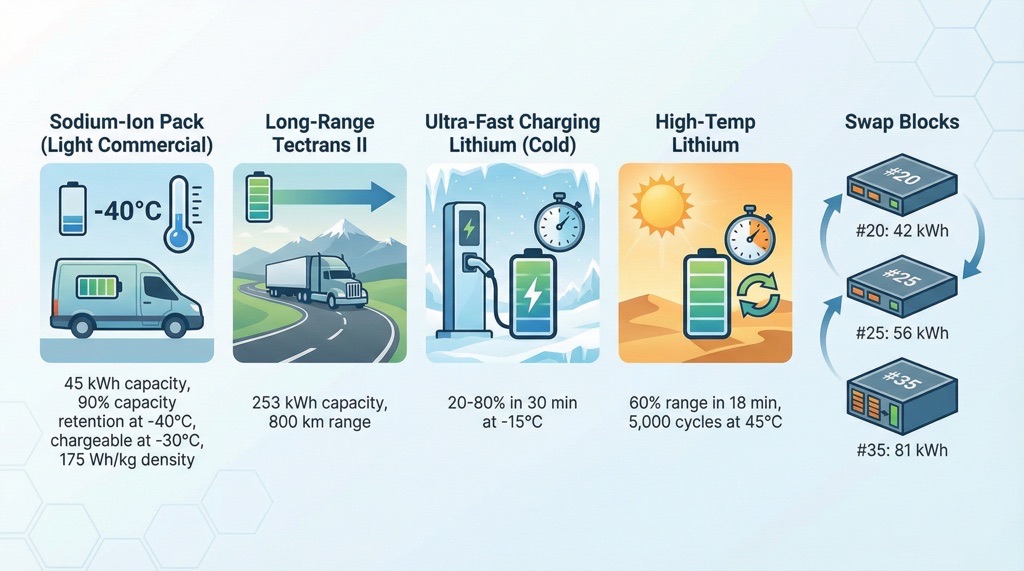
| Sodium-Ion Pack (Light Commercial) | 45 kWh capacity, 90% capacity retention at -40°C, chargeable at -30°C, 175 Wh/kg density |
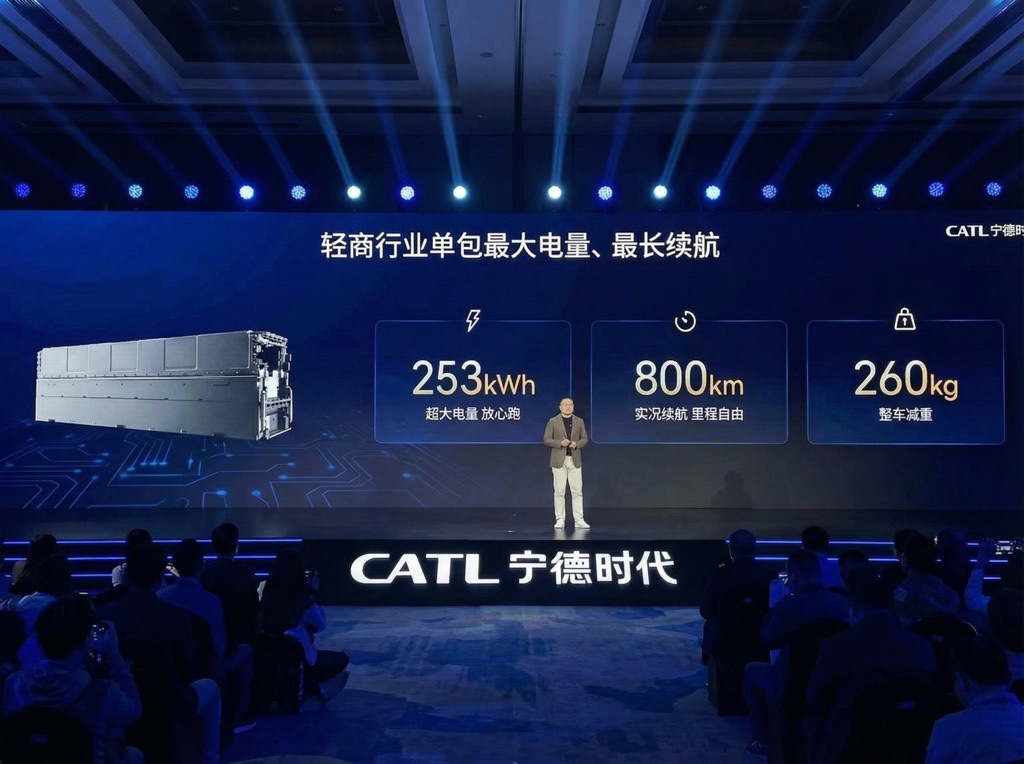
| Long-Range Tectrans II | 253 kWh capacity, 800 km range |
| Ultra-Fast Charging Lithium (Cold) | 20-80% in 30 min at -15°C |
| High-Temp Lithium | 60% range in 18 min, 5,000 cycles at 45°C |
| Swap Blocks | #20: 42 kWh; #25: 56 kWh; #35: 81 kWh |
Sources confirm these specs across multiple reports, with the sodium-ion pack targeting micro-trucks and small vans.
Cold-Weather Superiority
Sodium-ion batteries solve lithium-ion’s cold-weather woes, where capacity can drop over 50% below freezing. CATL’s Tectrans II sodium pack maintains 90% usable energy at -40°C and charges at -30°C, ideal for northern delivery routes. This outperforms LFP lithium packs, which struggle below -20°C. Energy density reaches 175 Wh/kg, enabling 500 km range in passenger EVs, though lower than top lithium packs (250+ Wh/kg).
 News
News
Denza Z9 GT Hits 1,036 km CLTC Range – Longest for Any Chinese Production EV
Denza Z9 GT filings confirm up to 1,036 km CLTC range from its 122.5 kWh battery, setting a new benchmark...
 Cars
Cars
2026 Nissan Serena e-Power Delivers 163 PS Electric Drive and 400 Malaysian Bookings Before March Launch
Edaran Tan Chong Motor (ETCM) will launch the sixth-generation C28 Nissan Serena e-Power in Malaysia in early March 2026, with...
 Cars
Cars
Tesla Model 3 & Model Y Batteries From China Show “Catastrophic” Failure Rates — Report by EV Clinic
European EV repair experts warn about severe degradation in LG NCM811 packs used in Tesla Long Range & Performance models...
Safety edges include no cobalt or nickel, reducing fire risk, and over 10,000 cycles reported for some cells. Pricing remains lower than lithium-ion in 2025, though the exact 2026 figures are unconfirmed.
Versatile Tectrans II Lineup
Beyond sodium, Tectrans II includes a 253 kWh pack for 800 km in heavy-duty trucks, challenging diesel on long hauls. Ultra-fast lithium options charge 20-80% in 30 minutes at -15°C or add 60% range in 18 minutes at 45°C with 5,000-cycle durability. Battery swapping gains three modular blocks: 42 kWh (#20), 56 kWh (#25), and 81 kWh (#35), compatible with stations for minimal downtime.
This modular approach suits fleet operators, allowing size-matched swaps. CATL’s event on January 22, 2026, positions Tectrans II as a pivot from uniform lithium designs.
Strategic Rollout and Unanswered Questions
Mass production targets light commercial vehicles first, expanding to passenger EVs by late 2026. CATL’s supplier conference on December 28, 2025, outlined scaled deployment. However, real-world pricing, exact vehicle integrations, and energy density improvements beyond 175 Wh/kg remain details not yet confirmed. Independent testing of cycle life in fleet use is pending.
Comparison with Competitors
| Battery Maker | Key Sodium Product | Cold Performance | Density | Status |
|---|---|---|---|---|
| CATL | 45 kWh Tectrans II | 90% at -40°C | 175 Wh/kg | Mass production 2026 |
| BYD | Seagull sodium packs | Good to -30°C | ~160 Wh/kg | Low-speed EVs now |
| Farasis | Commercial sodium | -40°C capable | ~170 Wh/kg | Early deployment |
CATL leads in capacity and commercial focus; BYD prioritizes affordable cars, and Farasis trails in scale. Sodium remains niche versus LFP dominance.
Verdict
CATL’s Tectrans II, led by the 45 kWh sodium-ion battery, delivers proven cold-weather reliability for electric trucks, making it ideal for logistics fleets in Canada, Scandinavia, or Russia. While density lags premium lithium, cost and safety advantages position it for mass adoption in 2026. Buyers should monitor pricing and partnerships; this isn’t a lithium replacement but a vital cold-climate complement.