
Caterham Finally Turns Its Attention to America
For more than 50 years, Caterham largely ignored the United States — despite it being the world’s most lucrative sports car market. That is now changing.
At the Consumer Electronics Show in Las Vegas, Caterham openly acknowledged what many brands already know: the US has both demand and money. According to Justin Gardiner, Caterham’s head of overseas operations, overlooking America for decades was simply “ridiculous.”
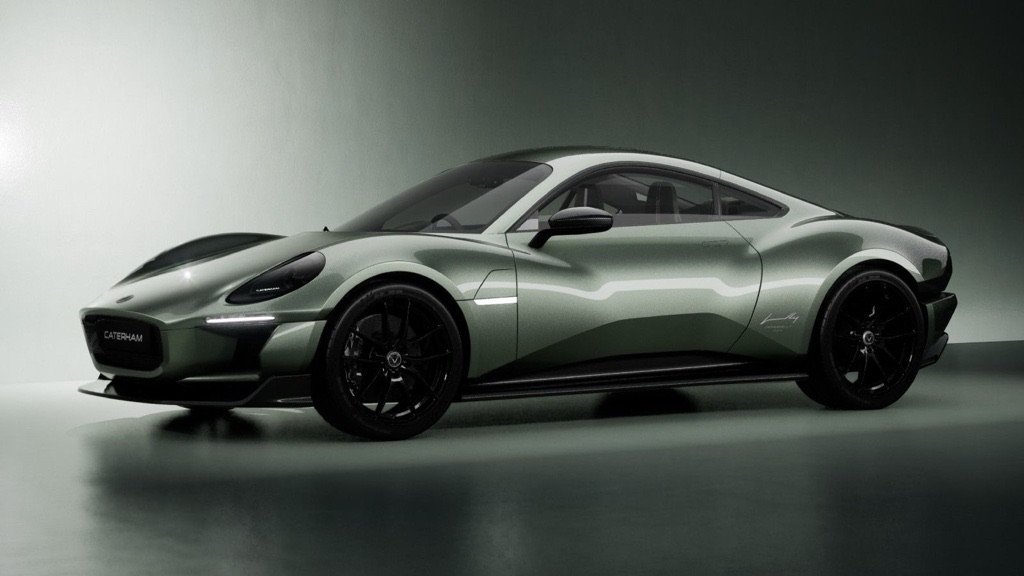
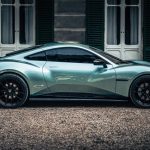
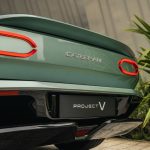
The result of this strategic rethink is Project V — Caterham’s first fully electric production car, and the model chosen to finally reintroduce the brand to US buyers.
Project V: A Very Un-Caterham Caterham
Unlike the iconic Caterham Seven — essentially a minimalist road-legal race car — Project V looks like a proper coupe. It has:
-
A fixed roof
-
Proper doors
-
A weatherproof cabin
In other words, it is a Caterham designed for modern expectations, without abandoning the brand’s obsession with driving purity.
A working prototype is set to debut at the Tokyo Auto Salon, marking the most concrete step yet toward production after more than two years of teasing.









Why Caterham Rejected the “Skateboard” EV Platform
Most electric vehicles rely on a flat, floor-mounted battery pack — the so-called skateboard architecture. Caterham deliberately rejected this solution.
Caterham’s Argument
-
Skateboard platforms force a high seating position
-
That conflicts with Caterham’s low, road-hugging driving philosophy
-
The Seven’s magic comes from feeling close to the asphalt
Instead, Caterham chose a far more unconventional solution.
Dual Battery Layout: “Polar Momentum”
Project V uses two separate battery packs, supplied by Xing Mobility:
-
One mounted at the front
CarsBYD Sealion 7: China’s Game-Changing Electric SUV Takes On Tesla
In an increasingly crowded electric SUV market, the BYD Sealion 7 emerges as a refreshing contender that combines European design...
 Cars
Cars
No Plans for a 2026 Kia Seltos EV Despite Shared Hyundai Platform
Kia has officially confirmed that there will be no fully electric version of the next-generation Kia Seltos, despite the model...
 Cars
Cars
Amazon Zoox Robotaxi: The Self-Driving Future of Prime Delivery and Mobility
Amazon Zoox Robotaxi: The Self-Driving Future of Prime Delivery and Mobility Like it or not, we better get ready for...
-
One mounted at the rear
Caterham calls this approach “polar momentum.” By placing mass at both extremes of the chassis, the goal is to recreate the agile, lively handling that defines the Seven — even in an electric car.
Battery & Cooling Overview
| Specification | Detail |
|---|---|
| Battery layout | Dual-pack (front + rear) |
| Capacity | ~27 kWh per pack |
| Cooling | Liquid, dielectric fluid |
| Focus | Sustained performance, not max range |
This setup prioritizes thermal stability under hard driving, not highway efficiency.








Powertrain: Yamaha Muscle, Caterham Weight
Power comes from an electric motor supplied by Yamaha, producing:
-
268 horsepower
-
Rear-wheel drive
-
Lightweight vehicle architecture
On paper, 268 hp may sound modest in today’s EV world. In reality, Caterham’s low curb weight means this is more than enough for extreme performance and driver engagement.
Charging Strategy: Performance Over Convenience
In a surprising move, Caterham has capped DC fast charging at 100 kW.
This is not a limitation — it is a philosophy.
Caterham’s Logic
-
Project V is not designed for cross-country road trips
-
Owners are expected to:
-
Drive aggressively
-
Track the car
-
Enjoy the back roads
-
-
The priority is how fast the battery can discharge, not how fast it can recharge
This approach avoids power throttling and thermal derating during spirited driving — a common issue with performance EVs.
Price and Positioning in the US Market
Caterham expects Project V to cost around $135,000 in the United States.
That puts it firmly into:
-
Boutique performance territory
-
Aimed at enthusiasts, not mass buyers
-
Competing on feel, not numbers
This is a bold move — asking US customers to spend six figures on an EV with under 300 hp. But Caterham is betting that character beats spec sheets.



Why Project V Is a Big Gamble — and Why It Might Work
Project V breaks nearly every modern EV rule:
-
❌ No skateboard battery
-
❌ No ultra-fast charging arms race
-
❌ No focus on maximum range
Instead, it doubles down on:
-
Lightweight design
-
Driver involvement
-
Emotional connection
If Project V delivers even a fraction of the visceral experience of a Caterham Seven, it could succeed where many EV sports cars feel sterile.
Final Verdict: Caterham Bets on Feel Over Numbers
Caterham’s return to the US is late — but strategically fascinating.
Project V is not trying to out-Tesla Tesla. It is trying to answer a different question:
Can an electric car still feel dangerous, alive, and joyful?
If the answer is yes, Caterham may finally get what it came for — a piece of the American wallet.