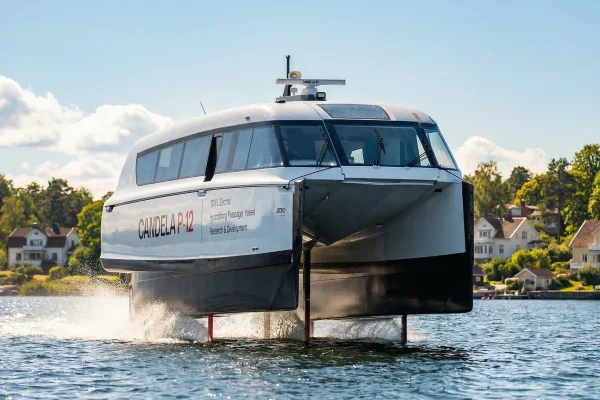

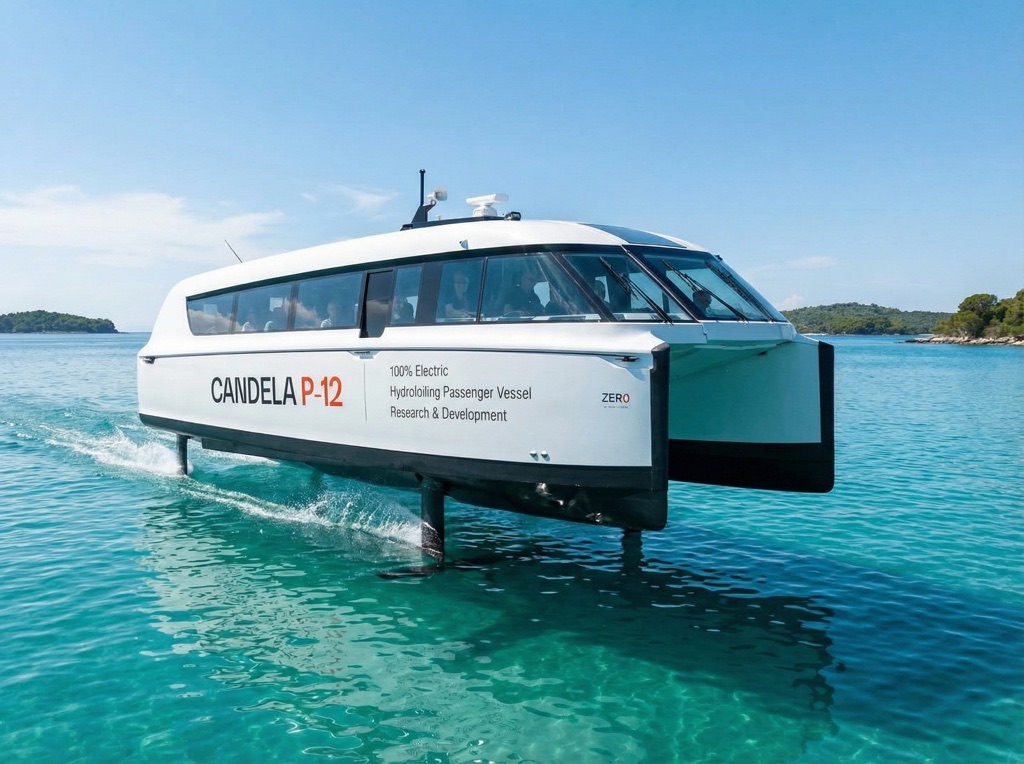
Candela’s P-12 electric hydrofoil ferry traveled 160 nautical miles from Gothenburg, Sweden, to Oslo, Norway—the longest journey by an electric passenger vessel—using standard car chargers and costing just $230 in electricity. This demonstration highlights how computer-controlled hydrofoils lift the hull above water, slashing drag by 80% and enabling 40-nautical-mile range at 25 knots. For EV enthusiasts and urban planners, it signals viable battery-powered ferries that bypass diesel without massive infrastructure.
Background: Candela’s Rise in Electric Hydrofoils
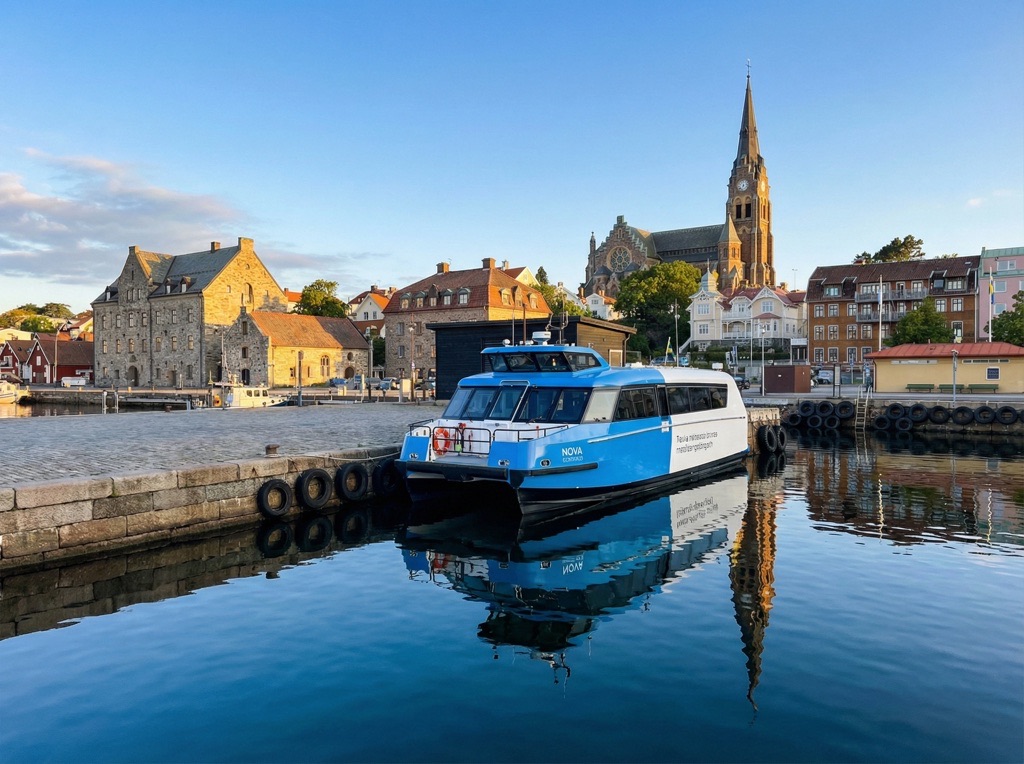
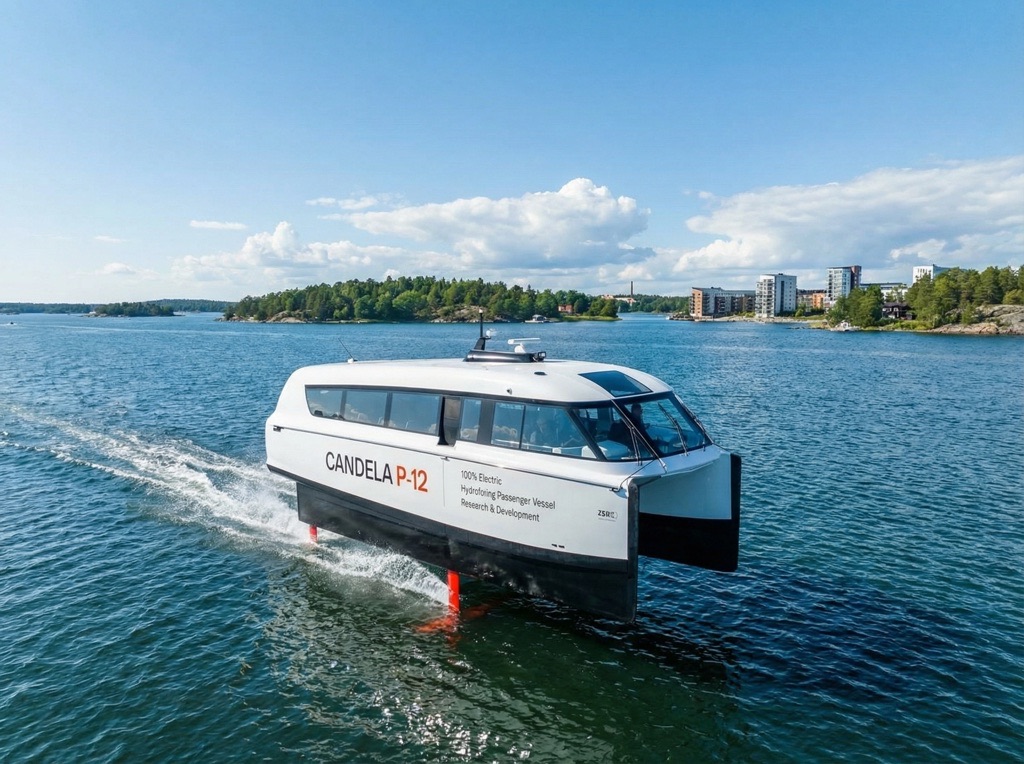
Candela Speed Boat AB, a Swedish company, specializes in electric hydrofoil vessels that ‘fly’ above water to minimize energy use. Founded to address waterway underutilization due to traditional boats’ wake, pollution, and costs, Candela launched its first commercial P-12 Shuttle in 2023 for public transport. The P-12 entered service in Stockholm in 2024 as the world’s fastest electric passenger vessel at 25 knots service speed, outpacing local diesel ferries.
Over 30 units sold to markets including Saudi Arabia, the Maldives, India, and the US underscore demand. Recognition came with Time Magazine’s Best Inventions of 2025 for its efficiency. The Gothenburg-Oslo trip, completed in three days with stops, validated long-range capability without custom charging stations.
Key Specifications
| Specification | Details |
|---|---|
| Length | 11.99 m (39.24 ft) |
| Beam | 4.5 m (14.76 ft) |
| Weight | 10 tonnes |
| Capacity | 30 passengers + 1 crew; max payload 3,000 kg (includes bikes, wheelchairs, skis) |
| Propulsion | 2 x Candela C-POD electric drives, 320 kW peak (110 kW continuous each) |
| Battery | 300 kWh |
| Charging | Up to 200 kW DC; full charge <1 hour on standard fast charger |
| Service Speed | 25 knots (29 mph) |
| Top Speed | 30+ knots (34+ mph) |
| Range | 40 nautical miles at 25 knots |
| Wave Handling | HS 1 m foiling; HS 2 m hull-borne |
| Certifications | DNV Craft with passenger and battery notation |
Sources confirm consistent specs across deployments, with hydrofoils reducing energy by 80-90% vs. planing hulls.
Analysis: Hydrofoil Technology Breakthrough
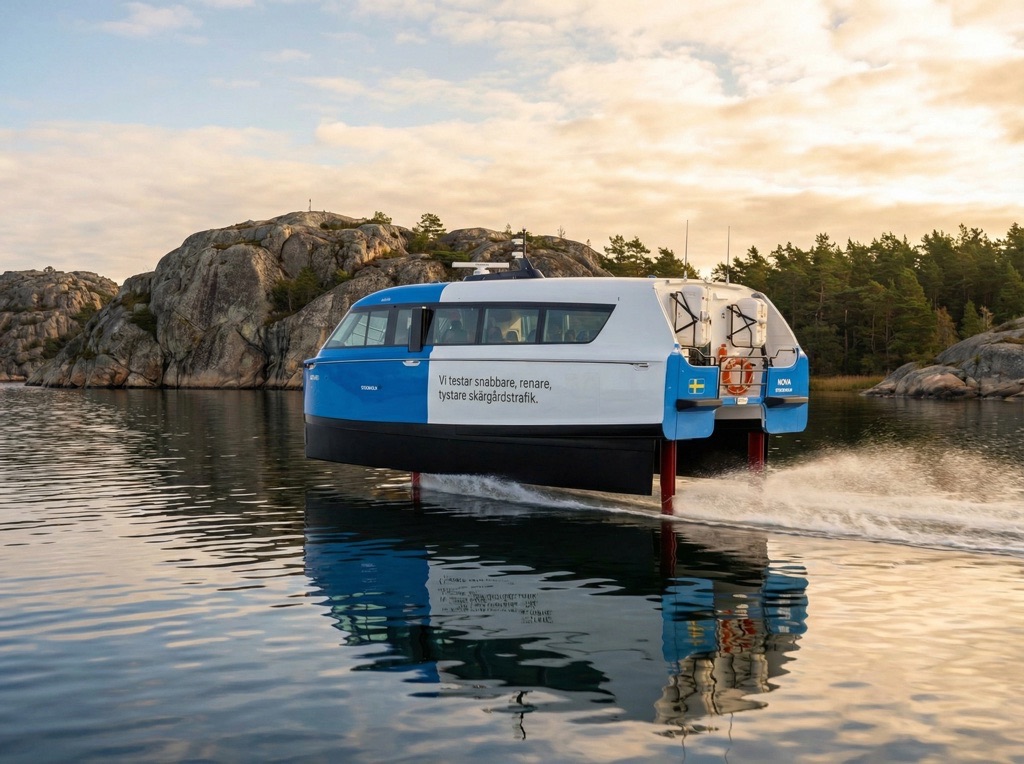
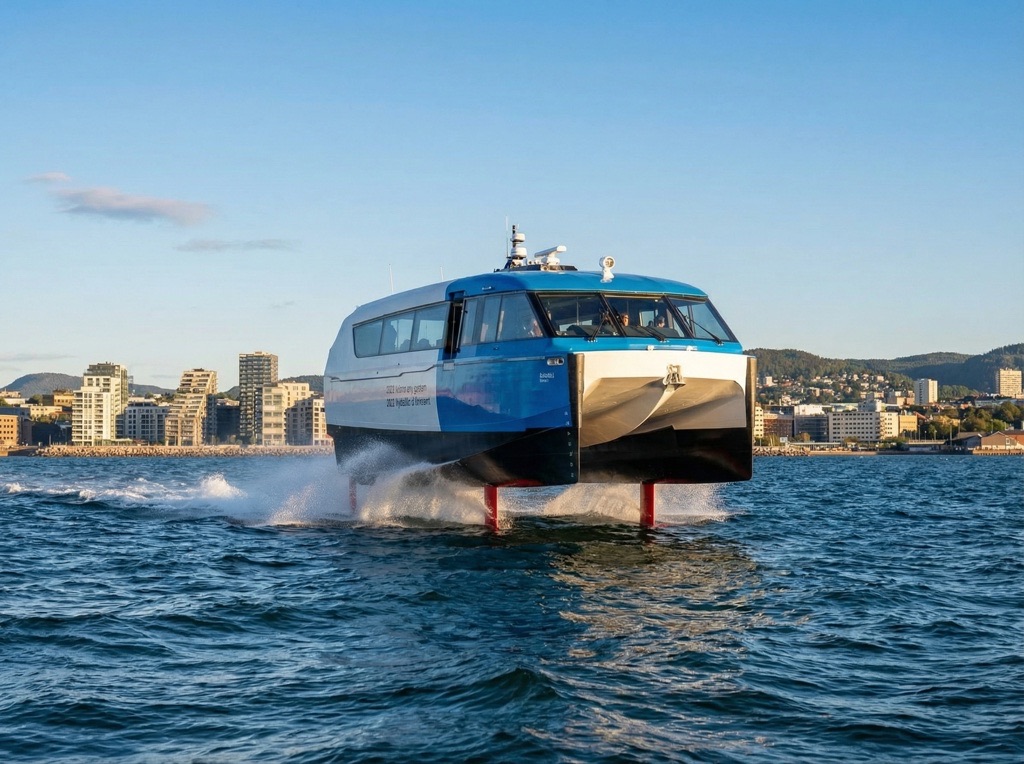
The P-12’s core innovation is computer-controlled hydrofoils—underwater wings that lift the 10-tonne hull above waves at speeds over 20 knots. The Flight Controller adjusts foil angle 100 times per second using sensors for wave height, wind, and balance, delivering 90% less g-forces than traditional boats. This enables silent, wake-free operation ideal for urban routes.
 Boats
Boats
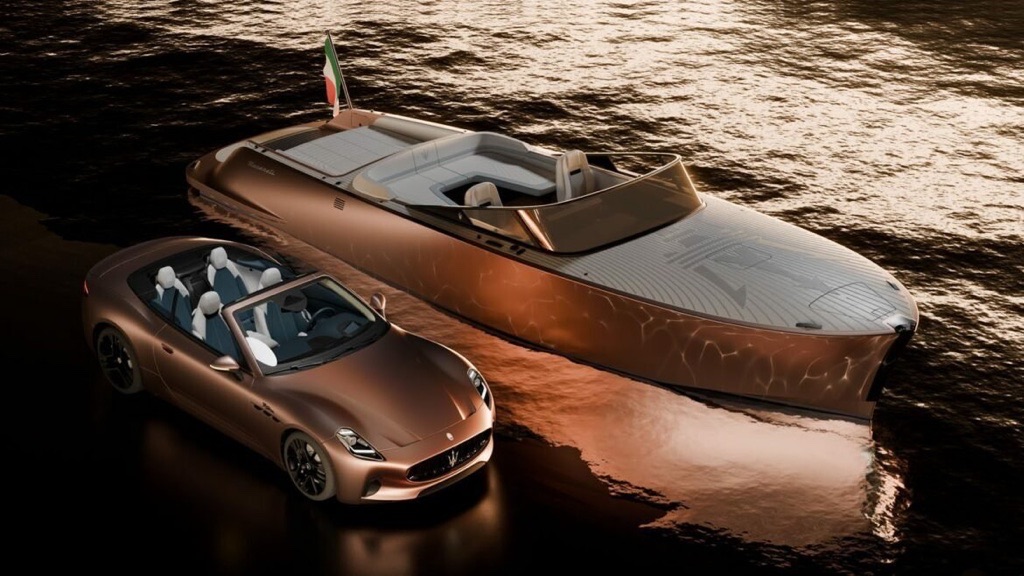
Maserati Makes a $2.6 Million Splash With Electric Tridente Speedboat
When you think of Maserati, visions of sleek Italian sports cars likely come to mind. But the iconic automotive brand...
 Boats
Boats
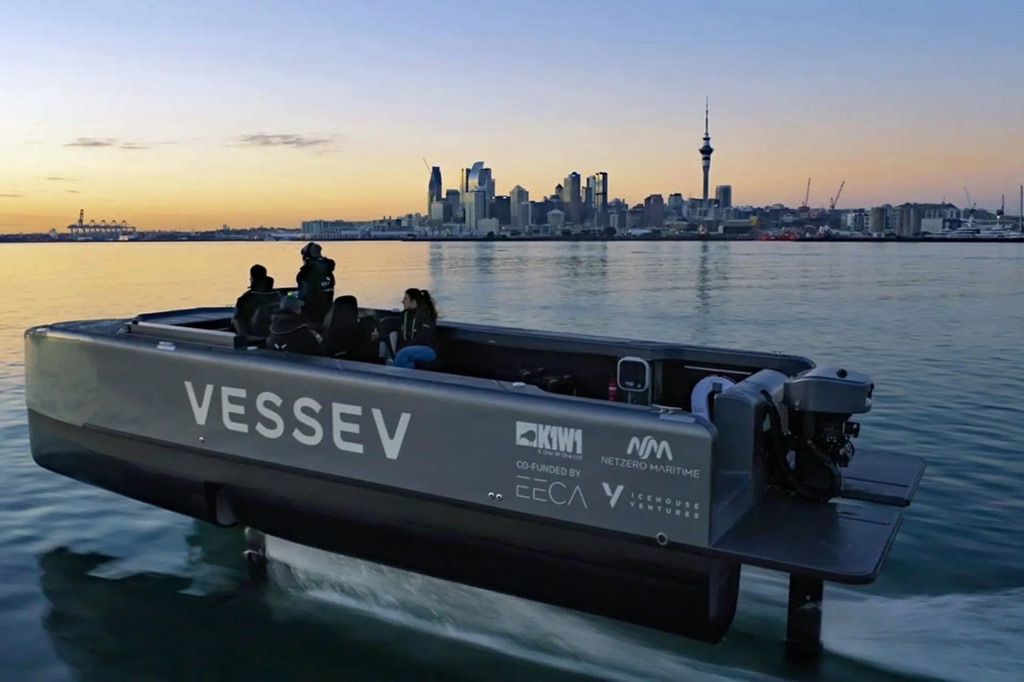
Vessev VS-9 The Future of Water Transport: Electric Hydrofoil Boats Taking Flight
In the world of transportation, innovation is the key to a sustainable future. While electric cars and bikes have been...
 Boats
Boats
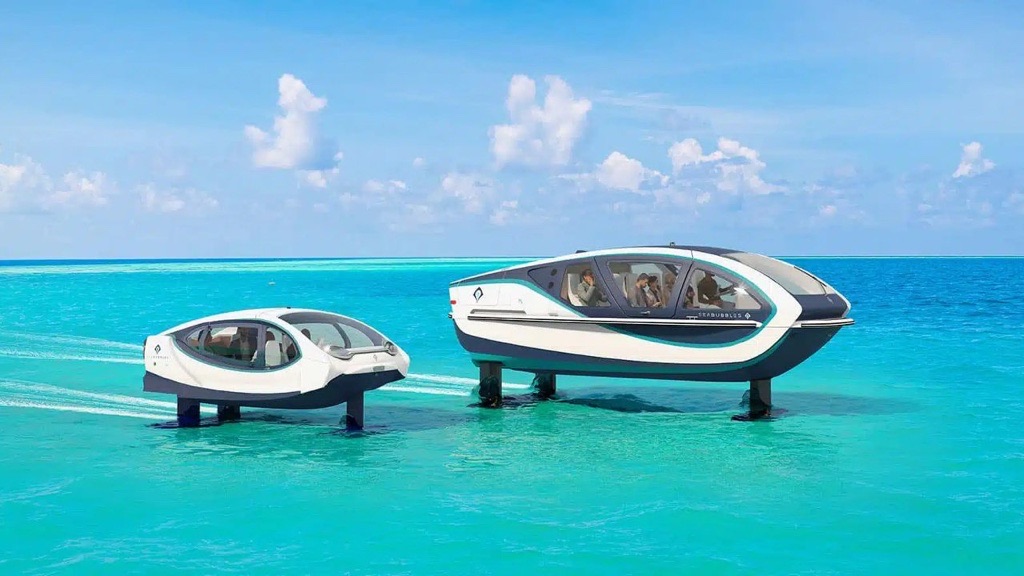
SeaBubbles Smart Bubble: The Future of Electric Water Taxis?
Imagine gliding across the water in a silent, eco-friendly vessel that looks like it’s straight out of a sci-fi movie....
Energy efficiency stands out: 80% less drag allows 40-nautical-mile range at high speed, vs. conventional electric ferries’ 11 miles. Oslo’s electric ferries, for comparison, lag in speed and range. Dual C-POD pod drives with thrust vectoring ensure precise maneuvering, while a bow ramp handles dock heights from 0.3-1.9 m for quick 2-minute foiling transitions.
Real-World Deployment and Economics
In Stockholm, the P-12 NOVA operates as the fastest electric ferry, expanding service due to its success. Lake Tahoe trials with Fly Tahoe target 30-minute ski resort runs vs. 2-hour roads. The Gothenburg-Oslo voyage used portable charging from a Ford F-150 Lightning when docks lacked plugs, totaling $230—far below diesel equivalents.
Operational costs per passenger-mile are 10-50% of diesel ferries, using existing car chargers without ‘nuclear power plant’ infrastructure. Over-the-air updates keep fleets current. Rough-water capability (HS 1-2 m) and no-wake design suit congested waterways.
Critical Perspective: Unanswered Questions
While impressive, scalability remains key. With 30+ units sold, production ramps, but battery life in saltwater, foil maintenance costs, and cold-weather range loss need long-term data. Local certifications vary; operators must verify. Pricing undisclosed—details not yet confirmed. Does it scale to larger fleets without supply chain issues for C-PODs and batteries?
Comparison with Competitors
| Feature | Candela P-12 | Oslo Electric Ferry | Conventional Diesel Ferry |
|---|---|---|---|
| Service Speed | 25 knots | <15 knots | 12-20 knots |
| Range at Speed | 40 nm | ~11 nm | 200+ nm |
| Energy/Drag Reduction | 80% | None | None |
| Charge Time | <1 hr (200 kW) | Multi-hour, custom | N/A |
| Cost per Passenger-Mile | 10-50% of diesel | Higher | Baseline |
P-12 dominates in speed/range efficiency; diesel wins endurance, but faces emissions regs. Other electrics lack the hydrofoils’ range.
Verdict
The Candela P-12 sets a new benchmark for electric ferries, proving hydrofoils enable practical high-speed, long-range battery operation without infrastructure overhauls—ideal for city operators like Stockholm or Tahoe seeking green, fast commuter services. It’s for public transport fleets prioritizing efficiency over unlimited range, though buyers should confirm lifecycle costs. This isn’t hype; the 160-nm voyage delivers proof.