Electra’s Hybrid-Electric EL9 Targets Pentagon’s Last-Mile Logistics Gap
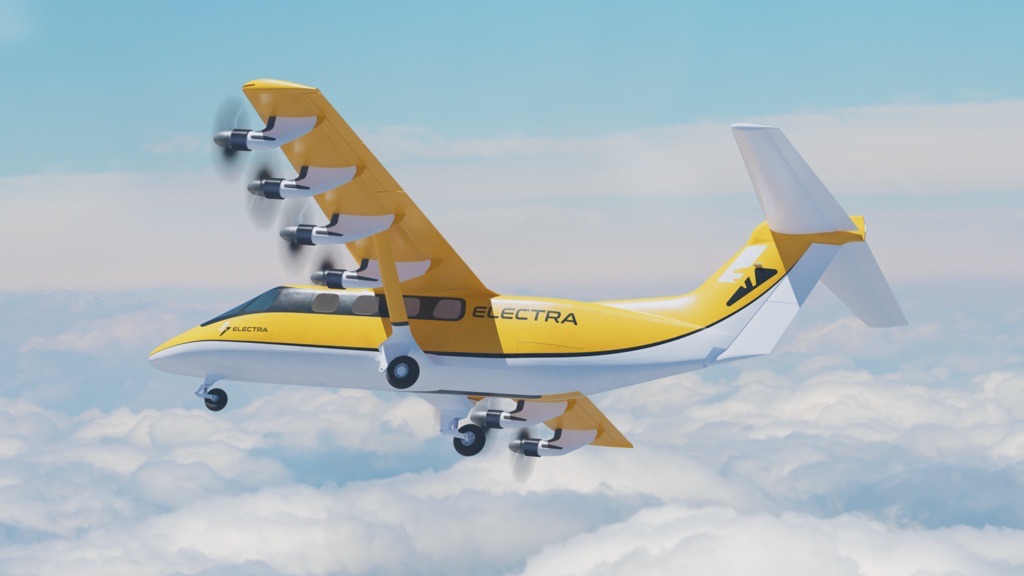
Electra Aero has launched a dedicated defense business unit to commercialize its EL9 hybrid-electric aircraft, a nine-passenger ultra-short takeoff and landing (STOL) aircraft designed to solve what Pentagon planners identify as a critical capability gap: runway-independent logistics for austere environments. The aircraft’s unconventional design—featuring eight distributed electric rotors along a fixed wing rather than traditional propellers—enables takeoff and landing in just 150 feet while carrying up to 3,000 pounds of cargo or personnel over 1,000 nautical miles.
The move follows successful government testing with the U.S. Air Force in September 2025 and a $85 million Strategic Funding Increase contract that accelerated hybrid-electric propulsion development. Electra CEO Marc Allen frames the EL9 as enabling “direct aviation”—point-to-point air transport that bypasses traditional runway infrastructure entirely. “The Pentagon has been very clear in its planning work that runway independence or runway agnosticism is a missing part of the puzzle,” Allen told Breaking Defense. “If that’s true, then this is absolutely right in the center of the target.”
From Goldfinch to EL9: Electra’s Military Trajectory
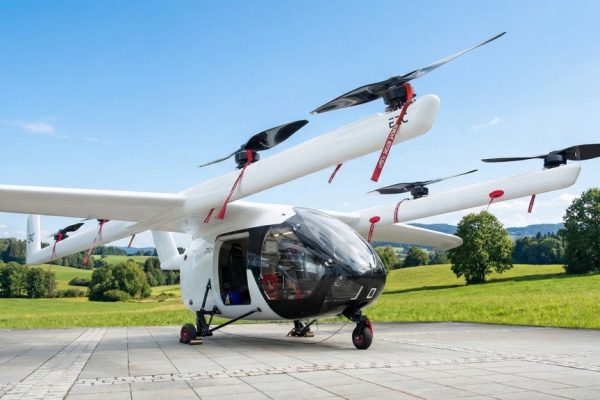
Electra’s defense pivot builds on years of government partnership and technology validation. The company previously tested its EL2 “Goldfinch” technology demonstrator during the Air Force Research Laboratory’s Future Flag 25-3 exercise in September 2025, where it executed operational scenarios including quiet ultra-STOL takeoff and landing, logistics asset command and control, and powering an MQ-9 Reaper drone. These tests proved the hybrid-electric platform’s viability for military operations in contested environments.
The company’s trajectory reflects growing Pentagon recognition that traditional airlift assets—C-17s and C-130s—cannot efficiently serve the “last tactical leg” of logistics chains in austere or remote locations. Retired General Doug Brown, co-chair of Electra’s advisory board, emphasized this strategic imperative: “The EL9’s ability to take off and land from ships and runways as short as 150 feet mitigates the scarcity of available runways in contested environments. Should a conflict break out in the Indo-Pacific, long-range runway-independent airlift is needed to counteract the inevitable targeting of runway infrastructure.”
In June 2025, Electra formalized its military ambitions through a memorandum of understanding with Lockheed Martin Skunk Works to accelerate EL9 commercialization and explore global defense opportunities. This partnership signals serious Pentagon interest in the platform’s potential for programs of record.

Technical Specifications and Capabilities
| Specification | Value |
|---|---|
| Passenger Capacity | 9 people |
| Maximum Payload | 3,000 pounds (1,360 kg) |
| Cargo Capacity | 1,000 pounds over 1,000 nautical miles |
| Takeoff/Landing Distance | 150 feet (45 meters) |
| Cruise Speed | 175 knots (200 mph) |
| Cruise Altitude | 8,000–12,000 feet |
| Expeditionary Power Generation | 600 kilowatts |
| Propulsion System | Eight distributed electric rotors (hybrid-electric) |
| Flight Controls | Fly-by-wire with autonomy support |
The EL9’s 600-kilowatt power generation capability transforms it into a mobile power station—a feature with significant military applications for forward operating bases and command centers. The fly-by-wire architecture supports future autonomous operations, addressing Pentagon interest in reducing pilot workload during extended missions.

Military Mission Set: From Logistics to Special Operations
Electra envisions the EL9 serving multiple military mission profiles:
- Last Tactical Mile Logistics—resupply of forward positions without runway infrastructure
- Sustainment Support for Agile Combat Employment (ACE)—dispersed operations to reduce vulnerability to enemy strikes
- Ship-to-Shore Transport—amphibious operations and expeditionary deployment
- CASEVAC/Personnel Recovery—medical evacuation and personnel extraction from austere sites
- Expeditionary Power/Command & Control—mobile power generation and communications relay
- Quiet Infil/Exfil for Special Operations Forces—low-noise insertion and extraction
- Maritime Patrol & Intelligence, Surveillance, and Reconnaissance (ISR)
The “sprinter van of the skies” metaphor—used by Donn Yates, Vice President and General Manager of Electra Defense—captures the aircraft’s intended role: agile, flexible, and capable of reaching locations where traditional military airlift cannot operate. This positioning directly aligns with the Air Force’s Agile Combat Employment doctrine, which emphasizes dispersed operations to complicate adversary targeting.
 Aircraft
Vertical Aerospace Valo eVTOL Revealed: Britain’s Quiet Electric Air Taxi Targets 2028 Certification
Another electric air taxi has entered the rapidly growing eVTOL race — but this one may actually be worth paying...
 Aircraft
China’s Low-Altitude Economy: The eVTOL Revolution Taking Flight
The Rise of Electric Vertical Takeoff and Landing Aircraft China is quietly revolutionizing the future of transportation, and the electric...
 Aircraft
The Hydrogen Hype Train: Is Sirius Aviation’s CEO Jet the Future of Electric Aviation?
In the rapidly evolving world of electric transportation, a Swiss company is making waves with an ambitious claim that could...
Development Timeline and Certification Path
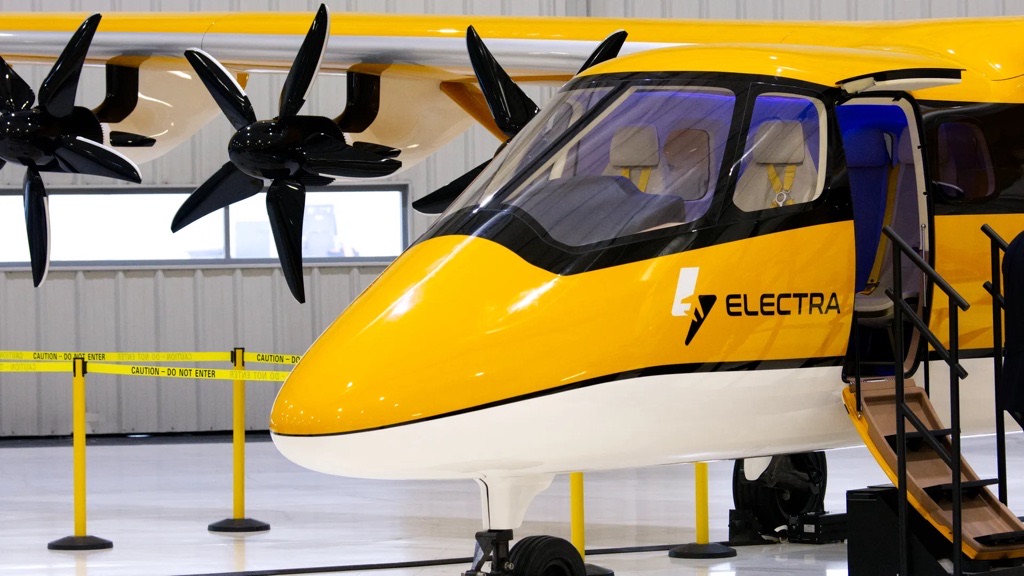
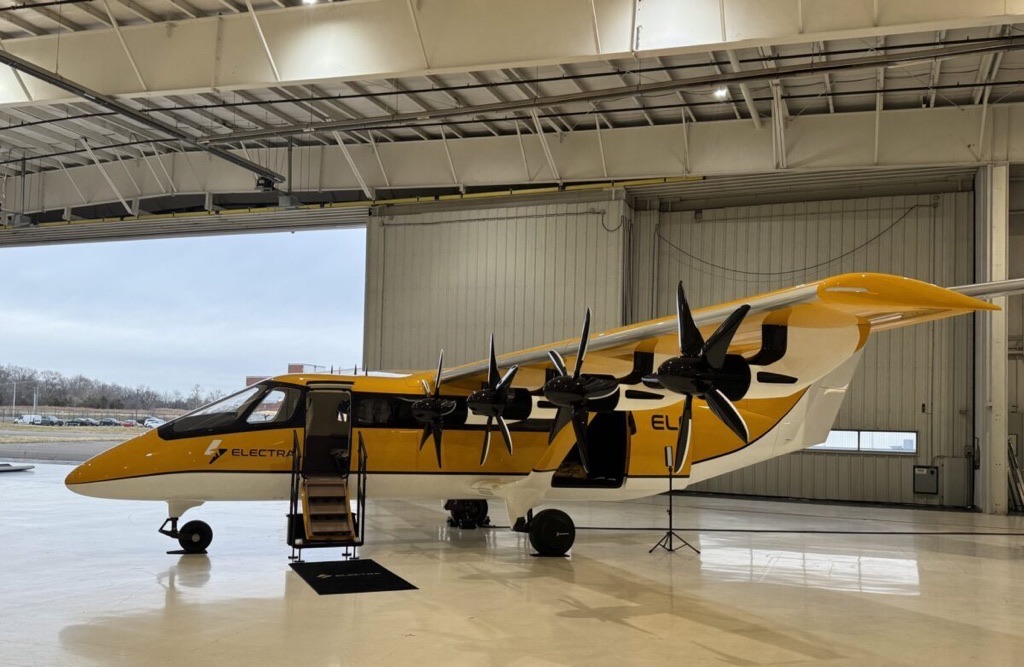
The EL9 currently exists as a full-scale model in Electra’s Manassas, Virginia hangar. Flight testing is planned for late 2027 or early 2028, with FAA Part 23 type certification targeted for 2029. On December 10, 2025, Electra submitted its formal application for Part 23 certification, marking the transition from technology development to regulatory compliance.
Part 23 establishes airworthiness standards for aircraft with 19 or fewer passengers and represents the regulatory pathway for commercial passenger and cargo operations. Achieving certification by 2029 would open the commercial market while supporting military procurement timelines.
Company officials acknowledged significant work remains before the EL9 enters service. The prototype phase will validate the distributed rotor architecture, hybrid-electric propulsion system, and short-field performance claims under real-world conditions. Yates, a former Boeing executive, emphasized the company’s commitment to meeting aggressive timelines while maintaining safety and performance standards.
Commercial Momentum Supporting Military Ambitions
Electra’s defense strategy leverages substantial commercial demand to reduce unit costs and accelerate production. The company has secured over 2,200 provisional orders from 60+ commercial customers worldwide, representing a $15 billion commercial order pipeline. This dual-use economics model—where military and commercial production share manufacturing infrastructure and supply chains—reduces per-unit costs for both customer segments.
Contracted customers include the U.S. Air Force, U.S. Army, U.S. Navy, and NASA, alongside commercial airlines and helicopter operators. This diversified customer base provides revenue stability and production volume that support the aggressive certification and deployment timeline.
Competitive Positioning and Unanswered Questions
The EL9 enters a nascent market for military ultra-STOL aircraft. While competitors exist—including traditional helicopter operators and emerging electric vertical takeoff and landing (eVTOL) developers—none currently offer the EL9’s combination of 1,000+ nautical mile range, nine-passenger capacity, and runway-independent operations.
However, critical questions remain unanswered. The Air Force’s “Last Tactical Leg” program, identified as a potential customer for the EL9, had not issued formal solicitations as of January 2026, leaving procurement timelines uncertain. Additionally, the hybrid-electric propulsion system’s operational costs, maintenance requirements, and battery lifecycle in military service remain unspecified. The eight-rotor distributed architecture, while enabling short-field performance, introduces complexity in redundancy and failure modes that will require extensive flight testing to validate.
Electra has not disclosed pricing for military variants, though commercial pricing models suggest unit costs in the $10-15 million range based on the $15 billion order pipeline divided by 2,200 aircraft. Military variants with hardened systems, autonomous capabilities, and expeditionary power generation could command significant premiums.

Strategic Implications for Pentagon Logistics
The EL9 addresses a genuine Pentagon capability gap. In contested environments—particularly the Indo-Pacific theater—traditional runway infrastructure becomes a vulnerability. An aircraft capable of operating from 150-foot clearings, parking lots, or ship decks expands tactical options for commanders executing Agile Combat Employment doctrine. The 600-kilowatt power generation capability adds utility for forward operating bases lacking reliable electrical infrastructure.
However, the EL9 cannot replace strategic airlift. Its 3,000-pound maximum payload and 1,000-nautical-mile range position it as a last-mile solution, not a strategic transport platform. The Pentagon’s interest reflects recognition that existing airlift assets—optimized for large-scale, long-distance cargo movement—are inefficient for small, urgent shipments to austere locations.
Verdict: A Credible Solution to a Real Problem
Electra’s EL9 represents a technically credible approach to a genuine military logistics challenge. The company’s successful Air Force testing, $85 million government contract, Lockheed Martin partnership, and substantial commercial order book demonstrate serious momentum. The distributed electric rotor architecture is unconventional but proven in testing. However, the aircraft remains in development—the hangar model is not yet flying, and certification is two to three years away. For military planners, the EL9 offers a promising solution to runway-independent logistics, but procurement decisions should await prototype flight testing and independent performance validation. For commercial operators, the EL9’s 1,000+ nautical mile range and nine-passenger capacity position it as a viable regional transport alternative to helicopters and turboprops, particularly for operators serving remote or underserved markets. The real test comes when the prototype takes flight in late 2027.